timer 40% Price Increase Coming Soon, Lock In Your Rate Today arrow_forward
Blog Login Start Free Trial

Trading Profit and Loss Calculator

Enter your entry, exit, direction, and size to see the profit or loss in pips or points and in your account currency, with costs and return on margin.

Profit / Loss
Market
Direction
lots
Costs and leverage
USD
+$250.00
trending_up profit
net profit or loss on this trade
Gross P/L +$250.00
Pips captured +50.0
Value per pip $5.00
Costs $0.00
Return on margin +46.08%
your prices Runs in your browser

Educational tool, not financial advice. Results depend on your broker's contract specs and pricing. Runs in your browser. Nothing you enter is stored.

Embed This Calculator

Add the Profit & Loss Calculator to your website or blog. Copy the code below and paste it wherever you want the calculator to appear, it auto-adjusts to fit any container. Please keep the attribution line intact.

help_outline How to use this calculator

  1. 1Choose forex/CFD or stocks mode.
  2. 2Pick the instrument and your account currency (forex mode).
  3. 3Set the direction: buy (long) or sell (short).
  4. 4Enter your size, entry price, and exit price.
  5. 5Open the costs panel to subtract commission, spread, and swap.
  6. 6Read the net profit or loss, the pips or points, and the return on margin.

The Profit and Loss Formula (with a Worked Example)


                Pips = (exit price - entry price) / pip size x direction (+1 buy, -1 sell)
Gross P/L = pips x pip value per lot x lots
Net P/L = gross P/L - costs
              

Worked example: a 0.5 lot EURUSD long from 1.0800 to 1.0850 captures 50 pips. At 10 per pip per standard lot, the gross is 50 x 10 x 0.5 = 250.00. A short from 1.0850 down to 1.0800 captures the same 50 pips and the same 250.00, because the direction flips the sign.

Pips Captured vs Money Made

Pips measure the move; money measures the outcome. The same 50 pip move is worth very different amounts depending on your lot size and the pair, which is why this tool always shows both. For a standard lot, a pip on most USD-quoted pairs is 10, but on a JPY pair the pip value depends on the exchange rate, so the calculator converts it for you using the exit price.

Leverage does not change the pip math. A 50 pip win is 50 pips whether your account is 1:30 or 1:500. What leverage changes is the margin the position ties up, and therefore your return on margin, which the calculator shows as a separate row. Confusing pips with money, or thinking higher leverage earns more per pip, is one of the most common beginner mistakes.

CFD and Index Profit: What Changes

On index and commodity CFDs you count points rather than pips, and the contract size differs from forex. A standard lot of an index like US30 is often one unit per point, so a 100 point move is 100 per lot. Gold is quoted in dollars per ounce with 100 ounces per lot, so a one dollar move is 100 per lot. The calculator reads the contract size from the instrument you pick, so the points-to-money step is handled for you.

Crypto CFDs work the same way, with one lot usually equal to one coin and fractional sizes allowed. Because these instruments move in larger nominal ranges than forex, always confirm the contract specification in your platform, then let the tool convert the move into your account currency.

Counting Costs: Spread, Commission, and Swap

The gross figure is the move alone; the net is what actually lands in your account. Spread is baked into your entry and exit, commission is charged per lot on many accounts, and swap is the overnight financing on positions held past the daily rollover. Enter your total costs in the costs panel and the calculator subtracts them to show the net.

On small or short-term trades, costs can be the difference between a winner and a loser. A trade that looks profitable in pips can be flat or negative once spread and commission come out, which is why the tool flags when costs flip a winning move into a net loss. Track your real costs so your expectancy math is honest.
quiz Frequently Asked Questions

How do I calculate forex profit?expand_more
Take the number of pips you captured, multiply by the pip value per lot for your pair, and multiply by your lot size. For a buy, pips are positive when the exit is above the entry; for a sell, they are positive when the exit is below. Subtract your costs to get the net.
What is 100 pips worth?expand_more
For a standard lot on most USD-quoted pairs, one pip is about 10, so 100 pips is about 1,000. At 0.1 lots it is about 100, and at 0.01 lots about 10. On JPY pairs the exact pip value depends on the exchange rate, which the calculator converts for you.
Does leverage increase profit per pip?expand_more
No. Your profit per pip comes from your lot size and the pair, not your leverage. Leverage only changes the margin the position needs. A 1:30 account and a 1:500 account make exactly the same money on the same position; the higher-leverage account just ties up less margin.
How do I calculate profit on a short trade?expand_more
A short (sell) profits when price falls. Enter the higher price as your entry and the lower price as your exit, set the direction to sell, and the calculator gives a positive result. It handles the sign for you, so you do not need to reverse the prices yourself.
What is return on margin?expand_more
Return on margin is your net profit or loss divided by the margin the position required, shown as a percentage. It tells you how hard your committed capital worked on the trade, which is different from return on the whole account. The calculator computes it from the leverage you set in the costs panel.
How do taxes fit into the result?expand_more
This tool shows gross and net trading profit before tax, and tax treatment varies by country and account type, so it does not attempt a tax figure. Treat the net as pre-tax, and check the rules in your jurisdiction or with a professional for how trading gains are taxed where you live.

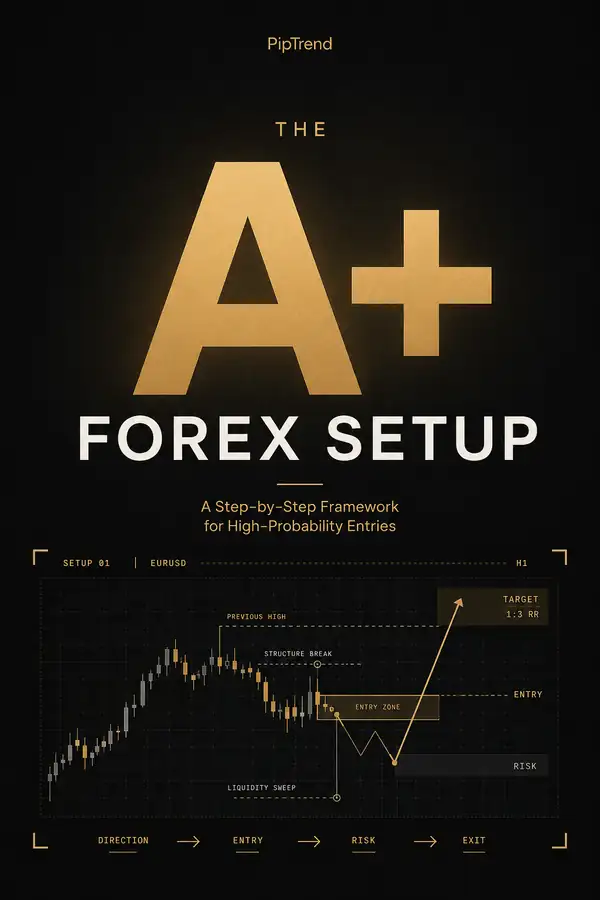
Get the free PipTrend A+ setup guide

We're finishing it now: the exact entries, exits, and risk rules our traders use, on one chart. Leave your email and we'll send it the day it's ready.

grid_view

Explore All Free Tools

Browse our full library of calculators, market tools, and trading resources.

Browse all tools arrow_forward

Want Smarter Signals on Your Chart?

These tools help you plan. PipTrend helps you execute, with a smart signal engine and adaptive trend detection right on your TradingView chart.

Secure checkout via Whop · Instant access · 30-day money-back guarantee