
The world of futures trading is rapidly evolving, and understanding the role of a futures commission merchant is more important than ever. Whether you are a trader, investor, or financial professional, navigating this landscape in 2025 requires up-to-date knowledge and confidence.
This guide breaks down what a futures commission merchant does, how they are regulated, and why they are crucial for safe and efficient trading. You will discover key definitions, compliance essentials, risk management tools, and technology trends shaping the industry.
Ready to make smarter trading decisions? Dive in to learn everything you need to confidently work with FCMs and enhance your trading strategy.
What Is a Futures Commission Merchant (FCM)?
Navigating modern futures markets requires trusted intermediaries. The futures commission merchant plays a central role, ensuring trades are executed, cleared, and settled within strict legal and operational standards. Understanding how a futures commission merchant operates is essential for both new and seasoned traders.
Definition and Core Role of an FCM
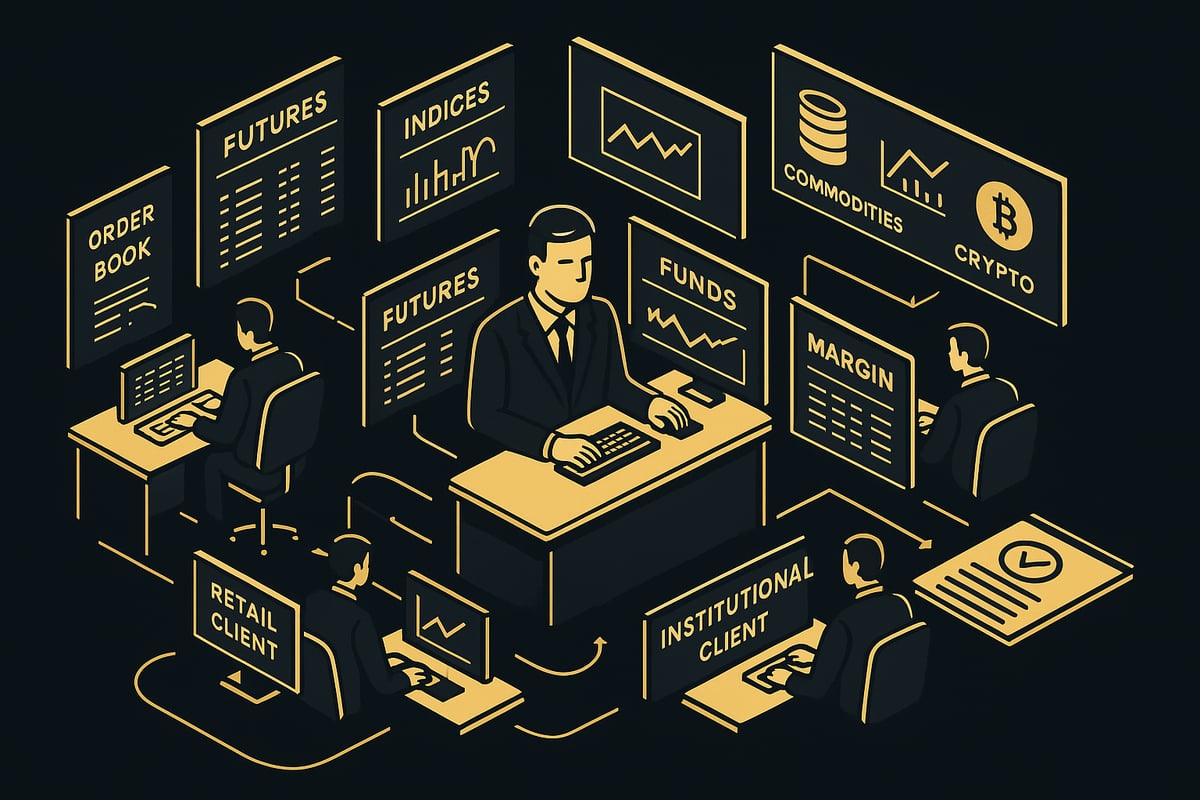
A futures commission merchant is a financial firm authorized by the Commodity Futures Trading Commission (CFTC) to solicit or accept orders for futures contracts and related options. Its core responsibilities include handling customer funds and managing margin requirements for these trades.
Unlike brokers or clearing firms, a futures commission merchant is legally required to segregate client funds, ensuring they are protected and used only for trading activities. For example, when an individual or institution places a futures order, the futures commission merchant executes and clears the trade, then manages the necessary margin.
The futures commission merchant is a licensed entity, serving as a vital pillar for regulated futures markets. Without their oversight, customer protection and market integrity would be at risk.
Types of Clients and Markets Served
A futures commission merchant works with both retail and institutional clients. Retail clients are individual traders seeking access to futures markets, while institutional clients include hedge funds, asset managers, and proprietary trading firms.
These firms provide access to a broad range of markets: commodities, foreign exchange, equity indices, and even crypto futures. For instance, some futures commission merchants serve hedge funds trading energy futures, while others focus on retail traders interested in index contracts. Recent years have seen strong growth in retail participation, with more individuals trading futures than ever before.
To see how index futures markets operate, check out this Index futures trading basics guide. Ultimately, the futures commission merchant acts as a gateway, connecting clients to global derivatives opportunities.
Key Functions and Services Provided
The futures commission merchant delivers several essential services:
- Order execution: Placing and executing client trades on various exchanges
- Clearing and settlement: Ensuring trades are matched, netted, and settled correctly
- Margin management: Calculating and collecting initial and variation margin
- Account management: Maintaining client records, providing daily statements, and issuing trade confirmations
- Compliance support: Helping clients meet regulatory requirements
For example, when a market moves against a client’s position, the futures commission merchant issues a real-time margin call and, if needed, liquidates positions to prevent further losses. These services underpin the integrity of the market, safeguarding both clients and the broader financial system.
FCMs vs. Introducing Brokers and Other Intermediaries
It’s important to distinguish a futures commission merchant from other intermediaries. Introducing brokers (IBs), for example, help clients open accounts and provide trading advice, but do not hold customer funds. Instead, the futures commission merchant is responsible for custody and compliance.
Other entities like swap dealers, commodity pool operators, and clearinghouses play specialized roles. For instance, a client may open an account through an IB, but their funds are always held and managed by the futures commission merchant.
Here’s a quick comparison:
| Entity Type | Holds Client Funds | Executes Trades | Regulatory Oversight |
|---|---|---|---|
| Futures Commission Merchant | Yes | Yes | CFTC, NFA |
| Introducing Broker | No | No | CFTC, NFA |
| Clearinghouse | No | Yes (netting) | CFTC, Self-regulatory Orgs |
Choosing whether to work directly with a futures commission merchant or through intermediaries depends on your trading needs and desired level of service.
Industry Landscape and Major FCM Players
The global futures commission merchant industry is dominated by established financial institutions and specialized firms. Leading names include JP Morgan, Goldman Sachs, and ADM Investor Services, each serving a diverse client base.
Recent industry trends show consolidation, with larger futures commission merchants acquiring smaller competitors. Specialization is also rising, as some firms focus on niche markets or advanced technology solutions. Market share data reflects this shift, highlighting the importance of scale and innovation in today’s competitive landscape.
Regulatory Framework for FCMs in 2025
Navigating the regulatory landscape is critical for any futures commission merchant operating in 2025. This section breaks down the core regulations, licensing steps, anti-money laundering mandates, reporting duties, and the latest rule changes impacting FCMs. Understanding these factors is essential for anyone engaging with a futures commission merchant, whether as a client or industry professional.
Core Regulatory Bodies and Legal Requirements
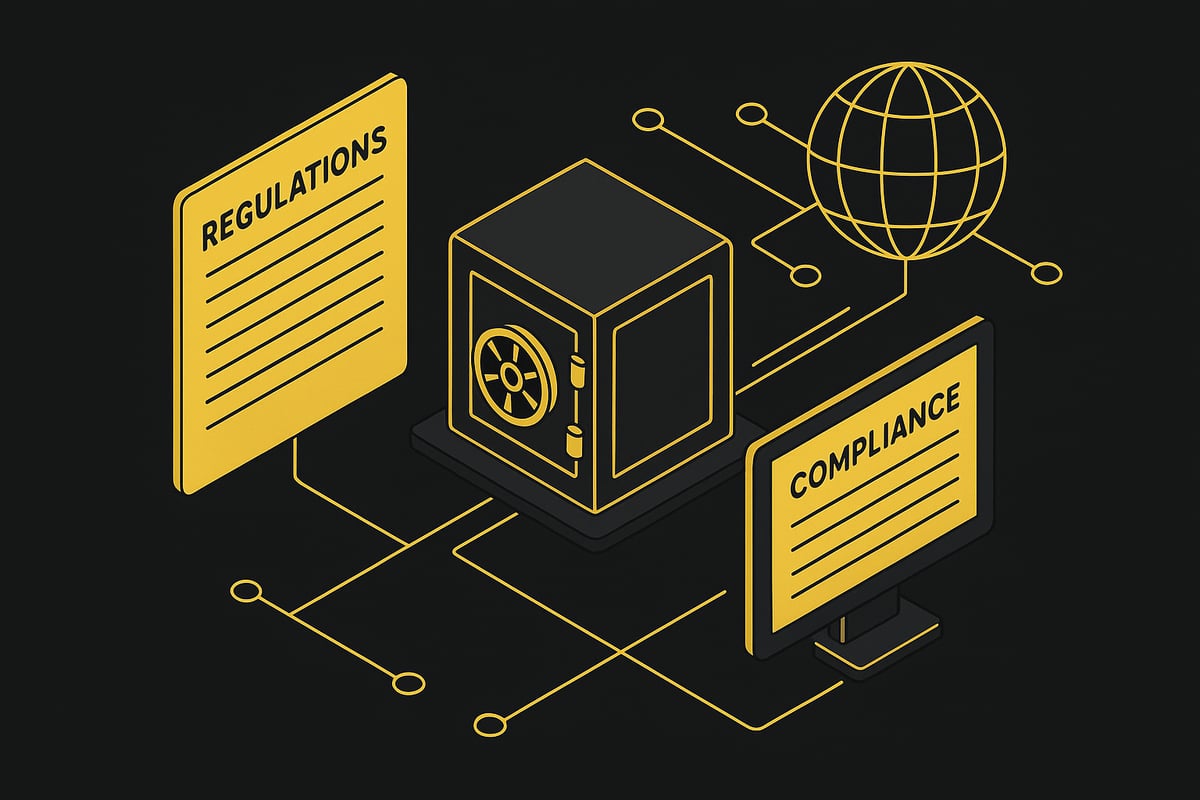
A futures commission merchant in the United States is subject to oversight by several key agencies. The Commodity Futures Trading Commission (CFTC) sets the primary legal framework, enforcing the Commodity Exchange Act and related rules. The National Futures Association (NFA) acts as a self-regulatory organization, setting conduct standards and auditing members. FinCEN, under the U.S. Treasury, enforces anti-money laundering requirements.
A futures commission merchant must comply with annual regulatory obligations, such as those outlined in the NFA’s Annual FCM Requirements. These rules address client fund protection, risk management, and periodic reporting. Together, these agencies ensure that every futures commission merchant operates transparently, maintains financial integrity, and protects customer assets.
Registration and Licensing Process
Becoming a futures commission merchant involves a structured process. Firms must file an application with the CFTC, undergo comprehensive background checks, and demonstrate compliance with strict capital requirements. NFA membership is mandatory, requiring ongoing education and adherence to professional standards.
Documentation for registration includes firm financials, principal biographies, and compliance manuals. The timeline for approval varies, but a diligent applicant can expect several months from initial application to full approval. The licensing process ensures that each futures commission merchant meets the highest industry standards before offering services to clients.
Anti-Money Laundering (AML) and Customer Identification Programs
Every futures commission merchant must implement a robust AML program under 31 CFR Part 1026. This includes customer due diligence, Know Your Customer (KYC) procedures, and ongoing transaction monitoring. Firms are required to flag and report suspicious activity, as detailed in § 1026.320.
Recent years have seen an increase in AML enforcement actions, reflecting regulators’ focus on deterring illicit finance. Customer identification programs are not just about onboarding; they involve constant monitoring, especially for high-risk clients or large transactions. By maintaining these programs, a futures commission merchant helps protect the financial system.
Reporting, Recordkeeping, and Information Sharing
A futures commission merchant is obligated to file various reports, including currency transaction and suspicious activity reports. Record retention standards, such as those in § 1026.400-410, require firms to keep detailed transaction records for several years. These records must be readily available for regulatory review.
Special information sharing procedures, mandated by § 1026.500 and beyond, facilitate collaboration between FCMs and authorities. For example, a futures commission merchant may work with law enforcement during financial crime investigations. These reporting and recordkeeping duties are central to regulatory compliance and market integrity.
Recent and Upcoming Regulatory Changes for 2025
Regulation is constantly evolving, and 2025 brings notable updates for the futures commission merchant industry. Amendments to eCFR Title 31 and CFTC rules reflect changes in permissible investments of customer funds and digital asset derivatives oversight. The regulatory environment is responding to the rise of crypto futures and new product categories.
Firms are adapting by upgrading compliance systems and enhancing internal controls. These changes demand agility from every futures commission merchant, requiring them to stay informed and proactive. Understanding the latest rules helps both firms and clients minimize risk and capitalize on emerging opportunities.
How FCMs Operate: Processes, Technology, and Risk Management
Operating as a futures commission merchant involves a complex blend of account management, trade execution, risk controls, and technology. Understanding how these processes work together can empower you to make informed decisions and reduce trading risks.
Account Opening, Margin, and Collateral Management
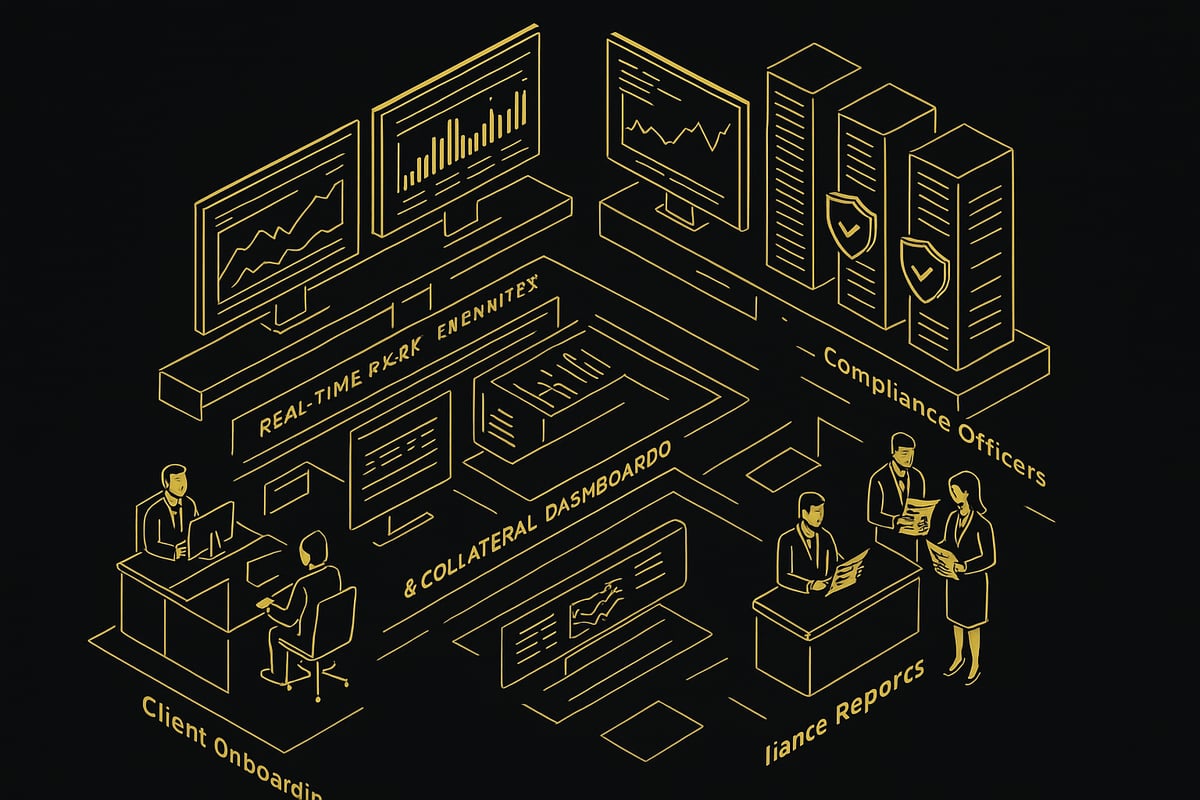
To open an account with a futures commission merchant, you’ll submit identification, financial documents, and complete verification steps. Once approved, you fund your account and meet initial margin requirements.
Margin is central to risk management. You must maintain a minimum balance (maintenance margin), and if your equity drops below this, you face a margin call. The FCM may liquidate positions if the call isn’t met. Daily variation margin adjusts your account based on market moves.
Safeguarding client funds is a top priority. Recent CFTC’s 2025 Final Rules on Customer Funds Investment set strict guidelines on how FCMs can handle and invest customer assets, ensuring extra protection.
Trade Execution, Clearing, and Settlement
When you place a trade, your futures commission merchant routes the order to the appropriate exchange. The FCM’s clearing operations ensure trades are netted, novated, and guaranteed for settlement. This reduces counterparty risk and ensures proper fund movements.
For exchange-traded derivatives, the FCM acts as your gateway to regulated markets. In the case of OTC derivatives, the FCM may provide additional clearing support and settlement services. The settlement cycle is tightly managed to ensure timely transfer of funds and positions.
A robust trade execution process is essential for both retail and institutional clients. The futures commission merchant ensures accuracy, speed, and compliance with regulatory requirements every step of the way.
Technology Infrastructure and Digital Transformation
Modern futures commission merchant operations rely on advanced technology. Trading platforms offer real-time execution, automated margin calls, and API access for algorithmic strategies. Digital onboarding streamlines client verification, while cloud-based solutions enhance scalability.
Cybersecurity is a priority, with firewalls, encryption, and monitoring tools safeguarding sensitive data. FCMs are investing heavily in technology, with industry surveys showing year-over-year increases in IT budgets.
Some FCMs also use machine learning to detect unusual trading patterns, providing an extra layer of defense and operational efficiency in today’s fast-paced markets.
Risk Management Practices and Safeguards
Risk management is at the heart of a futures commission merchant’s operations. Key controls include segregation of customer funds, strict capital adequacy standards, and regular stress testing.
Scenario analysis helps FCMs prepare for market volatility. When unexpected price swings occur, the FCM’s default management protocols kick in, protecting both client accounts and the firm’s stability.
Effective internal controls are essential. By maintaining clear boundaries between customer and firm assets, the futures commission merchant reduces the risk of loss or misappropriation.
Transparency, Reporting, and Client Communications
Transparency is a major competitive advantage for any futures commission merchant. Clients receive daily statements, trade confirmations, and margin reports, often accessible through secure online portals.
Regulatory reporting is equally important. FCMs must submit timely disclosures to authorities and provide clients with regular updates about their accounts.
Clear communication builds trust. When clients have real-time access to their data, they can make faster, more informed trading decisions with confidence in their FCM’s reliability.
Challenges and Innovations in FCM Operations
Operating as a futures commission merchant brings challenges, from adapting to evolving regulations to managing operational costs. Compliance demands are rising, and FCMs must stay agile to keep up.
Innovative solutions are emerging. AI-driven compliance tools, blockchain-based settlement systems, and automated workflow platforms are reshaping the landscape. For example, machine learning is increasingly used to flag suspicious activities and enhance trade surveillance.
By embracing technology and innovation, the futures commission merchant can streamline operations, reduce risks, and deliver better client experiences in an ever-changing market.
Compliance Essentials for FCM Clients
Navigating compliance as a client of a futures commission merchant is essential for protecting your investments and ensuring a smooth trading experience. Whether you are new to derivatives or a seasoned trader, understanding your rights, obligations, and the mechanisms in place to safeguard your funds and data can make a significant difference.
Understanding Your Rights and Obligations as a Client
When you open an account with a futures commission merchant, you enter a regulated environment designed to protect your interests. Clients have the right to clear disclosures about risks, fees, and any potential conflicts of interest. FCMs must also provide risk disclosure statements and maintain transparent communication.
You are obligated to review all agreements carefully and understand the rules governing your account. Regulatory bodies like the CFTC and NFA enforce these protections, ensuring you have avenues for redress if issues arise. For those new to this space, the Introduction to trading for beginners guide is a helpful resource to get familiar with the basics before engaging a futures commission merchant.
How FCMs Protect Client Funds and Data
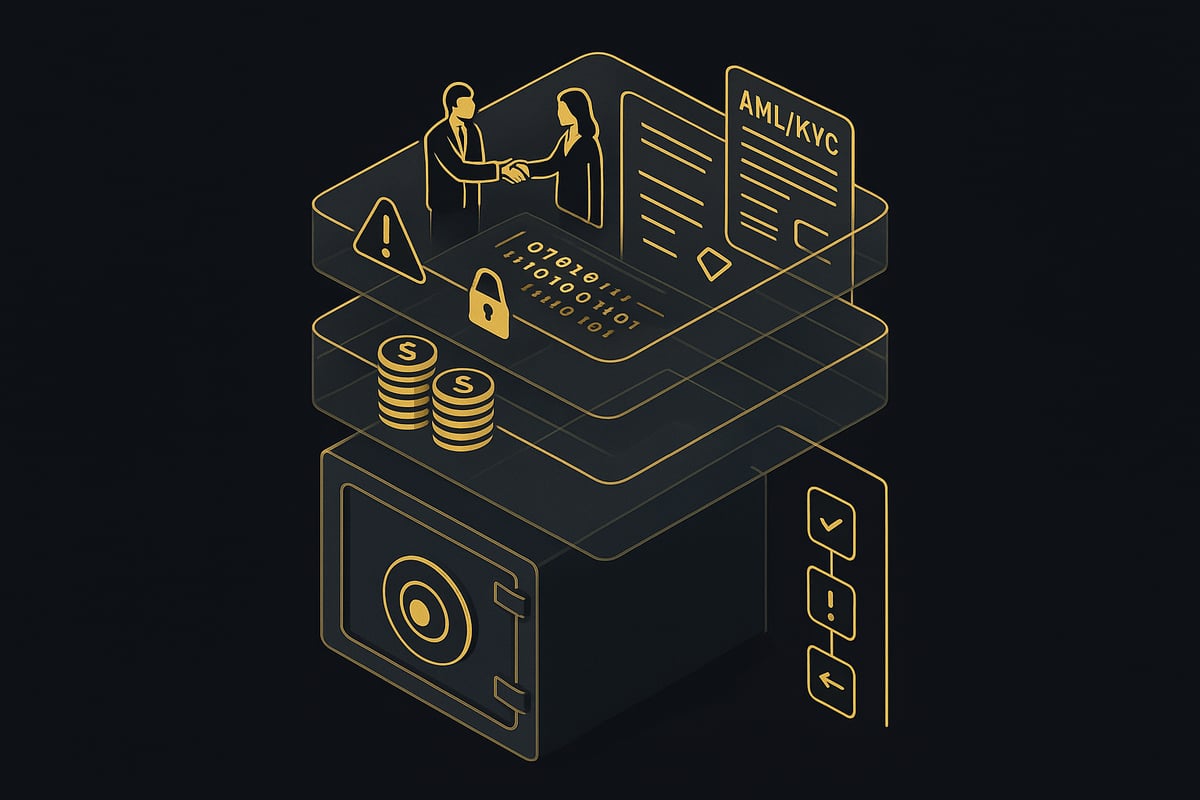
A major responsibility of any futures commission merchant is safeguarding client assets and personal information. By law, FCMs must keep customer funds in segregated accounts, separate from their own operating capital. This segregation helps shield your money from firm insolvency or misuse.
Strong cybersecurity measures are also implemented. FCMs use encryption, multi-factor authentication, and continual monitoring to protect sensitive data. If a breach or misappropriation occurs, strict protocols guide the response, including immediate notification and remediation. This robust approach ensures your assets and information remain secure throughout your relationship with a futures commission merchant.
AML/KYC Procedures: What Clients Must Provide
To comply with anti-money laundering (AML) laws, every futures commission merchant requires clients to complete rigorous Know Your Customer (KYC) checks. This process involves submitting valid identification, proof of address, and, for entities, corporate documentation. These details must be accurate and current.
Ongoing monitoring is part of the compliance landscape. FCMs may request updated documents periodically, especially for high-risk clients or large transactions. Enhanced due diligence can apply in some cases, such as politically exposed persons. Your cooperation with these requests helps the futures commission merchant maintain compliance and keep markets safe.
Reporting Suspicious Activities and Client Responsibilities
Clients play a key role in the compliance process with a futures commission merchant. If you notice any irregular account activity, errors, or possible misuse, you are responsible for reporting these concerns promptly. FCMs have dedicated procedures for handling such reports, including immediate investigation and client communication.
Steps to follow include notifying your account representative and documenting any suspicious transactions. FCMs are also required to submit reports to regulatory bodies when necessary. By staying vigilant and proactive, you help your futures commission merchant uphold the highest standards of integrity and security in the marketplace.
Navigating Disputes and Regulatory Complaints
Despite robust compliance frameworks, disputes or complaints can sometimes arise between clients and a futures commission merchant. The first step is to address the issue directly with your FCM, following their internal complaint procedures. If the matter remains unresolved, you can escalate it to the NFA or CFTC, which offer formal avenues for arbitration or mediation.
Resolution timelines are usually well-defined, and regulatory bodies ensure that your concerns are heard and addressed fairly. Keeping thorough records and understanding the escalation process empowers you to protect your interests and maintain a productive relationship with your futures commission merchant.
Selecting and Working with an FCM: Step-by-Step Guide
Choosing the right futures commission merchant is a critical part of your trading journey. The process may seem daunting, but breaking it into clear steps makes it manageable and helps you avoid costly mistakes. Here’s a practical, step-by-step guide to ensure your partnership with a futures commission merchant is both productive and secure.
Step 1: Define Your Trading Needs and Objectives
Start by clarifying what you want from your relationship with a futures commission merchant. Are you trading high volumes, or are you a retail client with modest activity? Consider which asset classes you want to access — commodities, indices, forex, or crypto futures.
Assess your risk tolerance and the level of support you’ll need. Some traders require robust research tools, while others prioritize low costs or seamless technology. Defining these objectives helps you filter out FCMs that don’t match your style.
This self-assessment forms the foundation for a successful futures commission merchant relationship.
Step 2: Research and Compare FCMs
Once you know your goals, compare futures commission merchants on key criteria. Look at reputation, financial stability, regulatory track record, fees, and technology offerings.
Here’s a quick comparison table:
| Criteria | FCM A | FCM B | FCM C |
|---|---|---|---|
| Regulatory Status | Registered | Registered | Registered |
| Margin Rates | Low | Medium | Low |
| Platform Features | Advanced | Basic | Moderate |
Review industry rankings and client satisfaction surveys. For a broader perspective, explore comprehensive trading guides to deepen your understanding of FCM-related processes and best practices.
Choosing the right futures commission merchant at this stage saves time and stress later.
Step 3: Due Diligence and Onboarding
Before committing, conduct thorough due diligence on your chosen futures commission merchant. Carefully review all disclosures, legal agreements, and compliance history.
Prepare the necessary documents for KYC and AML checks, such as identification, proof of address, and financial statements. Here’s a typical onboarding checklist:
- Complete application form
- Submit identification and tax documents
- Fund your account
- Review risk disclosures
The onboarding process ensures your futures commission merchant meets regulatory requirements and protects your assets from the outset.
Step 4: Integrate Technology and Trading Tools
Evaluate the technology your futures commission merchant offers. Does the platform support your preferred devices? Can you access APIs for algorithmic trading? Look for real-time reporting, mobile access, and customizable alerts.
Advanced analytics tools can give you a competitive edge, helping you react swiftly to market changes. Test demo accounts to ensure platform compatibility and ease of use.
A well-integrated tech stack with your futures commission merchant streamlines your trading experience and maximizes efficiency.
Step 5: Ongoing Relationship Management and Performance Review
Your work with a futures commission merchant does not end after onboarding. Regularly monitor service quality, including margin calls, reporting accuracy, and response times.
Schedule annual reviews to assess whether the FCM still fits your evolving needs. Renegotiate terms if necessary, and stay updated on regulatory or technological changes that could affect your trading.
Staying proactive with your futures commission merchant ensures your trading goals remain on track as the market evolves.
Common Pitfalls and How to Avoid Them
Many traders make avoidable mistakes with their futures commission merchant, such as overlooking hidden fees or misunderstanding margin policies.
Common pitfalls include:
- Ignoring the fine print in agreements
- Failing to monitor account activity regularly
- Not understanding risk disclosures
Learning from recent enforcement actions and client disputes can help you steer clear of trouble. Continuous education and vigilance are your best defenses when working with a futures commission merchant.
The Future of FCMs: Trends and Outlook for 2025 and Beyond
As the landscape for every futures commission merchant continues to evolve, 2025 is shaping up to be a pivotal year. Regulation, technology, and client demands are converging to change how FCMs operate and compete. Let’s explore the most important trends shaping the future.
Regulatory Evolution and Impact on FCMs
Regulatory changes remain at the forefront for every futures commission merchant. In 2025, U.S. and global authorities are introducing new frameworks for digital assets, crypto derivatives, and cross-border trading. The Commodity Futures Trading Commission (CFTC) is refining its approach, as seen in the CFTC’s Withdrawal of Operational Resilience Proposal. This decision signals a shift toward more targeted, risk-based oversight.
FCMs are also adapting to evolving anti-money laundering (AML) and customer protection rules. These changes require continuous investment in compliance systems and staff training. As regulations tighten, FCMs must stay agile to maintain their competitive edge and meet global standards.
Technology Advancements Shaping FCM Services
Technology is a game changer for the futures commission merchant industry. FCMs are rapidly adopting artificial intelligence, machine learning, and automation to streamline compliance and risk management. Blockchain and distributed ledger technologies are gaining traction for clearing and settlement, promising faster, more transparent processes.
According to the Chambers and Partners’ Fintech 2025 USA Guide, FCMs are increasing investments in digital transformation. Key innovations include:
- Automated margin calls and real-time risk alerts
- Secure client onboarding with biometric verification
- Cloud-based trading platforms for global access
These tools help FCMs deliver better client experiences and improve operational resilience.
Shifts in Client Expectations and Market Access
Client expectations are rising, and every futures commission merchant must adapt. Traders now demand faster execution, transparent pricing, and 24/7 support. Retail participation in futures markets is growing, fueled by mobile platforms and educational resources.
Global market access is also a priority. FCMs are expanding connectivity, enabling trading across asset classes and geographies. Clients expect real-time analytics, customizable dashboards, and seamless integration with research tools. Meeting these demands is crucial for FCMs to retain and attract clients in a competitive marketplace.
Competitive Landscape and FCM Consolidation
The competitive landscape for the futures commission merchant sector is shifting. Mergers, acquisitions, and new fintech entrants are driving consolidation. Some FCMs specialize in niche markets, while others offer full-service solutions.
Here is a comparison of recent trends:
| Trend | Impact on FCMs |
|---|---|
| Mergers & Acquisitions | Increased market share |
| Fintech Entrants | Innovation pressure |
| Specialization | Targeted client focus |
| Full-Service Models | Broader offerings |
These shifts are shaping how FCMs position themselves for growth and resilience.
Preparing for the Next Generation of Futures Trading
The next generation of trading will challenge every futures commission merchant to innovate. Algorithmic and high-frequency trading are now standard, requiring robust risk controls and advanced analytics. FCMs are investing in education, transparency, and client empowerment to build trust.
To stay ahead, FCMs must embrace change and foster partnerships with clients. The future promises more interconnected markets, smarter technology, and a greater focus on compliance and service. Those who adapt will lead the way in the evolving trading ecosystem.
Now that you have a solid grasp of how Futures Commission Merchants work and what to look for in 2025, it’s time to take your trading strategy to the next level. Navigating the complexities of FCMs is easier when you have tools that simplify your decisions and boost your confidence. That’s where real time signals and smart analysis make all the difference. If you want to trade with more clarity and less guesswork, it’s worth seeing how an AI powered indicator can help you spot better opportunities. Ready to make smarter moves in the markets? See Your Trading Improve With PipTrend