
In the blink of an eye, billions move through global markets thanks to hft trading. This lightning-fast approach now shapes the majority of trades, redefining how financial strategies are built and executed.
This guide cuts through the complexities of hft trading in 2025. Whether you are a trader, investor, or curious observer, you will find clear strategies, essential tools, and expert insights designed to help you stay ahead.
You will explore the fundamentals of hft trading, core strategies, cutting-edge technology, regulatory updates, risk management, and emerging trends. Ready to master the world where speed and data rule? Dive in and discover how to gain your competitive edge.
Understanding High-Frequency Trading in 2025
High-frequency trading (hft trading) has transformed financial markets, making speed and automation critical for success. In today's environment, trades are executed within milliseconds, and algorithms dominate order flow. To truly grasp the influence of hft trading in 2025, it's essential to break down its core definition, mechanics, and market impact.
What is HFT?
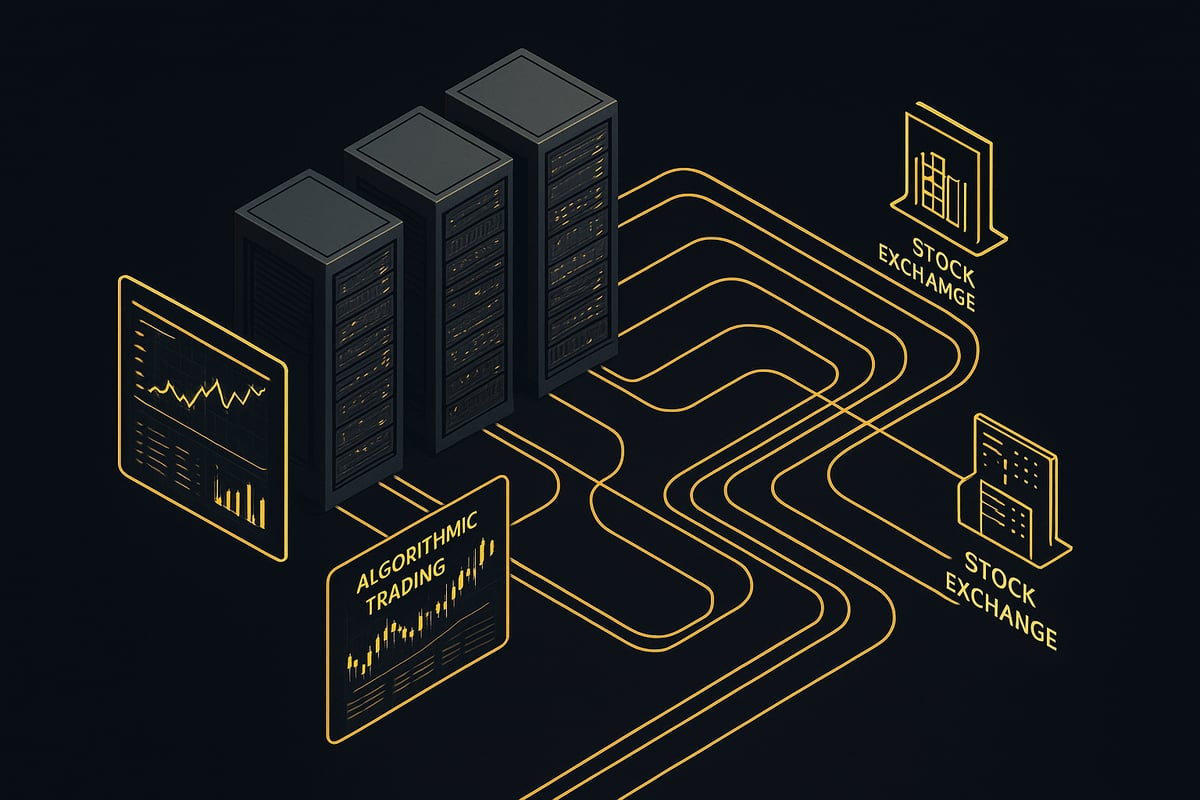
Hft trading refers to the use of automated computer algorithms to execute a vast number of orders at extremely high speeds. This approach relies on advanced technology, including low-latency networks and powerful servers, to gain an edge in the market.
Key characteristics of hft trading include:
- Execution within milliseconds or microseconds
- Handling thousands of trades per second
- Very short holding periods, often seconds or less
For example, leading hft trading firms can process over 10,000 transactions per second, capitalizing on brief price movements. According to CFI (2024), hft trading accounts for more than 50% of all US equity trading volume, highlighting its dominance.
How does hft trading compare to traditional trading? While conventional investors may hold positions for days or months and rely on in-depth analysis, hft trading focuses on rapid, frequent trades and capturing tiny price discrepancies.
| Aspect | HFT Trading | Traditional Trading |
|---|---|---|
| Speed | Milliseconds | Minutes to days |
| Volume | Thousands/second | Low to moderate |
| Holding Period | Seconds or less | Days to months |
| Analysis Approach | Algorithmic | Fundamental/Technical |
How HFT Works: Core Components
The workflow of hft trading is both sophisticated and highly technical. Each component is designed for maximum efficiency and minimal latency.
Key components of hft trading:
- Data acquisition: Real-time and historical data are essential. Hft trading systems pull from market feeds and alternative sources, such as social sentiment.
- Algorithm development: Quantitative analysts and programmers build predictive models for identifying profitable trades.
- Strategy formulation: Algorithms are translated into actionable strategies, defining entry and exit points.
- Co-location and low-latency infrastructure: Many hft trading firms place servers physically close to exchange data centers to reduce communication delay.
- Market monitoring: Algorithms continuously scan order books and price feeds for opportunities.
- Signal and order generation: Trades are executed automatically when specific criteria are met. For a deeper understanding of how trading signals guide these executions, see signals in trading explained.
- Post-trade analysis: Firms analyze performance data to refine and adapt strategies.
Below is a simplified code snippet illustrating a basic signal-based execution flow:
if price_movement > threshold and volume_spike:
 place_order('BUY')
else:
 hold_position()
Co-location and low-latency infrastructure are vital for minimizing delays, as even microseconds can determine profitability in hft trading. Additionally, ongoing post-trade analysis helps teams adapt to changing market conditions and improve future performance.
HFT’s Impact on Modern Markets
Hft trading has left a profound mark on modern financial markets, influencing everything from liquidity to risk.
Positive impacts:
- Market liquidity: Hft trading tightens bid-ask spreads, making it easier for other participants to buy and sell.
- Increased trading volume: The sheer volume of orders helps absorb large trades, stabilizing prices.
Potential drawbacks:
- Volatility: Rapid-fire orders can cause short-term price swings and, in rare cases, flash crashes.
- Systemic risk: If many algorithms react similarly, it can trigger cascading failures, as seen in the 2010 “Flash Crash.”
- High barriers to entry: Substantial technology and capital investments are required, limiting access for smaller players.
A recent industry report found that hft trading strategies can reduce bid-ask spreads by up to 50%. However, there is ongoing debate about whether these benefits outweigh the risks for long-term investors.
In summary, hft trading remains a driving force in global markets, shaping liquidity, competition, and the very structure of trading itself.
Essential HFT Trading Strategies for 2025
High-frequency trading strategies are rapidly evolving, shaping the landscape of modern financial markets. Mastering these approaches is vital for anyone seeking a competitive edge in hft trading. Below, we break down the most essential strategies for 2025, highlighting their mechanics, use cases, and why they matter.
Arbitrage Strategies
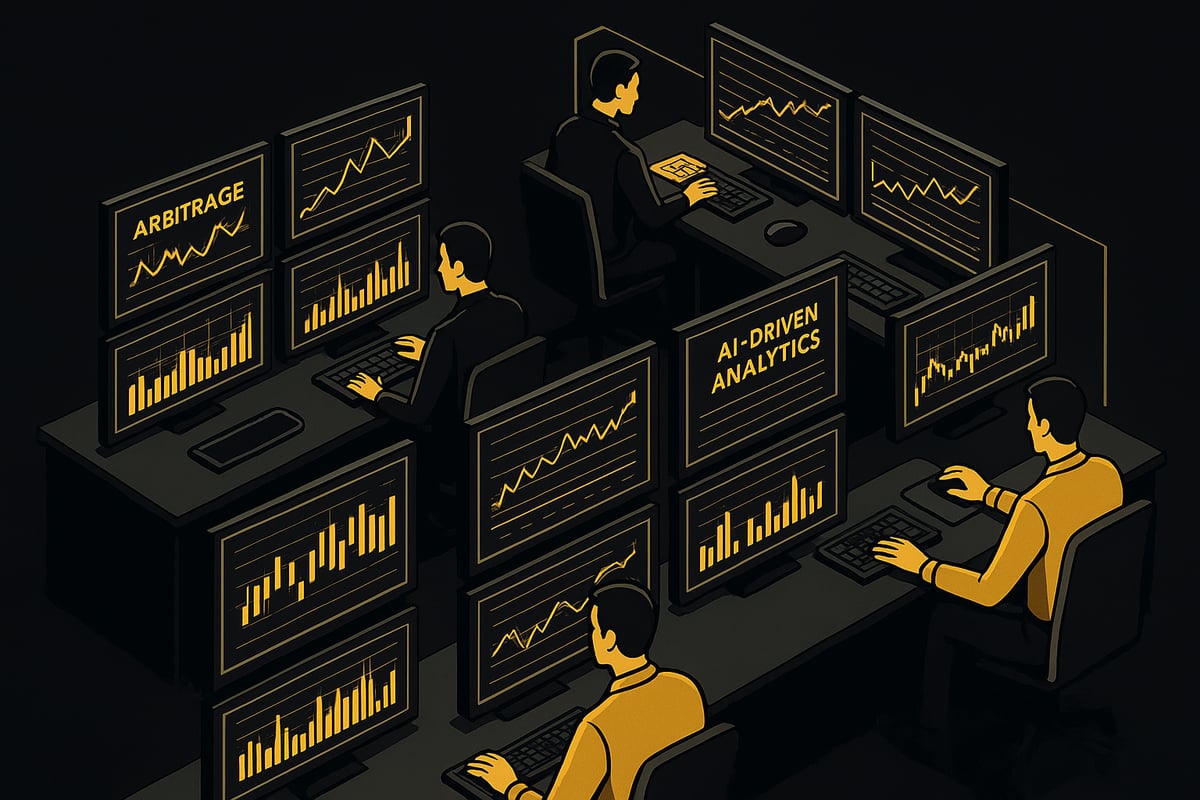
Arbitrage remains a cornerstone of hft trading, capitalizing on fleeting price discrepancies across markets. Key forms include:
- Statistical arbitrage: Using quantitative models to spot mispricings between correlated assets.
- Latency arbitrage: Exploiting time lags in price updates between trading venues.
- Cross-asset and cross-market arbitrage: Capturing spreads between assets like forex pairs or crypto exchanges.
A classic example involves simultaneously buying and selling the same stock on NYSE and NASDAQ to lock in a profit. These strategies are foundational, with industry data showing that hft trading’s arbitrage techniques continue to drive significant profitability.
Market Making
Market making is central to hft trading, providing liquidity by continuously quoting buy and sell prices. Firms profit from the bid-ask spread while managing inventory risk. Key aspects include:
- Posting simultaneous buy and sell orders to maintain tight spreads.
- Adjusting quotes in real time based on market flow and volatility.
- Balancing order flow to manage inventory and minimize exposure.
Many hft trading firms serve as market makers in S&P 500 futures, helping stabilize markets and ensuring participants can transact efficiently.
Momentum and Trend-Following
Momentum and trend-following strategies in hft trading use advanced analytics to identify and ride short-term price movements. Algorithms scan order books and price action, searching for patterns and shifts that signal a developing trend.
Machine learning and AI enhance these systems, enabling split-second detection of momentum. For example, algorithms may spot a rapid influx of buy orders, triggering trades that profit from the ensuing surge. In hft trading, speed and adaptability are critical for capturing these fleeting opportunities.
Event-Driven Strategies
Event-driven hft trading strategies leverage real-time news, earnings releases, and macroeconomic data to execute ultra-short-term trades. Natural language processing algorithms parse news feeds instantly, extracting actionable signals.
A prominent example is reacting to central bank announcements within milliseconds, capitalizing on sharp price swings before the broader market adjusts. This approach requires powerful infrastructure and sophisticated models, as hft trading success hinges on acting faster than competitors.
Order Anticipation and Sniping
Order anticipation and sniping involve detecting large institutional trades, often hidden as “iceberg” orders in the market. Hft trading systems analyze order books for patterns that suggest the presence of hidden liquidity.
Techniques include:
- Monitoring order book depth and changes in quote sizes.
- Identifying unusual trading patterns that precede large moves.
- Executing trades just ahead of detected institutional orders.
These practices spark debate, as they test the boundaries of market fairness and regulatory oversight in hft trading.
Adaptive and AI-Driven Approaches
The future of hft trading increasingly belongs to adaptive, AI-powered strategies. Machine learning models continuously refine themselves based on market feedback, integrating alternative data sources like social media or satellite imagery.
AI-driven hft trading systems have outperformed traditional, rule-based algorithms by dynamically adjusting to new patterns. For a deeper dive into how artificial intelligence is revolutionizing these strategies, explore AI in trading strategies. The ability to learn and evolve in real time provides a decisive edge in the ever-changing landscape of hft trading.
Tools, Infrastructure, and Technology Stack for HFT
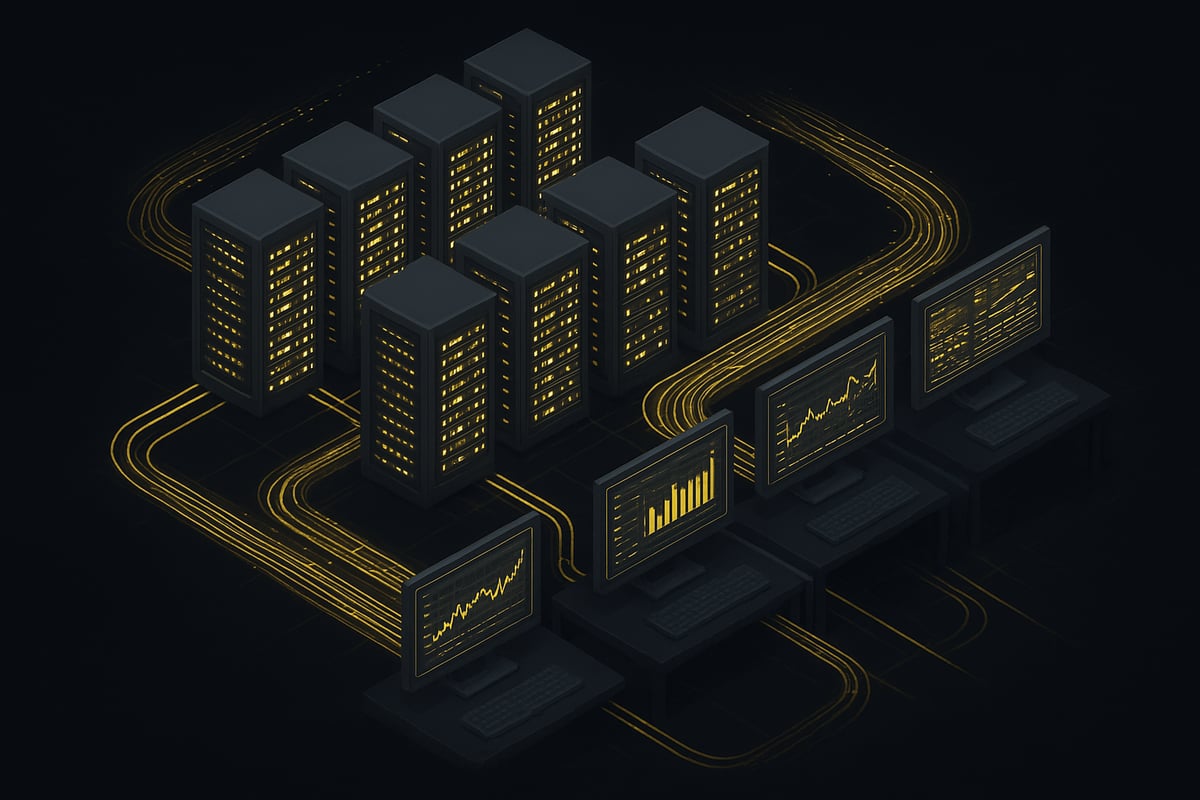
Navigating the technology landscape of hft trading in 2025 requires a deep understanding of the essential tools, platforms, and systems that power modern strategies. Each component, from data acquisition to infrastructure resilience, plays a crucial role in maintaining speed, reliability, and a competitive edge.
Data Acquisition and Management
Data is the lifeblood of hft trading. Firms rely on low-latency, high-fidelity market data feeds to react in real time. These feeds include order book snapshots, tick-level trade data, and alternative sources such as social sentiment and news.
Historical data is equally vital. Traders use it for backtesting, allowing them to simulate strategies under various market conditions before deployment. Integrating exchange APIs directly into proprietary systems ensures real-time data flow, reducing delays.
Key considerations for hft trading data infrastructure:
- Redundant data sources to prevent outages
- Smart caching for rapid access
- Scalable storage for massive datasets
A robust data management stack ensures that every millisecond counts in hft trading.
Algorithm Development Platforms
The core of hft trading lies in its algorithms. Developers use programming languages such as Python for rapid prototyping, C++ for speed, and Java for scalability. Specialized libraries support quantitative modeling, machine learning, and statistical analysis.
Platforms often include backtesting frameworks and simulation environments, enabling teams to refine strategies before deploying them live. Access to trading indicators for algorithms is crucial, as these indicators form the building blocks of predictive models in hft trading.
Essential features of algorithm development platforms:
- Version control for collaborative coding
- Integrated debugging and performance profiling
- Modular architecture for rapid strategy iteration
The right platform accelerates innovation and minimizes costly errors in hft trading.
Execution and Order Routing Systems
Fast and efficient execution is the hallmark of successful hft trading. Smart order routers analyze multiple venues, seeking the best price and liquidity. Co-location services, where servers are physically close to exchange data centers, further reduce latency and improve fill rates.
Some firms leverage microwave or laser transmission for ultra-low-latency connections. These technologies can shave microseconds off round-trip times, which is critical for hft trading strategies.
Execution systems include:
- Adaptive order types (iceberg, hidden, pegged)
- Real-time venue analysis
- Failover mechanisms for uninterrupted trading
Optimized execution ensures that hft trading strategies remain competitive in volatile markets.
Risk Management and Compliance Tools
Risk control is non-negotiable in hft trading. Real-time monitoring tools track position limits, exposure, and margin requirements. Automated kill switches and circuit breakers prevent runaway losses from unexpected market events or system failures.
Compliance tools automatically generate audit trails, ensuring regulatory requirements are met. These systems keep hft trading operations transparent and accountable.
Key components of risk management:
- Pre-trade and post-trade checks
- Automated alerts for limit breaches
- Integrated compliance dashboards
A proactive risk management framework safeguards both capital and reputation in hft trading.
Monitoring, Analytics, and Post-Trade Analysis
Continuous monitoring is essential for performance and anomaly detection in hft trading. Dashboards display live metrics, latency statistics, and real-time P&L. Advanced analytics tools attribute profits and losses to specific strategies, helping teams refine their approach.
Post-trade analysis leverages AI for pattern recognition and to identify inefficiencies. By reviewing every trade, hft trading firms can iterate quickly and adapt to market changes.
Features of effective monitoring systems:
- Customizable alerts and reports
- Integration with data visualization tools
- Automated reconciliation processes
Data-driven insights fuel ongoing success in hft trading environments.
Security and Infrastructure Resilience
Security is a top priority in hft trading, given the value of proprietary algorithms and sensitive data. Firms deploy multi-layered cybersecurity defenses, including encryption, firewalls, and intrusion detection systems.
Resilience is achieved through redundant hardware, geographically dispersed data centers, and automated failover protocols. This ensures uptime and business continuity, even during hardware failures or cyberattacks.
Best practices for hft trading infrastructure:
- Regular penetration testing
- Real-time system health monitoring
- Disaster recovery plans with multi-site architecture
A secure, resilient infrastructure forms the backbone of sustainable hft trading operations.
Regulatory Landscape and Compliance in 2025
Navigating the regulatory landscape is essential for anyone involved in hft trading. As financial markets evolve, so do the rules that govern them. In 2025, compliance is more complex and global than ever, requiring firms to stay agile and informed.

Key Regulatory Developments
In 2025, hft trading faces increased regulatory scrutiny worldwide. Major markets such as the US, EU, and Asia have introduced rules targeting speed, transparency, and market integrity. The US SEC and EU ESMA have rolled out updates, including "speed bumps" to slow certain trades and tighter order-to-trade ratio limits to reduce excessive messaging.
Asia is also tightening oversight. For example, China has announced plans to impose higher transaction fees on hft trading to curb excessive activity and promote stability. You can read more about these changes in China’s Regulatory Measures on High-Frequency Trading. These global shifts reflect a broader trend toward harmonizing regulations to address cross-border trading risks.
Compliance Best Practices for HFT Firms
Stringent compliance is now a competitive necessity in hft trading. Firms must implement real-time surveillance systems capable of detecting market abuse or manipulative behaviors instantly. Automated tools monitor trades, flag anomalies, and ensure adherence to regulatory thresholds.
Maintaining robust audit trails is equally important. These records document every order, modification, and execution, supporting transparency and facilitating regulatory reviews. Additionally, automated compliance checks are integrated into order flow systems to prevent unauthorized trades before they reach the market.
Ethical Considerations and Market Fairness
Ethical questions remain at the forefront of hft trading regulation. Authorities and market participants debate the impact of rapid-fire algorithms on fairness and market health. Concerns include potential manipulation, unequal access to technology, and the social consequences of automated trading.
Regulators have responded by imposing fines on hft trading firms found guilty of abusive practices. These measures aim to deter misconduct and reassure investors that markets remain fair, transparent, and open to all participants.
Preparing for Future Regulatory Changes
The regulatory environment for hft trading is dynamic, with new challenges emerging as technology advances. Firms must anticipate rules targeting AI-driven and cross-asset hft trading, which could reshape compliance requirements. Flexible frameworks are essential, allowing quick adaptation to changes such as potential transaction taxes or new speed restrictions.
Proactive scenario planning and regular policy reviews help firms stay ahead. By investing in compliance infrastructure now, hft trading firms can reduce risk and maintain their edge in a rapidly shifting landscape.
Risk Management and Challenges in HFT
Navigating the landscape of hft trading in 2025 requires a clear-eyed approach to risk management and awareness of evolving challenges. As technology accelerates, so do the risks, making robust controls and proactive strategies essential for survival and success.
Market and Systemic Risks
Hft trading is uniquely exposed to both market and systemic risks due to its reliance on speed and automation. Flash crashes can wipe out liquidity in seconds, leaving markets in disarray. The infamous 2010 flash crash, where the Dow plummeted nearly 1,000 points before rebounding, highlighted how algorithmic strategies can amplify volatility.
These risks often stem from highly correlated trading behaviors, with multiple algorithms reacting to the same signals. When liquidity evaporates, even the most sophisticated hft trading strategies can become vulnerable to rapid losses. Market participants must remain vigilant for scenarios where systemic failures cascade across interconnected platforms.
Key market and systemic risks include:
- Sudden liquidity droughts
- Extreme price swings
- Chain reactions from correlated algorithms
Understanding these threats is critical for anyone involved in hft trading.
Technical and Operational Risks
The technical backbone of hft trading is both its strength and its Achilles' heel. Hardware failures, software bugs, and connectivity issues can disrupt operations in milliseconds, causing missed opportunities or unintended trades. A single coding error has led to multi-million dollar losses in the past, as seen in notable industry incidents.
Continuous development and deployment cycles raise the potential for operational glitches. Rigorous testing environments, real-time monitoring, and redundant systems are necessary to minimize these risks. Hft trading firms must also guard against data feed interruptions, which can skew algorithm decisions and introduce further instability.
Operational risk factors include:
- Faulty hardware or networking equipment
- Inadequate software testing
- Unreliable market data sources
Mitigating technical risks is a non-negotiable part of sustainable hft trading.
Competitive and Strategic Risks
The hft trading field is fiercely competitive, with participants locked in an ongoing technological arms race. Strategies that deliver an edge today may become obsolete tomorrow as rivals innovate and adapt. The costs of maintaining state-of-the-art infrastructure and talent can be immense, pressuring firms to constantly reinvest in their operations.
Strategic risks in hft trading also arise from market saturation. As more players deploy similar algorithms, profit margins can erode, and the window for exploiting inefficiencies narrows. This dynamic environment demands flexibility and a commitment to ongoing research and development.
Notable competitive and strategic risks:
- Rapid obsolescence of trading models
- Escalating infrastructure costs
- Shrinking arbitrage opportunities
Staying ahead means embracing change and anticipating the next evolution in hft trading.
Risk Mitigation Techniques
Effective risk management is the cornerstone of any successful hft trading operation. Firms employ a suite of techniques to safeguard capital and ensure compliance with regulatory standards. Real-time risk limits, circuit breakers, and automated kill switches help halt runaway losses before they escalate.
Diversifying strategies across asset classes and markets reduces exposure to single points of failure. Extensive simulation and stress testing prepare firms for extreme scenarios, making their systems more resilient. For a deeper dive into robust risk controls, see risk management in trading.
Key mitigation techniques include:
- Automated monitoring of position and exposure limits
- Instant shutdown protocols for system anomalies
- Scenario analysis using historical and synthetic data
By continuously refining these practices, hft trading firms enhance their ability to navigate uncertainty and seize opportunity.
Future Trends and Innovations in HFT
The future of hft trading is being shaped by rapid technological advancements, new data sources, and evolving market structures. As we look ahead to 2025, traders and firms must stay alert to these trends to remain competitive and compliant. Below, we explore the most impactful innovations driving the next chapter of hft trading.
AI and Machine Learning Integration
Artificial intelligence and machine learning are revolutionizing hft trading by enabling algorithms to learn and adapt in real time. Deep learning models, such as convolutional and recurrent neural networks, can now identify complex patterns across vast datasets faster than ever.
Recent breakthroughs in multi-agent reinforcement learning frameworks, like JaxMARL-HFT: GPU-Accelerated Multi-Agent Reinforcement Learning for HFT, show how collaborative AI agents can optimize trading strategies dynamically. These systems continuously self-improve, often outperforming traditional rule-based approaches.
In practice, this means hft trading firms can swiftly adjust to market shifts, reduce slippage, and capture fleeting opportunities. The integration of AI is no longer a luxury, but a necessity for those aiming to lead in speed and precision.
Alternative Data and Advanced Analytics
Access to alternative data is transforming how hft trading strategies are developed and executed. Traders now leverage information from social media sentiment, satellite imagery, IoT sensors, and even web traffic to gain a unique market edge.
For example, algorithms can analyze Twitter sentiment in real time, predicting news-driven price swings before conventional data sources react. Advanced analytics platforms use these unconventional datasets to enhance signal detection and refine entry and exit points.
This trend is pushing hft trading beyond traditional market data, allowing firms to spot emerging patterns and anomalies that others might miss. As competition intensifies, the ability to harness diverse data sources will become a critical differentiator.
Quantum Computing and Next-Gen Infrastructure
Quantum computing has the potential to redefine the speed and complexity of hft trading. While still in early stages, quantum processors can solve optimization problems and simulate market scenarios much faster than classical systems.
Alongside quantum advances, next-gen hardware like field-programmable gate arrays (FPGA) and application-specific integrated circuits (ASIC) are reducing latency to microseconds. These innovations enable hft trading algorithms to process and act on market information almost instantaneously.
As infrastructure evolves, firms are investing heavily in both quantum research and custom hardware to maintain their technological edge. The race for ultra-low latency and high-throughput is only accelerating.
The Evolving Role of HFT in Global Markets
Hft trading is expanding rapidly into new asset classes, including cryptocurrencies and emerging markets. As digital assets mature, they present fertile ground for algorithmic strategies and liquidity provision.
According to the High-Frequency Trading Market Size and Growth Forecast, the global hft trading market is projected to grow steadily through 2030, driven by increasing adoption and technological innovation.
Hft trading is also influencing market structure, tightening spreads and deepening liquidity across the globe. Looking ahead, expect its share of trading volume to rise as more markets embrace automation and data-driven decision making.
After exploring the fast-paced world of HFT, its strategies, and the critical role that real-time data and reliable signals play in staying ahead, it’s clear that having the right tools can make all the difference. If you’re ready to put these insights into action and want to trade with more confidence and clarity, why not see how an AI-powered indicator can support your goals? You don’t have to guess your next move—you can use intelligent, instant signals tailored for dynamic markets.
See Your Trading Improve With PipTrend