
Imagine having the power to trade the future direction of the S&P 500, the world’s benchmark stock market index, using accessible and flexible financial tools. With s and p 500 futures, both new and experienced traders can participate in market movements, regardless of whether prices rise or fall.
This beginner’s guide will break down s and p 500 futures in clear, practical terms. You will learn the basics, discover the main benefits and risks, follow a step-by-step trading process, explore essential strategies, and find top resources to help you trade confidently in 2025.
Ready to unlock new trading possibilities? Let’s get started.
Understanding S&P 500 Futures: The Basics
Navigating the world of s and p 500 futures starts with a clear grasp of what these instruments are and why they matter. By understanding their structure, benefits, and how they compare to other investment tools, beginners can make informed decisions as they step into futures trading.
What are S&P 500 Futures?
S and p 500 futures are standardized financial contracts that allow traders to speculate on the future value of the S&P 500 Index. These contracts represent an agreement to buy or sell the index at a predetermined price on a specified date. Unlike buying individual stocks, s and p 500 futures offer exposure to the entire index, reflecting the performance of the 500 largest publicly traded U.S. companies.
Each contract has specific features, such as a tick size (the minimum price movement), contract size (the dollar value each point move represents), and set expiration dates. The most widely traded version is the E-mini S&P 500 futures contract, which is listed on the CME Group. For example, if the S&P 500 index is trading at 5,000 and you buy one E-mini contract, each one-point movement equals $50. This clarity in structure makes s and p 500 futures accessible to both institutional and retail traders.
To understand the precise specifications and trading hours, you can refer to the CME Group S&P 500 Futures Contract Specifications for up-to-date details. With transparent rules and high liquidity, these contracts serve as a foundational tool in global financial markets.
Why Trade S&P 500 Futures?
Trading s and p 500 futures offers several compelling advantages for both new and experienced investors. One of the primary benefits is leverage, which allows you to control a large notional value with a relatively small amount of capital. This capital efficiency means your potential gains, as well as losses, are magnified.
Another key advantage is the ability to profit in both rising and falling markets. S and p 500 futures can be bought if you expect the index to rise, or sold short if you anticipate a decline. This flexibility is especially appealing during volatile periods. Additionally, these futures trade nearly 24 hours a day, providing more opportunities to react to global events compared to regular stock market hours.
S and p 500 futures are extremely popular, with significant participation from both institutional and retail traders. In recent years, trading volumes have reached record highs, reflecting their central role in global finance. Whether used for hedging, speculation, or portfolio diversification, s and p 500 futures have demonstrated strong liquidity and reliability.
S&P 500 Futures vs. Other Instruments
When considering s and p 500 futures, it is helpful to compare them to other common financial products like ETFs, stocks, and options. Unlike ETFs, which track the index and can be bought or sold like shares, futures provide direct exposure with greater leverage and generally lower transaction costs for large positions.
A key advantage of s and p 500 futures is their deep liquidity and efficient tax treatment for U.S. traders, often making them more attractive for active strategies. Options, on the other hand, offer defined risk but can be more complex for beginners.
For example, using an ETF for index exposure does not provide the same leverage or round-the-clock trading flexibility as s and p 500 futures. This makes futures a preferred choice for traders seeking to capitalize on short-term market movements or hedge portfolio risk with precision.
How S&P 500 Futures Work: Core Mechanics
Understanding the inner workings of s and p 500 futures is essential for anyone looking to trade this popular financial instrument. These contracts are built on precise mechanics that determine how they are priced, traded, and settled. By breaking down the core concepts of pricing, margin, leverage, and contract cycles, you can approach s and p 500 futures trading with greater confidence and clarity.
Pricing and Settlement
The price of s and p 500 futures is closely linked to the current value of the S&P 500 index. However, several factors influence the exact futures price, including interest rates, expected dividends, and time until expiration. This relationship is known as the "cost of carry" model.
Futures contracts are typically settled in one of two ways:
- Cash settlement: Most s and p 500 futures, including the E-mini, are cash-settled, meaning you receive or pay the difference between your entry and exit price.
- Physical delivery: Rare for index futures, but some contracts in other markets require the actual delivery of the underlying asset.
Each day, positions are marked to market. This means gains and losses are settled daily, and your account balance updates to reflect the current market value.
To see real-time pricing and track current market movements, you can refer to a S&P 500 futures live chart, which provides up-to-the-minute data.
Margin and Leverage
Trading s and p 500 futures requires a margin deposit, which acts as collateral to cover potential losses. There are two main types of margin:
- Initial Margin: The upfront amount needed to open a position.
- Maintenance Margin: The minimum balance to keep the position open.
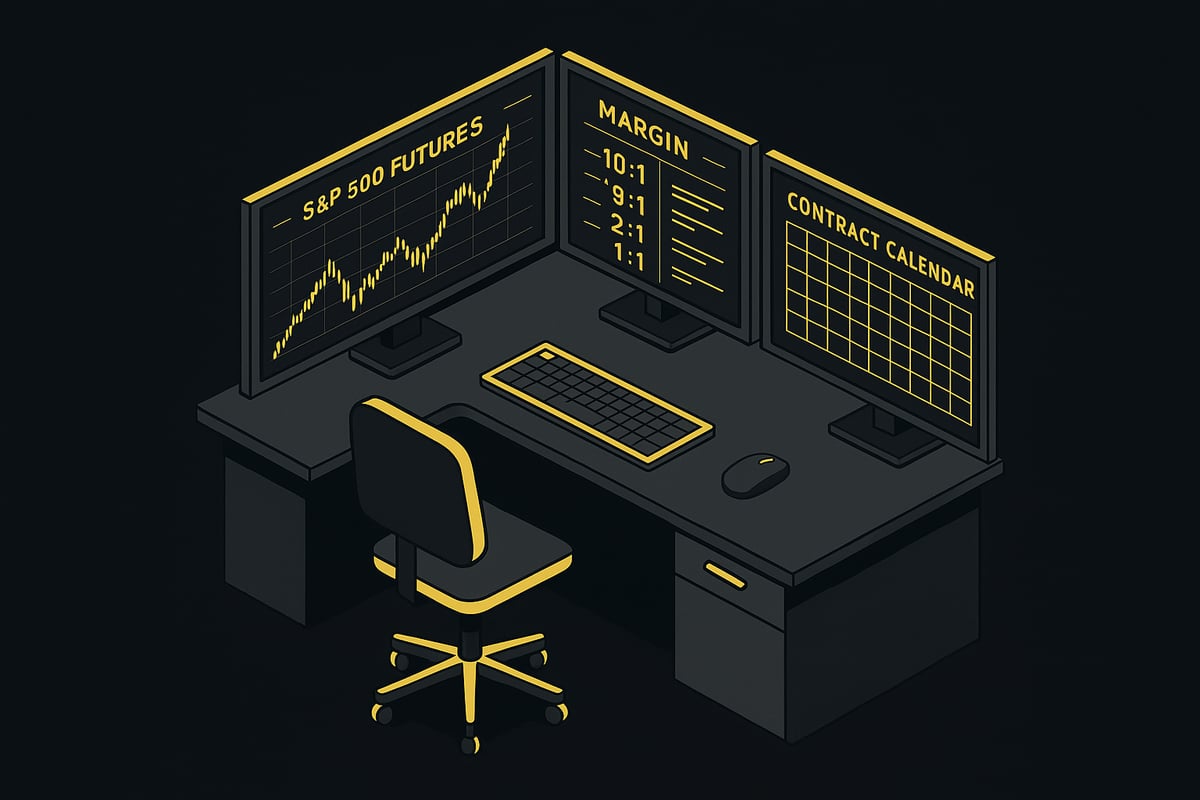
Futures trading is leveraged, allowing you to control a large contract with a relatively small deposit. For example, a single E-mini S&P 500 futures contract might require an initial margin of around $12,000, while the notional value could exceed $200,000.
| Margin Type | Example Amount | Purpose |
|---|---|---|
| Initial Margin | $12,000 | To open a position |
| Maintenance Margin | $10,000 | To keep the position active |
If your account falls below the maintenance margin, you may receive a margin call and need to add funds or close positions. Leverage increases both potential gains and losses, making risk management critical when trading s and p 500 futures.
Expiration, Rollover, and Contract Months
S and p 500 futures contracts have specific expiration months: March, June, September, and December. Each contract has a set lifespan, and as expiration approaches, traders must decide whether to close their positions or "roll" them forward to the next contract month.
At expiration, most s and p 500 futures are cash-settled, meaning your profit or loss is realized without any physical delivery. Rolling a contract involves closing the expiring position and opening a new one in a later month to maintain index exposure.
Being aware of contract cycles and expiration dates is vital. This ensures that you avoid unexpected settlement and maintain your intended market exposure when trading s and p 500 futures.
Getting Started: Step-by-Step Guide to Trading S&P 500 Futures
Starting your journey with s and p 500 futures can seem overwhelming at first. By breaking down the process into manageable steps, you can approach the market with confidence and clarity. Let’s walk through each essential stage to get you up and running.
Step 1: Setting Up a Futures Trading Account
Before you can trade s and p 500 futures, you need a dedicated futures trading account with a regulated broker. Look for a broker that is registered with the CFTC and NFA, offers competitive fees, reliable customer support, and a user-friendly trading platform.
The account approval process will require you to provide identification and answer questions about your trading experience and risk tolerance. Minimum deposit requirements vary, typically starting from a few thousand dollars for basic accounts. Always review the broker’s margin policies and available contract types.
For a comprehensive introduction to key trading concepts, explore this Trading for beginners resource, which can help you build a strong foundation before entering the s and p 500 futures market.
Step 2: Learning the Trading Platform
Once your account is active, take time to familiarize yourself with your broker’s trading platform. Most platforms for s and p 500 futures feature real-time quotes, customizable charts, and straightforward order entry systems.
Start by exploring the main dashboard, watchlists, and charting tools. Many brokers offer demo accounts, allowing you to practice trading s and p 500 futures with simulated funds. This is an excellent way to learn platform features and order execution without risking real capital.
Common order entry types include market, limit, and stop orders. Get comfortable with these, as well as with viewing your open positions and account balances.
Step 3: Understanding Order Types and Execution
Successful s and p 500 futures trading requires a clear grasp of order types and how they execute in the futures market. The main order types are:
- Market Order: Executes instantly at the best available price.
- Limit Order: Fills only at your specified price or better.
- Stop Order: Becomes a market order when a specified price is reached.
For example, if you buy one s and p 500 futures contract at 4,800, you might set a stop loss at 4,750 and a take profit at 4,850. This approach helps automate risk management and lock in gains or limit losses.
Here’s a simple code example for clarity:
Buy 1 S&P 500 Futures @ 4,800
Stop Loss: 4,750
Take Profit: 4,850
Step 4: Risk Management Essentials
Managing risk is crucial when trading s and p 500 futures. Start by determining your position size based on your account balance and how much you are willing to risk per trade, typically 1–2%.
Always use stop-loss orders to protect against sudden adverse market moves. Trailing stops can help you capture profits as the market moves in your favor. Avoid overleveraging, as the leverage available in s and p 500 futures can amplify both gains and losses.
Keep a trading journal to track your decisions, outcomes, and areas for improvement. This disciplined approach reduces emotional trading and helps build consistency.
Step 5: Placing Your First S&P 500 Futures Trade
With your account funded and your platform mastered, you are ready to place your first s and p 500 futures trade. Begin by analyzing the market using basic technical or fundamental analysis to identify a potential entry point.
Let’s walk through a sample trade:
- Identify the trend using a moving average on the s and p 500 futures chart.
- Place a buy order if the price is above the moving average and market conditions align.
- Set your stop loss and take profit levels before confirming the trade.
- Monitor your open position, adjusting your stop or target as needed based on market developments.
Remember, patience and discipline are your best allies. By following this structured process, you can build confidence and skill as you navigate the world of s and p 500 futures.
Key Strategies for Beginners in S&P 500 Futures
Mastering s and p 500 futures requires a blend of the right mindset, proven strategies, and a clear understanding of the market’s unique characteristics. Beginners should start with foundational approaches and gradually expand their toolkit. Below, we break down key strategies to help new traders build confidence and consistency when trading s and p 500 futures.
Day Trading vs. Swing Trading
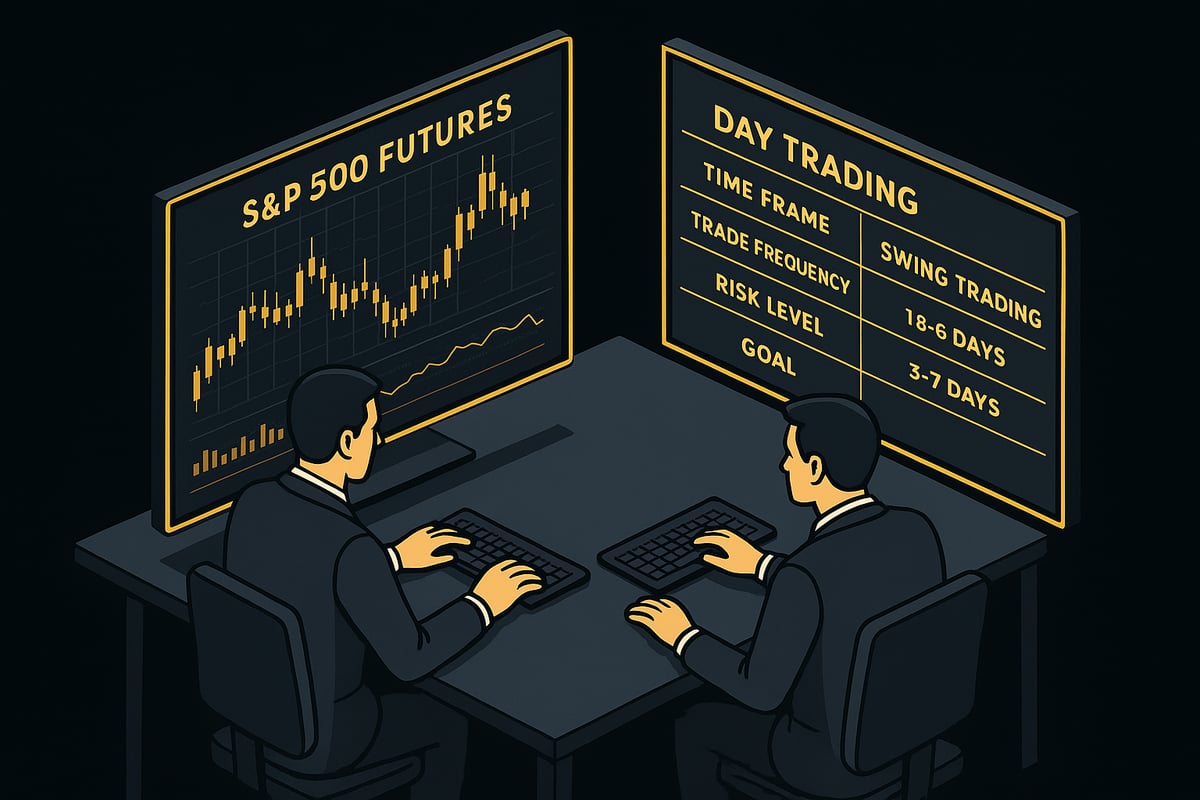
Choosing between day trading and swing trading is a crucial first step for anyone starting with s and p 500 futures. Day trading focuses on making multiple trades within a single session, aiming to capitalize on short-term price movements. This approach demands constant attention and quick decision-making.
Swing trading, in contrast, involves holding positions for several days or even weeks. Traders seek to profit from broader trends, using less frequent but potentially larger trades. Swing trading often suits those who cannot monitor the markets all day.
Comparison Table:
| Feature | Day Trading | Swing Trading |
|---|---|---|
| Timeframe | Intraday (minutes–hours) | Multi-day (days–weeks) |
| Trade Volume | High | Lower |
| Risk Exposure | Short-term | Overnight/weekend gaps |
| Analysis Type | Technical focus | Technical & fundamental |
For s and p 500 futures, beginners may find swing trading more manageable at first, as it allows more time for analysis and decision-making.
Technical and Fundamental Analysis
Succeeding with s and p 500 futures means mastering both technical and fundamental analysis. Technical analysis involves using indicators such as moving averages, RSI, and MACD to spot trends and entry points. These tools help traders anticipate price movements based on historical data.
Fundamental analysis, meanwhile, focuses on economic news, earnings reports, and macroeconomic events that can move the s and p 500 futures market. For example, Federal Open Market Committee (FOMC) announcements often trigger sharp price swings. Being aware of these events helps traders adjust their strategies accordingly.
Combining technical signals with fundamental insights gives traders a fuller picture, helping them make more informed decisions when trading s and p 500 futures.
Managing Volatility and Market Risks
Volatility is a hallmark of s and p 500 futures, especially during major news releases or geopolitical events. Beginners must learn to manage this volatility to protect their capital.
Key strategies include trading smaller positions during high-volatility periods and always knowing when key economic reports are scheduled. Using economic calendars and real-time news feeds helps traders stay informed and react quickly.
For instance, market volatility often spikes after unexpected policy changes or global events, making risk management essential for anyone trading s and p 500 futures.
Avoiding Common Mistakes
Many new traders in s and p 500 futures fall into avoidable pitfalls. Overtrading, revenge trading after losses, and ignoring stop-losses are common errors. Data from 2023 shows that lack of discipline and poor risk management are leading causes of losses for beginners.
To avoid these mistakes, always use stop-loss orders, size positions appropriately, and resist the urge to trade outside your plan. Continuous education is also vital, and resources like the Index trading guide provide valuable context for understanding how s and p 500 futures fit within broader index trading strategies.
By staying disciplined and learning from both successes and setbacks, beginners can build a strong foundation for long-term success in s and p 500 futures.
Costs, Risks, and Regulatory Considerations
Understanding the costs, risks, and regulations associated with s and p 500 futures is essential for every beginner. These factors shape your trading experience and directly impact your bottom line. Let’s break down what you need to know before placing your first trade.
Trading Costs and Fees
When trading s and p 500 futures, understanding the full cost structure is crucial. Traders pay several types of fees, which can affect profitability. The main costs include exchange fees, broker commissions, and potential margin interest if you’re borrowing funds.
Here’s a simple table showing a typical round-trip cost for one contract:
| Cost Type | Typical Amount (per contract) |
|---|---|
| Exchange Fee | $1.20 |
| Broker Commission | $0.50 – $2.00 |
| Clearing Fee | $0.25 |
| Total (low end) | $1.95 |
| Total (high end) | $3.45 |
These fees might seem small, but they add up quickly, especially for active traders. In addition, some brokers charge data or platform fees. Always check your broker’s fee schedule to avoid surprises when trading s and p 500 futures.
Tax Implications
S and p 500 futures are taxed differently than stocks or ETFs in the United States. Most contracts qualify for IRS Section 1256 tax treatment. This means that, regardless of how long you hold the futures contract, your profit or loss is split: 60% is taxed at the long-term capital gains rate, and 40% at the short-term rate.
This blended tax rate can be advantageous compared to regular stock trading, where short-term trades are fully taxed at your ordinary income rate. It’s wise to consult a tax professional to ensure you’re reporting your s and p 500 futures trades correctly and taking advantage of any potential tax benefits.
Main Risks in S&P 500 Futures Trading
S and p 500 futures offer significant opportunities, but they also come with unique risks. The primary risks include:
- Leverage Risk: Futures require only a small margin deposit, so losses can exceed your initial investment.
- Gap Risk: Sudden market moves, especially overnight, can cause prices to jump, triggering larger losses.
- Liquidity Risk: While s and p 500 futures are highly liquid, extreme market events may reduce liquidity and widen bid-ask spreads. For recent data on trading volumes and liquidity, review the CME Group Q1 2024 Equity Insights.
- Margin Calls: If your account balance falls below the maintenance margin, you’ll need to deposit more funds or risk having your position closed.
By recognizing these risks, you can develop strategies to protect your capital when trading s and p 500 futures.
Regulatory Bodies and Protections
U.S. futures trading is strictly regulated to protect traders. The Commodity Futures Trading Commission (CFTC) oversees the industry, while the National Futures Association (NFA) enforces compliance and ethical standards. Before opening an account to trade s and p 500 futures, always verify your broker’s registration with these agencies.
Regulators help prevent fraud and ensure fair trading practices. If a broker seems suspicious or is not listed with the CFTC or NFA, avoid them. Staying compliant with regulations is a key safeguard for anyone trading s and p 500 futures.
Essential Tools and Resources for S&P 500 Futures Beginners
Navigating the world of s and p 500 futures requires more than just market knowledge. Having the right educational materials, trading platforms, data sources, and a supportive community can make all the difference for beginners. This section outlines the must-have resources and tools to help you build a solid foundation and continually improve your trading skills.
Top Educational Resources
Building your knowledge is the first step toward confident s and p 500 futures trading. Start with beginner-friendly books like "Trading Futures for Dummies" or "The Complete Guide to Futures Markets." These texts cover essential concepts, market mechanics, and practical tips.
Online courses and webinars are invaluable for hands-on learning. Platforms such as CME Group offer free webinars and interactive materials tailored for futures traders. For a structured overview of SPX futures, the SPX futures overview provides clear explanations and contract details relevant to s and p 500 futures.
Consider using simulators provided by exchanges, which allow you to practice trading without risking real capital. Always verify that the educational resource is up to date and relevant to current market conditions.
News, Data, and Analysis Platforms
Timely information is critical when trading s and p 500 futures. Real-time data providers like Bloomberg, Reuters, and TradingView deliver up-to-the-second price quotes, volume statistics, and market sentiment.
Economic calendars are essential for tracking major events that can impact futures prices, such as Federal Reserve meetings, earnings reports, and employment data releases. Many platforms integrate news feeds and alerts, keeping you informed about sudden shifts in market direction.
Access to reliable analysis tools, including technical indicators and chart overlays, enhances your ability to interpret trends and identify trade opportunities in the s and p 500 futures market.
Trading Tools and Simulators
Practical experience is crucial for mastering s and p 500 futures. Most brokers offer demo accounts where you can practice order entry, risk management, and trade execution in a risk-free environment.
Look for trading platforms with intuitive interfaces, customizable charting, and advanced order types. Tools like NinjaTrader and MetaTrader support futures trading, and their simulators closely mimic live market conditions.
Simulators help you test strategies, manage simulated portfolios, and gain confidence before transitioning to real s and p 500 futures trading. Prioritize platforms that provide robust historical data for thorough backtesting.
Communities and Support Networks
Connecting with other traders accelerates your learning curve in s and p 500 futures. Online forums such as Futures.io and Reddit’s r/FuturesTrading allow you to discuss strategies, share experiences, and ask questions.
Mentorship programs and trading groups provide direct feedback and accountability. Many experienced traders host live sessions, where you can observe real-time analysis and trading decisions.
Participating in a supportive community helps you stay motivated, avoid common mistakes, and develop the discipline needed for long-term success in s and p 500 futures trading.
Glossary of Key Terms
Understanding industry jargon is vital for any s and p 500 futures trader. Below is a quick-reference table for common terms:
| Term | Definition |
|---|---|
| Contract Size | The value of one futures contract |
| Tick Size | The minimum price fluctuation for the contract |
| Margin | Funds required to open and maintain a position |
| Expiration | The date the futures contract settles |
| Rollover | Extending a position by moving to the next contract |
Familiarizing yourself with these terms will make it easier to interpret educational materials and platform interfaces as you trade s and p 500 futures.
Building a Continuous Learning Plan
Success in s and p 500 futures depends on ongoing education and skill development. Set clear learning goals, such as mastering a specific trading strategy or understanding new contract types.
Track your progress by maintaining a trading journal, noting both successful trades and lessons learned from mistakes. Stay updated with market news, new tools, and educational events to keep your knowledge current in the evolving s and p 500 futures landscape.
By dedicating time each week to learning and reflection, you will steadily build expertise and confidence, ensuring you remain competitive and well-informed as you trade s and p 500 futures.
Now that you understand the essentials of S and P 500 futures and how to navigate your first trades, it’s time to put your knowledge into action with the right tools. As you start exploring the markets, having clear buy and sell signals can make all the difference in building your confidence and consistency. PipTrend’s AI-powered platform is designed to simplify your trading experience by providing real time alerts, multi timeframe analysis, and reliable signals—so you can focus on making informed decisions, not second guessing your entries. Ready to level up your trading journey? See Your Trading Improve With PipTrend