
Trade careers are booming in 2025, offering more lucrative opportunities and flexibility than ever before. As the job market shifts, choosing the best trade requires a smart, informed strategy.
This guide will walk you through expert-backed steps to evaluate your options, compare the latest trends, and confidently select the best trade for your goals and lifestyle. You'll get up-to-date insights, salary data, and practical advice to future-proof your career.
Ready to find your path? Follow along for a deep dive into trade job trends, evaluation criteria, top trades for 2025, step-by-step selection, education paths, and ways to ensure your choice stands the test of time.
Understanding the Trade Landscape in 2025
Choosing the best trade in 2025 means understanding a rapidly shifting landscape. Gone are the days when trade jobs were limited to construction or repair. Today’s skilled trades blend hands-on expertise with advanced technology, offering a wide range of career paths for every interest and skill set.

The Definition and Scope of Trade Jobs
Trade jobs include vocational, skilled, and technical roles that require specialized training but not always a four-year degree. The best trade for you could be traditional (like electricians or HVAC technicians) or emerging (such as web developers or dental hygienists).
Unlike the stereotype, not all trades are physically demanding. Many modern trades—especially in tech and healthcare—focus more on problem-solving and digital skills than heavy lifting. According to the Bureau of Labor Statistics (BLS), median salaries for trade jobs range from $47,000 to over $129,000, depending on specialization and experience.
Traditional trades remain essential, but new opportunities are rising in fields like renewable energy and digital technology. This diversity means more ways to match your strengths and lifestyle with the best trade for your future.
Key Trends Shaping Trade Careers
Technology and automation are rapidly transforming the best trade careers. Robotics, smart systems, and digital tools are now part of the daily workflow in many fields. The rise of green energy is fueling demand for roles like wind turbine technicians, projected to grow 68% through 2032.
Healthcare and tech-driven trades are expanding fastest, with some roles seeing job outlooks above 23%. Regional salary differences also play a role, as certain areas experience spikes in demand or offer higher pay for specific trades. For a deeper look at which skilled trades are most sought after by employers in 2025, see the Top Skilled Trades in Demand by Employers in 2025.
Staying aware of these trends helps you align your decision with both current and future opportunities, ensuring you select the best trade for lasting success.
Benefits of Choosing a Trade Career
Opting for the best trade in 2025 comes with big advantages. Training is often shorter and more affordable than a traditional college path—many programs last from just eight weeks to two years. This means you can enter the workforce sooner and start earning faster.
Trade careers also offer high earning potential and job security. For example, construction managers and air traffic controllers make between $98,000 and $129,000 per year. Many trades provide flexibility, allowing for self-employment or contract work. Advancement opportunities abound, so your career can grow as your skills and interests evolve.
With these benefits, finding the best trade can be a fast track to both financial stability and personal satisfaction.
Challenges and Considerations
While the best trade offers many rewards, there are challenges to consider. Some trades require physical stamina and involve safety risks—think of welders or construction workers. Others, like dental hygienists or web developers, are less physically taxing but may need ongoing certification and training.
Licensing and education requirements vary by state and trade. The job market can also be sensitive to economic swings; for example, boilermakers currently face a -1% job outlook, while others are on the decline. Diversity gaps remain in certain trades, though efforts are underway to make the best trade fields more inclusive.
Careful research and self-reflection can help you navigate these obstacles and make an informed decision.
Future-Proofing Your Trade Choice
To ensure you’re choosing the best trade for the long term, focus on adaptability and continuous learning. Trades most likely to withstand automation—such as web developers, CAD drafters, and medical sonographers—blend technical skills with creativity and problem-solving.
Digital literacy is increasingly vital, as many trades now require familiarity with software, data analysis, or new tech tools. Keeping your skills up to date will help you stay competitive, no matter how the economy or job market shifts.
By prioritizing trades with strong growth projections and tech-driven skill sets, you can future-proof your career and confidently select the best trade for 2025 and beyond.
Criteria to Evaluate and Compare Trades
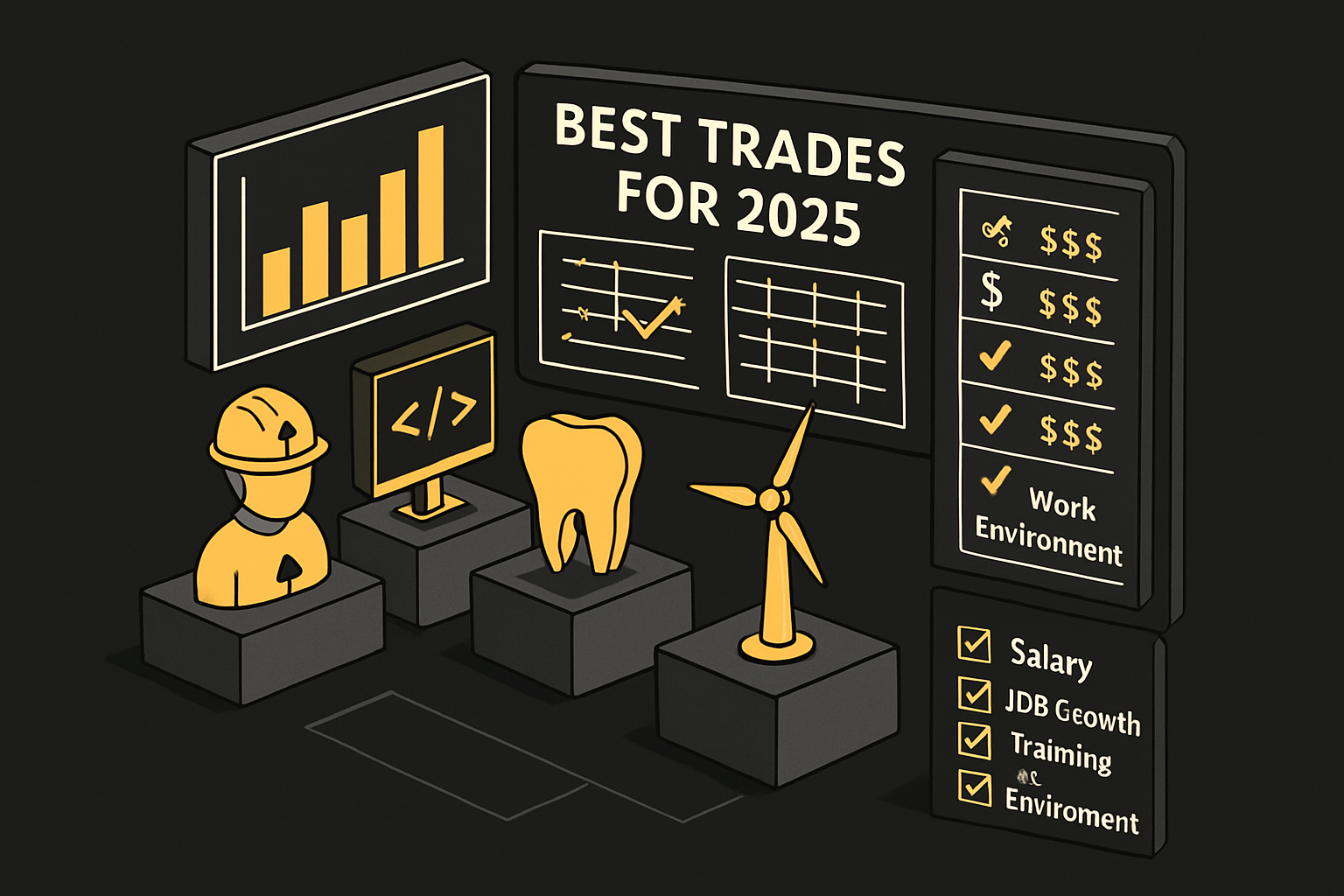
Choosing the best trade in 2025 means looking beyond job titles and digging into what each career truly offers. To help you make a confident decision, let’s break down the most critical criteria—salary, job growth, training, work environment, and advancement—so you can compare your options side by side.
Salary and Earning Potential
Salary is often a deciding factor when searching for the best trade. Trade salaries can vary widely, with starting wages that often surpass entry-level college-degree jobs. For example, air traffic controllers earn a median of $129,750, electricians make about $60,040, and welders bring in $47,010. Regional demand and specialization can further influence pay, so researching local trends is wise.
| Trade | Median Salary (2025) |
|---|---|
| Air Traffic Controller | $129,750 |
| Electrician | $60,040 |
| Welder | $47,010 |
For a comprehensive list of lucrative options, see the Top 9 Highest-Paying Trade Jobs to Consider in 2025. Evaluating earning potential is a crucial step in selecting the best trade for your goals.
Job Growth and Demand
Understanding job outlook helps you avoid trades facing decline and focus on those with strong futures. The best trade for you should offer not only solid pay but also steady demand. According to BLS data, wind turbine technicians are projected to grow by 68%, occupational therapy assistants by 34%, and respiratory therapists by 23%. In contrast, CAD drafters and building inspectors may see slight declines.
To ensure you’re choosing the best trade, research national and regional statistics. Look for roles with consistent growth and adaptability to changing market needs.
Training Requirements and Accessibility
Training paths for trades are often shorter and more affordable than four-year degrees. The best trade might require as little as 8 weeks of certification—or up to 2 years for an associate degree. Apprenticeships, trade schools, and community colleges are the most common routes. Many programs even offer online or hybrid options for added flexibility.
When comparing the best trade options, consider costs, duration, and accessibility of training. Factor in the return on investment and potential for employer-sponsored education.
Work Environment and Lifestyle Fit
Work setting and daily routine can make or break your satisfaction in any role. The best trade for you should match your lifestyle—whether you prefer indoor or outdoor work, physical tasks or tech-based roles, and regular or flexible hours. For instance, electricians split time between indoor and outdoor sites, dental hygienists work in clinics, and web developers may work remotely.
Think about shift work, travel, and self-employment opportunities. Matching your preferences to your chosen path is key to finding the best trade for your future.
Advancement Opportunities and Career Pathways
A great trade career doesn’t have to be a dead end. The best trade will offer advancement into supervisory, management, or even entrepreneurial roles. Construction managers, for example, often start as tradespeople. HVAC technicians can become business owners, and skills gained in one trade may open doors to others.
Look for trades that allow skill stacking, leadership development, and career mobility. Choosing the best trade means planning for growth and long-term satisfaction.
Step-by-Step Guide: How to Choose the Best Trade in 2025
Choosing the best trade for your future can feel overwhelming, but breaking it down into clear, actionable steps makes all the difference. This guide will walk you through a proven process—so you can confidently select the best trade for your strengths, interests, and the evolving 2025 job market.
Step 1: Self-Assessment—Interests, Strengths, and Values
Start by looking inward. What work excites you? Do you prefer hands-on problem-solving, or are you drawn to tech-driven roles? Assess your physical and mental strengths—some trades require stamina, others need sharp analytical skills.
Use career assessment quizzes and speak to professionals in fields that interest you. For example, if you love solving puzzles and working with your hands, becoming an electrician might be your best trade. If helping others motivates you, healthcare trades could be a natural fit.
Write down your values—income, flexibility, work-life balance, or advancement opportunities. Your personal priorities are the foundation for finding the best trade for your future.
Step 2: Researching Trade Options and Market Data
Next, dive into the research. Compare job outlooks, salary ranges, and demand in your region. Utilize trusted sources like the Bureau of Labor Statistics and industry reports to identify which trades are on the rise.
For a deeper look at fast-growing opportunities, explore resources such as the High-Demand Trade Careers Growing in 2025 guide. Look for trades that align with your skills and have strong future prospects—like construction managers, web developers, or wind turbine technicians.
Keep a shortlist of the best trade options that stand out to you, considering both national trends and local demand.
Step 3: Evaluating Education and Training Paths
Examine the training requirements for each trade on your list. Some roles, like HVAC technician or welder, offer fast-track programs—ranging from 8 weeks to 2 years. Others, like medical sonographer or construction manager, may require associate degrees or specialized certifications.
Make a table comparing duration, cost, and return on investment for each path:
| Trade | Program Length | Typical Cost | Entry Salary |
|---|---|---|---|
| HVAC Technician | 6 wks–2 yrs | $3k–$15k | $48,630 |
| Electrician | 4 yrs (appr.) | $0–$10k | $60,040 |
| Web Developer | 2 yrs (AAS) | $5k–$20k | $77,200 |
Factor in accessibility—are there nearby programs or online options? The best trade for you balances affordability, speed, and your learning style.
Step 4: Considering Work-Life Balance and Flexibility
Imagine your daily routine in each trade. Some, like dental hygienists, offer predictable hours and clinic settings. Others, such as welders or electricians, may involve variable shifts, outdoor work, or travel.
Think about flexibility. Many trades allow for self-employment or contract work. If you value remote work, tech-based trades like web development could be your best trade.
Ask yourself: Does this role fit my desired lifestyle? Prioritize options that align with your work-life balance goals.
Step 5: Shadowing, Internships, and Entry-Level Experience
Before you commit, get a taste of the real work. Shadow a professional, pursue an internship, or try entry-level roles. This firsthand exposure helps you confirm the best trade for your interests and skills.
Reach out through local trade schools, unions, or online platforms to find opportunities. Networking with current professionals can open doors and give you practical insights.
Remember, experience is the best teacher—testing the waters now can prevent regrets later.
Step 6: Weighing Long-Term Prospects and Future Trends
Consider each trade’s long-term stability. Some roles, like wind turbine technicians and medical sonographers, are expected to grow rapidly thanks to technology and green energy trends.
Assess the risk of automation—tech-driven trades with a human touch are often safest. The best trade is one that will remain relevant as industries evolve. Look for future-proof sectors, such as healthcare, renewable energy, and information technology.
Stay informed about emerging trends and be ready to adapt as new opportunities arise.
Step 7: Making the Final Decision and Creating an Action Plan
Now it’s time to choose. Review your research, real-world experiences, and personal priorities. Narrow your options to the best trade that checks your most important boxes.
Set clear, actionable goals: application deadlines, required tests, and enrollment steps. Map out a timeline for gaining certifications or licenses.
Stay flexible—your career path may twist and turn. The best trade for you today should offer room for growth and adaptation tomorrow.
AI in Trade Selection: Leveraging Modern Tools
Modern technology is transforming how people find the best trade for their future. AI-powered platforms can analyze market trends, predict job demand, and offer personalized career recommendations.

For example, AI tools help aspiring traders by providing real-time signals and market analysis—making it easier to spot opportunities and avoid pitfalls. Using these advanced resources reduces guesswork and boosts confidence in your decision.
Embrace digital tools and data-driven insights as you search for the best trade. Staying informed ensures you’ll make choices that stand the test of time.
Top Trades to Consider in 2025: Profiles and Comparisons
Choosing the best trade in 2025 means understanding not just pay, but also job outlook, daily work, and advancement potential. Let’s break down the best trade options by category so you can compare and find the right fit for your goals.

High-Paying Trades with Strong Outlook
If your top priority for the best trade is high earning potential with strong job prospects, several roles stand out in 2025. Air traffic controllers lead the pack, commanding a median salary of $129,750 and requiring only an associate’s degree plus FAA training. Construction managers also offer lucrative pay, averaging $98,890, with opportunities to rise from trade backgrounds. Elevator and escalator installers, earning about $97,860, benefit from steady demand and clear advancement paths. These roles combine high wages, job security, and a direct path to leadership, making them contenders for the best trade this year.
| Trade | Median Salary | Job Outlook (2025) |
|---|---|---|
| Air Traffic Controller | $129,750 | 4% |
| Construction Manager | $98,890 | 11% |
| Elevator/Escalator Installer | $97,860 | 6% |
Fastest-Growing and Future-Proof Trades
For those seeking the best trade with rapid growth and future-proof skills, green and healthcare trades take center stage. Wind turbine technicians are projected to grow by a stunning 68%, driven by the shift to renewable energy. Occupational therapy assistants and respiratory therapists are also in high demand, with 34% and 23% growth expected, respectively. These roles are highlighted in the Top 5 In-Demand Skilled Trade Careers for 2025, making them excellent picks for anyone looking to invest in a resilient, stable career path.
- Wind Turbine Technician: $56,260, 68% growth
- Occupational Therapy Assistant: $61,520, 34% growth
- Respiratory Therapist: $61,830, 23% growth
Each of these jobs offers a strong combination of pay, purpose, and long-term stability—the hallmarks of the best trade in a changing economy.
Tech-Driven and Less Physically Demanding Trades
Not all of the best trade options require heavy lifting or outdoor work. Tech-driven trades like web developers ($77,200/year, 13% growth), CAD drafters ($60,290, -2% but strong in certain niches), and medical sonographers ($75,380, 14% growth) offer excellent opportunities for those who prefer digital or analytical work environments.
The best trade for tech-savvy individuals could even include emerging roles in financial trading, where AI and trading careers are transforming the landscape with automation and data analysis. These roles require strong technical skills, adaptability, and a willingness to keep learning as technology evolves.
Trades with Flexible Entry and Advancement
If you want the best trade with a clear entry path and room to grow, classic skilled trades like electrician, plumber, and welder are hard to beat. Electricians earn around $60,040, plumbers $59,880, and welders $47,010, with apprenticeships or vocational training often replacing the need for a four-year degree.
- Apprenticeships let you earn while you learn.
- Many in these fields move on to start their own businesses.
- Flexible work arrangements—contracting, self-employment—are common.
For many, the best trade is one that balances opportunity and independence, and these roles deliver on both fronts.
Healthcare and Service-Oriented Trades
For those motivated by helping others, the best trade might be in healthcare. Dental hygienists earn about $77,810 with an 11% job growth outlook, while radiation therapists average $82,790 and see a 9% increase in demand. These careers require certification and licensing but offer high job satisfaction, regular hours, and the chance to make a direct impact on people’s lives.
- Dental Hygienist: $77,810, 11% growth
- Radiation Therapist: $82,790, 9% growth
Choosing the best trade in this sector can mean stable employment and the reward of meaningful work every day.
Regional and Niche Opportunities
The best trade for you may depend on your local job market and industry needs. For example, boilermakers are in demand in industrial regions, while HVAC technicians thrive in areas with extreme climates. Use state and city employment data to target high-demand trades near you.
- Research local salary and job outlooks.
- Look for niche roles tied to regional industries.
- Adjust your best trade choice based on where you want to live and work.
By matching your interests and location, you can land on the best trade for your unique situation.
Education, Certification, and Training Pathways for Top Trades
Choosing the right education and certification pathway is essential for landing the best trade in 2025. The journey is more streamlined than you might think—let’s break down the options and what you need to succeed.
Trade Schools, Community Colleges, and Apprenticeships
When mapping your route to the best trade, you’ll likely choose between trade schools, community colleges, or apprenticeships. Each has unique benefits:
| Pathway | Duration | Cost | Learning Style | Example Trades |
|---|---|---|---|---|
| Trade School | 8 weeks–2 yrs | Moderate | Hands-on, focused | Welding, HVAC |
| Community College | 1–2 years | Affordable | Mix of theory/prac | Dental hygiene, sonography |
| Apprenticeship | 2–5 years | Earn-while-learn | On-the-job | Electrician, plumber |
Trade schools offer concentrated, skill-based programs. Community colleges provide broader academic grounding, sometimes leading to an associate degree. Apprenticeships immerse you in real work environments while you earn. If you’re considering financial trading as your best trade, check out this Beginner's guide to trading for a modern entry point.
Licensing and Certification Requirements
Securing the best trade often means meeting licensing or certification standards. Most skilled trades—like electricians, dental hygienists, and HVAC techs—require state or national licenses. The process usually involves:
- Completing approved training or apprenticeship
- Passing a standardized exam
- Submitting background checks and fees
- Renewing licenses periodically
Certification boosts your credibility and can lead to higher pay. Some best trade roles, like web developers, may not require formal licenses but benefit from industry-recognized certificates. Always check your state’s requirements before enrolling.
On-the-Job Training and Career Progression
One advantage of pursuing the best trade is the chance to earn while you learn. Apprenticeships combine paid work with structured instruction, making them a favorite for many. Mentorship is a key feature—seasoned professionals guide you as you develop skills.
Most trades offer clear ladders for advancement. For example, electricians can move from apprentice to journeyman to master, or even start their own business. Welders and HVAC techs often follow similar paths. Real-world experience is invaluable, especially if you’re aiming for management or entrepreneurial roles in your chosen best trade.
Funding, Scholarships, and Financial Aid
Affording the best trade education is easier than you might expect. There are several ways to fund your journey:
- Federal and state grants (often don’t require repayment)
- Scholarships from trade associations or local businesses
- Low-interest student loans
- Employer-sponsored training or tuition reimbursement
To minimize debt and maximize your investment, research all available options early. Many best trade programs qualify for financial aid, and some employers offer paid apprenticeships or cover tuition for in-demand skills.
Continuing Education and Upskilling
The best trade careers require ongoing learning to stay competitive. Technology, regulations, and industry standards change fast—so should your skills. Options for upskilling include:
- Online courses and workshops
- Industry certifications
- Conferences and webinars
If you’re leaning toward tech-forward or financial trades, understanding trading signals explained can be a smart way to future-proof your expertise. Lifelong learning ensures you’ll remain adaptable, opening doors to advancement and new opportunities in the best trade landscape.
As you think about which trade fits your goals and lifestyle in 2025, remember how much smarter your choices can be when you have the right tools at your side. Whether you’re considering a future in financial trading or just want to make data-driven decisions, platforms like PipTrend bring clarity to a complex landscape—giving you real-time signals, simple analysis, and confidence to move forward. If you’re ready to take your first step toward trading success and want to see what smarter, AI-powered decisions feel like, See Your Trading Improve With PipTrend.