
Trading has never been more accessible or exciting for beginners than in 2025. With rapid advancements in technology, powerful AI tools, and user-friendly online platforms, stepping into trading is now within reach for almost anyone.
Many newcomers dream of financial freedom, building passive income streams, or simply experiencing the thrill of the markets. If you share these aspirations, you’re not alone.
This guide is designed to help you confidently get into trading from the ground up. You’ll discover trading basics, how to choose your market, must-have tools, essential risk management, beginner strategies, and the simple steps to start your journey.
Understanding the Basics of Trading
Stepping into trading can feel like opening a door to a new world. The basics are your foundation, whether you want to trade stocks, forex, or crypto. Let’s break it down, making sure you have a clear path as you begin your journey into trading.
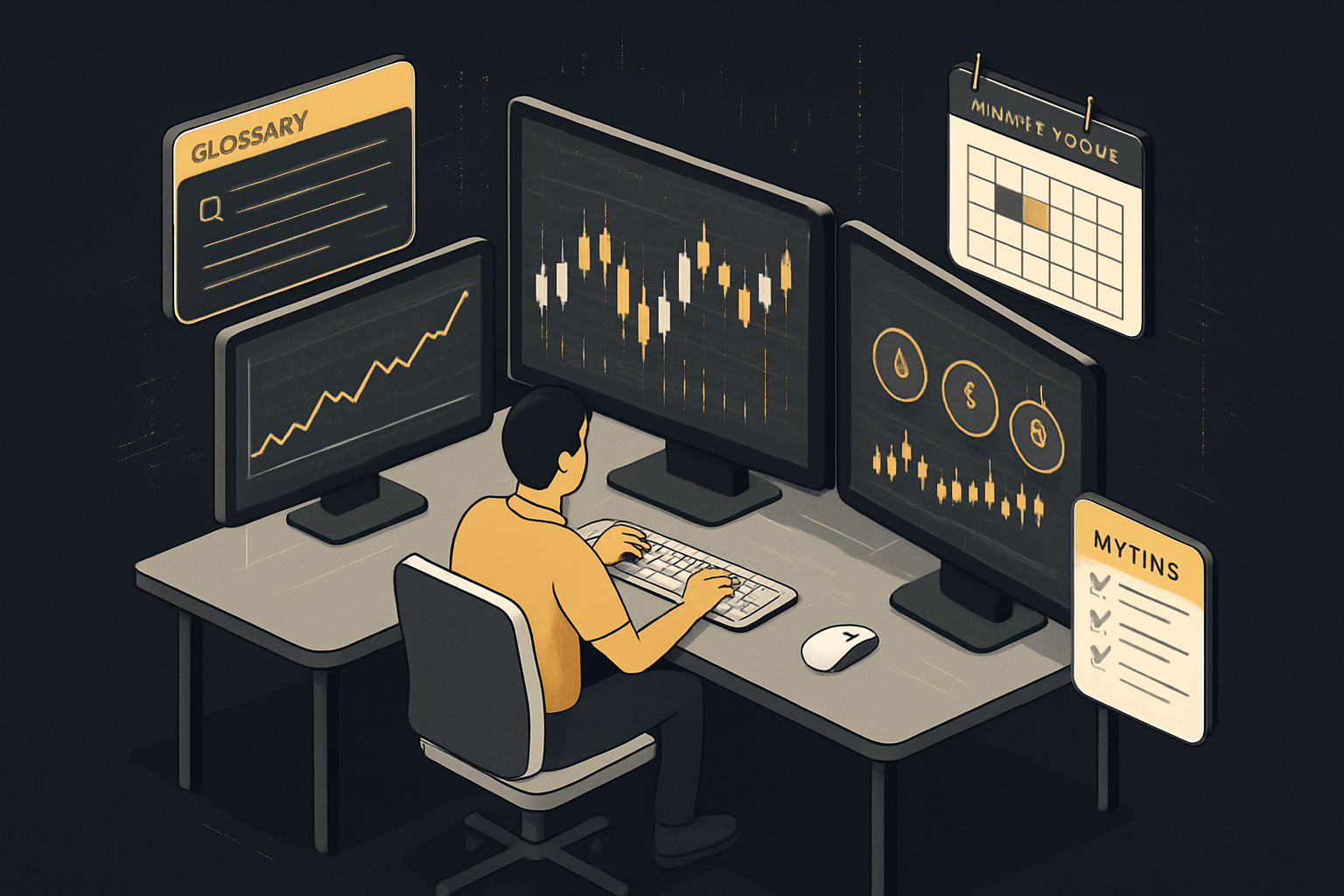
What is Trading?
Trading in financial markets means buying and selling assets—like stocks, currencies, cryptocurrencies, or indices—with the goal of making a profit. Unlike investing, which focuses on long-term growth, trading is about capturing shorter-term price movements.
The main asset classes you’ll encounter when you step into trading include:
- Stocks: Shares of companies like Apple or Tesla.
- Forex: Currencies such as EUR/USD or GBP/JPY.
- Cryptocurrencies: Digital coins like Bitcoin or Ethereum.
- Indices: Baskets of assets like the S&P 500.
For example, a trader might buy shares in a tech company before an earnings report, hoping for a quick gain, while an investor might hold those shares for years. Understanding these differences is key as you move into trading.
Key Trading Terminology
Getting into trading means learning a new language. Here are some essential terms:
- Bid/Ask: The price buyers are willing to pay (bid) and sellers are asking for (ask).
- Spread: The difference between bid and ask prices.
- Leverage: Borrowed funds to increase trade size.
- Margin: The deposit required to open a leveraged position.
- Lot Size: The number of units per trade.
- Order Types: Instructions for your broker (market, limit, stop).
Mastering this jargon is crucial. It helps you communicate clearly and make smarter decisions as you dive deeper into trading.
Types of Trading (Day, Swing, Position, Scalping)
There are several approaches you can take when getting into trading. Each style suits different personalities and lifestyles:
| Trading Style | Holding Period | Pros | Cons | Beginner Friendly? |
|---|---|---|---|---|
| Day Trading | Minutes–Hours | Fast results | High stress, risky | Sometimes |
| Swing Trading | Days–Weeks | Less time needed | Overnight risk | Yes |
| Position Trading | Weeks–Months | Lower stress | Slower returns | Yes |
| Scalping | Seconds–Min | Many trades | Requires speed | Rarely |
Day trading is fast and exciting, but swing and position trading often suit beginners better, offering a more manageable way into trading.
How the Markets Work
Financial markets are ecosystems with different players. When you go into trading, you’ll encounter:
- Retail Traders: Individuals like you.
- Institutions: Banks, hedge funds.
- Market Makers: Firms that provide liquidity.
Prices move based on supply and demand. If more people want to buy than sell, prices rise. Liquidity—how easily you can buy or sell—matters, especially in volatile markets. Market hours also impact trading; for example, forex trades 24/5, while stocks have set hours. Understanding these dynamics is essential as you get into trading.
Common Myths and Misconceptions
It’s easy to believe myths when starting into trading. Some think it’s just gambling, or that anyone can get rich overnight. Others assume you need to be a math genius.
The reality? Trading requires discipline, learning, and patience. Most new traders don’t see instant success. In fact, studies such as those found in Day Trading Success Rates reveal that only a small percentage of beginners consistently profit. Setting realistic expectations is vital as you step into trading.
Choosing Your Trading Market
Choosing the right market is a key step for anyone getting into trading. Each market offers different opportunities, risks, and requirements, so understanding your options is crucial before you dive in.
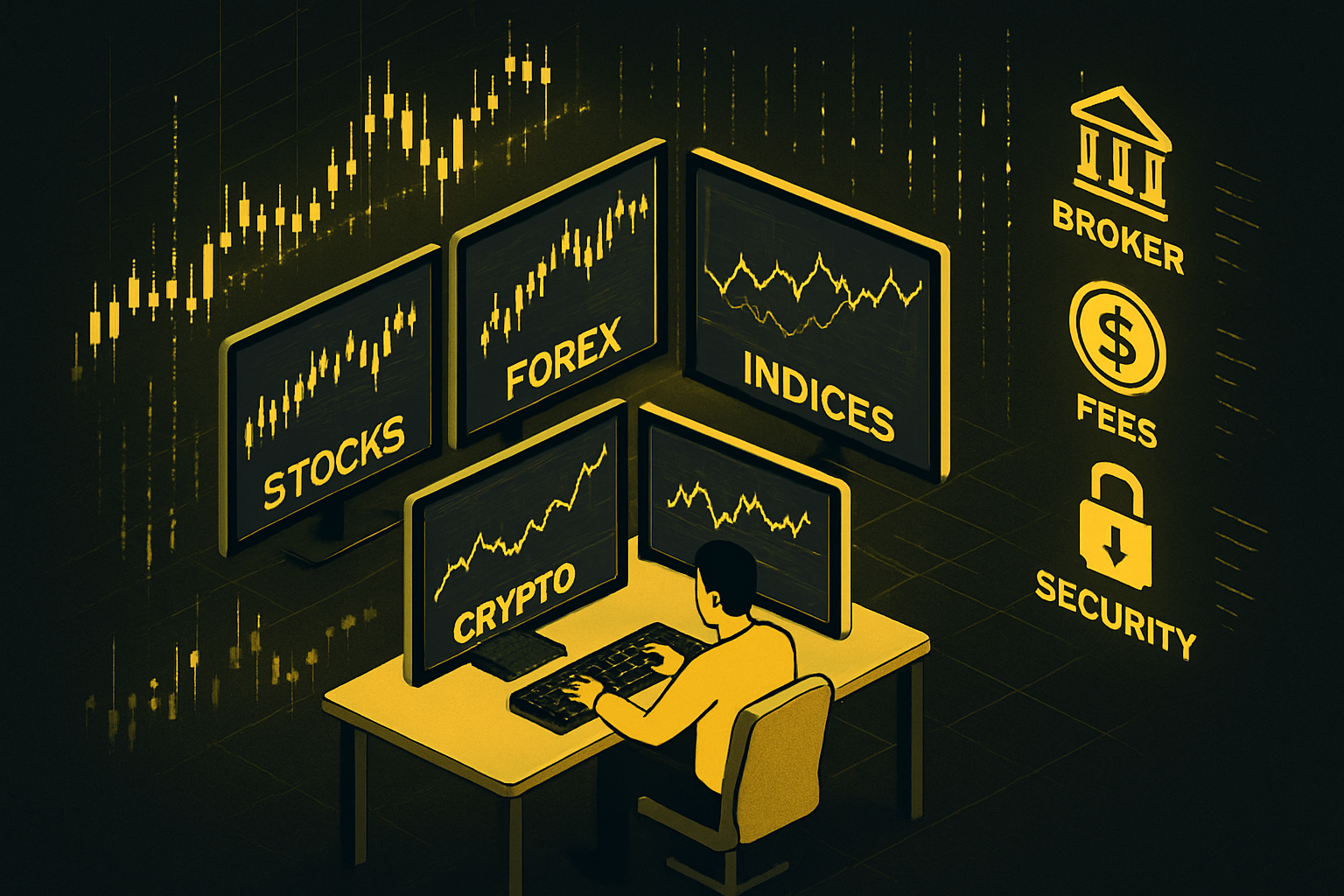
Overview of Major Markets
When getting into trading, you’ll encounter several major markets. The most popular are stocks, forex, cryptocurrencies, and indices. Each market comes with its own unique features and requirements.
| Market | Liquidity | Volatility | Trading Hours |
|---|---|---|---|
| Stocks | High | Moderate | 9:30am-4pm EST |
| Forex | Very High | High | 24/5 |
| Cryptocurrencies | High | Very High | 24/7 |
| Indices | High | Moderate | Varies by exchange |
Stocks are well-regulated and suitable for those who prefer established companies. Forex appeals to traders who like flexibility and high liquidity. Cryptocurrencies attract those seeking innovation and volatility. Indices offer exposure to entire markets in one trade.
Factors to Consider When Selecting a Market
Before jumping into trading, consider your starting capital, available time, and risk tolerance. Stocks typically require larger capital, while forex and crypto can be started with less. If you have limited time, swing trading or longer-term positions in indices may suit you.
Accessibility is another factor. Forex and crypto markets are open around the clock, making them ideal for those with non-traditional schedules. For beginners, it’s vital to understand the risks—especially with fast-paced markets like forex and day trading. The SEC Day Trading Risks page offers essential insights on the pitfalls new traders should avoid.
Think about your personal goals and lifestyle. Are you looking for a part-time venture or a full-time commitment? Matching your needs with the right market is vital for long-term success when getting into trading.
Popular Platforms and Brokers for Beginners
Selecting a platform is a critical step when getting into trading. Look for brokers that are regulated by authorities such as the SEC, FCA, or ASIC. This ensures your funds are protected and the broker follows fair practices.
Beginner-friendly platforms should offer intuitive interfaces, educational resources, and responsive customer support. Some well-known options include eToro, TD Ameritrade, and MetaTrader for forex. Always check for demo accounts, which allow you to practice risk-free.
Consider the safety of your funds and the transparency of the broker. Read reviews and make sure the platform offers the features you need as you step into trading.
Costs and Fees Involved
Every market comes with its own set of fees that can impact your bottom line. Common costs include spreads (the difference between buy and sell prices), commissions on each trade, overnight swaps, and sometimes inactivity or withdrawal fees.
Here’s a quick comparison of average costs:
| Platform | Spread (EUR/USD) | Commission | Swap Fee |
|---|---|---|---|
| eToro | 1 pip | None | Yes |
| TD Ameritrade | Varies | $0 stocks | Yes |
| Binance | 0.1% | None | Yes |
Hidden fees can eat into your profits, so always read the fine print. Understanding the full cost structure is essential before you get into trading, as even small fees add up over time.
Essential Tools and Resources for New Traders
Getting into trading in 2025 means having a reliable toolkit at your fingertips. The right resources can make your journey smoother, more informed, and far less overwhelming. Let’s break down the essential tools every beginner should have when stepping into trading for the first time.

Trading Platforms and Charting Software
The foundation of getting into trading is choosing the right platform. Leading options like MetaTrader, TradingView, and Thinkorswim offer robust charting capabilities, a user-friendly interface, and powerful analysis tools.
Here’s a quick comparison:
| Platform | Features | Demo Account | Beginner Friendly |
|---|---|---|---|
| MetaTrader | Forex focus, automation | Yes | Yes |
| TradingView | Web-based, social tools | Yes | Yes |
| Thinkorswim | Advanced analytics | Yes | Moderate |
A demo account is crucial for those just getting into trading. It lets you practice without risking real money, test strategies, and get comfortable with order placement.
Real-Time Data and News Feeds
Success into trading depends on staying updated. Real-time data and news feeds are vital for making timely decisions. Economic calendars track key events like interest rate announcements, while news aggregators deliver market-moving headlines.
Must-have resources include:
- Investing.com for global economic calendars
- Bloomberg and Reuters for breaking news
- TradingView’s news feed for sentiment analysis
Using these tools, you can react quickly to changes and avoid being caught off guard. Integrating real-time data into trading routines enhances your edge.
Educational Resources and Communities
Continuous learning is non-negotiable when getting into trading. Online courses, webinars, and trading forums open doors to new strategies and support from experienced traders.
Top learning sources:
- Babypips for forex basics
- Coursera and Udemy for structured courses
- Reddit’s r/StockMarket for active discussions
Mentorship and community feedback accelerate growth. For a deeper dive into trading psychology and risk management, check out this Trading for a Living Book Review. Structured education has been shown to significantly improve outcomes for those starting into trading.
Trading Journals and Analytics Tools
Tracking every trade is a must for anyone serious about getting into trading. Digital journals like Edgewonk or simple spreadsheets help record entries, exits, and emotions.
Benefits of journaling:
- Spotting patterns in your performance
- Learning from mistakes
- Building trading discipline
Analytics tools provide visual breakdowns of your trades. This data-driven approach to improvement is essential for long-term success into trading.
AI and Automation in Modern Trading
The rise of AI is transforming how people get into trading. AI-powered indicators and trading bots can analyze massive datasets in seconds, identify trends, and even execute trades automatically.
For beginners, automation offers:
- Reduced emotional bias
- Faster trade execution
- Ability to backtest strategies
However, it’s wise to start slow and understand how these tools work before relying on them. AI is a powerful ally, but successful trading still requires human judgment and oversight.
Step-by-Step Guide to Getting Started with Trading
Embarking on your journey into trading can feel overwhelming, but breaking it down into manageable steps makes all the difference. This section offers a clear, actionable path for beginners eager to dive into trading, from setting your first goals to reviewing your performance. Let’s walk through the essentials together.
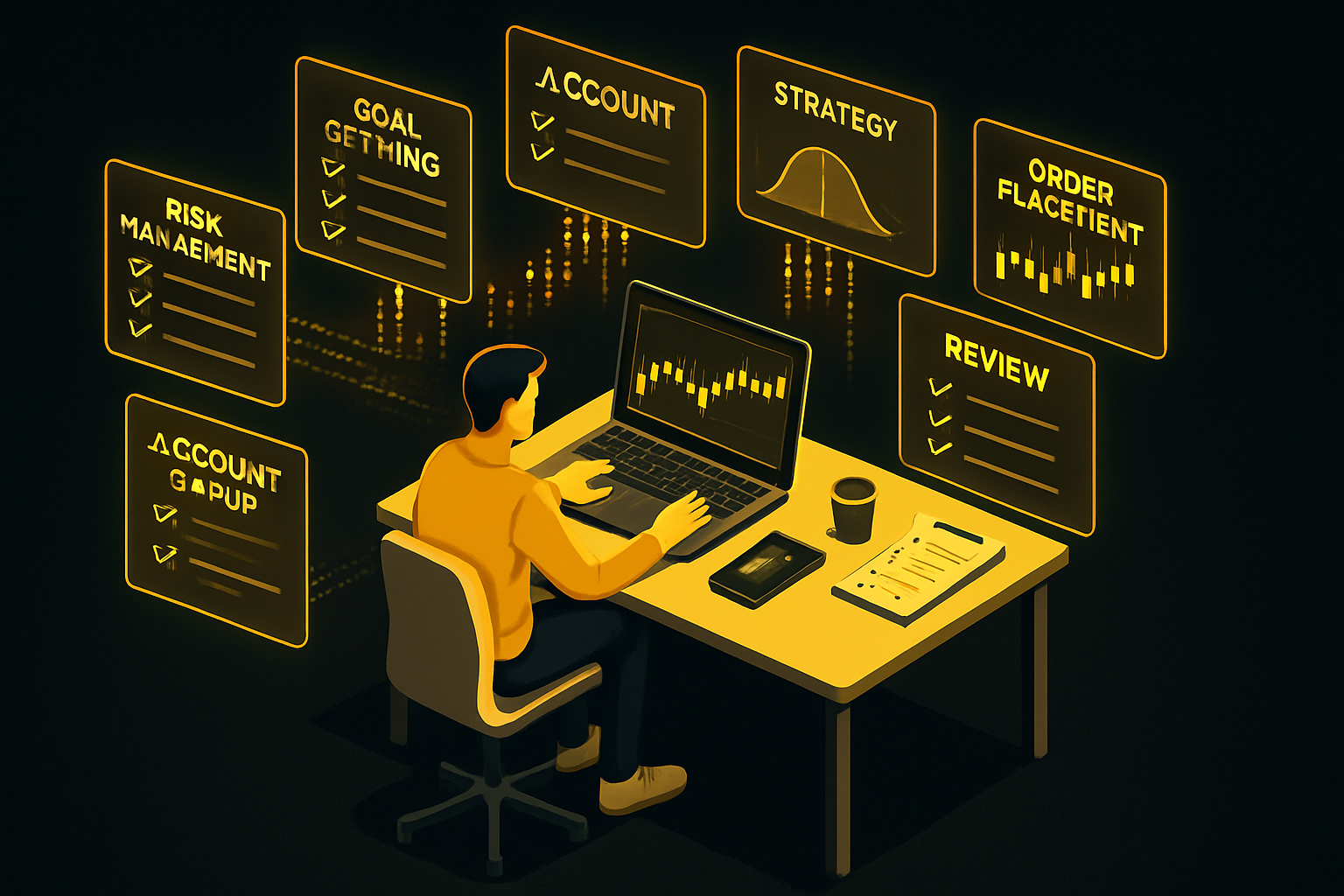
Step 1: Setting Goals and Expectations
Before diving into trading, clarify what you want to achieve. Are you seeking extra income, long-term growth, or just to learn the ropes? Setting goals gives you direction and keeps you motivated, especially when markets get tough.
Consider using the SMART framework (Specific, Measurable, Achievable, Relevant, Time-bound) to shape your goals. For example:
| Goal Type | Example |
|---|---|
| Income | Earn $200/month from trading in 6 months |
| Learning | Complete 3 trading courses in 3 months |
| Growth | Grow portfolio by 5% in the first year |
Having clear expectations about the realities of getting into trading helps you avoid disappointment and stay focused on steady progress.
Step 2: Creating a Risk Management Plan
Risk management is your safety net. Even the best traders lose sometimes, so protecting your capital is key. Before you get into trading, decide how much you’re willing to risk per trade—most recommend 1–2% of your total account.
Set rules for stop-loss and take-profit orders to automatically limit losses and lock in gains. Here’s a sample rule set:
- Never risk more than 2% of your account per trade.
- Always use a stop-loss at a logical level.
- Set a risk/reward ratio of at least 1:2.
Studies show traders who follow strict risk management last far longer in the markets. Make this a non-negotiable part of your journey into trading.
Step 3: Choosing and Opening a Trading Account
Ready to take the plunge into trading? The first step is picking a reliable broker that fits your needs. Look for platforms with low fees, strong regulation, and beginner-friendly interfaces.
The process usually looks like this:
- Research and compare brokers.
- Complete the Know Your Customer (KYC) process.
- Fund your account via bank transfer or other methods.
- Set up your trading platform and explore demo accounts.
Avoid common pitfalls like skipping the fine print or ignoring commission structures. Taking your time now prevents headaches later as you move deeper into trading.
Step 4: Learning to Analyze the Markets
Successful trading starts with solid analysis. There are two main approaches: fundamental analysis (studying news, economic data, and company reports) and technical analysis (reading price charts and patterns).
For beginners getting into trading, start simple. Learn to identify basic chart patterns (like head and shoulders or double tops) and key economic indicators (such as GDP or employment data). Try this basic workflow:
1. Check the economic calendar for major events.
2. Review recent price action and chart patterns.
3. Combine findings to form a trading idea.
Building your analytical skills lays the foundation for confident decision-making in your trading journey.
Step 5: Developing a Trading Strategy
Every trader needs a plan. A good strategy outlines when to enter and exit trades, which assets to focus on, and how much to risk. For those new into trading, start with simple approaches like trend-following or using moving averages.
Backtesting—testing your strategy on past data—helps you refine your approach before risking real money. You might also explore proven indicators; for example, research such as the MACD-Based Trading Strategies Study offers valuable insights for strategy development.
Paper trading (simulating trades without real money) is a smart way to practice. This step ensures you’re prepared before you commit actual funds into trading.
Step 6: Placing Your First Trade
Now comes the exciting part—placing your first trade. Start with a small position to manage your nerves and risk. Choose your order type (market, limit, or stop order) based on your strategy.
Set alerts to monitor open positions, so you can react if the market moves unexpectedly. Remember, emotions can run high at this stage. Stay calm, follow your plan, and treat this as a learning experience as you step further into trading.
Step 7: Reviewing and Improving Your Performance
Continuous improvement is the secret to lasting success into trading. After each trade or week, review your results. Use a trading journal to note your decisions, emotions, and outcomes.
Here’s a simple review template:
| Date | Trade Idea | Outcome | Lesson Learned |
|---|---|---|---|
| 2025-01-10 | EUR/USD buy | +$50 | Followed plan |
Regular reviews help you spot patterns, avoid repeating mistakes, and adapt your strategy. This cycle of reflection and adjustment is what turns beginners into trading pros.
Risk Management and Psychology in Trading
Mastering risk management and understanding trading psychology are essential for anyone stepping into trading. These elements often separate long-term success from costly mistakes. Even the best strategies can fail if emotions and risk are not controlled. Let’s dive into these crucial aspects to ensure your journey into trading is built on a solid foundation.
The Role of Emotions in Trading
Emotions like fear, greed, and FOMO can have a dramatic effect on anyone getting into trading. These feelings often cloud judgment, leading to impulsive decisions and losses. For example, chasing a rising stock out of fear of missing out can quickly backfire.
Traders can use techniques like meditation, journaling, and setting clear rules to keep emotions in check. Studies show that over 70% of trading mistakes are linked to emotional reactions. Knowing this, it’s crucial to approach into trading with discipline and self-awareness.
Building emotional control is not just about avoiding losses. It’s about making rational decisions, even when markets become volatile. Remember, successful trading is as much about psychology as it is about numbers.
Key Risk Management Techniques
Effective risk management is the backbone of every successful journey into trading. Diversification helps spread risk across different assets, reducing the impact of a single loss. Position sizing ensures no single trade can wipe out your account.
Setting stop-loss orders is a must. These automatically close a trade at a certain loss level, protecting your capital from unexpected market moves. Many experienced traders use a risk/reward ratio, aiming for at least 2:1, to maximize long-term gains.
Here’s a quick table comparing common risk management methods:
| Technique | Purpose | Example |
|---|---|---|
| Diversification | Spread risk | Stocks + Forex |
| Stop-Loss Orders | Limit losses | -2% per trade |
| Position Sizing | Control exposure | 1% per trade |
By applying these practices, you can build a safer path into trading and avoid devastating setbacks.
Building a Resilient Trader Mindset
The right mindset is a powerful asset when getting into trading. Patience, consistency, and adaptability help traders weather both good and bad market conditions. It’s normal to experience setbacks, but resilient traders see losses as lessons, not failures.
Adopt a growth mindset by focusing on continual learning. Successful traders review their trades, adjust their strategies, and never stop improving. They don’t let short-term results shake their confidence or push them off course.
Building resilience also means having realistic expectations. Into trading is not a get-rich-quick scheme. Progress comes from mastering the process, not chasing profits. Stay committed, and your mindset will become your edge.
Avoiding Common Mistakes
Many beginners stumble into trading pitfalls like overtrading, revenge trading, or ignoring their trading plan. These mistakes can quickly drain your account and confidence. Data shows that most new traders lose money because they repeat these errors.
To prevent them, stick to your plan and keep detailed records of every trade. If you find yourself trading emotionally or increasing position sizes to recover losses, step back and reassess. Setting daily or weekly limits can help you maintain control.
Here are some practical tips to avoid common mistakes:
- Trade with a plan, not on impulse.
- Review your performance regularly.
- Never risk more than you can afford to lose.
By staying vigilant and learning from your experiences, you’ll turn challenges into opportunities for growth as you move further into trading.
Trading Strategies for Beginners in 2025
Stepping into trading in 2025 means having more strategy choices than ever. The right trading strategy can make the difference between frustration and steady progress. Whether you’re aiming for financial freedom or just exploring the excitement of the markets, understanding which strategies suit you is the first real step into trading.
Overview of Popular Beginner Strategies
When you first get into trading, you’ll quickly encounter three core strategies: trend-following, breakout, and mean-reversion.
- Trend-following involves riding the market’s momentum. You enter trades in the direction of the trend, aiming to capture large moves.
- Breakout strategies focus on entering trades when price breaks through key support or resistance levels, often signaling the start of a new trend.
- Mean-reversion bets on prices returning to their average after short-term extremes.
Here’s a quick comparison:
| Strategy | Market Type | Pros | Cons |
|---|---|---|---|
| Trend-following | All | Simple, clear signals | Can miss reversals |
| Breakout | Volatile | High reward potential | False breakouts common |
| Mean-reversion | Ranging | Frequent trades | Risk if trend develops |
Each is suitable for different personalities. Trend-following is great if you prefer patience, while breakout and mean-reversion suit more active traders. As you step into trading, try paper-trading each to see what fits.
Technical Analysis Basics
Technical analysis is a cornerstone for anyone getting into trading. It helps you make sense of price charts and spot trade opportunities.
Key indicators include:
- Moving Averages (MA): Smooth out price data to reveal trends.
- Relative Strength Index (RSI): Measures overbought or oversold conditions.
- MACD: Shows momentum and trend changes.
- Support/Resistance: Levels where price tends to reverse or pause.
Here’s a sample chart setup for beginners:
- Add a 20-period and 50-period moving average
- Plot RSI (14) below your price chart
- Mark recent support and resistance levels
Combining these tools makes it easier to identify when to enter or exit trades. As you practice, you’ll see how these indicators interact, guiding your decisions into trading.
Fundamental Analysis for Beginners
Fundamental analysis looks at the “why” behind price moves. If you’re into trading stocks, you’ll focus on earnings reports, company news, or economic data. In forex, central bank decisions or inflation numbers drive markets. Crypto traders track adoption rates and regulatory news.
For example, a strong earnings report can send a stock soaring, while disappointing economic data might weaken a currency. Beginners into trading should start by following economic calendars and reading summaries of major news events.
Consider this case study: In 2024, a tech company’s share price jumped 10% after announcing a breakthrough product. Traders who spotted the news early and understood its impact reaped the rewards. Keeping informed is crucial as you move deeper into trading.
Combining Technical and Fundamental Analysis
Many new traders wonder if they should focus on charts or news. The reality is, combining both gives you a broader edge into trading.
A typical workflow might look like this:
- Scan the calendar for major news releases.
- Identify technical setups on your preferred chart.
- Wait for the news event, then confirm the technical signal.
- Enter the trade, managing risk according to your plan.
This hybrid approach helps you filter out low-quality trades and avoid surprises. For example, if a breakout aligns with strong fundamental news, the probability of success increases. Blending both methods is a smart way to get into trading with confidence.
The Role of Backtesting and Practice
Before risking real money, it’s vital to test your strategies. Backtesting means checking how your approach would have performed in the past, using historical data. Many platforms let you do this with just a few clicks.
Popular backtesting tools include:
- TradingView’s strategy tester
- MetaTrader’s built-in backtester
- Manual spreadsheet tracking
Traders who backtest and paper-trade tend to last longer into trading. Studies show that disciplined practice improves win rates and reduces costly mistakes. Make it a habit to test every new idea before going live.
Staying Updated with Market Trends in 2025
Markets evolve quickly, especially for those just getting into trading. Ongoing education is key. Subscribe to reputable trading newsletters, join online communities, and regularly review new strategies.
Some resources worth bookmarking include Investopedia’s trading section, TradingView’s Ideas, and economic calendar apps. Staying current helps you adapt your approach and find fresh opportunities as the world of trading shifts in 2025.
Remember, the journey into trading is ongoing. Keep learning, stay curious, and you’ll build a solid foundation for long-term success.
If you’ve made it this far, you’re already ahead of most beginners—understanding the basics, picking the right market, and learning how to use essential tools can set you up for real trading success. But I know getting started can still feel overwhelming, especially with so much information out there. That’s where a smart, reliable tool can make all the difference. If you’re ready to put what you’ve learned into practice and want clear, real-time signals to help guide your trades, Start Catching Winning Trades, Right Now!