
Curious about how traders turn market movements into profit? In today’s fast-paced financial world, understanding trading how does it work is more important than ever before. With the surge in retail trading and powerful technology, anyone can now access global markets right from their phone or computer.
This guide demystifies trading, showing you trading how does it work and what you need to start confidently in 2025. We’ll break down the basics, explore markets and assets, walk through key steps, share essential strategies and tools, highlight risks and rewards, and help you get started step by step. Ready to dive in?
What Is Trading? The Core Concepts Explained
Curious about trading how does it work in today’s world? Let’s break down the foundational concepts every aspiring trader needs to know. Whether you’re just starting or looking to sharpen your skills, understanding these basics is the first step to navigating financial markets in 2025.

Defining Trading in 2025
At its core, trading is the act of buying and selling financial assets—like stocks, currencies, or commodities—with the goal of profiting from price changes. But trading how does it work when compared to investing? Trading typically involves short-term speculation, aiming for quick gains, while investing focuses on long-term growth and asset ownership.
Speculation means traders try to predict market moves. For instance, during the COVID-19 pandemic, some traders bought airline stocks at low prices, hoping to sell them higher as travel recovered. In 2021, retail traders accounted for 23% of US equity trading, a number expected to grow with better online platforms.
Key trading terms to know:
Asset: The item being traded (stock, currency, etc.)Market: Where assets are bought/sold (NYSE, forex market)Position: Your open tradeOrder: Instruction to buy/sell at a certain price
Technology has made trading more accessible than ever. If you’re new, consider checking out this Trading for Beginners Guide for a step-by-step approach.
Types of Financial Markets and Assets
When exploring trading how does it work, you’ll find a variety of markets and assets to choose from:
- Stocks: Shares in companies, traded on stock exchanges (centralized).
- Forex: Currency pairs like EUR/USD, traded 24/5 (decentralized).
- Indices: Groups of stocks, like the S&P 500.
- Commodities: Gold, oil, coffee, and more.
- Cryptocurrencies: Digital assets such as Bitcoin.
- ETFs and Bonds: Funds and fixed-income products.
Each market operates differently. For example, trading the S&P 500 index happens on exchanges, while forex trades occur globally without a central hub. Most major platforms now offer access to over 17,000 tradable assets, including thematic baskets for diversification.
Market hours vary—forex is nearly around the clock, while stocks have set exchange times. Diversifying across assets helps manage risk and capture more opportunities.
Trading vs. Investing: Key Differences
It’s crucial to distinguish trading how does it work from investing. Traders don’t usually own the underlying asset; they speculate on price moves, often using derivatives like CFDs. Investors, meanwhile, buy assets to hold for years, benefiting from dividends and long-term growth.
| Aspect | Trading | Investing |
|---|---|---|
| Ownership | Speculate, don’t own | Own the asset |
| Time Horizon | Minutes to weeks | Years |
| Profit Mechanism | Short selling, capital gains | Dividends, growth |
| Tools Used | Leverage, derivatives | Shares, ETFs, bonds |
For example, CFD trading lets you go long or short with leverage, while buying shares means you own a piece of the company. Trading often requires more active management, quick decision-making, and higher risk tolerance than investing.
Who Participates in Trading?
When considering trading how does it work, it’s important to know who’s involved:
- Retail traders: Individuals trading from home.
- Institutional traders: Banks, hedge funds, mutual funds.
- Governments: Central banks and sovereign funds.
Retail participation has surged since 2019, doubling by 2021. Still, institutions handle about 77% of market trades. Brokers and online platforms act as intermediaries, providing tools and access.
There are various trading styles:
- Day trading: In and out within a day.
- Swing trading: Holding for several days.
- Position trading: Weeks or longer.
Institutions usually have more capital, advanced tools, and sophisticated strategies than individuals. To get started, you’ll need a brokerage account and some initial capital, but technology has lowered barriers for everyone.
How Does Trading Work? Step-by-Step Guide
Curious about trading how does it work in the real world? Mastering the process is all about following a proven sequence of steps. Whether you’re a beginner or brushing up your skills, this guide breaks down each stage of the trading journey, making the path from research to execution clear and actionable.
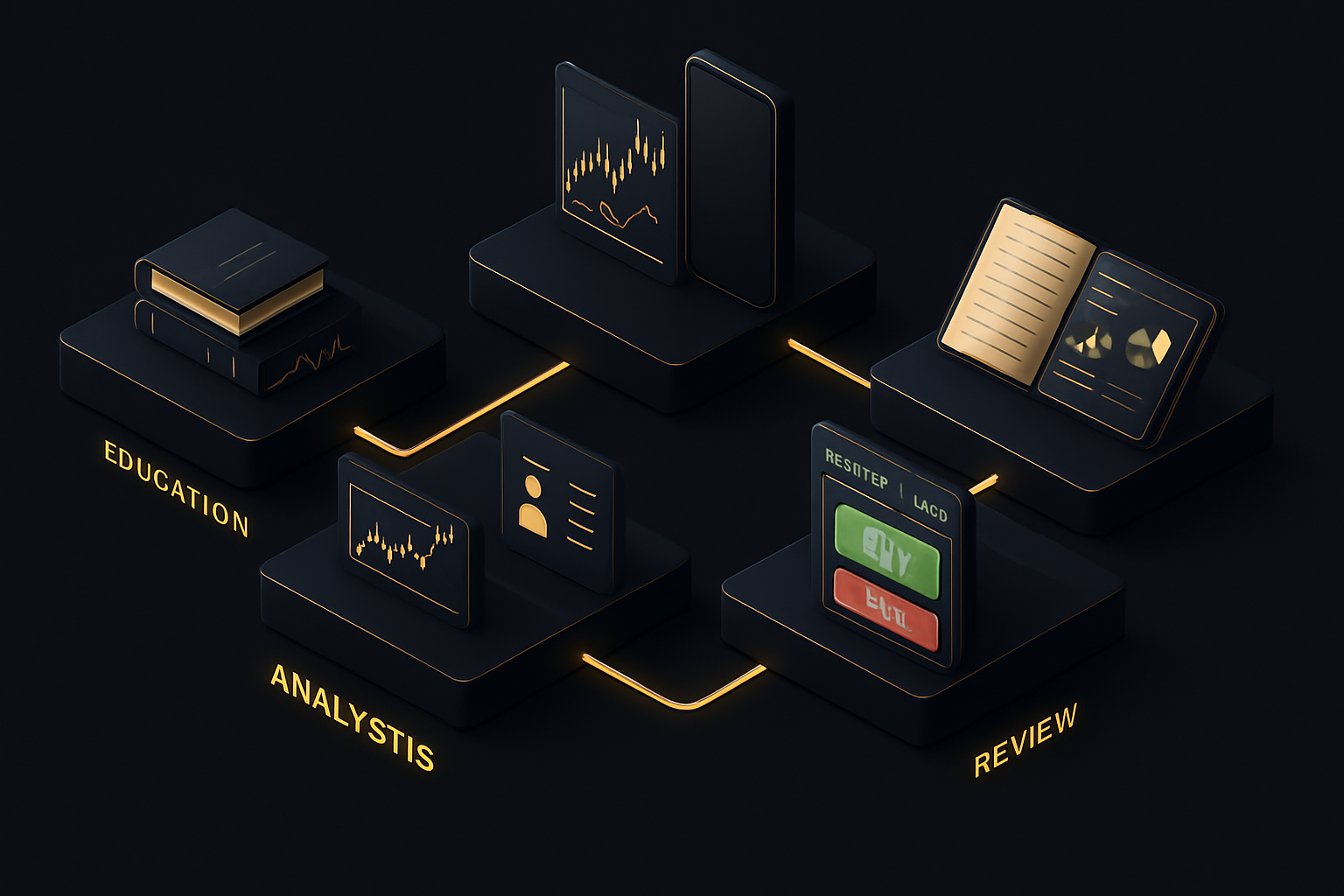
Step 1: Building Foundational Knowledge
Before diving into trading how does it work, every trader needs a solid understanding of financial basics. Start by learning key concepts such as market orders, limit orders, stop-loss, and margin. Resources like trading academies, online courses, and demo accounts offer practical ways to build your knowledge without risking real money.
- Explore glossaries to get familiar with trading terms.
- Join online communities for peer support.
- Use demo accounts to practice in real-time market conditions.
Lack of education is a major pitfall—71% of CFD traders lose money due to poor preparation. Understand market volatility, risk, and the importance of continuous learning. Building a strong foundation is your best defense against common beginner mistakes.
Step 2: Analyzing the Markets
Once you grasp trading how does it work at a basic level, the next step is market analysis. There are two main approaches: technical analysis, which uses charts and indicators, and fundamental analysis, which focuses on economic data and news events.
Traders often use tools like moving averages to spot trends or economic calendars to anticipate volatility. For example, global events—wars, natural disasters—can dramatically move prices in minutes.
- Technical tools: charts, oscillators, price action.
- Fundamental sources: news feeds, earnings reports.
- Backtesting: test your approach on historical data.
Sentiment analysis and behavioral finance also play a role, helping you gauge the mood of the market. The more you analyze, the better you position yourself for informed trading decisions.
Step 3: Opening a Trading Account
With analysis skills in hand, it’s time to explore trading how does it work from a practical standpoint by opening a trading account. Start by choosing a broker that’s regulated and offers transparent fees, robust platform features, and strong security.
You’ll need to complete KYC (Know Your Customer) verification, which typically requires:
- Proof of identity (passport or ID)
- Proof of address (utility bill)
- Funding method (bank transfer, card, e-wallet)
Decide between demo and live accounts. Demo accounts allow you to practice risk-free, while live accounts let you trade real assets. Compare platforms to find one that fits your asset preferences—stocks, forex, crypto, or commodities. Security measures like two-factor authentication and fund protection are essential for peace of mind.
Step 4: Placing and Managing Trades
Now that you have an account, trading how does it work in action means executing and managing trades. You’ll encounter various order types, including market, limit, stop, and trailing stop orders. For example, you might place a buy order on EUR/USD, using a stop-loss to limit potential losses and a take-profit to lock in gains.
- Use real-time alerts to monitor open positions.
- Stick to your trading plan for discipline.
- Respond swiftly to breaking market news.
Technology has made trade execution nearly instant, but emotional control remains vital. If you want to understand the tools that help execute trades efficiently, check out How Trading Signals Work for insights on using signals to time entries and exits. Learning to manage both the technical and emotional aspects of trades sets successful traders apart.
Step 5: Reviewing and Refining Your Strategy
The final step in trading how does it work is ongoing review and refinement. Keep a detailed trading journal, noting each trade’s rationale, outcome, and any patterns you spot. Regularly review both wins and losses to tweak your risk management and strategies.
- Analyze your stop-losses and take-profits for improvement.
- Simulate new strategies in a paper trading environment.
- Set realistic benchmarks based on your goals.
Adapt your approach as markets evolve. Continuous self-assessment, along with feedback from trading communities, helps you stay sharp and responsive to market shifts. Remember, trading is a journey of growth, learning, and adaptation.
Essential Trading Strategies and Tools for Beginners
Ready to take your first step into the world of trading? Understanding trading how does it work isn’t just about buying and selling—it’s about having the right strategies, tools, and mindset from the start. Let’s break down the essentials every beginner needs to know to trade smarter in 2025.
Popular Trading Strategies Explained
When you ask, “trading how does it work,” you’ll quickly find that it all starts with your strategy. Some of the most popular strategies include trend following, where traders ride ongoing price movements, and mean reversion, which bets prices will return to their average. Breakout trading looks for assets breaking past support or resistance, while scalping and swing trading focus on very short- or medium-term moves.
Here’s a quick comparison:
| Strategy | Timeframe | Best For |
|---|---|---|
| Trend Following | Days–Weeks | Strong trends |
| Mean Reversion | Minutes–Days | Range-bound assets |
| Breakout | Minutes–Hours | Volatile markets |
| Scalping | Seconds–Min | Fast movers |
| Swing Trading | Days–Weeks | Short/medium moves |
Backtesting these strategies with historical data is essential. Remember, no single method fits all market conditions. Choose an approach that fits your personality and schedule, and always review performance to refine your trading how does it work game plan.
Risk Management in Trading
Risk management is the backbone of trading how does it work. Even the best strategies can fail without proper controls. Setting stop-loss and take-profit orders helps cap losses and lock in gains. Smart traders never risk more than a small percentage of their capital on any single trade.
Diversification is another key principle—spreading your trades across different assets reduces the impact of a single bad move. Leverage can amplify profits, but it also increases losses, so use it cautiously.
Emotional discipline is critical. Avoid revenge trading after losses, and stick to your plan. Practicing with demo accounts is a smart way to test risk strategies before going live. Effective risk management lets you stay in the game for the long term, which is what trading how does it work is all about.
Technology and Trading Platforms
Modern trading how does it work relies heavily on technology. Today’s platforms offer real-time quotes, advanced charting, instant notifications, and even mobile apps so you can monitor trades anywhere. Security is paramount, so look for platforms with two-factor authentication and fund segregation.
Demo accounts let you practice without risking real money. Reliable platforms execute orders quickly, minimizing slippage. Third-party tools like TradingView provide advanced charting and indicator libraries.
Choosing the right platform often means comparing features, fees, and support. For those interested in technical analysis, check out resources like Essential Trading Indicators to deepen your understanding of core tools. Remember, the best tech empowers your trading how does it work journey, not complicates it.
AI-Powered Trading Indicators: Enhancing Your Edge
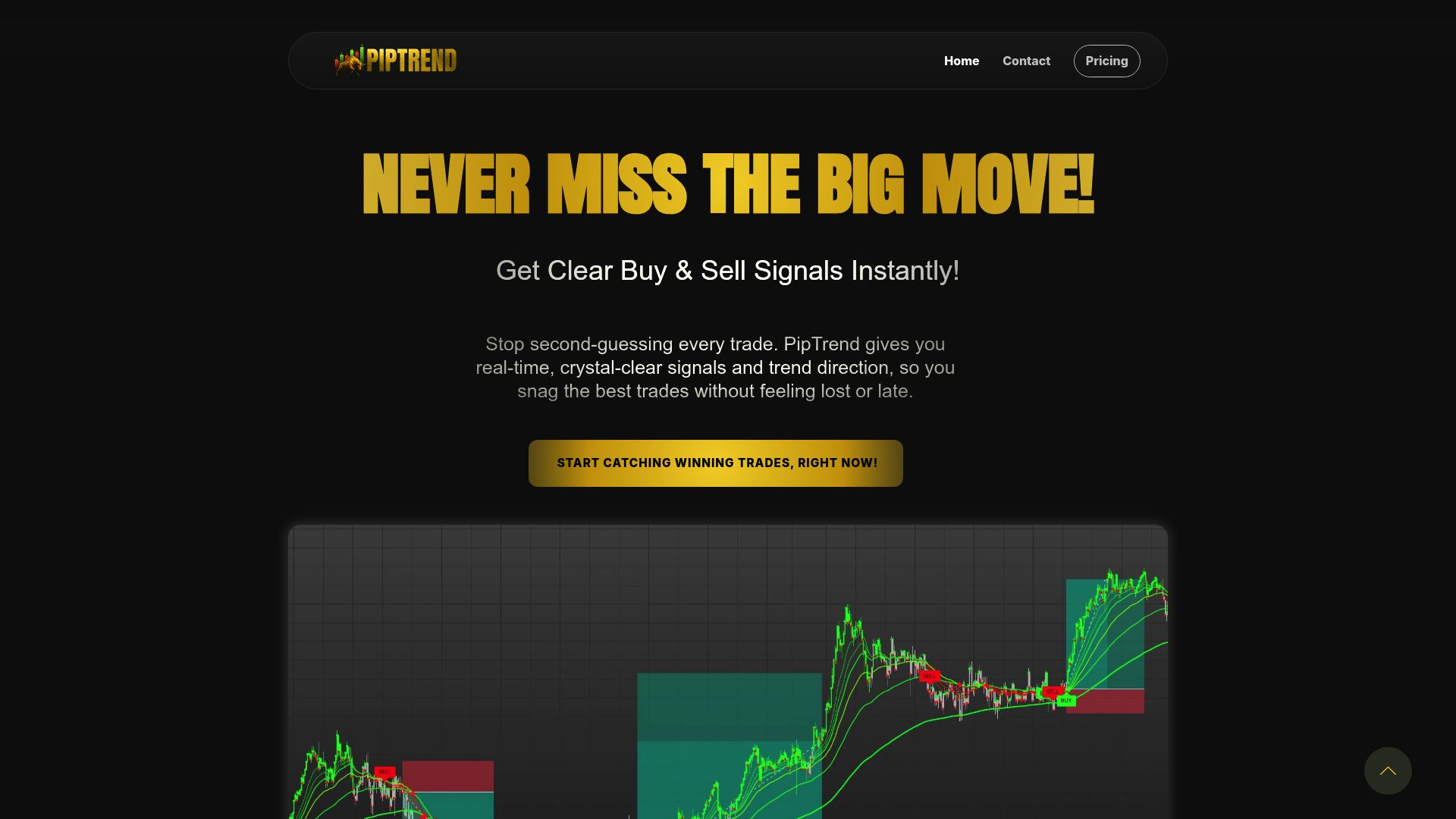
AI is transforming trading how does it work by offering real-time analysis and actionable signals. Platforms like PipTrend scan vast amounts of data to spot patterns and send instant buy or sell alerts across forex, crypto, stocks, and indices.
 Trading Indicators: Enhancing Your Edge">
What sets AI indicators apart? They use multi-timeframe analysis to filter out noise, helping you align your trades with major trends. This reduces analysis paralysis and gives both beginners and pros an edge.
For example, using PipTrend’s dashboard, you can see trending opportunities and receive instant alerts, making it easier to react quickly. AI tools are especially valuable for new traders looking to build consistency and confidence in their trading how does it work approach.
Common Trading Mistakes and How to Avoid Them
Every beginner makes mistakes, but knowing what to watch for can save you money. Overtrading and chasing losses often stem from impatience or emotion. Ignoring risk management protocols, such as trading without stop-losses, is a recipe for disaster.
Another common pitfall is trading how does it work without a plan or journal. This leads to random, impulsive decisions. Avoid falling for “hot tips” and market hype, which can cloud your judgment.
Stay adaptable. Markets change, so should your strategies. Patience and discipline pay off over time. By learning from mistakes and sticking to proven principles, you’ll master trading how does it work with greater confidence.
Understanding the Risks and Rewards of Trading
Navigating the world of trading means weighing both the exciting potential for profit and the inevitable risks involved. If you’re asking, “trading how does it work,” it’s crucial to understand the full spectrum—from financial gains to psychological challenges. Let’s break down the key aspects every trader should consider.
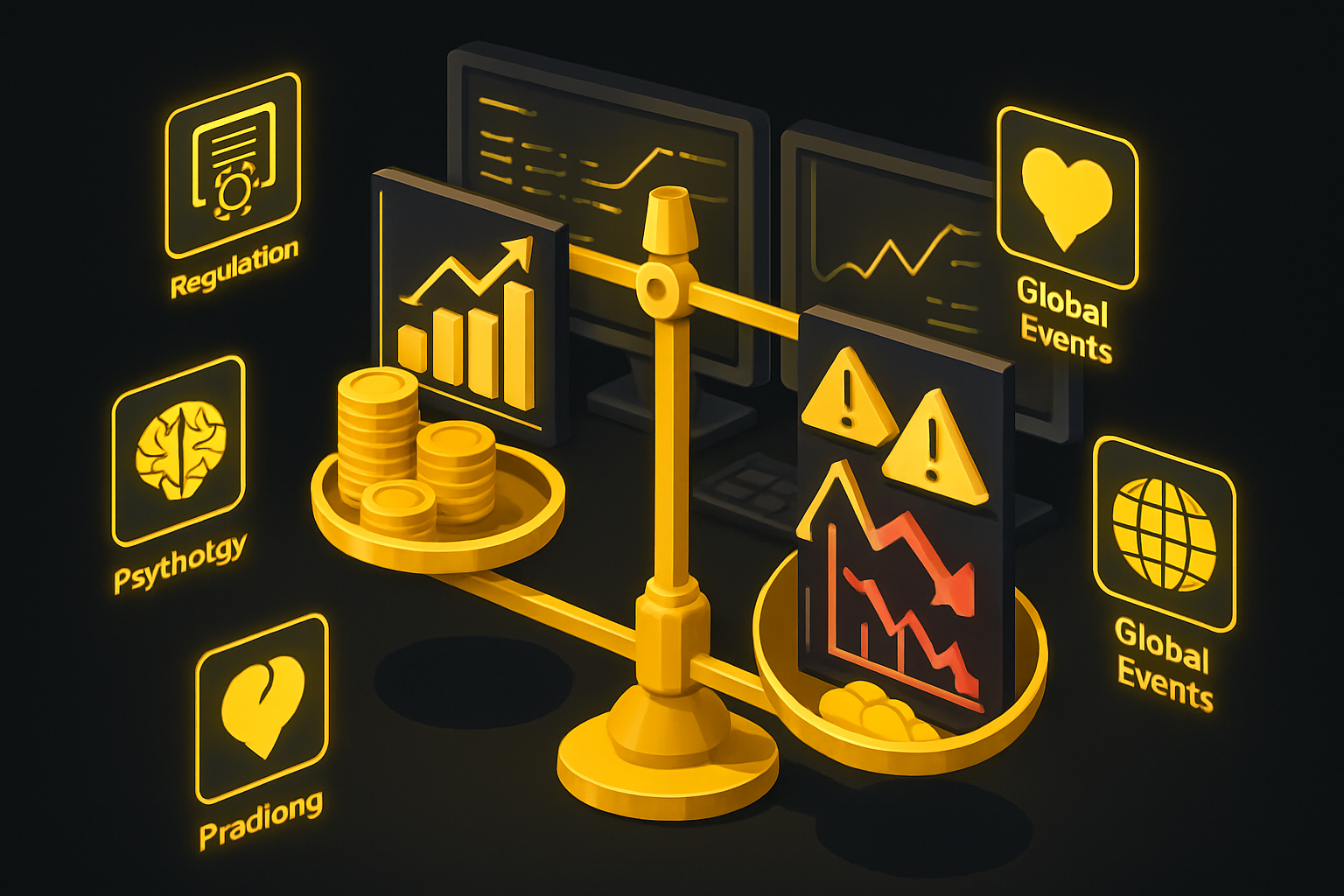
The Upside: Potential Profits and Flexibility
One of the biggest attractions of trading is its potential for rapid profits. Traders can capitalize on price swings in stocks, forex, crypto, and other assets, often with the flexibility to trade around the clock. This means you’re not limited by traditional office hours or geographic boundaries.
You can go long or short, scaling your trades based on your available capital. For example, some traders profit from volatility during major news events, turning market uncertainty into opportunity. Retail participation has exploded in recent years, with retail investors shattering records with $6.6 trillion traded in the first half of 2025. If you’re exploring trading how does it work, these possibilities are a huge draw.
The Downside: Risks and Volatility
While the rewards are tempting, the risks are just as real. Trading how does it work becomes more complex when you factor in leverage, rapid price swings, and emotional decision-making. Market volatility can wipe out accounts in minutes, especially if risk management is ignored.
Emotional stress, the risk of losing your entire investment, and even losing more than you deposited (with leveraged products), are genuine concerns. Regulatory bodies regularly warn that up to 71% of CFD traders lose money. Understanding these risks is essential before you dive in.
Risks vs. Rewards Table
| Aspect | Rewards | Risks |
|---|---|---|
| Profit | Quick capital gains | Rapid losses |
| Flexibility | 24/5 global market access | Overtrading temptation |
| Leverage | Amplified profits | Amplified losses |
Regulatory Environment and Trader Protection
A strong regulatory framework is vital in trading how does it work. Financial regulators like the FCA and SEC set strict rules for brokers to protect traders. This includes mandatory licensing, segregation of client funds, and investor compensation schemes.
For example, if a regulated broker faces insolvency, clients may be eligible for compensation. Regulations also require brokers to disclose risks clearly, helping traders make informed decisions. As trading evolves, expect regulatory oversight to adapt, especially with the rise of digital assets and new trading technologies.
Psychological Aspects of Trading
Mastering trading how does it work isn’t just about numbers—it’s also about mindset. Emotional control is critical. Fear, greed, and overconfidence are common pitfalls that can lead to impulsive or “revenge” trading after a loss.
Successful traders develop routines, practice mindfulness, and reflect on their decisions. Building emotional resilience, seeking mentorship, and joining trading communities can provide valuable support. Remember, trading is as much a psychological game as it is a financial one.
Real-World Trading Examples and Case Studies
Looking at real-world examples is one of the best ways to grasp trading how does it work. Consider the airline stocks during the COVID-19 crash and recovery. Some traders profited from the sharp drop and rebound, while others suffered heavy losses due to sudden market moves.
Geopolitical events often shake forex and commodities, creating both danger and opportunity. Retail trading has doubled since 2019, reflecting a major shift in market dynamics. For deeper insights into recent trends, the 2024 Global Retail Investor Outlook highlights how retail traders are shaping markets in new ways.
How to Get Started with Trading in 2025
Starting your journey in trading can feel overwhelming, but breaking it down into clear steps makes the process manageable. If you’re wondering about trading how does it work in 2025, this section walks you through every stage, from choosing your market to building a sustainable plan and finding the right support.
Choosing the Right Market and Asset Class
Selecting what to trade is your first big decision. The world of trading how does it work revolves around asset classes like stocks, forex, crypto, indices, and commodities. Each offers unique opportunities and risks.
Retail investors are making a huge impact, with Retail Investors Pump $1.55T into Stocks, ETFs in 2025 H1 highlighting the surge in stock and ETF participation. Consider your interests, risk tolerance, and the hours you’re available to trade.
Here’s a quick comparison:
| Asset | Volatility | Market Hours | Typical Beginner Appeal |
|---|---|---|---|
| Stocks | Medium | 9:30-16:00 | High |
| Forex | High | 24/5 | Medium |
| Crypto | Very High | 24/7 | Growing |
| Commodities | Medium | Varies | Moderate |
Demo accounts help you test different markets before risking real money. Align your trading style with your chosen assets for a smoother start.
Selecting a Broker and Trading Platform
A reliable broker is your gateway to the markets. When exploring trading how does it work, pay close attention to regulation, fees, platform features, and support.
Test several demo accounts to compare interfaces and execution speed. Check that your broker is regulated by authorities like the FCA or SEC. Read reviews and ensure there are solid security measures such as two-factor authentication.
Key factors to consider:
- Regulation and reputation
- Platform tools (charting, mobile access)
- Fees and commissions
- Customer support quality
- Withdrawal and funding options
Avoid unregulated brokers, and always verify the safety of your funds before committing.
Setting Up Your First Trade: A Beginner’s Walkthrough
Once your account is funded, it’s time to place your first trade. The process of trading how does it work is straightforward but requires attention to detail.
Step-by-step:
- Select your asset (e.g., a stock or currency pair).
- Decide on the trade size.
- Set stop-loss and take-profit levels for risk control.
- Place a market or limit order.
- Monitor your position in real time.
For example, buying your first share involves choosing the stock, entering the number of shares, and confirming the order. Use trading simulators to practice and build confidence before trading live.
Developing a Personal Trading Plan
A trading plan is your blueprint for success. Understanding trading how does it work means setting clear goals, risk parameters, and rules that suit your lifestyle.
A simple plan should include:
- Daily loss limits
- Preferred strategies (trend following, swing trading, etc.)
- Journaling trades for review
- Scheduled performance check-ins
Example template:
| Goal | Risk per Trade | Strategy | Review Frequency |
|---|---|---|---|
| Growth | 1% | Swing Trading | Weekly |
Stick to your plan consistently, and adjust only as you gain experience and insights.
Continuous Learning and Staying Updated
Markets evolve constantly, so staying informed is critical. As you deepen your understanding of trading how does it work, follow financial news, use economic calendars, and join trading communities.
Explore new methods like Understanding Price Action Trading to enhance your decision-making. Attend webinars, take online courses, and consider mentorship for faster progress.
Being part of active forums and social platforms can accelerate your learning and provide real-time support from other traders.
Resources and Support for New Traders
Support and the right resources make a huge difference in trading how does it work for beginners. Use demo accounts to practice, and consult trading glossaries to build your vocabulary.
Recommended resources:
- Reputable trading academies
- Simulation tools for risk-free practice
- Real-time news feeds and analysis portals
- Community forums for peer advice
- Regulatory sites for safety tips
Peer support can boost your confidence and help you avoid common mistakes. Stay connected, stay curious, and keep learning as you grow in your trading journey.
Now that you understand the basics of how trading works and what it takes to get started in 2025, it’s time to turn knowledge into action. Navigating the markets can feel overwhelming at first, but having the right tools makes all the difference. That’s where PipTrend comes in—with its real-time, AI-powered buy and sell signals, you can cut through the noise and trade with more confidence. If you’re ready to put your new skills to use and want an edge from day one, Start Catching Winning Trades, Right Now!