
In today’s lightning-fast markets, speed is the name of the game. Traders everywhere are seeking an edge by mastering fast execution and efficient strategies.
This guide is your roadmap to navigating the world of quick trade techniques. Whether you’re a seasoned pro or just starting out, you’ll discover the fundamentals, essential tools, rapid execution methods, smart risk management, advanced tactics, and what the future holds for fast trading in 2025.
Ready to boost your trading speed and results? Dive in and unlock your competitive advantage now.
Understanding Quick Trading in 2025
Modern trading is changing rapidly, and quick trade strategies are leading this transformation. Let’s explore what sets quick trade apart, how it’s evolved, and why it’s become essential for traders in 2025.
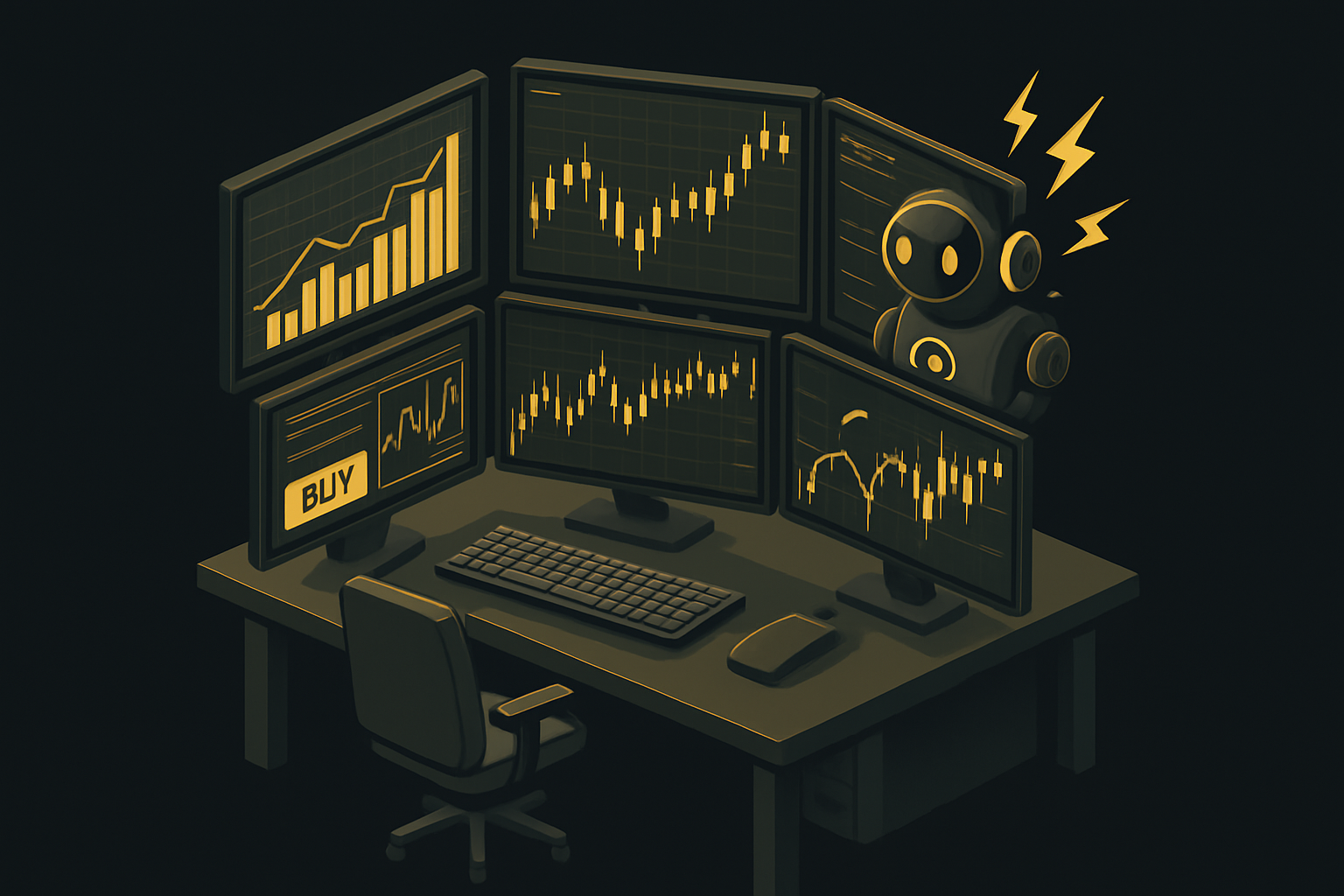
Defining Fast Trading and Its Evolution
Quick trade refers to executing trades at lightning speed, capitalizing on small price movements within extremely short timeframes. Unlike traditional trading, where positions may be held for days or weeks, quick trade relies on rapid entries and exits, often within minutes or seconds.
The evolution of quick trade is remarkable. Decades ago, trades were executed manually, with phone calls and paper tickets. Today, algorithmic systems and artificial intelligence drive most quick trade activity. In 2025, this shift has been accelerated by advanced hardware, ultra-low-latency internet, and powerful trading algorithms.
Market volatility has increased, making quick trade strategies vital. Tighter spreads and the ability to act on micro-movements are now possible due to sophisticated platforms and AI-driven decision-making. Traders can access global markets from their smartphones, further shrinking the gap between opportunity and execution.
Here’s a quick overview of common fast trading types:
| Type | Typical Holding Time | Key Focus |
|---|---|---|
| Scalping | Seconds to minutes | Small profits, high freq |
| Day Trading | Minutes to hours | Intraday moves |
| High-Frequency Trading | Milliseconds | Algorithmic speed |
Recent statistics show that in 2024–2025, the average holding time for quick trade positions dropped below two minutes on major exchanges, and trading volumes hit record highs. In volatile markets, a one-second delay can mean missing a profitable move or taking a loss. Mobile trading apps and global connectivity have made quick trade more accessible than ever.
Benefits and Drawbacks of Quick Trading
Quick trade offers several compelling advantages. Traders can:
- Capture more opportunities each day
- Enjoy faster capital turnover
- Potentially achieve higher returns in volatile conditions
However, there are important drawbacks to consider:
- Increased risk due to rapid decision-making
- Higher transaction costs from frequent trades
- Greater potential for emotional and impulsive actions
Who benefits most from quick trade strategies? Typically, tech-savvy individuals who thrive under pressure, enjoy analyzing data in real time, and are comfortable with risk. Many new traders are drawn to quick trade for its excitement and profit potential, but it’s crucial to master the basics first. Resources like the Beginner's guide to fast trading can be invaluable for understanding essential concepts and risk management.
Consider a trader who specializes in quick trade: by consistently reacting to news catalysts and using fast execution tools, they manage to secure modest but steady profits almost every day. This approach requires discipline, planning, and the ability to adapt instantly.
Regulatory changes in 2025 have also shaped quick trade. New rules focus on transparency and risk controls, ensuring that speed doesn’t compromise market integrity. Staying updated on these changes is now as important as mastering the strategies themselves.
Essential Tools and Platforms for Fast Trading
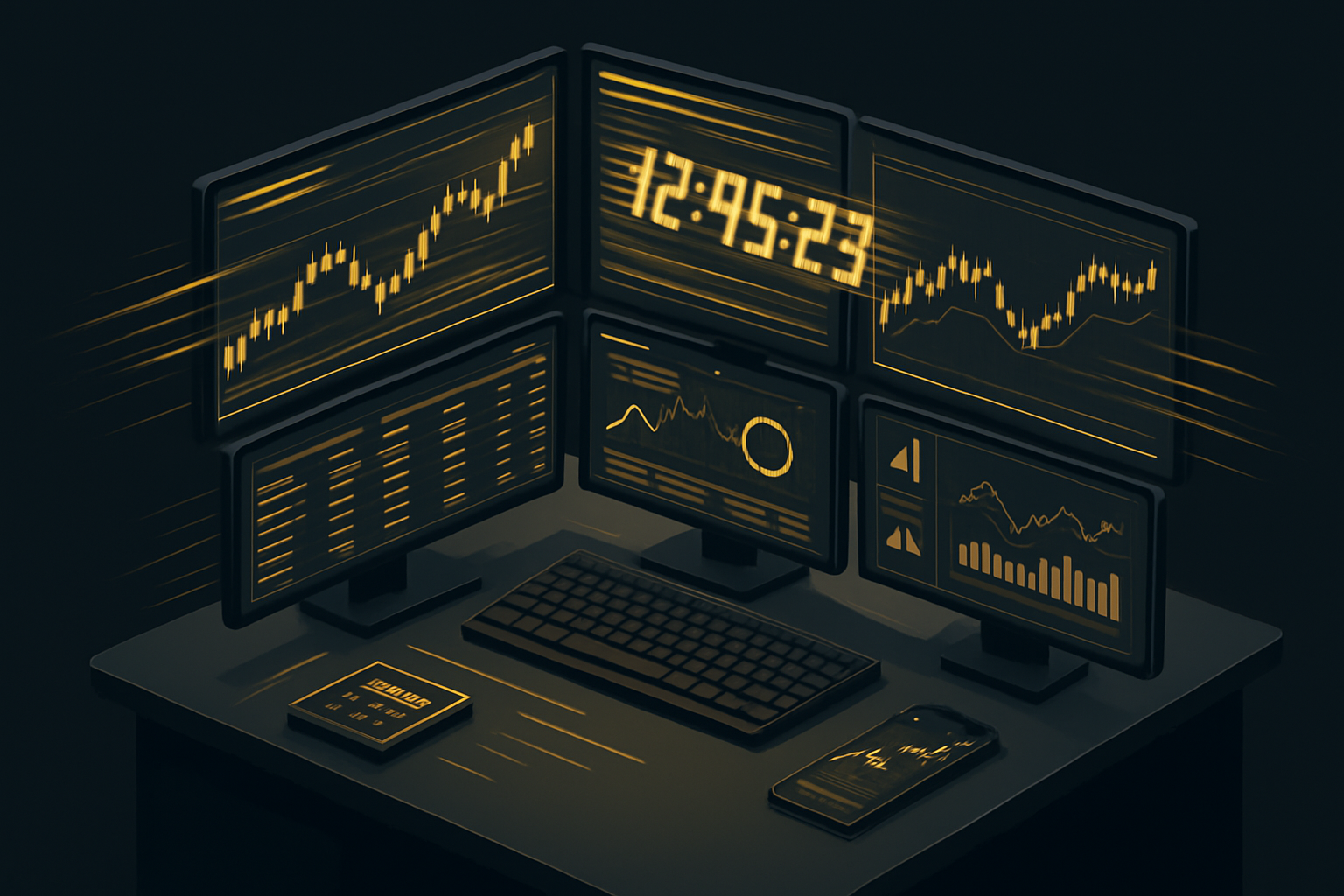
Fast and efficient execution is the backbone of any successful quick trade strategy. The right platforms and tools can mean the difference between catching prime opportunities and missing out. In this section, we'll break down what to look for in trading platforms and the must-have tools every quick trade enthusiast should consider.
Choosing the Right Trading Platform
A quick trade demands a platform built for speed, reliability, and seamless usability. When evaluating options, focus on these key criteria:
- Order execution speed: Milliseconds can make or break a quick trade. Seek platforms with proven low-latency performance.
- Reliability: Downtime is a trader's worst nightmare. Check for platforms with robust uptime records and backup systems.
- User interface: An intuitive layout lets you react instantly during volatile moments.
In 2025, top platforms like TradingView, MetaTrader, and proprietary broker systems continue to lead the pack. What's new? Many now offer advanced API access for algorithmic and AI-powered quick trade strategies. Check out this simple comparison:
| Platform | Avg. Execution Speed | Uptime (%) | API Support | Mobile App |
|---|---|---|---|---|
| TradingView | 30 ms | 99.98 | Yes | Yes |
| MetaTrader 5 | 25 ms | 99.96 | Yes | Yes |
| BrokerPro 2025 | 18 ms | 99.99 | Advanced | Yes |
Execution speed isn't just about numbers—it's about staying ahead in a quick trade environment. Even a fraction of a second can tip the scales.
Mobile trading is also essential. Many quick trade professionals use both desktop and mobile platforms, switching seamlessly as market conditions change. While desktops offer more screen space, mobile apps provide flexibility and real-time alerts on the go.
For a comprehensive breakdown of the top tools and platforms, the Comprehensive Guide to Trading Tools is a valuable resource for comparing the latest offerings and features.
Must-Have Tools for Quick Traders
Beyond the platform itself, mastering quick trade requires a toolkit designed for rapid analysis and execution.
- Real-time market data feeds: Instant price updates and news aggregators keep you in sync with market-moving events.
- Advanced charting software: Multi-timeframe analysis, technical indicators, and pattern recognition help spot quick trade entries.
- Hotkeys and macros: Speed up order placement with customizable shortcuts. In fast markets, manual order entry is simply too slow.
- Custom dashboards: Visualize multiple assets, watchlists, and alerts in one place for quick trade decisions.
- AI and algorithmic integration: AI-powered trade signals and bots can execute strategies faster and more consistently than manual trading.
- Security features: Two-factor authentication, encryption, and secure API keys are non-negotiable for protecting your quick trade accounts.
Here's an example: Imagine using a dashboard that displays real-time signals, news, and order book data side by side. With hotkeys, you enter a quick trade in seconds, while AI-driven alerts notify you of emerging setups. This synergy of tools streamlines your workflow, letting you focus on strategy, not mechanics.
Ultimately, the best tools are those that fit your unique quick trade style and help you execute with confidence.
Step-by-Step Guide to Executing Fast Trades
Mastering the art of the quick trade means optimizing every step, from preparation to execution and review. In this section, you'll discover practical routines and strategies to help you react with speed and precision in the fast-paced world of 2025.
Preparing for Quick Trades
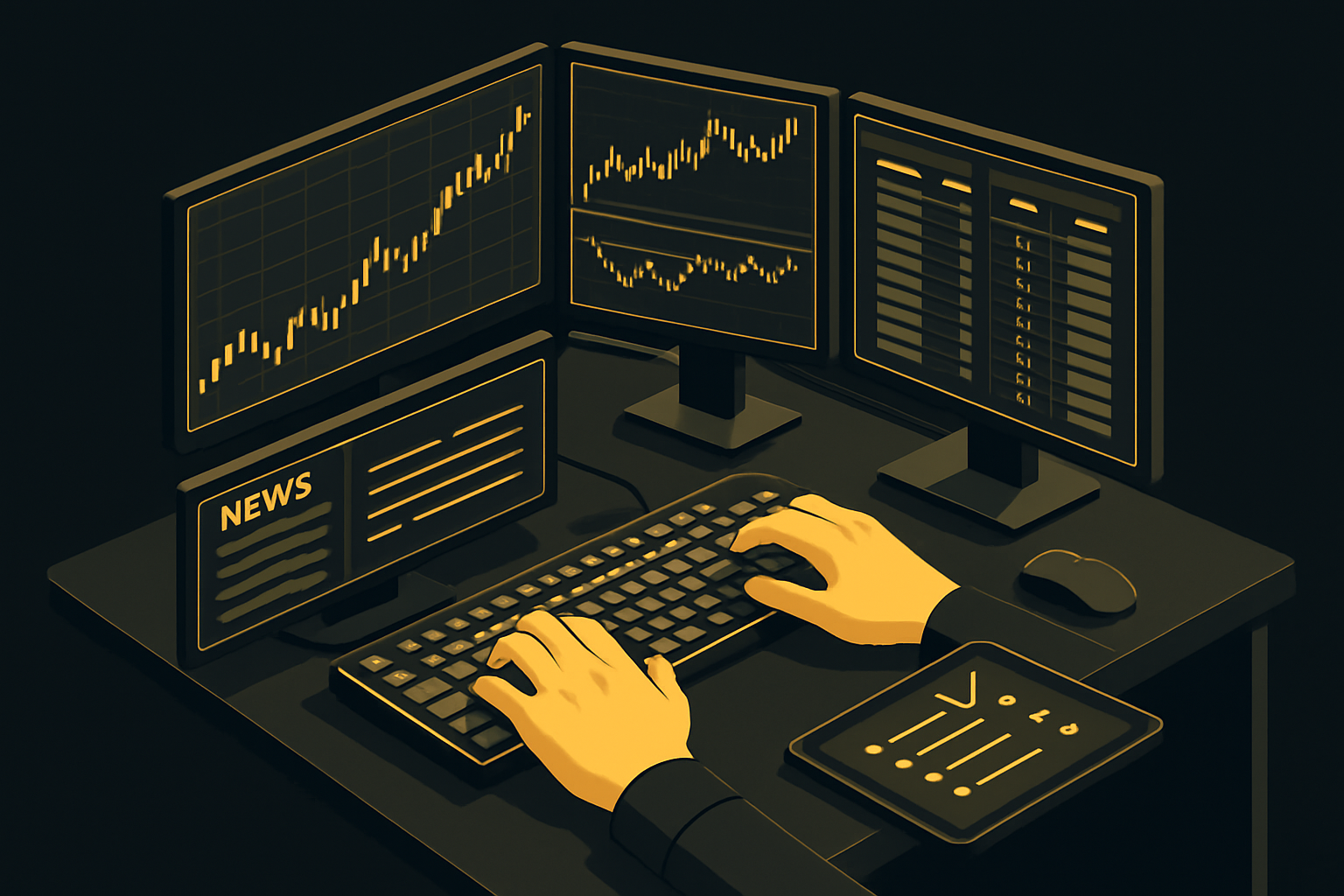
Preparation is the backbone of every successful quick trade. Start by optimizing your workspace for efficiency. Invest in dual monitors, a high-speed internet connection, and an ergonomic chair to reduce fatigue during intense trading sessions.
Before the market opens, conduct a thorough analysis. Scan for news catalysts, review economic calendars, and identify assets with high volatility. Use your trading platform’s watchlist feature to track potential quick trade setups.
A rock-solid trading plan is essential. Define your entry and exit rules, set clear position sizes, and establish stop-loss levels. Here’s a simple pre-trading checklist to keep you on track:
- Check internet and platform connectivity.
- Review overnight news and pre-market movers.
- Mark key support and resistance levels.
- Set up alerts for target price zones.
- Confirm your risk and position sizing for each quick trade.
This preparation ensures you’re ready to execute a quick trade the moment an opportunity arises, boosting your chances of success.
Placing Trades Efficiently
When it’s time to act, speed is everything. Quick trade execution relies on hotkeys, one-click order features, and a deep understanding of the order book. Configure your platform’s hotkeys for market, limit, and stop orders so you can react instantly.
Monitor order book depth to assess liquidity and avoid slippage. The best quick trade setups often appear when volume surges and spreads tighten. Use real-time signals and indicators to spot these moments. For more on rapid signal use, check out this signals and indicators in trading guide.
Here’s a step-by-step example of a quick trade in action:
- Receive a buy signal on your dashboard.
- Double-check liquidity in the order book.
- Hit your hotkey to place an instant order.
- Confirm execution and set your stop-loss.
- Monitor the position closely for target exit.
This streamlined process minimizes hesitation and maximizes your ability to capitalize on quick trade opportunities.
Post-Trade Management and Review
After executing a quick trade, efficient post-trade steps are vital. Close positions decisively once your target or stop-loss is hit—avoid letting emotions dictate your exit. Rapidly recording trade details in a digital journal keeps your performance data organized.
Review each quick trade with a critical eye. Analyze what went right, what went wrong, and how your speed or decisions impacted the outcome. Consider using a simple table to log your trades:
| Trade # | Entry Time | Exit Time | Result | Emotion |
|---|---|---|---|---|
| 1 | 09:32 | 09:34 | +0.5% | Calm |
| 2 | 10:15 | 10:17 | -0.3% | Rushed |
This immediate feedback loop helps you spot patterns and avoid repeating mistakes. Over time, disciplined post-trade review sharpens your quick trade instincts and builds lasting confidence.
Risk Management Strategies for Fast Trading
Navigating the risks of quick trade is essential for long-term profitability. Fast-paced markets offer incredible opportunities, but they also expose traders to unique pitfalls that can drain capital in seconds. Developing robust risk management for quick trade is not just smart—it's vital for survival.
Identifying and Managing Risks Unique to Quick Trading
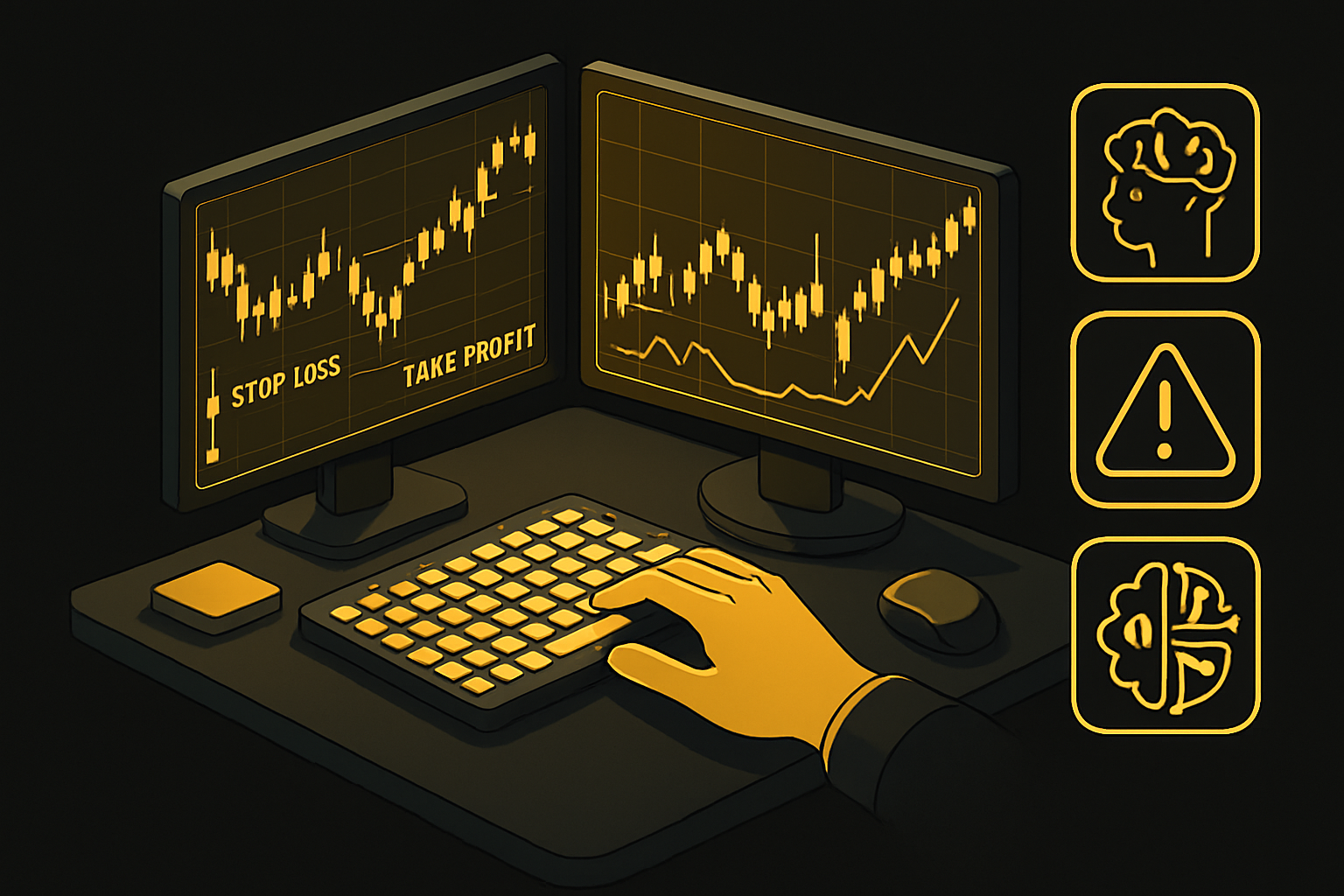
Quick trade strategies bring specific risks that demand proactive management. The most common threats include:
- Slippage: Prices can move before your order executes, especially during volatility.
- Overtrading: The urge to chase every opportunity can lead to excessive, undisciplined trades.
- Emotional decision-making: Rapid markets can trigger impulsive actions.
To manage these, traders should:
- Set precise stop-loss and take-profit levels for every quick trade. This limits potential losses and locks in gains.
- Control leverage and position size to avoid large, unexpected drawdowns.
- Automate risk controls using advanced order types or trading bots. Preset stop orders and automated alerts can help maintain discipline in the heat of quick trade.
- Monitor market conditions closely. In 2025, AI-driven volatility adds new layers of risk. For more on this trend, see AI's Impact on Market Volatility.
Here’s a table highlighting the difference discipline can make in quick trade results:
| Trader Type | Avg. Loss per Trade | Win Rate (%) | Emotional Trades |
|---|---|---|---|
| Disciplined | $25 | 57 | Low |
| Undisciplined | $75 | 39 | High |
Using technology to automate stop-losses and alerts is a game-changer for quick trade. Automated systems reduce reaction time, cut down on errors, and help prevent repeated mistakes.
Psychological Aspects of Fast Trading
The mental side of quick trade is just as important as technical skill. High-speed environments create stress and decision fatigue, which can erode judgment.
Pro traders handle these challenges by:
- Establishing routines: A pre-trade checklist and set review times help maintain focus.
- Practicing mindfulness: Short breathing exercises between trades can reset mental clarity.
- Limiting session lengths: Taking breaks prevents burnout and impulsive decisions during quick trade sessions.
Professionals also use visualization and self-talk to reinforce positive habits. For example, before a quick trade, they might rehearse their exit strategy or remind themselves to stick to their plan.
A simple technique: After every quick trade, jot down what went well and what to improve. This immediate feedback loop keeps emotions in check and supports continuous growth.
In the end, mastering the psychological demands of quick trade is what separates consistent winners from those who struggle. Building mental resilience, just like refining technical skills, is a cornerstone of lasting success.
Advanced Tactics and Automation for Speed
Staying ahead in the quick trade landscape means embracing advanced tactics and automation. In 2025, traders who leverage technology and innovative strategies can dramatically boost their trading speed, accuracy, and consistency.
Leveraging Algorithmic and AI Tools
Algorithmic trading has become the backbone of quick trade strategies. Algorithms can scan markets, identify patterns, and execute orders in milliseconds—far faster than any manual process. In 2025, AI-powered systems take this further by learning from historical data and adapting to new market conditions.
Integrating AI tools into your quick trade setup offers several advantages:
- Consistency: Automated algorithms remove emotions, reducing the risk of impulsive trades.
- Speed: AI bots can monitor multiple assets and react instantly to market changes.
- Scalability: With automation, you can manage more positions than with manual trading.
For example, imagine a trader using an AI-driven bot that reacts to sudden price spikes. This bot can enter and exit trades within seconds, capturing profits that manual traders would miss. Customizing bots with your own quick trade rules—like setting specific entry signals or risk parameters—lets you fine-tune performance.
According to AI in trading strategies, traders adopting machine learning models are seeing notable improvements in execution speed and win rates. As AI continues to evolve, expect even more innovative features, from predictive analytics to automated portfolio balancing.
Ultimately, automation is not just about speed, but about making smarter, data-driven decisions. Quick trade practitioners who embrace these tools gain a clear competitive edge.
Multi-Timeframe and Cross-Market Analysis
Another advanced quick trade tactic is using multi-timeframe analysis. This approach involves monitoring the same asset across different chart intervals—such as 1-minute, 5-minute, and 15-minute charts—to confirm trade setups and filter out noise.
Here's how multi-timeframe analysis can enhance your quick trade strategy:
- Improved Accuracy: Confirm signals on higher timeframes to avoid false entries.
- Broader Perspective: Spot trends and reversals that may not be visible on a single chart.
- Better Timing: Align entries and exits with both short-term volatility and longer-term trends.
A practical example: A trader spots a bullish pattern on the 1-minute chart, but waits for confirmation on the 5-minute chart before executing a quick trade. This simple step can significantly increase the probability of success.
For a step-by-step approach, check out this multi-timeframe analysis guide, which provides practical tips for applying this strategy in fast-moving markets.
Cross-market monitoring is another valuable tactic. By watching correlated assets (like EUR/USD and GBP/USD), you can identify leading signals and diversify your quick trade opportunities. Data shows that traders using multi-timeframe and cross-market analysis often report higher win rates and more consistent profits.
Incorporating these advanced tactics into your quick trade routine will help you adapt to dynamic markets and stay one step ahead.
Future Trends and Innovations in Fast Trading
The quick trade landscape is evolving at breakneck speed, driven by technological breakthroughs and shifting market dynamics. Staying ahead means understanding what’s next and adapting your strategies to harness every advantage.
Technological Developments Shaping Fast Trading in 2025
In 2025, technology is the engine powering every quick trade. Artificial intelligence and machine learning now analyze market data in real time, delivering actionable insights at lightning speed. Quantum computing, while still emerging, promises even faster calculations, potentially unlocking new levels of quick trade efficiency.
Trading platforms are transforming. Many are moving to cloud-based architectures, offering near-zero downtime and seamless access from anywhere. Decentralized exchanges are gaining traction, making quick trade opportunities available around the clock. Meanwhile, mobile-first platforms allow traders to react instantly to market shifts, ensuring they never miss a beat.
Here’s a quick look at how these innovations compare:
| Innovation | Impact on Quick Trade | Availability |
|---|---|---|
| AI & Machine Learning | Real-time analytics, smarter signals | Widespread |
| Quantum Computing | Ultra-fast computation | Emerging |
| Cloud Platforms | Low latency, global access | Mainstream |
| Decentralized Exchanges | 24/7 trading, transparency | Growing |
| Mobile-First Design | On-the-go execution | Standard |
Regulatory changes are also shaping the quick trade environment. New rules aim to balance speed and market stability, which means traders must stay alert to compliance updates. For example, several platforms now boast sub-second execution times, a direct response to demand for ever-faster quick trade transactions.
Industry leaders predict that AI integration will become standard in every serious trading setup. If you want to see what’s possible, explore the Top AI Trading Tools of 2025 to discover how today’s tools are setting new performance benchmarks.
Preparing for the Next Wave
Adapting to the future of quick trade means staying nimble and open to change. Markets are becoming more volatile, and new technologies demand constant learning. The best quick trade strategies will be those that evolve with the landscape.
Continuous education is key. Keeping up with algorithmic advances, regulatory shifts, and platform updates ensures you won’t fall behind. Reading resources like Future Trends in Algorithmic Trading can help you anticipate what’s coming and fine-tune your approach.
Here’s a simple roadmap to future-proof your quick trade game:
- Regularly review trading tools and platforms for new features.
- Network with other traders to share tips and spot trends early.
- Dedicate time each week to learning about AI, automation, and market structure.
Remember, community and networking are as important as technology. Joining trading forums or mastermind groups can give you fresh perspectives and insider knowledge, helping you stay ahead in the quick trade race.
As the quick trade world speeds into the future, those who combine adaptability, education, and the right tech will be best positioned to thrive.
Now that you’ve got a solid grasp of what it takes to master fast trading in 2025—everything from smart risk management to harnessing the latest AI-powered tools—it’s time to put this knowledge into action. Why not take the guesswork out of your trades and see what real-time, clear signals can do for your results? If you’re ready to boost your confidence and efficiency in fast-paced markets, See Your Trading Improve With PipTrend. Let’s make those quick trades smarter, together!