
Candlestick patterns have stood the test of time, remaining a favorite tool for traders even as financial markets transform in 2025. Yet, many still find it difficult to trade candlestick patterns with reliable success. Why do some traders thrive while others struggle to decode these signals?
In this guide, you’ll discover 12 of the best, actionable ways to trade candlestick patterns effectively, blending classic wisdom with modern strategies. We’ll cover practical setups, accuracy-boosting tips, and how to adapt your approach for today’s fast-paced environment.
Ready to unlock trading mastery? Let’s dive in.
Understanding Candlestick Patterns in 2025
Candlestick patterns have stood the test of time—evolving from their humble beginnings to become a core tool for traders today. In 2025, the way we trade candlestick patterns is more dynamic than ever, thanks to rapid technological advancements and deeper market insights. Let’s break down how these patterns have changed, why they matter, and how you can use them confidently in the modern trading landscape.
The Evolution of Candlestick Charting
Candlestick charting dates back to 18th-century Japan, where rice traders first used these patterns to predict price movements. Fast forward to 2025, and candlestick analysis has been transformed by digital platforms, algorithmic trading, and artificial intelligence.
Modern traders now leverage AI tools that scan for patterns in real-time, making it easier to trade candlestick patterns efficiently. The integration of machine learning and instant data feeds means traders can adapt quickly to shifting market conditions. To dive deeper into how these changes impact trading today, check out this Candlestick Charts Explained: 2025 Investor's Guide.
Staying current with these advancements is crucial for anyone looking to trade candlestick patterns successfully.
Anatomy of a Candlestick
At its core, each candlestick tells a story about market sentiment. The body shows the open and close prices, while the wicks (or shadows) display the highest and lowest points reached during the session.
Color matters too: a green or white candle signals bullish momentum, while a red or black candle shows bearish sentiment. For example, a long lower wick with a small body (like a hammer) often hints at a potential reversal.
Understanding these details is essential if you want to trade candlestick patterns with confidence, as every part of the candle offers insight into who’s in control—buyers or sellers.
Types of Candlestick Patterns
Candlestick formations come in three main types: single, double, and triple patterns. Each type offers unique clues about market direction. Single candles include doji and hammer patterns. Double formations, like the engulfing pattern, signal strong shifts in momentum. Triple patterns, such as the morning star or three white soldiers, often mark major reversals or continuations.
You’ll find patterns categorized as bullish, bearish, or continuation setups. Recognizing the right type is key if you want to trade candlestick patterns effectively and spot high-probability setups in any market.
Why Candlestick Patterns Matter in 2025
Did you know that over 70% of technical traders rely on candlestick patterns to make decisions? These patterns offer early warnings for reversals, continuations, and market indecision—giving you an edge in fast-moving markets.
In 2025, it’s more important than ever to combine candlestick analysis with advanced tools and solid risk management. By integrating these elements, you can trade candlestick patterns with greater accuracy and adapt to evolving market conditions.
Essential Preparation Before Trading Candlestick Patterns
Preparation is the backbone of success when you trade candlestick patterns. Before placing your first order, it's crucial to build a strong foundation. This means setting up your tools, understanding how to validate signals, and ensuring your mindset is sharp for the challenges ahead.
Setting Up Your Trading Environment
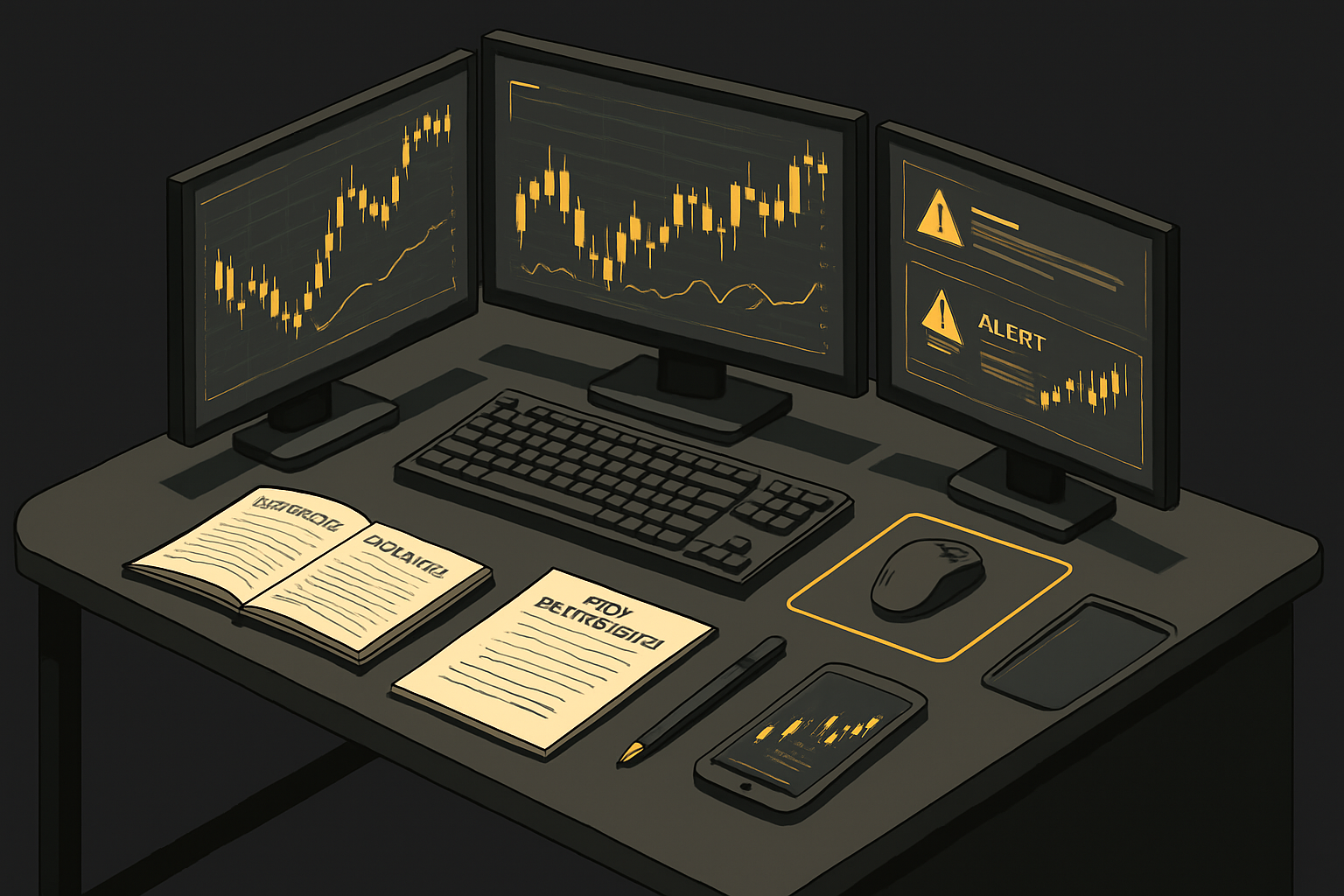
The right trading environment makes a world of difference when you trade candlestick patterns. Start by choosing a platform that offers advanced candlestick visualization and seamless access to real-time data. Look for customizable alerts so you never miss a key setup.
Multi-timeframe analysis is essential for confirmation. By checking patterns across several timeframes, you boost your accuracy and confidence. For a deeper dive into how to use this technique effectively, see this multi-timeframe trading strategies resource.
- Choose platforms with advanced charting features
- Ensure instant access to live price feeds
- Set up alerts for specific candlestick patterns
A well-prepared environment sets you up to trade candlestick patterns with clarity and speed.
Integrating Technical Indicators
Combining indicators with your candlestick approach can filter out false signals and strengthen your trades. Popular choices include moving averages, RSI, MACD, and volume analysis. Each offers a unique perspective that complements candlestick insights.
For example, if you spot a bullish engulfing pattern, confirming with RSI can help you decide whether to enter the trade. If RSI is oversold, the signal is stronger. This approach helps you trade candlestick patterns with greater precision.
- Moving averages show trend direction
- RSI and MACD reveal momentum shifts
- Volume spikes confirm the power behind a pattern
Blending these tools with candlestick setups makes your strategy more robust.
Risk Management Fundamentals
Effective risk management is non-negotiable when you trade candlestick patterns. Start by setting stop-loss and take-profit levels based on the specific pattern structure. For instance, place your stop just below the wick on a bullish hammer to limit losses if the trade reverses.
Calculate position sizes that match your account balance and risk tolerance. Never risk more than a small percentage on a single trade. This keeps you in the game for the long haul.
- Set stops just below/above key pattern wicks
- Determine trade size according to risk limits
- Use take-profit targets based on recent highs or lows
Sound risk management ensures you can trade candlestick patterns with confidence and resilience.
Psychological Readiness and Discipline
Mindset is as important as technical skill when you trade candlestick patterns. Avoid emotional decisions by sticking to a tested strategy. Keep a detailed trading journal to track your results and spot patterns in your performance.
When you lose, treat it as a lesson. Review each trade to refine your approach. Over time, this discipline helps you recognize high-probability setups and avoid costly mistakes.
- Stick to your plan, even after losses
- Record every trade for later analysis
- Focus on learning, not just winning
A disciplined, reflective trader is best equipped to trade candlestick patterns profitably in any market.
12 Best Ways To Trade Candlestick Patterns In 2025
Unlocking the power to trade candlestick patterns can transform your trading results, especially as we navigate the fast-paced markets of 2025. Below, you’ll discover 12 of the most effective, actionable strategies to help you identify, confirm, and capitalize on both classic and advanced candlestick setups. Whether you’re a seasoned trader or just starting out, these methods will give you practical tools to trade candlestick patterns with greater confidence and consistency.
1. Trade Reversals with the Hammer and Hanging Man
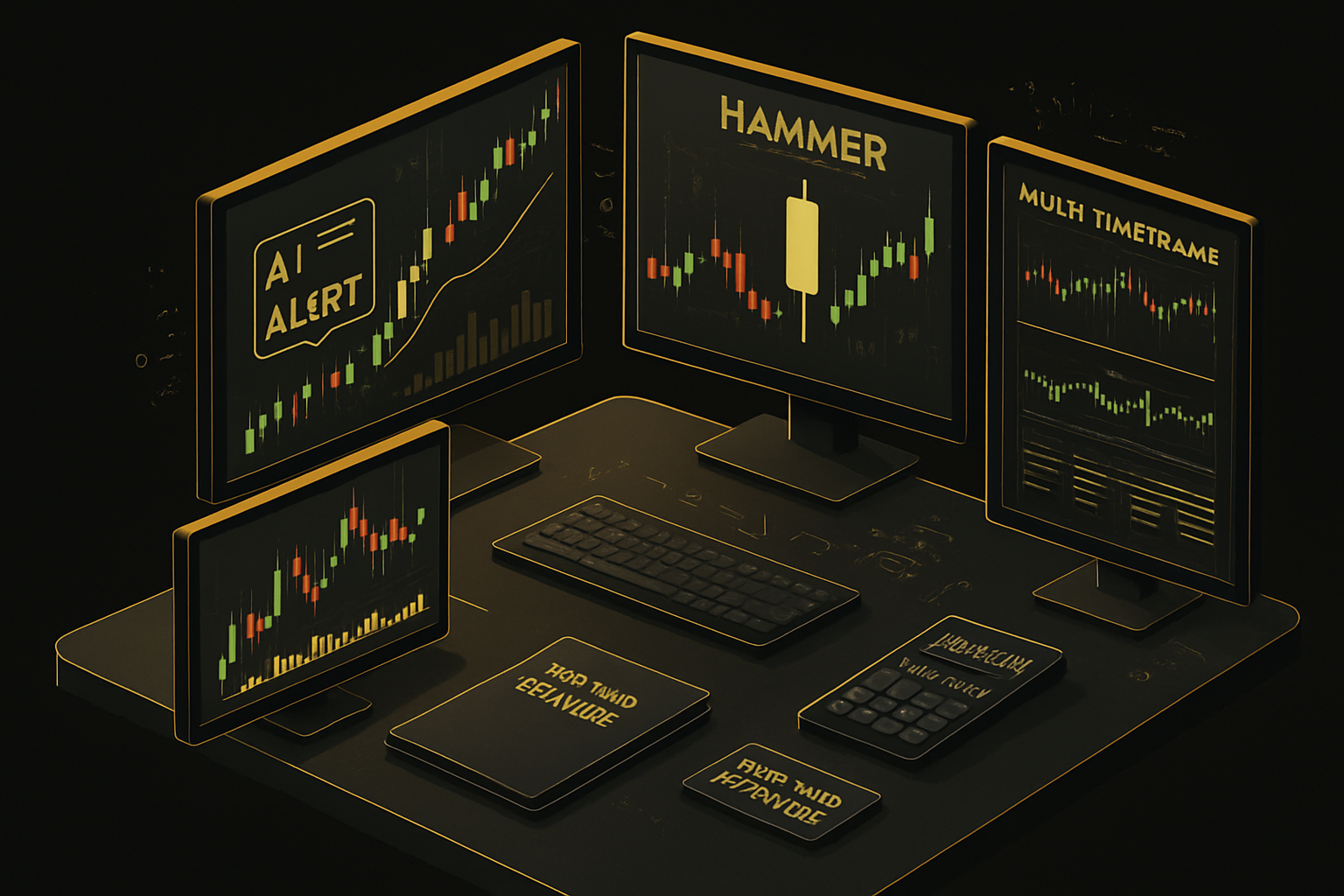
Spotting hammers and hanging man candlesticks at key turning points can give you a decisive edge as you trade candlestick patterns. A hammer forms at the bottom of a downtrend and signals a bullish reversal, while a hanging man appears at the top and warns of a bearish reversal.
For best results, wait for a confirmation candle to close above the hammer or below the hanging man before entering your trade. Tight stop-losses should be placed just beyond the wick for risk management. For an in-depth breakdown and real chart examples, check out this Hammer Candlestick Pattern guide.
Imagine trading EUR/USD: a hammer appears after a long selloff, followed by a strong bullish candle. Entering here lets you trade candlestick patterns with precision, capturing trend reversals early.
2. Master the Engulfing Pattern for Strong Momentum Moves
Engulfing patterns are powerful tools when you trade candlestick patterns, especially after extended trends. A bullish engulfing occurs when a green candle completely swallows the previous red candle, signaling buyers taking control. The opposite holds for bearish engulfing.
Always confirm the pattern with a volume spike. For example, if the S&P 500 forms a bullish engulfing on the 4-hour chart with rising volume, it often precedes a strong upward move. Enter after the confirmation candle, set your stop below the engulfing candle’s low, and target recent resistance.
This approach helps filter out noise and ensures you only trade candlestick patterns with real momentum behind them.
3. Use the Morning and Evening Star for Trend Reversals
Morning and evening stars are classic three-candle formations that highlight major reversals. The morning star signals bullish reversal at the end of a downtrend, while the evening star flags a bearish shift after an uptrend.
Wait for the third candle to close and confirm the pattern before you trade candlestick patterns based on these setups. For example, if Bitcoin forms a morning star on the daily chart after a series of red candles, and the third candle closes strong, it’s a signal to go long.
This method helps you anticipate market turns and trade candlestick patterns with higher confidence.
4. Combine Doji Patterns with Support and Resistance Levels
Doji candles represent indecision, but their power multiplies when they appear at major support or resistance zones. To trade candlestick patterns with dojis, first identify these price levels on your chart.
Wait for a breakout or a confirmation candle before entering. For instance, if EUR/USD prints a doji at multi-month support and the next candle is bullish, that’s your cue. This approach reduces false signals and ensures you only trade candlestick patterns when the odds are stacked in your favor.
Want to dive deeper into doji setups? Explore this detailed Doji candlestick pattern explained resource.
5. Trade Breakouts with Three White Soldiers and Three Black Crows
Three white soldiers (three consecutive bullish candles) and three black crows (three bearish candles) are reliable signals for trend reversals and breakouts. To trade candlestick patterns using these, wait for the third candle to close—this confirms the breakout.
Check for supporting volume, and use trend indicators for added confirmation. For example, a stock index forms three white soldiers on the weekly chart, with above-average volume. Enter long at the close of the third candle, set stops below the pattern, and ride the new trend.
This strategy helps you trade candlestick patterns with conviction at major turning points.
6. Filter Trades with Multi-Timeframe Analysis
One way to boost your win rate as you trade candlestick patterns is by using multi-timeframe analysis. Look for the same pattern to appear on both higher and lower timeframes.
For example, a bullish engulfing on both the 1-hour and 4-hour charts signals a stronger setup. Only enter trades when the pattern aligns across timeframes, increasing your probability of success.
This disciplined approach ensures you trade candlestick patterns that have broad market agreement, minimizing false signals.
7. Utilize AI-Powered Trading Indicators for Real-Time Candlestick Signals
AI has revolutionized how we trade candlestick patterns. AI-powered indicators can scan thousands of charts, detect patterns instantly, and send alerts in real time.
For example, an AI tool spots a shooting star candlestick in a volatile crypto market and sends you a notification. You can act fast, skipping manual analysis. This approach helps you trade candlestick patterns with speed and accuracy, reducing missed opportunities.
AI tools also help standardize your strategy, keeping your decisions objective.
8. Pair Candlestick Patterns with Volume Analysis
Volume is the fuel behind every price move. When you trade candlestick patterns, always check the accompanying volume to validate the setup.
A bearish engulfing with a volume spike signals strong selling pressure. For example, if a commodity prints a bearish engulfing candle and volume doubles, it’s a sign to short the asset. Set stops above the pattern and target recent lows.
Combining volume with candlestick patterns helps you filter out weak or false signals, making your trades more robust.
9. Implement Candlestick Patterns in Algorithmic Trading Strategies
Algorithmic trading has made it easier than ever to trade candlestick patterns systematically. By coding algorithms to recognize and act on specific formations, you remove emotion and execute with precision.
For instance, you might program an algo to enter a trade whenever it detects a piercing line pattern on equities. Backtest your rules to optimize entries, exits, and risk management.
This approach lets you trade candlestick patterns across dozens of markets simultaneously, maximizing efficiency and consistency.
10. Avoid False Signals by Waiting for Candle Close Confirmation
One of the most common mistakes when you trade candlestick patterns is acting before the candle closes. Incomplete candles can change shape, turning a promising setup into a dud.
Always wait for the candle to close before making your move. For example, an intraday doji can morph into a bullish candle by session end. Patience here prevents premature entries and costly errors.
This simple rule can dramatically improve your results when you trade candlestick patterns.
11. Combine Candlestick Patterns with Trendlines and Moving Averages
To trade candlestick patterns more effectively, use trendlines and moving averages to confirm the prevailing trend. Only take trades that align with the bigger picture.
For example, a bullish hammer above the 200-day moving average is more likely to succeed than one in a downtrend. Draw trendlines to spot breakouts or reversals, and use them as additional filters.
This layered approach ensures you trade candlestick patterns with the trend, not against it.
12. Backtest and Refine Your Candlestick Pattern Strategy Regularly
Markets evolve, and so should your approach to trade candlestick patterns. Use historical data to backtest your strategies across different assets and timeframes.
Adjust your entry, exit, and risk rules based on performance. For example, backtesting the three black crows pattern on commodities might reveal optimal stop placement or profit targets.
Regular refinement ensures you continue to trade candlestick patterns with an edge, no matter how markets shift.
Leveraging AI-Powered Tools for Candlestick Pattern Trading
The way traders trade candlestick patterns is rapidly evolving. In 2025, AI-powered tools are leading the charge, enabling traders to spot, confirm, and act on candlestick setups faster and with more confidence than ever before. Instead of spending hours glued to charts, you can now leverage intelligent algorithms to streamline your trading workflow.
How PipTrend Can Enhance Your Candlestick Trading in 2025
AI-powered tools like PipTrend are designed specifically to help you trade candlestick patterns more effectively. PipTrend integrates seamlessly with TradingView, giving you access to real-time, actionable buy and sell signals across forex, crypto, stocks, and indices. Its smart dashboard scans the markets 24/7, instantly highlighting high-probability candlestick setups as soon as they form.
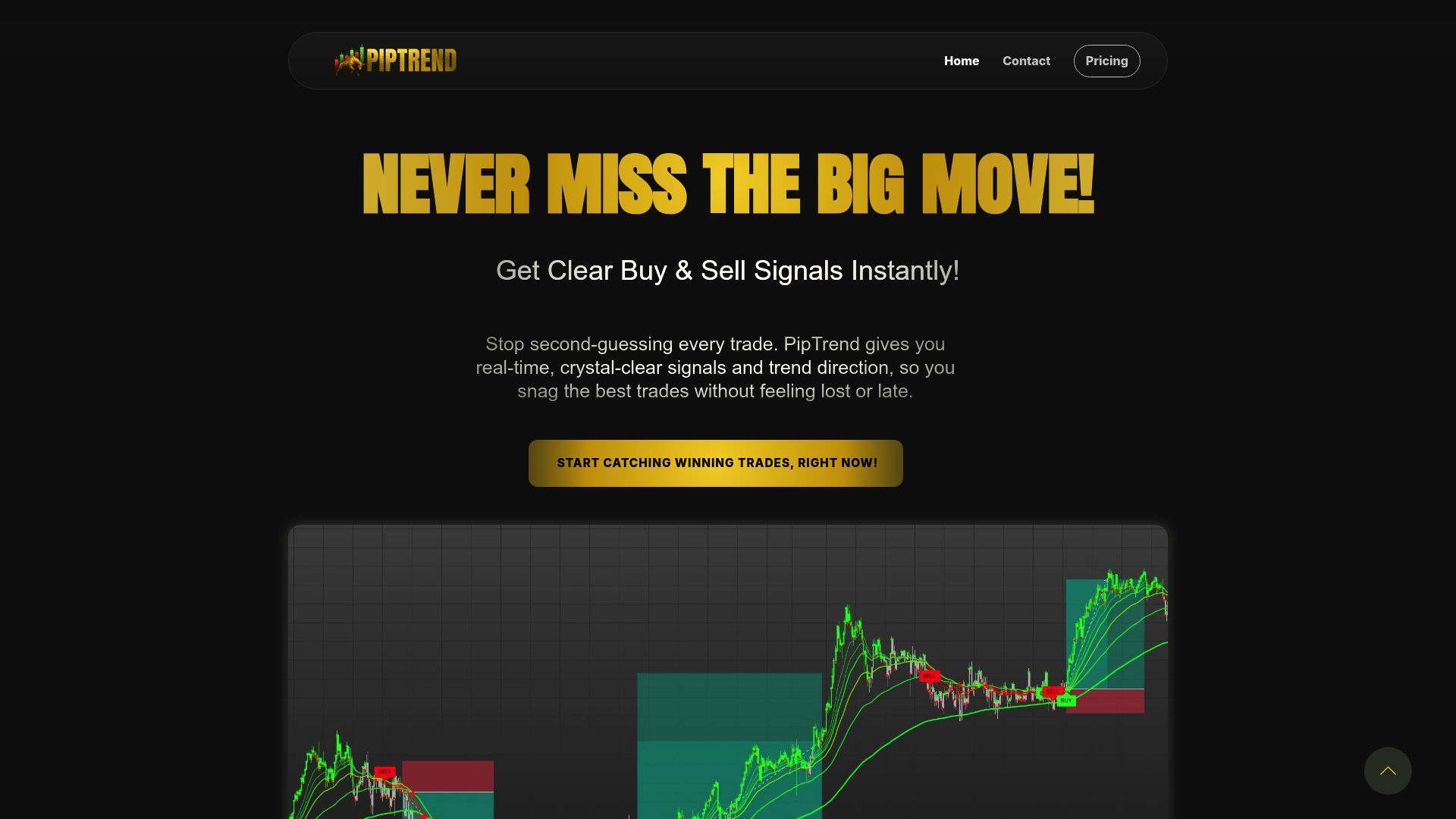
What sets PipTrend apart is its suite of features tailored for modern traders:
| Feature | Benefit |
|---|---|
| Real-time AI alerts | Never miss a key pattern; act instantly |
| Multi-timeframe dashboard | Confirm signals across different chart periods |
| Session liquidity insights | Trade during optimal market conditions |
| Customizable interface | Personalize alerts and visuals to your workflow |
| Expert support & updates | Stay ahead with ongoing improvements |
Instead of second-guessing signals or worrying about missed opportunities, PipTrend’s automation takes much of the guesswork out of the process. The tool is built for both beginners and seasoned pros—clear signals and expert guidance make it easy to get started, while advanced customization appeals to experienced traders.
Imagine receiving an instant alert for a bullish engulfing pattern on BTC/USD. With PipTrend, you can quickly check multi-timeframe alignment and session liquidity, then confidently place your trade. This level of automation and precision is essential for those who want to trade candlestick patterns successfully in today’s fast-moving markets.
AI-driven solutions are not only about convenience—they also enhance accuracy. Recent research, such as Investigating Market Strength Prediction with CNNs on Candlestick Chart Images, shows how deep learning models are transforming the way technical analysis is performed. These advancements allow tools like PipTrend to deliver smarter, more reliable signals.
With over 100 satisfied customers and endorsements from trading experts, PipTrend stands out as a trusted companion for anyone looking to trade candlestick patterns with confidence. By automating pattern recognition and streamlining decision-making, PipTrend empowers you to adapt and thrive in the tech-driven trading landscape of 2025.
Advanced Tips for Maximizing Candlestick Pattern Success in 2025
In 2025, knowing how to trade candlestick patterns is only part of the equation. To truly excel, traders must refine their approach, adapt to evolving markets, and avoid common pitfalls. Let’s explore four advanced tips to level up your candlestick pattern trading this year.
Adapting to Changing Market Conditions
Markets never stand still, and neither should your strategy to trade candlestick patterns. Volatility, liquidity, and news can all impact the reliability of patterns. For example, a hammer that signals a reversal in a calm market may fail during a sudden news-driven spike.
It’s essential to adjust your stop-loss and profit targets based on current conditions. During periods of high volatility, consider using wider stops to avoid being shaken out of trades. Conversely, in low-volatility phases, tighter stops help protect your capital.
Did you know pattern effectiveness changes over time? Recent studies like 40 Years of Candlestick Pattern Success Rates show that some patterns perform better in certain market environments. Use this knowledge to refine your approach and stay ahead.
Combining Candlestick Patterns with Fundamental Analysis
To trade candlestick patterns successfully, go beyond the chart. Integrate economic data, earnings reports, and macro events into your decision-making process. Even the strongest bullish engulfing pattern can fail if the broader fundamentals don’t support the move.
Before entering a trade, check for scheduled news releases or significant company announcements. If fundamentals align with your candlestick setup, your probability of success increases. For example, a positive earnings report paired with a bullish reversal pattern can offer a compelling entry.
By combining both technical and fundamental analysis, you create a robust filter for your trades. This dual approach helps you avoid surprises and trade candlestick patterns with greater confidence.
Continuous Learning and Pattern Recognition Improvement
The best traders never stop learning. To master how you trade candlestick patterns, regularly review updated literature, attend webinars, and experiment using demo accounts. The market evolves, and so do candlestick formations and their context.
Embrace new technologies. AI and machine learning are revolutionizing pattern recognition, as explored in Deep Learning Models Meet Financial Data Modalities. These tools can help you spot subtle variations and adapt your strategy faster.
Keep a detailed trading journal to track which setups work best for you. Review both successes and failures to sharpen your intuition and improve your ability to trade candlestick patterns effectively.
Avoiding Common Pitfalls and Mistakes
Even experienced traders stumble if they don’t follow best practices to trade candlestick patterns. Avoid overtrading, especially in choppy or low-volume markets where signals are less reliable. Don’t force a setup if the context isn’t right.
Be wary of confirmation bias. Always look for objective evidence—like indicator alignment or volume confirmation—before entering a trade. For instance:
| Pitfall | Solution |
|---|---|
| Overtrading | Trade only high-probability setups |
| Ignoring confirmation | Wait for candle close and indicator match |
| Forcing patterns | Stick to your tested trading plan |
By staying disciplined and patient, you sidestep costly errors and set yourself up to trade candlestick patterns with lasting success.
If you’re ready to take these 12 powerful candlestick strategies into real trades, why not make things even simpler for yourself? With so much to track—patterns, timeframes, market shifts—it helps to have smart tools on your side. PipTrend’s AI-powered signals let you catch reliable buy and sell opportunities in real time, so you can focus more on your strategy and less on second-guessing. The best part? You don’t have to navigate it alone—it’s designed for traders at every level, just like you and me.
See Your Trading Improve With PipTrend