
The world of trading is rapidly evolving, and price action trading is leading the charge in 2025. With more traders seeking clarity and profitability, this approach—focused on analyzing pure price movements instead of lagging indicators—has become the strategy of choice for both professionals and ambitious beginners.
This comprehensive guide will help you master price action trading strategies for the current market landscape. We’ll cover the fundamentals, essential chart reading skills, advanced setups, step-by-step trading processes, risk management, and the latest tools for success.
Ready to unlock the potential for high-probability trades and consistent growth? Dive in and discover how to take your trading to the next level.
Understanding Price Action Trading: Core Concepts for 2025
Price action trading is making waves among traders in 2025, thanks to its focus on pure price movement and clean chart analysis. Unlike strategies bogged down by indicators, price action trading helps traders read the market’s story directly from the price itself. In this section, we’ll break down what makes price action trading unique, compare it with indicator-based methods, highlight essential elements, explore why it’s gaining momentum, and clear up common misconceptions.
Defining Price Action Trading
Price action trading is all about interpreting the movement of price over time—no clutter, no lagging indicators. Traders focus on “naked” or “clean chart” setups, using only price, candlesticks, and market structure to make decisions. Unlike traditional technical analysis, which often layers multiple indicators, price action trading relies on the belief that price reflects everything—news, economic events, and trader psychology.
For example, a single candlestick can reveal whether buyers or sellers have control, offering clues to potential reversals or breakouts. According to industry research, most professional traders make decisions based on price action trading principles. If you want a deeper dive, An Introduction to Price Action Trading Strategies covers the tools and popularity of this approach. Despite the rise of new technologies, price action trading stays relevant because it adapts to any market condition.
Price Action vs. Indicator-Based Trading
The difference between price action trading and indicator-heavy approaches is like comparing a clear windshield to one covered in stickers. Price action traders rely on uncluttered charts, while indicator-based traders often stack tools like MACD, RSI, or Stochastics—each one lagging behind price.
Why is this a problem? Indicators frequently duplicate information already visible in price movement, adding unnecessary complexity. For example, compare a clean chart with one filled with oscillators and moving averages; you’ll notice how simplicity leads to better focus and faster decisions. Research shows traders who use simplified, price action trading methods often achieve better performance than those overwhelmed by technical tools.
Key Elements of Price Action
At the heart of price action trading are a few essential concepts:
- Swing highs and lows: Help spot trends and reversals.
- Support and resistance: Reveal where price might pause or reverse.
- Candlestick patterns: Like pin bars or engulfing bars, signal market sentiment shifts.
- Market structure: Trends, consolidations, and reversals shape the trading environment.
For example, identifying a series of higher highs and higher lows signals an uptrend, a classic price action trading principle. These elements help traders decode the psychology driving the market at any moment.
Why Price Action Trading Is Gaining Momentum in 2025
2025 has seen an explosion in both retail and institutional adoption of price action trading strategies. Why now? Increased volatility and liquidity across global markets mean price moves are sharper and more frequent, making price action trading especially effective.
Advances in charting technology and mobile accessibility have made it easier than ever to practice price action trading. Recent events have shown price action trading often outperforms news-based strategies, adapting quickly to algorithmic and AI-driven market shifts. As markets evolve, price action trading remains resilient and adaptable.
Common Misconceptions and Pitfalls
Some believe price action trading is just guesswork or too subjective. Others clutter their charts with unnecessary tools, hoping for extra confirmation. The truth? Overcomplicating your setup or mistaking random price movements for signals leads to costly mistakes.
Common pitfalls include trading every pattern you see or ignoring the broader market context. Novice traders often fall into these traps, but successful price action trading requires discipline, consistency, and a clear trading plan. Remember: simplicity and patience are your best allies.
Essential Chart Reading Skills for Price Action Traders
Mastering chart reading is the heart of price action trading. Whether you’re a novice or seasoned trader, sharpening these skills can transform the way you interpret the market. By focusing on the raw movements of price, you’ll gain insights that indicators simply can’t provide.
Understanding Candlestick Anatomy and Patterns
Candlesticks are the building blocks of price action trading. Each candle tells a story through its open, close, high, and low. Recognizing these components helps traders spot shifts in market sentiment. Popular candlestick patterns—like pin bars, inside bars, and engulfing bars—signal potential reversals or continuations.
For instance, a pin bar reveals price rejection at a level, often preceding a reversal. The frequency and reliability of these setups make them essential for price action trading. Want to master a core pattern? Explore the hammer candlestick pattern explained to see how this single candle can influence your decisions.
Patterns reflect the psychology of buyers and sellers. Consistently reading candlesticks gives traders an edge in fast-moving markets.
Identifying Support and Resistance Levels
Support and resistance levels are critical in price action trading. Support marks areas where buyers step in, while resistance highlights zones where sellers dominate. Drawing these levels requires observing repeated price reactions at certain price points.
Horizontal lines are most common, but dynamic support and resistance—like moving averages—also play a role. By validating these zones with multiple touches, traders can increase their confidence in the level’s strength.
Here’s a quick method:
- Mark major swing highs and lows.
- Watch for clusters of wicks or closes at similar prices.
- Confirm levels with recent price action trading setups.
Trading from these zones boosts the probability of catching significant moves.
Recognizing Market Structure: Trends and Ranges
Understanding market structure is fundamental for price action trading. Markets move in trends—up, down, or sideways. Uptrends form higher highs and higher lows, while downtrends create lower highs and lower lows. Ranging markets, or consolidations, occur when price oscillates between defined support and resistance.
Spotting transitions matters. A shift from consolidation to breakout can offer high-probability opportunities. For example, a chart may display a prolonged range, followed by a strong breakout—signaling a new trend.
Adapting your strategy to the market phase is crucial. Price action trading thrives when you read the underlying structure and act accordingly.
Chart Timeframe Selection and Multi-Timeframe Analysis
Choosing the right timeframe is a game-changer in price action trading. Common frames include M5 (5-minute), H1 (hourly), and D1 (daily). Each reveals different perspectives—short-term noise versus long-term trend.
Multi-timeframe analysis means checking higher and lower frames for confirmation. For example, aligning a trade entry on the H1 chart with the prevailing trend on the D1 chart increases confluence and reduces false signals.
This approach helps refine entries and exits. A well-chosen timeframe combination supports better timing in price action trading, leading to more consistent results and fewer surprises.
Tools and Platforms for Price Action Charting
Selecting the right platform enhances price action trading efficiency. Popular choices like TradingView and MetaTrader offer clean interfaces, advanced drawing tools, and customizable alert systems. These features help traders maintain uncluttered charts and focus on price movement.
Accessibility is key—modern platforms support both desktop and mobile, letting you monitor setups on the go. Setting up a workspace with only essential tools creates a distraction-free environment.
A recent survey showed TradingView’s user adoption rate climbing among price action trading enthusiasts. The right tools simplify analysis and keep you connected to market opportunities.
Mastering Price Action Strategies: Setups That Work in 2025
Ready to unlock the setups that top traders will be using in 2025? Mastering price action trading means understanding the patterns, setups, and filters that give you the clearest edge—without crowding your charts. Let’s break down the essential strategies, so you can confidently spot high-probability opportunities and avoid common traps in any market.
Pin Bar Trading Strategy
The pin bar is a cornerstone of price action trading. Recognized by its long wick and small body, a pin bar signals a sharp rejection of price at a key level—often leading to powerful reversals or trend continuations.
To trade a pin bar, look for the setup at major support or resistance. Place your entry just beyond the pin bar’s wick, set your stop loss at the other end, and target the next logical level.
- Pin bar at trendline support signals a strong bounce.
- In trending markets, pin bars can offer high win rates.
- The psychology: bulls or bears tried and failed, revealing direction.
Pin bars are most reliable in trending markets or at obvious levels, making them a high-probability foundation for price action trading.
Inside Bar Trading Strategy
Inside bars are classic consolidation patterns in price action trading. An inside bar forms when a candle’s high and low are completely within the previous bar’s range, signaling a pause before a breakout.
You can trade inside bars by entering on a break above or below the pattern, with stops on the opposite side. Inside bars after a strong move often lead to explosive continuations, while those at reversal zones may signal a turning point.
- Filter inside bar trades using the larger trend direction.
- Use inside bars for both breakout and reversal setups.
- Avoid trading inside bars in choppy, range-bound conditions.
Inside bars help you time entries with precision, especially when confirmed by other price action trading criteria.
Fakey (False Breakout) Strategy
Fakey patterns are powerful tools in price action trading, designed to catch false breakouts. A fakey occurs when price breaks out of an inside bar or key level, only to reverse sharply and trap traders on the wrong side.
Spot a fakey by identifying a “mother bar” and a breakout that quickly fails. Enter in the opposite direction of the failed move, with stops beyond the fakeout’s extreme.
- Fakeys at resistance can trigger strong reversals.
- Use in volatile markets for greater impact.
- Combine with trend context for higher accuracy.
Fakey setups let you capitalize on market manipulation and overextended moves, a valuable tactic in modern price action trading.
Support and Resistance Breakout Strategy
Trading breakouts from support and resistance is a staple of price action trading. Clean, well-tested levels attract attention from both retail and institutional traders.
For a valid breakout, look for:
- A clear level tested multiple times.
- A strong momentum candle closing beyond the level.
- Retest entries for reduced risk.
Confirmation with volume or candlestick patterns helps avoid false breaks. A well-managed breakout trade can offer impressive risk-reward, especially when the trend aligns.
According to Price Action Trading Strategies: A Complete Guide 2024, breakout setups have a higher probability of success when traded from clean, uncluttered charts.
Price Action Reversal Strategies
Reversal strategies are vital for price action trading, especially after extended trends. Look for reversal signals like pin bars, engulfing candles, or double tops/bottoms at significant zones.
Context is key—combine reversal patterns with evidence of trend exhaustion, divergence, or strong support/resistance. Entries should be taken only when the signal aligns with the broader market structure.
- Pin bar at resistance after an uptrend signals a shift.
- Double bottoms at support hint at a change in direction.
- Use confluence for added confidence.
Properly timed reversals can deliver outsized rewards and minimize drawdowns in price action trading.
Trading with Confluence: Increasing Probability
Confluence is the art of stacking multiple reasons to take a trade in price action trading. When a pin bar forms at major support within an uptrend, or an inside bar appears at resistance in a downtrend, your odds improve dramatically.
Combine:
- Price action signals (pin bar, inside bar, fakey)
- Key levels (support, resistance)
- Trend direction
Confluence filters out weak trades and boosts your win rate. Data shows that trades taken with at least two forms of confluence outperform single-signal setups, making it a core principle of price action trading.
Filtering and Validating Price Action Setups
The real edge in price action trading comes from strict filtering and validation. Not every pin bar or inside bar is worth trading—location and context matter.
Quality setups share these traits:
- Form at key levels or within trends.
- Align with higher timeframe structure.
- Show clear rejection or momentum.
Keep a trading journal to track which setups work best. Backtest your filters to refine your edge. Patience and selectivity help you avoid overtrading and increase your consistency in price action trading.
Step-By-Step Price Action Trading Process for 2025
Mastering price action trading in 2025 requires a structured, repeatable process. By following these five essential steps, traders can develop a disciplined routine, minimize errors, and boost their edge in any market environment.
Step 1: Preparing Your Trading Environment
Success in price action trading starts with your workspace. Choose a reputable broker and a platform that offers clean, customizable charts—think TradingView or MetaTrader. Strip away unnecessary indicators to keep your focus on raw price movement.
Organize watchlists for your preferred markets. Set up alert systems to notify you when price nears key levels or patterns form. For example, a well-designed TradingView workspace lets you toggle between markets and timeframes effortlessly.
Preparation is your first line of defense against distractions and costly mistakes. A streamlined setup fosters discipline and ensures you’re always ready for the next price action trading opportunity.
Step 2: Analyzing Market Structure and Context
Before jumping into trades, assess the bigger picture. Identify the prevailing trend—are we in an uptrend, downtrend, or range? Map out support, resistance, and other critical levels. Multi-timeframe analysis is key: check higher timeframes (like the daily or 4-hour) for confirmation, then drill down to lower timeframes for entries.
For a deeper dive, explore this multi-timeframe analysis guide to see how aligning trends across timeframes can dramatically improve your price action trading accuracy.
Always analyze the broader context before making micro-decisions. This step helps you avoid tunnel vision and spot high-probability setups.
Step 3: Spotting and Validating Price Action Setups
Now, scan your charts for proven price action trading patterns—pin bars, inside bars, fakeys, and more. Don’t just take every signal you see. Instead, validate each setup with context and confluence. Is the pattern forming at a key support level? Does it align with the trend?
Filter out ambiguous or low-probability signals. For example, avoid trading a pin bar that appears in the middle of a choppy range. The best price action trading setups are clear, well-located, and supported by multiple factors.
Strict validation improves your win rate and protects you from overtrading.
Step 4: Executing Trades with Precision
Execution is where your plan meets reality. For every price action trading setup, define your entry point, stop loss, and take profit based on chart structure. Use limit or stop orders to automate entries and reduce slippage.
A common approach is to enter on a retest after a breakout, ensuring confirmation. Always double-check order types before placing trades. Precision in execution preserves your trading edge and ensures consistency.
Even the best price action trading analysis falls short without disciplined order placement.
Step 5: Managing Trades and Risk
Once in a trade, shift your focus to management. Adjust stops to breakeven as price moves in your favor. Consider scaling out partial profits at logical targets, and let winners run when the trend is strong.
Stay calm and stick to your plan—don’t let emotions dictate your decisions. For example, if your price action trading setup plays out, move your stop to lock in gains and trail profits as the move extends.
Consistent risk management is the foundation for long-term success, turning small wins into sustainable growth.
Advanced Price Action Techniques and Adaptations for 2025
In 2025, advanced price action trading techniques are evolving rapidly to keep pace with increasingly dynamic markets. Traders are blending classic strategies with modern technology and adapting setups for new asset classes. Let's explore the most effective adaptations for price action trading this year.
Multi-Timeframe Confluence and Trend Alignment
Multi-timeframe confluence is a cornerstone of price action trading in 2025. By analyzing the same asset across different timeframes, traders identify primary and secondary trends, improving trade accuracy. For example, a bullish daily trend combined with a 1-hour price action setup creates a high-probability scenario.
To implement this, start by defining the dominant trend on a higher timeframe (like D1). Then, look for entry signals on lower timeframes (like H1 or M15) that align with the bigger picture. This approach reduces drawdowns and filters out noise, especially in choppy markets.
Professional traders often use at least two timeframes for confirmation. Multi-timeframe analysis gives price action trading an edge by ensuring that trades are not taken against the prevailing market direction.
Trading Price Action in Volatile and Algorithmic Markets
Volatility and algorithmic activity have transformed price action trading. In 2025, markets move faster, with AI-driven bots creating sudden spikes and liquidity voids. Traders must adapt by recognizing algorithmic footprints—such as rapid wicks, clustered stops, and fakeouts—common during high-impact news.
One effective tactic is to avoid trading immediately after major economic releases, letting order flow settle. Focus on clear price action signals confirmed by market structure, rather than chasing every move. In volatile sessions, use wider stops and smaller position sizes to manage risk.
For deeper insights into adapting your approach, see Advanced Price Action Strategies for Forex Traders, which highlights the impact of algorithmic trading and increased retail participation on price action trading.
Integrating AI-Powered Tools with Price Action Analysis
The fusion of artificial intelligence with price action trading is a game changer in 2025. AI-driven platforms now offer real-time alerts, pattern recognition, and multi-timeframe dashboards that complement manual analysis. These tools help traders avoid analysis paralysis and act swiftly on high-quality setups.
For instance, AI can scan dozens of charts for classic price action patterns like pin bars or engulfing candles, alerting you when confluence appears. This integration streamlines workflow and reduces the chance of missed opportunities.
To explore how AI is transforming trading strategies, check out AI in trading strategies for an in-depth look at the latest innovations in price action trading.
How PipTrend Enhances Price Action Trading
PipTrend is redefining price action trading by offering AI-powered, real-time buy/sell signals and trend detection across forex, crypto, stocks, and indices. Its instant phone alerts and multi-timeframe analysis provide clarity and confidence—especially valuable for traders seeking clean, actionable charts.
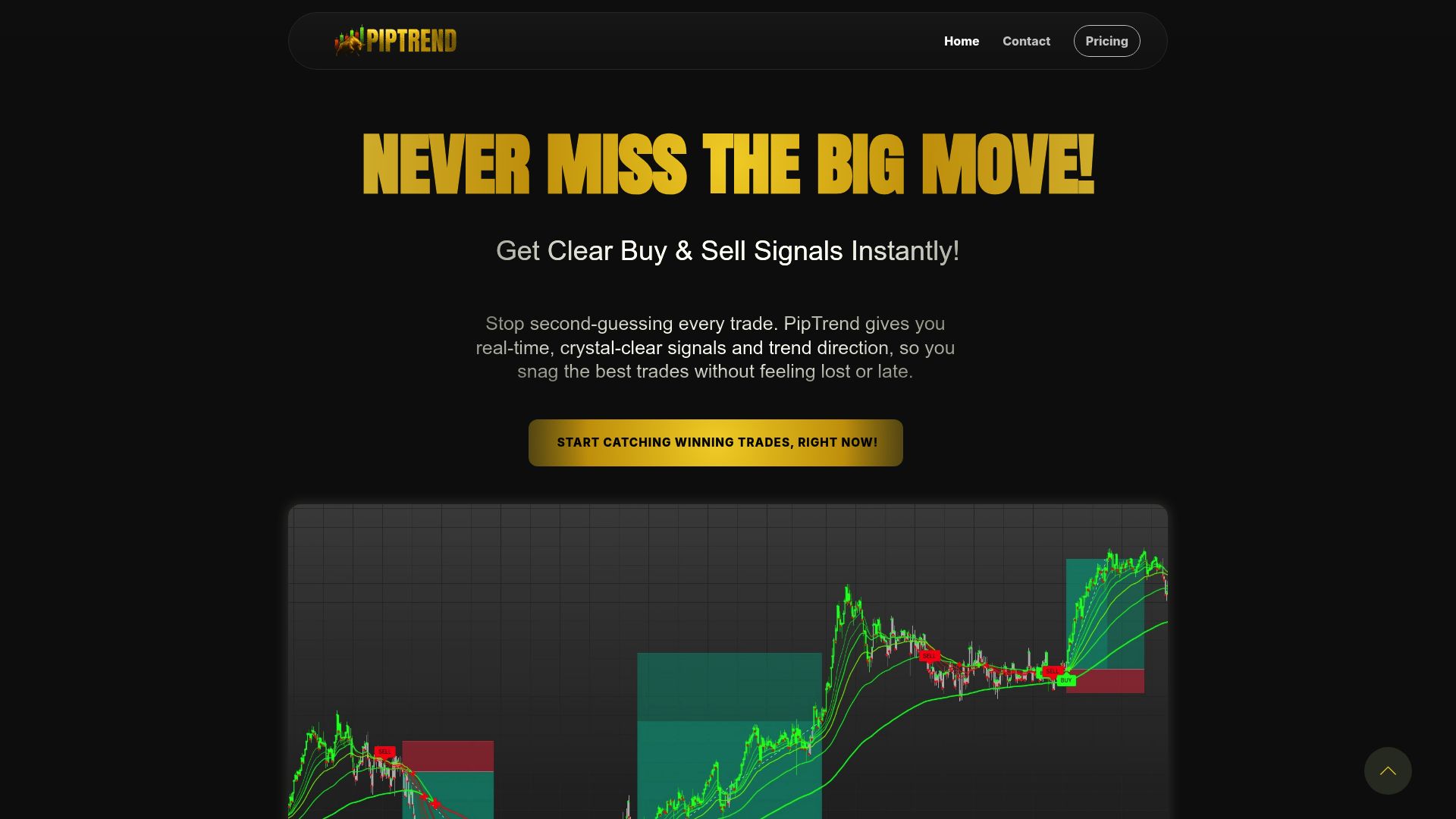
The platform's seamless TradingView integration allows users to overlay AI insights directly onto price action setups. Beginners benefit from easy onboarding, while advanced traders leverage features like session liquidity and trend confluence.
Thousands of traders trust PipTrend to simplify price action trading, helping avoid overtrading and missed setups while enabling faster, smarter decisions.
Adapting Price Action Strategies for Different Asset Classes
Price action trading is not one-size-fits-all—each asset class has unique behavior. Forex pairs often respect support and resistance zones with high liquidity, while crypto markets are more volatile and prone to fakeouts. Stocks may trend smoothly during earnings, but indices can whip around news events.
| Asset Class | Typical Volatility | Pattern Reliability | Session Effects |
|---|---|---|---|
| Forex | Moderate | High | Strong |
| Crypto | High | Moderate | 24/7 |
| Stocks | Varies | High | Earnings/news |
| Indices | Moderate-High | Moderate | Macro events |
Adapting price action trading means customizing setups—like using wider stops for crypto or focusing on session opens in forex. Understanding these nuances boosts win rates and helps traders thrive across markets.
Risk Management and Psychology for Price Action Traders
Mastering risk management is the backbone of successful price action trading. Even the best strategies can crumble without a disciplined approach to sizing trades, handling losses, and managing emotions. Let’s break down the essential psychological and practical skills you need to thrive in 2025’s dynamic markets.
Position Sizing and Risk-Reward Ratios
Effective position sizing is your first line of defense in price action trading. Always determine your trade size based on your account balance and the distance to your stop loss—not on gut feeling. For example, risking 1% per trade helps you stay in the game during inevitable losing streaks.
Use a risk-reward ratio of at least 1:2 or 1:3 to ensure your winners outweigh your losers. Tools such as a currency strength meter basics can help confirm market context, strengthening your decision-making process.
A simple position sizing table:
| Account Size | Risk per Trade | Stop Loss (pips) | Position Size |
|---|---|---|---|
| $10,000 | 1% ($100) | 50 | 2.0 lots |
| $10,000 | 2% ($200) | 100 | 2.0 lots |
Managing Losses and Drawdowns
Accepting losses is part of the journey in price action trading. Losses aren’t failures—they’re tuition fees for your trading education. Avoid revenge trading or increasing risk to recover losses quickly, as this often leads to even deeper drawdowns.
Instead, focus on reviewing your trades to spot patterns in your mistakes. A trading journal is invaluable for this process. By analyzing both wins and losses, you build resilience and consistency, two traits that separate pros from amateurs.
Remember, steady risk management and emotional control are vital for long-term account growth.
Mastering Trading Psychology and Discipline
Trading psychology is often the silent force behind success in price action trading. Fear, greed, and FOMO can cloud judgment, leading to impulsive decisions. Establish a clear trading plan and stick to it—think of it as your roadmap through the market’s noise.
When you miss a trade or hit a losing streak, stay calm and avoid chasing setups. Treat each trade as just one of many in a long series, not a make-or-break event. This mindset helps you maintain discipline and avoid emotional rollercoasters.
In fast-moving markets, discipline is your anchor—without it, even the best setups can turn into losses.
Journaling and Continuous Improvement
A trading journal is your secret weapon for mastering price action trading. Log every trade, including your reasoning, emotions, and outcomes. Over time, this reveals patterns in both your successes and mistakes.
Continuous improvement means learning from every trade. For instance, referencing research like Pattern Recognition in Micro-Trading Behaviors Before Stock Price Jumps can help you spot subtle market behaviors and refine your approach.
Set aside time each week to review your journal. Identify what’s working, what isn’t, and adapt your strategy. This habit turns experience into mastery—and ensures you keep evolving as a trader.
Now that you’ve got a solid grasp on the fundamentals and advanced strategies of price action trading for 2025, why not give yourself an extra edge? Tools like PipTrend can help you put these concepts into action by providing real-time, AI-powered buy and sell signals, instant alerts, and multi-timeframe analysis—all designed to simplify your decision-making. If you’re serious about mastering price action and want to trade with more confidence and clarity, it’s the perfect time to See Your Trading Improve With PipTrend. Give it a try and see the difference for yourself!