
In the fast-evolving world of forex, staying ahead means using real-time data and smart tools to make sharper decisions. Traders in 2025 increasingly turn to advanced indicators like the currency strength meter to cut through market noise and spot true opportunities. Mastering the currency strength meter empowers you to pinpoint high-probability trades, dodge expensive errors, and maintain an edge—even in volatile markets. This guide will reveal how to use a currency strength meter effectively in 2025, demystifying its functions, showcasing practical strategies, and breaking down what you need for smarter, more consistent trading results.
What Is a Currency Strength Meter?
Understanding the currency strength meter is crucial for modern forex traders. This tool visually ranks the strength and weakness of each currency against others, offering a clear snapshot of the global market. Unlike traditional lagging indicators, a currency strength meter delivers real-time insights, helping traders make faster, smarter decisions.
Definition and Core Concept
A currency strength meter is a specialized tool that calculates and displays the relative strength or weakness of individual currencies. It takes the complex web of forex data and simplifies it into an easy-to-read format—typically a color-coded chart or list.
Real-time meters give immediate feedback, while lagging indicators may only reflect past movements. The currency strength meter is especially popular on platforms like MT4 and MT5, as well as through web-based dashboards. By presenting a visual summary, the currency strength meter helps traders quickly identify which currencies are dominating the market and which are underperforming.
How Currency Strength Is Calculated
Calculating currency strength involves several methods. The most common include the simple average, weighted average, and correlation-based metrics. For example, a currency strength meter might analyze all 28 major forex pairs to determine the status of USD, EUR, JPY, GBP, CHF, AUD, NZD, and CAD.
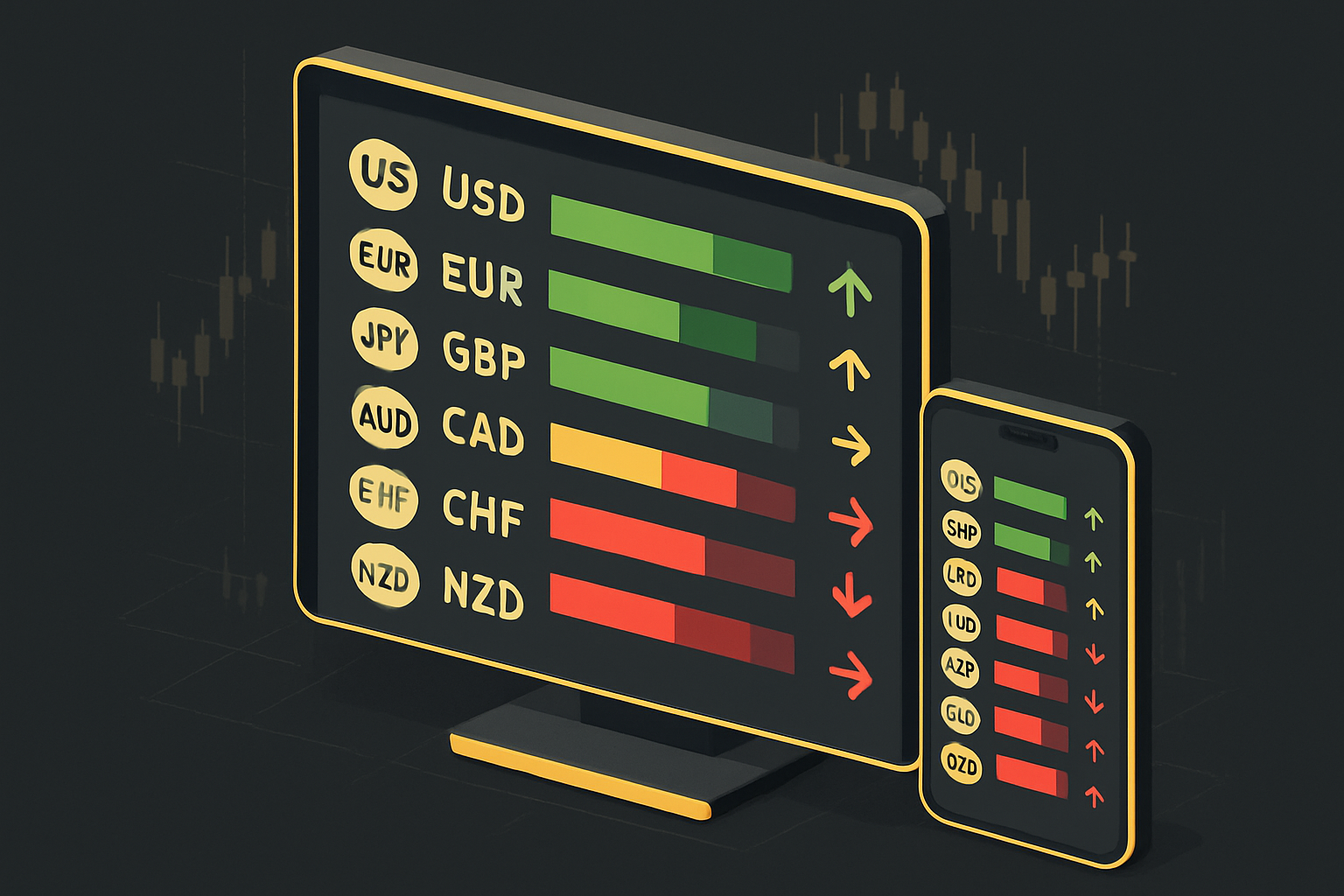
Different timeframes—such as 1-hour, 4-hour, daily, or weekly—can dramatically impact these readings. Many meters use intuitive color codes: green signals strength, red signals weakness, and arrows or trend bars can show the direction of change. This instant clarity allows traders to scan for opportunities without getting bogged down in raw data.
| Calculation Method | Description |
|---|---|
| Simple Average | Averages percent changes |
| Weighted Average | Adjusts for volatility/volume |
| Correlation-Based | Accounts for pair relationships |
Types of Currency Strength Meters
There are various types of currency strength meter tools available. Some are standalone online widgets, while others integrate as plugins within trading platforms. Simple meters may only show basic rankings, while advanced versions offer features like adjustable timeframes, real-time updates, and trend direction.
You’ll find both free and premium options. Free meters often have limited features or slower updates. Premium meters, such as the Live Currency Strength Meter, provide more accurate and comprehensive data. Popular platforms like NAGA and Switch Markets offer built-in meters for seamless integration.
Limitations and Considerations
While the currency strength meter is incredibly useful, it’s not flawless. Poorly-coded or outdated meters can lag or generate misleading signals, especially during volatile markets. Technical issues may arise if the tool is not regularly updated.
It’s important to remember that a currency strength meter should be used as a supplementary tool, not as a standalone trading system. Always combine its signals with other forms of technical and fundamental analysis to ensure well-informed trading decisions.
Why Use a Currency Strength Meter in Forex Trading?
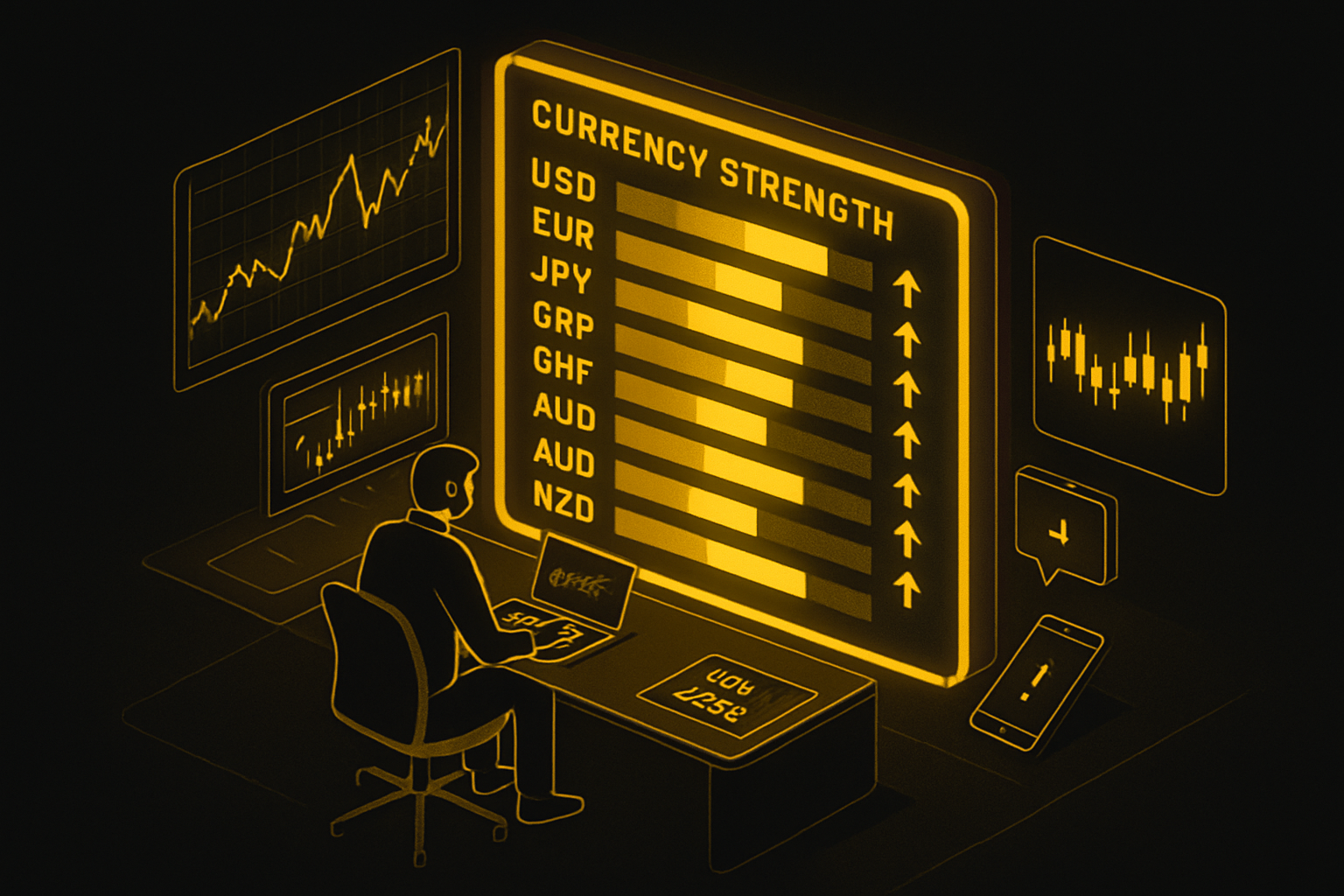
The modern forex market moves at lightning speed—and traders need every edge they can get. That's where the currency strength meter comes in, offering a clear, real-time snapshot of which currencies are dominating and which are lagging. But why has this tool become a must-have for both novice and seasoned traders? Let’s break down the practical advantages.
 Forex Trading?">
Core Benefits for Traders
A currency strength meter helps traders quickly identify the strongest and weakest currencies in the market. This insight allows for smarter pair selection—improving the odds of catching trends instead of fighting them. By focusing on high-momentum pairs, traders can time entries more effectively and reduce the risk of being caught on the wrong side of a move.
It also minimizes double exposure if you’re trading multiple pairs that share a currency. For example, a trader might avoid taking simultaneous long positions on highly correlated pairs like AUD/JPY and EUR/JPY. To explore more about how this tool’s calculations impact real trades, check out this in-depth Currency Strength Indicator Calculation and Use Cases guide.
Use Cases: Scalping, Day Trading, and Swing Trading
No matter your trading style, the currency strength meter adapts. Scalpers use it for rapid decisions, entering and exiting trades in minutes based on sudden shifts in currency dynamics. Day traders rely on the meter to verify setups and confirm trend direction before pulling the trigger.
Swing traders, on the other hand, use the tool to get a broader market context—spotting which currencies are gaining or losing strength over days. For example, a swing trader might confirm a GBP/USD breakout by checking GBP’s strength across all major pairs.
Supporting Risk Management
Risk management is where the currency strength meter truly shines. By highlighting conflicting signals between correlated pairs, it helps you avoid high-risk trades. Suppose the meter shows GBP is weak and USD is strong; going long on GBP/USD would be a risky move.
The meter also acts as a filter for other strategies—helping you validate or reject trades generated by technical or fundamental analysis. This reduces the chance of overtrading and accidental double exposure, especially when dealing with related pairs.
Accessibility and Ease of Use
One of the biggest advantages of the currency strength meter is its accessibility. Most meters feature intuitive visual displays—color-coded bars, arrows, and rankings—making them easy to interpret, even for beginners. Many are available as free plugins or web-based tools, so you don’t need expensive software to get started.
This simplicity helps reduce analysis paralysis, enabling traders to make faster, more confident decisions without getting bogged down in data overload.
Professional Adoption and Industry Trends
Industry leaders increasingly recognize the value of the currency strength meter as a confirmation tool. It’s now commonly integrated into algorithmic and AI-powered trading platforms, providing real-time data that complements advanced strategies.
Statistics from industry reports and competitor content reveal a steady rise in traders using strength meters as part of their daily workflow. This trend is expected to accelerate in 2025, driven by the demand for smarter, more automated trading solutions.
How Does a Currency Strength Meter Work?
Understanding the inner workings of a currency strength meter is essential for maximizing its potential in your trading strategy. These tools break down complex forex data into clear, actionable signals, enabling smarter decisions in real time.
Step-by-Step Mechanics
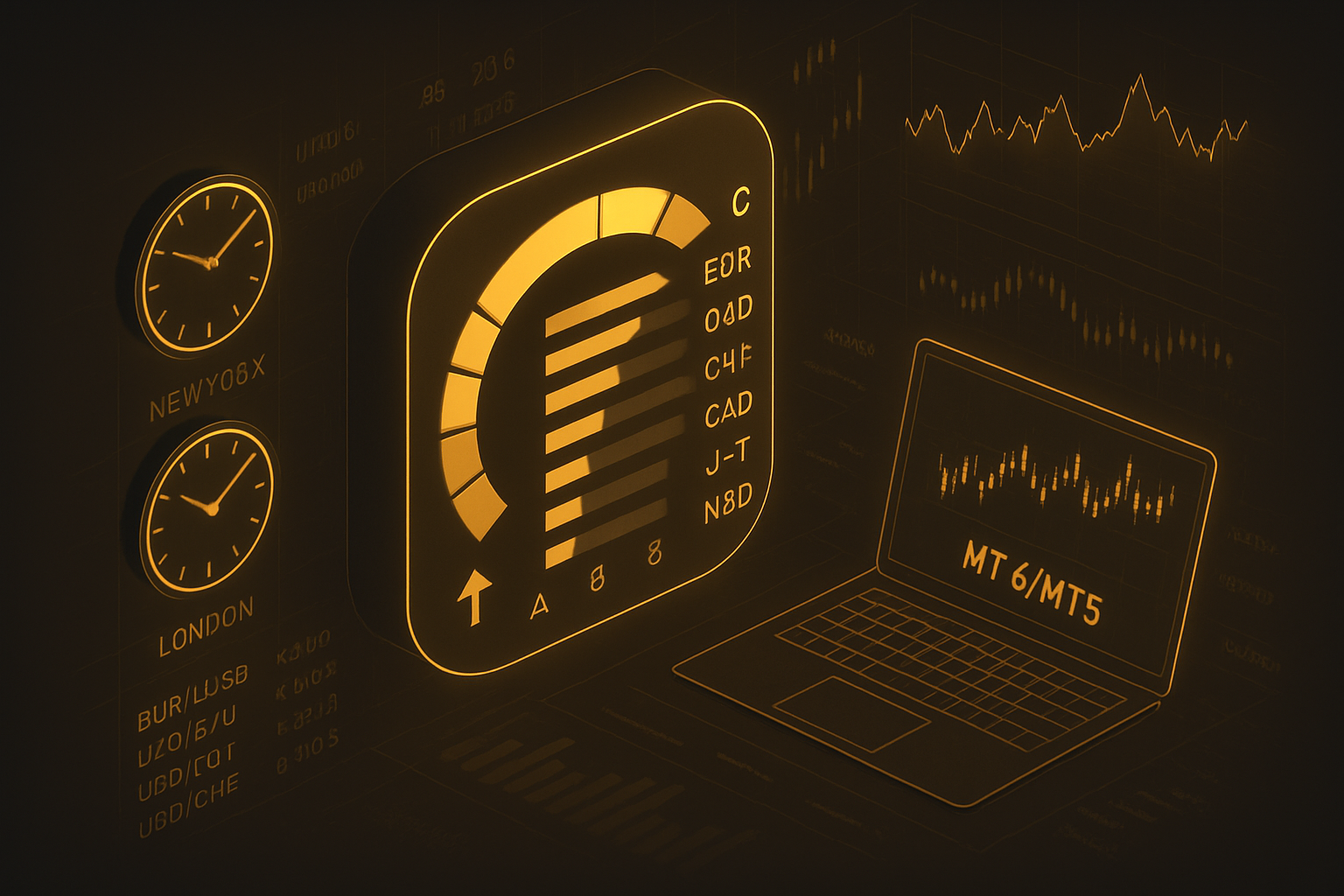
At its core, a currency strength meter operates by analyzing and comparing the performance of major currencies in real time. The process typically unfolds in several key steps:
- Step 1: You select your base currency and preferred trading timeframe.
- Step 2: The currency strength meter gathers live exchange rates from all major and minor forex pairs involving those currencies.
- Step 3: It calculates each currency’s relative strength using formulas like simple averages, weighted averages, or correlation-based metrics.
- Step 4: The meter ranks currencies from strongest to weakest, usually with intuitive color coding (green for strong, red for weak) and directional arrows.
- Step 5: Updates occur in real time, reflecting sudden market shifts or breaking news.
This streamlined, visual approach helps traders quickly spot which currencies are gaining or losing momentum—crucial for making timely trading decisions with the currency strength meter.
Example Calculation Walkthrough
To demystify what’s happening behind the scenes, let’s walk through a practical example using a currency strength meter.
Imagine you want to determine the strength of the USD. The meter analyzes all pairs containing USD—such as EUR/USD, USD/JPY, GBP/USD, AUD/USD, and others. For each pair, it checks if USD is appreciating or depreciating, then aggregates the results using its chosen formula.
Suppose USD is rising against EUR, JPY, and AUD, but flat versus GBP. The meter’s output might show USD as a strong performer, with a high score and a green bar. If, at the same time, JPY is consistently weak across its pairs, the meter will flag JPY as the weakest.
In this scenario, if EUR is the strongest and JPY is the weakest, the EUR/JPY pair would likely trend upward—making it a top candidate for trade consideration, as indicated by the currency strength meter.
Timeframe Impact and Multi-Timeframe Analysis
The reading you get from a currency strength meter can change dramatically depending on your selected timeframe. For instance, a currency might appear strong on a 1-hour chart but weak on a daily or weekly chart.
- Short timeframes (1-hour, 4-hour): Capture quick, intraday momentum shifts—ideal for scalpers and day traders.
- Longer timeframes (daily, weekly): Reveal broader trends and help swing traders or investors avoid false signals.
For deeper insight, many traders use multi-timeframe analysis to confirm that a currency’s strength aligns across several periods. This approach helps filter out noise and identify high-confidence setups. For a detailed breakdown of this technique, check out this multi-timeframe analysis guide.
The ability to adapt your strategy based on timeframe readings is a vital advantage of the currency strength meter.
Integration with Trading Platforms and Tools
Modern trading platforms make it easy to incorporate a currency strength meter into your workflow. Whether you use MT4, MT5, or web-based solutions, most meters offer:
- Real-time dashboards with color-coded rankings and alerts
- Trend direction indicators and change arrows
- Multi-timeframe support for comprehensive analysis
- Mobile app compatibility for monitoring on the go
For example, some platforms provide advanced meters that update instantly and integrate seamlessly with other trading tools. This connectivity ensures that your currency strength meter remains accurate, timely, and actionable, even in volatile markets.
Common Pitfalls and Misinterpretations
Despite its strengths, a currency strength meter isn’t foolproof. Here are some common mistakes to watch out for:
- Relying solely on the meter: Always combine signals with broader technical or fundamental analysis.
- Using outdated or poorly coded meters: These can lag or generate false signals, especially during news events or low liquidity periods.
- Ignoring market context: Sudden news can flip currency strength rankings in seconds, making it crucial to stay alert.
To avoid these pitfalls, treat the currency strength meter as a supplementary tool. Cross-check its readings with other indicators and keep your trading strategy flexible.
Step-by-Step Guide: How to Use a Currency Strength Meter in 2025
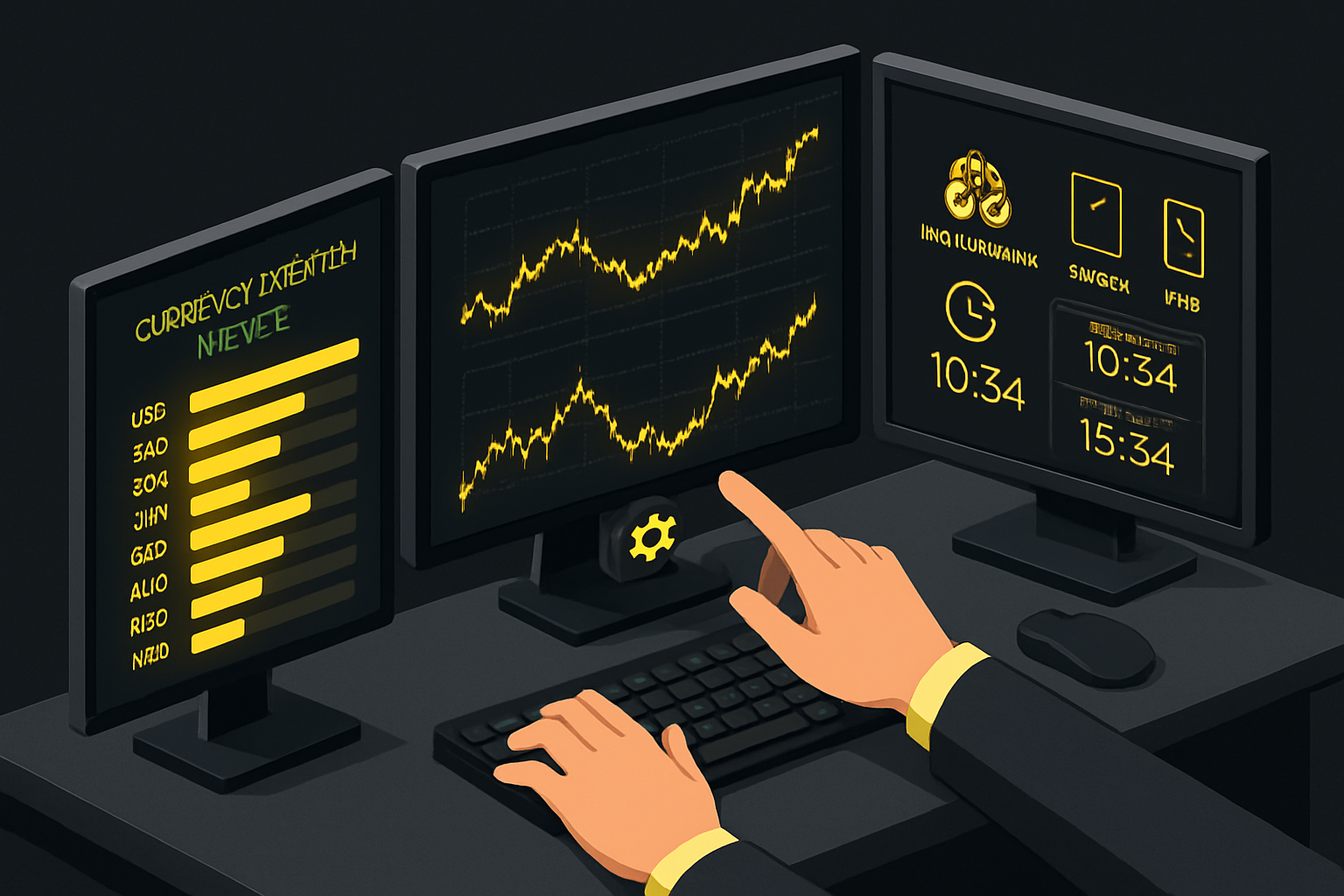
Ready to make smarter trades in 2025? Here’s your hands-on, step-by-step guide to using a currency strength meter. By following these steps, you’ll be able to quickly spot trading opportunities, avoid common pitfalls, and adapt to fast-moving forex markets.
Step 1: Choose the Right Currency Strength Meter
Selecting the best currency strength meter sets the foundation for your trading success. Look for a meter that offers real-time updates, clear visual rankings, and compatibility with your preferred trading platform (like MT4, MT5, or web-based dashboards).
Compare free vs. paid meters by examining their features, update frequency, and accuracy. Advanced meters may offer adjustable timeframes, integration with other tools, and trend direction indicators. Free meters are great for learning, but premium options often provide more reliability and customization.
| Feature | Free Meter | Paid Meter |
|---|---|---|
| Real-time updates | Sometimes | Yes |
| Adjustable timeframes | Limited | Full range |
| Platform integration | Basic | Advanced |
| Support & updates | Minimal | Regular |
For a foundational overview, check out this Beginner guide to trading tools to make sure you’re starting with the right resources.
Step 2: Set Your Trading Timeframe and Preferences
After picking your currency strength meter, it’s time to tailor its settings to your trading style. Are you a scalper, a day trader, or a swing trader? Each strategy benefits from different timeframe settings.
Adjust the meter to match your preferred session—whether it’s London, New York, or Asian hours. For scalping, use shorter timeframes like 1-minute or 5-minute charts. Day traders may prefer 1-hour readings, while swing traders often rely on daily or weekly data. Aligning the meter’s timeframe with your strategy helps filter out market noise and focus on the most relevant trends.
Step 3: Analyze the Strength Rankings
Now, dive into the meter’s rankings for a snapshot of the forex battlefield. The currency strength meter will display a ranked list—often color-coded (green for strong, red for weak)—showing the relative power of each major currency.
Look for clear outliers. If USD and JPY are both strong while AUD and NZD are weak, that signals potential trend opportunities. Use the meter’s arrows or change indicators to spot currencies gaining or losing momentum. This quick analysis helps you focus on pairs with the highest probability of strong moves, saving you from chasing false signals.
Step 4: Select Currency Pairs to Trade
With the rankings in hand, it’s time to pick your pairs. The core idea: match the strongest currency against the weakest for the best trend trades. If GBP is at the top and JPY is at the bottom, GBP/JPY might offer a high-probability setup.
For range-bound or reversal strategies, look for pairs where both currencies are equally strong or weak. Steer clear of pairs with similar strength to avoid choppy, directionless markets. This selection process ensures your trades align with the prevailing market sentiment, maximizing your edge.
Step 5: Confirm Trades with Additional Analysis
Never rely solely on the currency strength meter for entry or exit decisions. Instead, use it as a powerful filter alongside technical indicators like RSI, MACD, or moving averages, and always check for major news events.
For example, if the meter shows strong USD and weak EUR, confirm with your chart setup—look for breakouts, support/resistance, or trendline signals. Only pull the trigger when both the meter and your other analysis agree. This dual-confirmation approach helps you sidestep false signals and avoid overtrading.
Step 6: Monitor and Adjust in Real Time
Markets move fast—so should you. Continuously watch your currency strength meter for sudden changes, especially around economic news releases or unexpected events.
If the strength ranking flips—say, AUD suddenly strengthens and USD weakens—reassess your open positions. Update your watchlist and adapt your trade entries or exits accordingly. Staying nimble ensures you capitalize on fresh opportunities and minimize losses from rapid reversals.
Step 7: Record and Review Results
Finally, keep a detailed trading journal focused on meter-based trades. Log your entry and exit points, the meter’s readings at the time, and your rationale for each decision.
Over time, analyze which signals led to your most profitable trades and which didn’t pan out. Use these insights to refine your approach, tweak your meter settings, and develop a personalized trading playbook for 2025.
Advanced Tips and Strategies for Using Currency Strength Meters in 2025
Mastering the currency strength meter can elevate your trading edge, especially in the fast-evolving forex landscape of 2025. Let’s dive into advanced strategies and practical tips to help you unlock its full potential.
Multi-Timeframe and Multi-Asset Analysis
Unlock deeper insights by applying your currency strength meter across multiple timeframes. For example, check the 1-hour chart for short-term moves and the daily or weekly for long-term trends. This layered approach helps you avoid tunnel vision and spot discrepancies—like when a currency is strong intraday but weak on the weekly.
Consider expanding your analysis to other assets. Pair your currency strength meter with commodity or stock strength meters for a cross-market perspective. For instance, aligning USD strength with gold’s (XAU/USD) movement can reveal hidden opportunities.
A quick comparison:
| Analysis Type | Benefit |
|---|---|
| Single-Asset | Focused, direct signals |
| Multi-Asset | Broader, cross-market context |
By combining timeframes and assets, you can make more robust, informed trading decisions.
Integrating with Algorithmic and AI-Powered Tools
For 2025, integration is key. Advanced traders increasingly plug their currency strength meter into algorithmic systems or AI-powered platforms. This lets you automate alerts, generate signals, and even trigger trades based on real-time strength shifts.
Platforms that leverage AI in trading platforms can process massive data streams and adapt to market changes faster than manual methods. Imagine your meter interfacing with a trading bot—when the meter flags a strong/weak pair, the bot can execute a trade in seconds.
To get started:
- Choose a meter compatible with your trading software.
- Set up API connections or use platform plugins.
- Test automated strategies before deploying live.
When done right, this synergy supercharges your decision-making and execution speed.
Combining with Technical and Fundamental Analysis
A currency strength meter shines brightest when paired with other forms of analysis. Use it as a filter—only consider trade setups where the meter and your technical indicators agree. For example, if your meter shows GBP as strong and your RSI confirms a bullish breakout, the setup gains credibility.
Don’t forget fundamentals. If a major news event favors a currency, check if the meter reflects that sentiment. This dual confirmation helps filter out false signals.
For more on combining signals, explore trading signals in forex and see how they can strengthen your strategy alongside the meter.
The blend of technical, fundamental, and strength analysis creates a robust trading framework.
Risk Management and Position Sizing
Risk control is critical, no matter how advanced your tools. Use the currency strength meter to adjust position sizes based on the strength gap between currencies. A large differential might justify a bigger trade, while a marginal one calls for caution.
Steps to implement:
- Assess the strength ranking before each trade.
- Avoid taking multiple positions on highly correlated pairs.
- Set stop-losses based on volatility and strength changes.
By systematically aligning your risk with the meter’s output, you protect your capital and optimize returns.
Common Mistakes and How to Avoid Them
Even seasoned traders can stumble when using a currency strength meter. Watch out for these pitfalls:
- Overreliance: Don’t trade solely based on the meter—always cross-check with charts and news.
- Ignoring news shocks: Sudden events can flip strength readings instantly.
- Static settings: Markets evolve; regularly update your meter’s algorithms and preferences.
A checklist can help:
- Confirm with technical analysis
- Check for major news events
- Review meter settings monthly
Staying vigilant prevents costly errors and keeps your trading disciplined.
Staying Ahead: 2025 Trends and Innovations
The currency strength meter is evolving rapidly. Expect further integration with mobile apps, real-time push alerts, and cloud-based dashboards for global access.
AI and machine learning will drive smarter strength calculations, reducing lag and false signals. Visualization will become more interactive—think heatmaps, 3D charts, and customizable alerts tailored to your trading style.
Pro tip: Subscribe to platforms that offer instant notifications for strength changes, so you never miss a key move.
Staying current with these innovations ensures your currency strength meter remains a competitive edge in 2025’s dynamic markets.
Limitations, Drawbacks, and Best Practices
Navigating the forex market with a currency strength meter offers a clear edge, but no tool is perfect. Understanding its limitations and best practices ensures you make informed, safe decisions—especially in fast-moving markets.
Technical and Analytical Limitations
The currency strength meter, while powerful, can lag or provide false readings during periods of low liquidity or extreme volatility. Sometimes, meters use outdated or overly simplistic calculations, leading to misleading signals—especially around major news events.
For example, a free meter might freeze or miscalculate just when you need it most. Tools like the Visual Currency Strength Meter illustrate how real-time graphical updates help, but even advanced meters aren’t immune to technical hiccups.
Always remember, no meter is infallible—use it as a guide, not gospel.
Misuse and Overreliance Risks
Relying solely on a currency strength meter can be risky. Some traders fall into the trap of acting on every meter fluctuation, resulting in overtrading or doubling up on correlated pairs.
Imagine entering long trades on both EUR/USD and GBP/USD because both look strong—if the USD suddenly reverses, you’re exposed twice. The currency strength meter should supplement your analysis, not replace it.
Patience and confirmation from other tools are essential to avoid costly mistakes.
Best Practices for Reliable Results
To get the most from your currency strength meter, always combine it with technical and fundamental analysis. Regularly recalibrate or update your meter to maintain accuracy, and backtest your approach to uncover what works best for your style.
For a step-by-step approach, check out this guide on how to use a currency strength meter for high probability setups. Reliable results come from discipline, not shortcuts.
User Experience and Platform Compatibility
Not every currency strength meter works seamlessly with all brokers or platforms. Some require plugins for MT4/MT5, while others are purely web-based with different user interfaces and customization options.
A meter’s design and integration can impact your workflow—choose one that fits your needs and trading environment. Comparing platform-based meters to web tools can reveal big differences in speed, features, and ease of use.
Data Privacy and Security Considerations
With the rise of web tools, data privacy is a growing concern. Only use a currency strength meter from reputable providers, and avoid entering sensitive account information into unknown tools.
Look for meters with transparent privacy policies and robust security measures. Protecting your data is as important as protecting your trades.
Now that you know how powerful a currency strength meter can be for smarter, more confident trading in 2025, why not take the next step and put this knowledge into action? With PipTrend, you get real-time, AI-driven signals that make it easy to spot high-probability setups—plus, you’ll never have to second-guess your trades again. If you’re ready to simplify your strategy and see more consistent results, it’s time to experience the difference for yourself.
See Your Trading Improve With PipTrend
In the fast-evolving world of forex, staying ahead means using real-time data and smart tools to make sharper decisions. Traders in 2025 increasingly turn to advanced indicators like the currency strength meter to cut through market noise and spot true opportunities. Mastering the currency strength meter empowers you to pinpoint high-probability trades, dodge expensive errors, and maintain an edge—even in volatile markets. This guide will reveal how to use a currency strength meter effectively in 2025, demystifying its functions, showcasing practical strategies, and breaking down what you need for smarter, more consistent trading results.
What Is a Currency Strength Meter?
Understanding the currency strength meter is crucial for modern forex traders. This tool visually ranks the strength and weakness of each currency against others, offering a clear snapshot of the global market. Unlike traditional lagging indicators, a currency strength meter delivers real-time insights, helping traders make faster, smarter decisions.
Definition and Core Concept
A currency strength meter is a specialized tool that calculates and displays the relative strength or weakness of individual currencies. It takes the complex web of forex data and simplifies it into an easy-to-read format—typically a color-coded chart or list.
Real-time meters give immediate feedback, while lagging indicators may only reflect past movements. The currency strength meter is especially popular on platforms like MT4 and MT5, as well as through web-based dashboards. By presenting a visual summary, the currency strength meter helps traders quickly identify which currencies are dominating the market and which are underperforming.
How Currency Strength Is Calculated
Calculating currency strength involves several methods. The most common include the simple average, weighted average, and correlation-based metrics. For example, a currency strength meter might analyze all 28 major forex pairs to determine the status of USD, EUR, JPY, GBP, CHF, AUD, NZD, and CAD.
Different timeframes—such as 1-hour, 4-hour, daily, or weekly—can dramatically impact these readings. Many meters use intuitive color codes: green signals strength, red signals weakness, and arrows or trend bars can show the direction of change. This instant clarity allows traders to scan for opportunities without getting bogged down in raw data.
| Calculation Method | Description |
|---|---|
| Simple Average | Averages percent changes |
| Weighted Average | Adjusts for volatility/volume |
| Correlation-Based | Accounts for pair relationships |
Types of Currency Strength Meters
There are various types of currency strength meter tools available. Some are standalone online widgets, while others integrate as plugins within trading platforms. Simple meters may only show basic rankings, while advanced versions offer features like adjustable timeframes, real-time updates, and trend direction.
You’ll find both free and premium options. Free meters often have limited features or slower updates. Premium meters, such as the Live Currency Strength Meter, provide more accurate and comprehensive data. Popular platforms like NAGA and Switch Markets offer built-in meters for seamless integration.
Limitations and Considerations
While the currency strength meter is incredibly useful, it’s not flawless. Poorly-coded or outdated meters can lag or generate misleading signals, especially during volatile markets. Technical issues may arise if the tool is not regularly updated.
It’s important to remember that a currency strength meter should be used as a supplementary tool, not as a standalone trading system. Always combine its signals with other forms of technical and fundamental analysis to ensure well-informed trading decisions.
Why Use a Currency Strength Meter in Forex Trading?
The modern forex market moves at lightning speed—and traders need every edge they can get. That’s where the currency strength meter comes in, offering a clear, real-time snapshot of which currencies are dominating and which are lagging. But why has this tool become a must-have for both novice and seasoned traders? Let’s break down the practical advantages.
Core Benefits for Traders
A currency strength meter helps traders quickly identify the strongest and weakest currencies in the market. This insight allows for smarter pair selection—improving the odds of catching trends instead of fighting them. By focusing on high-momentum pairs, traders can time entries more effectively and reduce the risk of being caught on the wrong side of a move.
It also minimizes double exposure if you’re trading multiple pairs that share a currency. For example, a trader might avoid taking simultaneous long positions on highly correlated pairs like AUD/JPY and EUR/JPY. To explore more about how this tool’s calculations impact real trades, check out this in-depth Currency Strength Indicator Calculation and Use Cases guide.
Use Cases: Scalping, Day Trading, and Swing Trading
No matter your trading style, the currency strength meter adapts. Scalpers use it for rapid decisions, entering and exiting trades in minutes based on sudden shifts in currency dynamics. Day traders rely on the meter to verify setups and confirm trend direction before pulling the trigger.
Swing traders, on the other hand, use the tool to get a broader market context—spotting which currencies are gaining or losing strength over days. For example, a swing trader might confirm a GBP/USD breakout by checking GBP’s strength across all major pairs.
Supporting Risk Management
Risk management is where the currency strength meter truly shines. By highlighting conflicting signals between correlated pairs, it helps you avoid high-risk trades. Suppose the meter shows GBP is weak and USD is strong; going long on GBP/USD would be a risky move.
The meter also acts as a filter for other strategies—helping you validate or reject trades generated by technical or fundamental analysis. This reduces the chance of overtrading and accidental double exposure, especially when dealing with related pairs.
Accessibility and Ease of Use
One of the biggest advantages of the currency strength meter is its accessibility. Most meters feature intuitive visual displays—color-coded bars, arrows, and rankings—making them easy to interpret, even for beginners. Many are available as free plugins or web-based tools, so you don’t need expensive software to get started.
This simplicity helps reduce analysis paralysis, enabling traders to make faster, more confident decisions without getting bogged down in data overload.
Professional Adoption and Industry Trends
Industry leaders increasingly recognize the value of the currency strength meter as a confirmation tool. It’s now commonly integrated into algorithmic and AI-powered trading platforms, providing real-time data that complements advanced strategies.
Statistics from industry reports and competitor content reveal a steady rise in traders using strength meters as part of their daily workflow. This trend is expected to accelerate in 2025, driven by the demand for smarter, more automated trading solutions.
How Does a Currency Strength Meter Work?
Understanding the inner workings of a currency strength meter is essential for maximizing its potential in your trading strategy. These tools break down complex forex data into clear, actionable signals, enabling smarter decisions in real time.
Step-by-Step Mechanics
At its core, a currency strength meter operates by analyzing and comparing the performance of major currencies in real time. The process typically unfolds in several key steps:
- Step 1: You select your base currency and preferred trading timeframe.
- Step 2: The currency strength meter gathers live exchange rates from all major and minor forex pairs involving those currencies.
- Step 3: It calculates each currency’s relative strength using formulas like simple averages, weighted averages, or correlation-based metrics.
- Step 4: The meter ranks currencies from strongest to weakest, usually with intuitive color coding (green for strong, red for weak) and directional arrows.
- Step 5: Updates occur in real time, reflecting sudden market shifts or breaking news.
This streamlined, visual approach helps traders quickly spot which currencies are gaining or losing momentum—crucial for making timely trading decisions with the currency strength meter.
Example Calculation Walkthrough
To demystify what’s happening behind the scenes, let’s walk through a practical example using a currency strength meter.
Imagine you want to determine the strength of the USD. The meter analyzes all pairs containing USD—such as EUR/USD, USD/JPY, GBP/USD, AUD/USD, and others. For each pair, it checks if USD is appreciating or depreciating, then aggregates the results using its chosen formula.
Suppose USD is rising against EUR, JPY, and AUD, but flat versus GBP. The meter’s output might show USD as a strong performer, with a high score and a green bar. If, at the same time, JPY is consistently weak across its pairs, the meter will flag JPY as the weakest.
In this scenario, if EUR is the strongest and JPY is the weakest, the EUR/JPY pair would likely trend upward—making it a top candidate for trade consideration, as indicated by the currency strength meter.
Timeframe Impact and Multi-Timeframe Analysis
The reading you get from a currency strength meter can change dramatically depending on your selected timeframe. For instance, a currency might appear strong on a 1-hour chart but weak on a daily or weekly chart.
- Short timeframes (1-hour, 4-hour): Capture quick, intraday momentum shifts—ideal for scalpers and day traders.
- Longer timeframes (daily, weekly): Reveal broader trends and help swing traders or investors avoid false signals.
For deeper insight, many traders use multi-timeframe analysis to confirm that a currency’s strength aligns across several periods. This approach helps filter out noise and identify high-confidence setups. For a detailed breakdown of this technique, check out this multi-timeframe analysis guide.
The ability to adapt your strategy based on timeframe readings is a vital advantage of the currency strength meter.
Integration with Trading Platforms and Tools
Modern trading platforms make it easy to incorporate a currency strength meter into your workflow. Whether you use MT4, MT5, or web-based solutions, most meters offer:
- Real-time dashboards with color-coded rankings and alerts
- Trend direction indicators and change arrows
- Multi-timeframe support for comprehensive analysis
- Mobile app compatibility for monitoring on the go
For example, some platforms provide advanced meters that update instantly and integrate seamlessly with other trading tools. This connectivity ensures that your currency strength meter remains accurate, timely, and actionable, even in volatile markets.
Common Pitfalls and Misinterpretations
Despite its strengths, a currency strength meter isn’t foolproof. Here are some common mistakes to watch out for:
- Relying solely on the meter: Always combine signals with broader technical or fundamental analysis.
- Using outdated or poorly coded meters: These can lag or generate false signals, especially during news events or low liquidity periods.
- Ignoring market context: Sudden news can flip currency strength rankings in seconds, making it crucial to stay alert.
To avoid these pitfalls, treat the currency strength meter as a supplementary tool. Cross-check its readings with other indicators and keep your trading strategy flexible.
Step-by-Step Guide: How to Use a Currency Strength Meter in 2025
Ready to make smarter trades in 2025? Here’s your hands-on, step-by-step guide to using a currency strength meter. By following these steps, you’ll be able to quickly spot trading opportunities, avoid common pitfalls, and adapt to fast-moving forex markets.
Step 1: Choose the Right Currency Strength Meter
Selecting the best currency strength meter sets the foundation for your trading success. Look for a meter that offers real-time updates, clear visual rankings, and compatibility with your preferred trading platform (like MT4, MT5, or web-based dashboards).
Compare free vs. paid meters by examining their features, update frequency, and accuracy. Advanced meters may offer adjustable timeframes, integration with other tools, and trend direction indicators. Free meters are great for learning, but premium options often provide more reliability and customization.
| Feature | Free Meter | Paid Meter |
|---|---|---|
| Real-time updates | Sometimes | Yes |
| Adjustable timeframes | Limited | Full range |
| Platform integration | Basic | Advanced |
| Support & updates | Minimal | Regular |
For a foundational overview, check out this Beginner guide to trading tools to make sure you’re starting with the right resources.
Step 2: Set Your Trading Timeframe and Preferences
After picking your currency strength meter, it’s time to tailor its settings to your trading style. Are you a scalper, a day trader, or a swing trader? Each strategy benefits from different timeframe settings.
Adjust the meter to match your preferred session—whether it’s London, New York, or Asian hours. For scalping, use shorter timeframes like 1-minute or 5-minute charts. Day traders may prefer 1-hour readings, while swing traders often rely on daily or weekly data. Aligning the meter’s timeframe with your strategy helps filter out market noise and focus on the most relevant trends.
Step 3: Analyze the Strength Rankings
Now, dive into the meter’s rankings for a snapshot of the forex battlefield. The currency strength meter will display a ranked list—often color-coded (green for strong, red for weak)—showing the relative power of each major currency.
Look for clear outliers. If USD and JPY are both strong while AUD and NZD are weak, that signals potential trend opportunities. Use the meter’s arrows or change indicators to spot currencies gaining or losing momentum. This quick analysis helps you focus on pairs with the highest probability of strong moves, saving you from chasing false signals.
Step 4: Select Currency Pairs to Trade
With the rankings in hand, it’s time to pick your pairs. The core idea: match the strongest currency against the weakest for the best trend trades. If GBP is at the top and JPY is at the bottom, GBP/JPY might offer a high-probability setup.
For range-bound or reversal strategies, look for pairs where both currencies are equally strong or weak. Steer clear of pairs with similar strength to avoid choppy, directionless markets. This selection process ensures your trades align with the prevailing market sentiment, maximizing your edge.
Step 5: Confirm Trades with Additional Analysis
Never rely solely on the currency strength meter for entry or exit decisions. Instead, use it as a powerful filter alongside technical indicators like RSI, MACD, or moving averages, and always check for major news events.
For example, if the meter shows strong USD and weak EUR, confirm with your chart setup—look for breakouts, support/resistance, or trendline signals. Only pull the trigger when both the meter and your other analysis agree. This dual-confirmation approach helps you sidestep false signals and avoid overtrading.
Step 6: Monitor and Adjust in Real Time
Markets move fast—so should you. Continuously watch your currency strength meter for sudden changes, especially around economic news releases or unexpected events.
If the strength ranking flips—say, AUD suddenly strengthens and USD weakens—reassess your open positions. Update your watchlist and adapt your trade entries or exits accordingly. Staying nimble ensures you capitalize on fresh opportunities and minimize losses from rapid reversals.
Step 7: Record and Review Results
Finally, keep a detailed trading journal focused on meter-based trades. Log your entry and exit points, the meter’s readings at the time, and your rationale for each decision.
Over time, analyze which signals led to your most profitable trades and which didn’t pan out. Use these insights to refine your approach, tweak your meter settings, and develop a personalized trading playbook for 2025.
Advanced Tips and Strategies for Using Currency Strength Meters in 2025
Mastering the currency strength meter can elevate your trading edge, especially in the fast-evolving forex landscape of 2025. Let’s dive into advanced strategies and practical tips to help you unlock its full potential.
Multi-Timeframe and Multi-Asset Analysis
Unlock deeper insights by applying your currency strength meter across multiple timeframes. For example, check the 1-hour chart for short-term moves and the daily or weekly for long-term trends. This layered approach helps you avoid tunnel vision and spot discrepancies—like when a currency is strong intraday but weak on the weekly.
Consider expanding your analysis to other assets. Pair your currency strength meter with commodity or stock strength meters for a cross-market perspective. For instance, aligning USD strength with gold’s (XAU/USD) movement can reveal hidden opportunities.
A quick comparison:
| Analysis Type | Benefit |
|---|---|
| Single-Asset | Focused, direct signals |
| Multi-Asset | Broader, cross-market context |
By combining timeframes and assets, you can make more robust, informed trading decisions.
Integrating with Algorithmic and AI-Powered Tools
For 2025, integration is key. Advanced traders increasingly plug their currency strength meter into algorithmic systems or AI-powered platforms. This lets you automate alerts, generate signals, and even trigger trades based on real-time strength shifts.
Platforms that leverage AI in trading platforms can process massive data streams and adapt to market changes faster than manual methods. Imagine your meter interfacing with a trading bot—when the meter flags a strong/weak pair, the bot can execute a trade in seconds.
To get started:
- Choose a meter compatible with your trading software.
- Set up API connections or use platform plugins.
- Test automated strategies before deploying live.
When done right, this synergy supercharges your decision-making and execution speed.
Combining with Technical and Fundamental Analysis
A currency strength meter shines brightest when paired with other forms of analysis. Use it as a filter—only consider trade setups where the meter and your technical indicators agree. For example, if your meter shows GBP as strong and your RSI confirms a bullish breakout, the setup gains credibility.
Don’t forget fundamentals. If a major news event favors a currency, check if the meter reflects that sentiment. This dual confirmation helps filter out false signals.
For more on combining signals, explore trading signals in forex and see how they can strengthen your strategy alongside the meter.
The blend of technical, fundamental, and strength analysis creates a robust trading framework.
Risk Management and Position Sizing
Risk control is critical, no matter how advanced your tools. Use the currency strength meter to adjust position sizes based on the strength gap between currencies. A large differential might justify a bigger trade, while a marginal one calls for caution.
Steps to implement:
- Assess the strength ranking before each trade.
- Avoid taking multiple positions on highly correlated pairs.
- Set stop-losses based on volatility and strength changes.
By systematically aligning your risk with the meter’s output, you protect your capital and optimize returns.
Common Mistakes and How to Avoid Them
Even seasoned traders can stumble when using a currency strength meter. Watch out for these pitfalls:
- Overreliance: Don’t trade solely based on the meter—always cross-check with charts and news.
- Ignoring news shocks: Sudden events can flip strength readings instantly.
- Static settings: Markets evolve; regularly update your meter’s algorithms and preferences.
A checklist can help:
- Confirm with technical analysis
- Check for major news events
- Review meter settings monthly
Staying vigilant prevents costly errors and keeps your trading disciplined.
Staying Ahead: 2025 Trends and Innovations
The currency strength meter is evolving rapidly. Expect further integration with mobile apps, real-time push alerts, and cloud-based dashboards for global access.
AI and machine learning will drive smarter strength calculations, reducing lag and false signals. Visualization will become more interactive—think heatmaps, 3D charts, and customizable alerts tailored to your trading style.
Pro tip: Subscribe to platforms that offer instant notifications for strength changes, so you never miss a key move.
Staying current with these innovations ensures your currency strength meter remains a competitive edge in 2025’s dynamic markets.
Limitations, Drawbacks, and Best Practices
Navigating the forex market with a currency strength meter offers a clear edge, but no tool is perfect. Understanding its limitations and best practices ensures you make informed, safe decisions—especially in fast-moving markets.
Technical and Analytical Limitations
The currency strength meter, while powerful, can lag or provide false readings during periods of low liquidity or extreme volatility. Sometimes, meters use outdated or overly simplistic calculations, leading to misleading signals—especially around major news events.
For example, a free meter might freeze or miscalculate just when you need it most. Tools like the Visual Currency Strength Meter illustrate how real-time graphical updates help, but even advanced meters aren’t immune to technical hiccups.
Always remember, no meter is infallible—use it as a guide, not gospel.
Misuse and Overreliance Risks
Relying solely on a currency strength meter can be risky. Some traders fall into the trap of acting on every meter fluctuation, resulting in overtrading or doubling up on correlated pairs.
Imagine entering long trades on both EUR/USD and GBP/USD because both look strong—if the USD suddenly reverses, you’re exposed twice. The currency strength meter should supplement your analysis, not replace it.
Patience and confirmation from other tools are essential to avoid costly mistakes.
Best Practices for Reliable Results
To get the most from your currency strength meter, always combine it with technical and fundamental analysis. Regularly recalibrate or update your meter to maintain accuracy, and backtest your approach to uncover what works best for your style.
For a step-by-step approach, check out this guide on how to use a currency strength meter for high probability setups. Reliable results come from discipline, not shortcuts.
User Experience and Platform Compatibility
Not every currency strength meter works seamlessly with all brokers or platforms. Some require plugins for MT4/MT5, while others are purely web-based with different user interfaces and customization options.
A meter’s design and integration can impact your workflow—choose one that fits your needs and trading environment. Comparing platform-based meters to web tools can reveal big differences in speed, features, and ease of use.
Data Privacy and Security Considerations
With the rise of web tools, data privacy is a growing concern. Only use a currency strength meter from reputable providers, and avoid entering sensitive account information into unknown tools.
Look for meters with transparent privacy policies and robust security measures. Protecting your data is as important as protecting your trades.
Now that you know how powerful a currency strength meter can be for smarter, more confident trading in 2025, why not take the next step and put this knowledge into action? With PipTrend, you get real-time, AI-driven signals that make it easy to spot high-probability setups—plus, you’ll never have to second-guess your trades again. If you’re ready to simplify your strategy and see more consistent results, it’s time to experience the difference for yourself.
See Your Trading Improve With PipTrend