
The SP 500 futures market is evolving rapidly in 2025, capturing the attention of investors worldwide. With innovation accelerating and volatility at unprecedented levels, understanding these contracts is more crucial than ever.
Traders and investors are searching for ways to harness these changes for higher returns and more effective risk management. Mastering SP 500 futures can unlock new profit opportunities while providing a valuable hedge against uncertainty in today’s dynamic markets.
This essential guide demystifies SP 500 futures and offers a clear, actionable roadmap for navigating the shifting landscape in 2025. We’ll break down the fundamentals, explore emerging trends, and outline practical strategies, risk management tips, regulatory updates, and the best tools to help you succeed.
Understanding SP 500 Futures: The Basics and Beyond
Explore the foundations of SP 500 futures and see how these contracts have become a cornerstone in today’s financial markets. By understanding their mechanics, participants, and essential terminology, you will be better prepared to navigate opportunities and risks in 2025.
What Are SP 500 Futures?
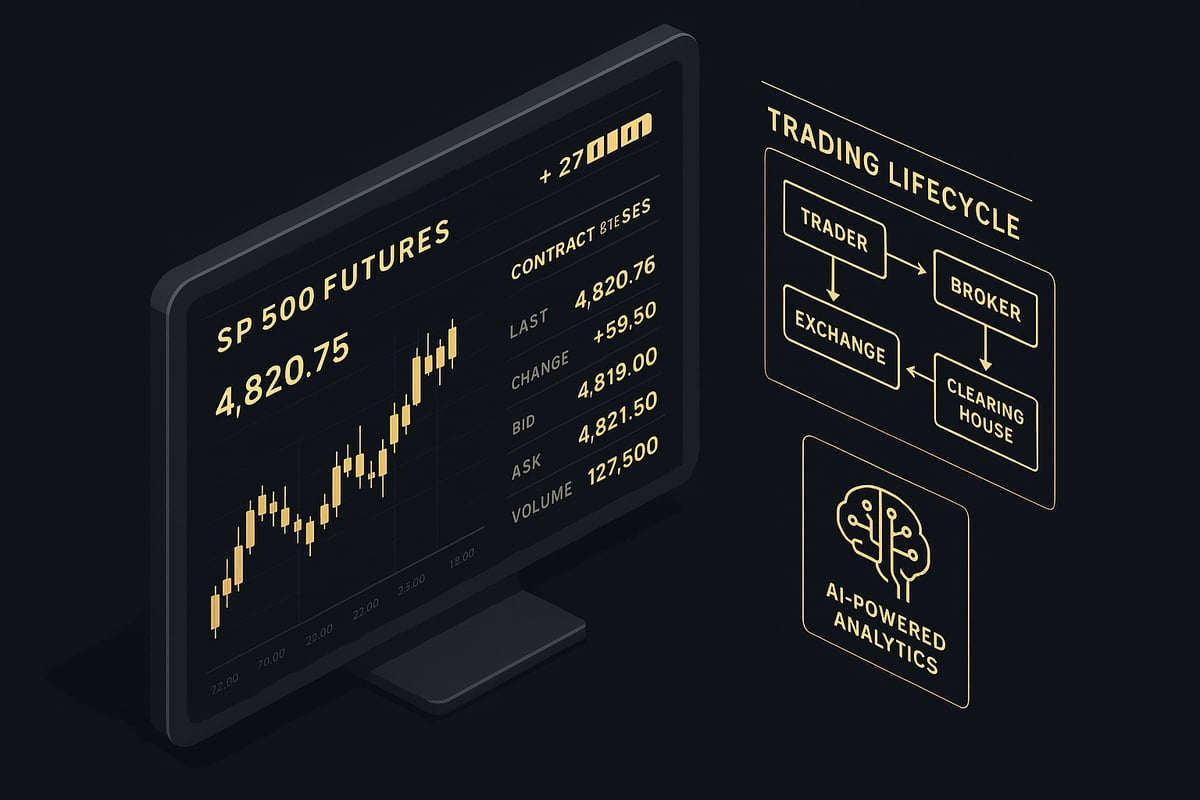
SP 500 futures are standardized contracts that allow traders to buy or sell the value of the S&P 500 Index at a future date. They originated in the early 1980s, providing a transparent way to speculate on or hedge against moves in the broad US equity market. Unlike other index futures, SP 500 futures are closely tracked for their liquidity and influence on global markets.
Here’s a look at key contract specs:
| Feature | E-mini (ES) | Micro (MES) |
|---|---|---|
| Tick Size | 0.25 index pts | 0.25 index pts |
| Contract Size | $50 x Index | $5 x Index |
| Expiration | Quarterly | Quarterly |
| Margin (approx) | $12,000 | $1,200 |
SP 500 futures help investors manage risk and gain exposure to the US stock market efficiently. For a deeper dive, see the Index trading essential guide.
How SP 500 Futures Work in 2025
Trading SP 500 futures in 2025 involves electronic order placement on major exchanges like the CME. Most trades occur on digital platforms, offering nearly 24-hour access and robust liquidity. In 2025, trading hours have expanded, with increased after-hours volume reflecting global participation.
Recent changes in contract structure, such as reduced tick sizes and updated margin rules, have made SP 500 futures even more accessible. A typical trade starts with order placement, followed by real-time execution, daily mark-to-market settlements, and eventual contract expiration or rollover.
For example, a trader might enter a long position in the E-mini contract, monitor price movements, and close the trade before expiration, realizing gains or losses based on index movement.
Why Trade SP 500 Futures?
Traders choose SP 500 futures for their leverage, allowing control of large positions with relatively small capital. This capital efficiency attracts portfolio managers and active traders alike. Futures also offer effective hedging tools, letting investors offset risks from equity portfolios.
A major advantage is 24-hour market access, letting participants respond to global events outside regular stock hours. Transaction costs are typically lower compared to ETFs, further increasing appeal.
Consider a real-world example: A portfolio manager worried about market declines can sell SP 500 futures to protect portfolio value, locking in gains or limiting losses if the market falls.
Who Participates in the SP 500 Futures Market?
The SP 500 futures market brings together a diverse range of participants. Institutional investors, such as hedge funds and pension managers, dominate trading volume. Retail traders have seen significant growth, especially with the rise of micro contracts and user-friendly platforms.
Market makers and liquidity providers ensure tight spreads and efficient execution. In 2025, algorithmic and AI-powered trading systems account for a growing share of volume, optimizing strategies and execution.
Recent CME data shows retail participation has reached record highs. Social trading platforms have enabled new traders to follow and replicate professional strategies, further expanding market diversity.
- Institutional investors
- Retail traders
- Market makers/liquidity providers
- Algorithmic/AI traders
Key Terms and Concepts Every Trader Should Know
Understanding key concepts is crucial for anyone trading SP 500 futures. Here are essentials every trader should know:
- Futures contract: Agreement to buy/sell an asset at a set price on a future date.
- Margin: Funds required to open/maintain a position.
- Tick: Minimum price movement.
- Settlement: Process of finalizing gains/losses.
- Basis: Difference between futures and spot price.
- Contango/Backwardation: Market conditions where futures prices are above/below spot.
- Rollover: Extending a futures position to a new contract.
- Expiration: Date contract ceases trading.
- Mark-to-market: Daily adjustment of account balance.
Example: In volatile markets, margin calls can occur if your account balance falls below maintenance requirements, forcing you to add funds or close positions.
Major Trends Shaping SP 500 Futures in 2025
The landscape for sp 500 futures is rapidly transforming in 2025. Multiple forces—technological, regulatory, macro-economic, and participant-driven—are converging, making it essential to understand the newest trends influencing the market. Let us explore these major trends shaping sp 500 futures this year.
Technological Advancements and AI Integration
In 2025, sp 500 futures trading is being revolutionized by artificial intelligence and machine learning. AI-driven trading strategies have become mainstream, powering faster and more accurate price discovery. Machine learning models are now capable of digesting vast amounts of order flow, news, and economic data in real time.
For example, AI-based volatility forecasting tools help traders anticipate market swings with greater precision. According to recent industry data, algorithms now execute over 80% of all trades in the sp 500 futures market. These systems analyze historical trends, adapt to new information, and identify patterns invisible to human eyes.
New trading platforms are also integrating AI analytics as standard features. Traders can now access predictive signals, risk management dashboards, and automated execution engines, all designed to improve decision-making and consistency. The result is a more efficient, data-driven sp 500 futures landscape.
Liquidity and Volatility Shifts
Liquidity in the sp 500 futures market has seen notable shifts this year. Trading volumes have generally increased, supported by the rise of global participation and advanced electronic platforms. However, liquidity can still fluctuate significantly during periods of heightened uncertainty.
Volatility spikes are often triggered by geopolitical events, inflation reports, or unexpected policy changes. In 2025, the average daily volume on the CME for sp 500 futures is up 12% compared to last year, reflecting both higher interest and more active trading. At the same time, bid-ask spreads tend to widen during market shocks, making execution more challenging.
For example, when a major economic announcement hits, futures pricing can adjust rapidly, and liquidity may temporarily evaporate. Traders must remain vigilant, using real-time data and risk controls to navigate these dynamic conditions.
Regulatory and Taxation Changes
Regulation of sp 500 futures continues to evolve in 2025. Both the CFTC and SEC have introduced new rules affecting market transparency and participant reporting. These changes aim to enhance market integrity and protect investors.
Margin requirements have also been updated, with some contracts now requiring higher initial and maintenance margins to address increased volatility. Tax treatment for futures traders has seen clarification, especially concerning the wash sale rule, which can impact how losses are reported and offset.
Compliance costs for brokers and traders have risen, with many firms investing in automated reporting and monitoring systems. For example, the average compliance spend among top brokers increased by 8% year-over-year. Staying informed about these regulatory shifts is crucial for anyone trading sp 500 futures in 2025.
Evolving Market Participants and Strategies
The composition of sp 500 futures market participants is changing. Retail traders now account for a larger share of open interest, thanks to user-friendly platforms and educational resources. Institutional investors continue to dominate, but the gap with retail is narrowing.
Market makers and liquidity providers play a vital role in maintaining orderly trading. The growth of algorithmic and AI-powered trading has also introduced new strategies and increased competition. In 2025, micro and mini contracts have gained popularity, making sp 500 futures more accessible to smaller accounts.
ESG-focused and thematic futures products are emerging, allowing traders to align their strategies with environmental or sector-specific goals. Social trading platforms are thriving, offering case studies and peer-driven insights for both new and experienced traders.
Macro-Economic Drivers in 2025
Macro-economic factors have a profound influence on sp 500 futures. Federal Reserve policy, especially interest rate decisions, directly impacts market sentiment and price direction. Inflation trends and the broader economic growth outlook are closely monitored by traders seeking to anticipate market moves.
Geopolitical risks, including the US election cycle and global tensions, are fueling sector rotation within the SP 500. In 2025, the correlation between sp 500 futures and leading economic indicators has increased, making macro analysis more important than ever. For a comprehensive look at recent sector performance and market metrics, see the Monthly Market Metrics and Trends: May 2025 report.
Staying informed on these drivers enables traders to adapt their strategies and manage risk effectively in the evolving sp 500 futures market.
Step-by-Step: How to Trade SP 500 Futures in 2025
Understanding how to trade sp 500 futures in 2025 is vital for investors aiming to maximize returns and manage risk. This step-by-step guide breaks down the process into six essential stages, making it accessible for both new and seasoned traders.
Step 1: Choosing the Right Broker and Platform
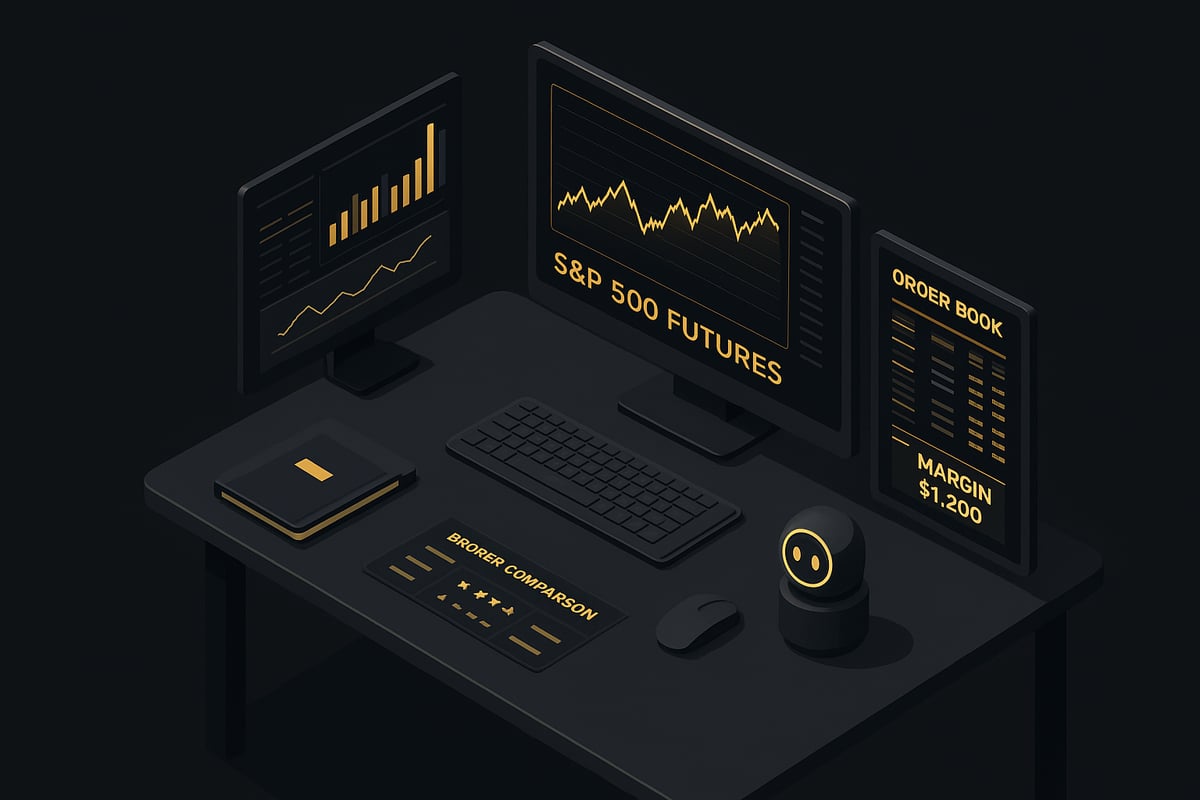
Selecting the right broker is a crucial first step when trading sp 500 futures. Look for a platform that offers robust security, transparent pricing, and access to the major futures exchanges. Regulatory compliance is non-negotiable, so ensure your broker is registered with the CFTC and NFA.
Consider the following when comparing brokers:
| Broker Feature | Importance | 2025 Trend |
|---|---|---|
| Commission Fees | Very High | Lower, more competitive |
| Trading Platform | High | AI-integrated |
| Data Access | Essential | Real-time, multi-asset |
| Regulatory Status | Critical | Stringent enforcement |
Some brokers also act as futures commission merchants, handling order execution and margin management. Evaluate account types, minimum deposits, and platform interfaces. For instance, compare CME Direct for institutional-grade analytics with Interactive Brokers for global market access. A well-chosen broker sets the foundation for successful sp 500 futures trading.
Step 2: Understanding Contract Specifications and Margin
To trade sp 500 futures effectively, you must understand the contract details. The most popular contracts are the E-mini (ES) and Micro E-mini (MES), each with different tick sizes and margin requirements. In 2025, updates to contract specs may include changes in tick value or expiration cycles.
Initial and maintenance margin are fundamental concepts. The initial margin is the capital required to open a position, while maintenance margin is the minimum balance to keep it open. Here’s a quick example using Python-style pseudocode:
initial_margin = 12000
contract_price = 5000
contracts = 2
required_funds = initial_margin * contracts
Careful margin calculation ensures you avoid unexpected liquidations. Understanding these mechanics is essential for anyone trading sp 500 futures, especially during volatile market periods.
Step 3: Analyzing the Market and Building a Trading Plan
Successful sp 500 futures traders rely on both technical and fundamental analysis. Technical analysis uses chart patterns, indicators, and volume to anticipate price movements. Fundamental analysis considers economic data, earnings, and geopolitical events.
Key steps in building your trading plan:
- Define clear entry and exit criteria
- Set risk and reward targets
- Use an economic calendar to track impactful events
- Backtest strategies with historical data
For example, traders often monitor FOMC meetings or key inflation reports for volatility triggers. Combining technical indicators with macroeconomic insights helps refine your sp 500 futures trading plan for 2025. A disciplined, data-driven approach can significantly improve your performance.
Step 4: Placing and Managing Trades
When placing trades in sp 500 futures, you’ll choose from several order types:
- Market orders for immediate execution
- Limit orders to specify your desired price
- Stop orders to manage risk and automate exits
Position sizing is critical. Use leverage cautiously, as futures allow you to control large positions with relatively small capital. Real-time monitoring lets you adjust or close trades quickly, especially during news-driven volatility.
For example, if a major economic announcement is due, you might tighten stop-loss orders or scale back exposure. Staying vigilant and responsive is vital in the fast-moving sp 500 futures market. Effective trade management can protect profits and limit losses.
Step 5: Risk Management Techniques
Risk management is the backbone of any sp 500 futures strategy. Always set stop-loss and profit targets before entering a trade. Diversify by trading multiple contracts or assets to spread exposure. Hedging with options or other derivatives can further reduce risk.
Managing overnight and weekend risk is especially important. Futures markets can gap on global news. Consider using protective puts or reducing positions before major events.
Statistically, the average drawdown for sp 500 futures traders can be significant during periods of high volatility. Adopting strict risk parameters and reviewing your risk profile regularly are key to long-term success in sp 500 futures.
Step 6: Reviewing and Refining Your Strategy
Continuous improvement is essential for staying competitive in the sp 500 futures market. Keep a detailed trading journal to track setups, outcomes, and emotional responses. Analyze trade performance metrics like win rate, average profit, and maximum drawdown.
Adapt your strategy as market conditions shift in 2025. For example, if volatility increases, you may need to widen stops or adjust position sizes. Use an iterative process to refine your techniques, leveraging both successes and failures as learning opportunities.
Regular review ensures your sp 500 futures approach remains relevant and effective in a rapidly evolving trading landscape.
Essential Tools and Resources for SP 500 Futures Traders
Access to the right tools and resources can make a significant difference for anyone trading sp 500 futures. As the market evolves in 2025, traders need platforms and technologies that provide speed, accuracy, and actionable insights. Let’s explore the essential resources every sp 500 futures trader should consider.
Real-Time Data and Charting Platforms
For sp 500 futures traders, access to reliable real-time data and advanced charting tools is essential. Platforms like TradingView and NinjaTrader offer robust charting features, real-time price feeds, and customizable indicators tailored for futures markets.
A quick comparison of popular platforms:
| Platform | Charting Tools | Data Speed | Custom Indicators |
|---|---|---|---|
| TradingView | Advanced | Real-time | Yes |
| NinjaTrader | Professional | Real-time | Yes |
Choosing a platform with integrated S&P 500 futures chart analysis can help traders spot trends, manage risk, and execute precise entries and exits. In 2025, charting technology continues to advance, offering seamless integration with algorithmic strategies and instant access to global market data.
AI-Powered Trading Indicators
Artificial intelligence has rapidly transformed how traders approach sp 500 futures. AI-powered indicators now provide real-time buy/sell signals, volatility forecasts, and pattern recognition, all designed to enhance decision-making.
Key benefits of AI tools include:
- Objective, data-driven signals
- Faster reaction to market changes
- Consistent application of trading logic
Leading platforms now integrate machine learning algorithms that analyze massive data sets for high-probability setups. As AI adoption grows in 2025, more sp 500 futures traders rely on these technologies to maintain a competitive edge and adapt to shifting market conditions.
How PipTrend Empowers SP 500 Futures Traders
PipTrend delivers a specialized AI-powered indicator designed for sp 500 futures and other major indices. This tool offers real-time buy and sell signals, trend analysis, and multi-timeframe market views, all within a user-friendly interface.
Notable features include:
- Instant alerts for high-probability setups
- Objective trend detection
- Easy integration with top trading platforms
By leveraging PipTrend, sp 500 futures traders can reduce guesswork and improve trade consistency, making it a valuable addition to any trader’s toolkit.
News, Research, and Community Resources
Staying updated with the latest news and market research is crucial for sp 500 futures traders. Trusted sources like Bloomberg, Reuters, and CME Group provide real-time news and analysis that can impact short-term and long-term strategies.
Key resources to consider:
- Economic calendars for tracking major events
- Active trading communities for peer insights
- Forums for sharing and refining strategies
Participating in these networks keeps sp 500 futures traders informed, connected, and ready to act on emerging opportunities as the market landscape evolves.
Advanced Strategies for SP 500 Futures in 2025
Unlocking the full potential of sp 500 futures requires advanced strategies that adapt to the evolving 2025 market. Professional traders are leveraging both traditional and cutting-edge techniques to manage risk, capture volatility, and automate their trading workflows.
Day Trading vs. Swing Trading Approaches
Day trading and swing trading are two prominent approaches in the sp 500 futures market. Day traders focus on intraday price action, exploiting short-term volatility and closing positions before the session ends. This reduces overnight risk but requires constant attention and quick decision-making.
Swing traders, in contrast, hold positions for several days to capture larger price swings. They rely on technical analysis and macroeconomic trends to identify opportunities. In 2025, average holding times have shortened due to increased volatility, but both styles remain viable. Choosing between them depends on your risk tolerance, available time, and market outlook.
Spread Trading and Arbitrage
Spread trading involves taking offsetting positions in related contracts, such as calendar spreads or intermarket spreads within sp 500 futures. This strategy seeks to profit from price differentials rather than outright market direction. Arbitrage opportunities, particularly during periods of volatility, allow traders to capitalize on inefficiencies between the main ES contract and micro contracts.
For those seeking a technical edge, S&P 500 TradingView strategies offer advanced charting tools and signals to analyze spreads and arbitrage setups in real time. Monitoring spread trading volume trends and using these resources can help refine entry and exit strategies.
Hedging Equity Portfolios with SP 500 Futures
Institutional and individual investors use sp 500 futures to hedge equity portfolios against market downturns. By selling futures contracts, a trader can offset potential losses in their stock holdings during periods of market stress. Calculating the correct hedge ratio is crucial to ensure optimal protection without over-hedging.
For example, if a portfolio closely tracks the S&P 500 index, selling an equivalent value of futures contracts can mitigate adverse movements. This approach provides flexibility and liquidity, making sp 500 futures a core tool for risk management in 2025’s uncertain environment.
Leveraging Options on SP 500 Futures
Options on sp 500 futures add another layer of strategic flexibility. Traders can use covered calls, protective puts, or complex spreads to manage risk and generate additional income. These strategies allow for tailored risk/reward profiles, especially valuable during periods of heightened volatility.
A recent study, Sizing the Risk: Kelly, VIX, and Hybrid Approaches in Put-Writing on Index Options, explores how different position sizing methods impact performance and drawdown control. Integrating such research into your trading plan can help optimize returns while safeguarding capital in the dynamic 2025 options market.
Integrating AI and Automation into Your Strategy
AI and automation are transforming sp 500 futures trading in 2025. Algorithmic systems execute trades based on predefined rules, while machine learning models analyze massive datasets for predictive insights. Automation enhances speed, consistency, and objectivity, reducing emotional biases.
Innovative research like Trading Under Uncertainty: A Distribution-Based Strategy for Futures Markets Using FutureQuant Transformer demonstrates how attention mechanisms can improve price forecasting and risk management. By integrating AI tools, traders can backtest strategies, monitor markets in real time, and adapt quickly to changing conditions.
As you explore the evolving landscape of SP 500 futures in 2025, you’ll notice how technology and real time analysis are transforming the way traders navigate volatility and seize opportunities. We’ve covered strategies, risk management, and the importance of staying ahead with the right tools. If you’re ready to take the next step and see the difference clear, AI powered signals can make in your trading, now is the perfect time to See Your Trading Improve With PipTrend. Empower your decisions with reliable insights and start pursuing consistent results in the SP 500 futures market today.