
In the fast-paced world of 2025, change is the only constant. Markets react at lightning speed, and even the most seasoned investors can struggle to keep up with the latest shifts.
The stakes are high, but so are the opportunities. Navigating market moves successfully means understanding what drives them, spotting trends early, and acting decisively.
This guide is here to help. Inside, you’ll find clear strategies, insights into the latest macroeconomic forces, and proven methods for identifying and capitalizing on new opportunities.
Whether you’re just starting out or refining your approach, you’ll discover actionable steps to help you master market moves in 2025. Ready to take your investing to the next level? Dive in and start building your edge today.
Understanding Market Trends in 2025
Staying ahead of market moves in 2025 means understanding the shifting landscape shaped by economics, politics, technology, and society. Investors face a complex web of influences, but recognizing the right trends can turn volatility into opportunity.

The Macroeconomic Backdrop
The global economic environment is the foundation of all major market moves. In 2025, inflation remains a core concern, with central banks like the Federal Reserve and European Central Bank balancing growth and price stability. Interest rates, which saw significant hikes in 2024, continue to influence asset prices and investor sentiment.
Recent data shows inflation settling around 3% in the US and slightly higher across Europe. Unemployment rates have remained steady, while GDP growth projections suggest moderate expansion despite ongoing geopolitical tensions. Events like the Russia-Ukraine conflict and evolving U.S.-China relations have led to policy shifts that ripple across markets.
A clear example: The Fed’s 2024 rate decisions caused sharp reactions in both equity and bond markets, highlighting how macro data can drive sudden market moves. For investors, keeping a close eye on economic releases and central bank communications is essential to navigate the ever-changing landscape.
Sector Rotation and Emerging Industries
Sector rotation is a powerful strategy for anticipating market moves. As the economic cycle evolves, capital flows shift between sectors—technology, green energy, AI, and healthcare are leading the charge in 2025. Tech continues to benefit from innovation, while sustainable energy attracts record investment due to climate policy momentum.
AI and automation are transforming manufacturing and services, boosting productivity and creating new growth opportunities. For instance, AI-driven factories are reducing costs and increasing output, giving leading firms a competitive edge. According to recent data, investment into sustainable energy and tech sectors has surged, reflecting investor confidence in these themes.
Identifying emerging sectors early can offer outsized returns. For a deeper dive into sector rotation and trending industries, use top-down analysis to spot where capital is flowing and position yourself ahead of the curve.
Globalization, Supply Chains, and Market Interdependence
In today’s world, global supply chains are both a source of efficiency and risk. Disruptions stemming from trade wars, tariffs, or logistical bottlenecks have caused significant market moves in recent years. Multinational companies must constantly adapt to shifting trade policies and regulations.
A notable example: Supply chain delays in 2024 led to shortages in retail and tech, causing share prices to swing dramatically. Investors who tracked logistics data and cross-border developments were better prepared for these shifts.
Monitoring global logistics and regulatory changes is now a must. Market moves are no longer isolated—an event in one part of the world can quickly ripple through interconnected markets, impacting portfolios everywhere.
Social, Demographic, and Political Trends
Demographic changes are reshaping the landscape of market moves. An aging global population is increasing demand for healthcare and retirement products, while Gen Z investors are driving fresh interest in digital assets and sustainable companies.
The rise of retail investing, fueled by easy-to-use platforms and social media, has amplified sentiment swings. Viral trends can cause sharp moves in stocks, as seen in past meme stock rallies. Political cycles and regulatory changes, especially in the EU and Asia, are also on the radar for 2025, with new policies impacting everything from tech regulation to green energy mandates.
Understanding how these social and political forces intersect with demographic trends is key. Investors who adapt to these evolving dynamics will be best positioned to capitalize on future market moves.
Identifying and Interpreting Market Signals
Interpreting market signals is essential for navigating market moves in 2025. With rapid shifts and evolving trends, mastering the art of reading signals can make the difference between success and missed opportunities.
Technical vs. Fundamental Analysis
Understanding both technical and fundamental analysis is crucial for interpreting market moves. Technical analysis focuses on price patterns, volume, and chart indicators to predict short-term movements. In contrast, fundamental analysis dives into a company's financial health, earnings, and macroeconomic data for long-term value.
So, when should you use each? Technical analysis excels during high-volatility periods, helping spot reversals or breakouts. For example, using moving averages can reveal momentum shifts during rapid market moves. Fundamental analysis, however, is ideal for investors seeking value in stable or corrective phases.
Many traders now combine both approaches. Hybrid strategies are gaining traction, allowing investors to validate technical signals with fundamental context. This blend can help you stay agile and better anticipate market moves.
Key Indicators and Tools for 2025
Monitoring the right indicators is vital for understanding market moves. Key economic signals like CPI, PMI, and employment data offer a macro perspective on trends. Technical indicators such as moving averages, RSI, MACD, and volume analysis can highlight shifts in momentum or potential reversals.
Sentiment analysis is becoming more important too. By tracking social media, news analytics, and even alternative datasets, investors can gauge crowd psychology and anticipate sudden market moves.
Consider how moving average crossovers predicted several major market moves in 2024. Using a mix of economic and technical signals gives traders a comprehensive toolkit for 2025.
The Rise of AI and Algorithmic Trading
AI and algorithmic trading are transforming how investors interpret market moves. Machine learning models now sift through massive datasets, detecting patterns and anomalies that humans might miss. Hedge funds increasingly rely on AI to identify subtle signals ahead of price swings.
For a deeper dive into this topic, check out AI and Trading Insights, which explores how AI-powered strategies are shaping market moves.
Despite powerful automation, human oversight remains essential. Algorithms can process data at lightning speed, but judgment and experience help avoid costly errors. Combining AI tools with expert intuition is becoming the gold standard for navigating market moves.
Common Pitfalls in Signal Interpretation
Even skilled investors can misread market moves if they fall into common traps. False positives in technical analysis can lead to poor entries or exits, especially when markets are highly volatile. Overfitting—where strategies are tailored too closely to past data—can also backfire in real-world trading.
Confirmation bias is another danger. Traders may only see signals that align with their expectations, ignoring warning signs. Emotional trading during volatile sessions can amplify losses, as seen when many retail investors misread market moves in 2024.
To avoid these pitfalls, always validate signals across multiple methods, maintain discipline, and keep emotions in check. Smart interpretation of market signals is the foundation for mastering market moves in 2025.
Actionable Strategies for Navigating Market Moves
Navigating market moves in 2025 requires more than just intuition—it demands a toolkit of proven strategies. Investors must stay agile, balancing risk and reward while leveraging technology and new data sources. Let’s break down the most effective ways to manage shifting conditions and seize opportunities this year.
Diversification and Risk Management
Diversification remains the cornerstone of effective market moves. By spreading investments across asset classes—like stocks, bonds, commodities, and real estate—you reduce the impact of sector-specific volatility. In 2025, global uncertainty and rapid sector shifts make this more crucial than ever.
Consider a portfolio allocation table:
| Asset Class | Typical Allocation | Rationale |
|---|---|---|
| Equities | 40% | Growth potential |
| Bonds | 30% | Income and stability |
| Commodities | 15% | Inflation hedge |
| Alternatives | 10% | Diversification |
| Cash | 5% | Liquidity |
Risk management tools like stop-loss orders, position sizing, and hedging protect against sudden market moves. Always set clear rules for when to exit losing trades, and regularly review correlations between portfolio assets.
Tactical Asset Allocation
Tactical asset allocation lets investors respond dynamically to changing market moves. Instead of sticking with a static mix, adjust your allocations based on macroeconomic signals, sector rotation, or geopolitical shifts.
For example, when inflation ticks up, you might reduce bond exposure and increase commodities or real assets. In highly volatile environments, holding a larger cash position can provide flexibility for fast-moving opportunities.
Key steps:
- Monitor economic indicators weekly.
- Rebalance allocations quarterly or after major events.
- Use scenario planning to test your portfolio’s resilience.
By being proactive, you can better capture upside while protecting downside in unpredictable market moves.
Momentum and Trend-Following Strategies
Momentum strategies aim to ride the wave of persistent price trends in market moves. Investors use tools like moving averages, RSI, and breakout signals to identify assets gaining traction.
A popular approach involves buying when an asset’s price crosses above its 50-day moving average and selling when it dips below. Trend-following funds have shown strong performance during prolonged rallies or corrections.
For those seeking to sharpen their edge, exploring High Probability Trading Techniques can provide actionable methods for identifying setups with favorable risk-reward.
Remember, no trend lasts forever. Set clear exit rules and avoid chasing every price swing in your quest to capitalize on market moves.
Value Investing and Contrarian Approaches
Value investing focuses on finding undervalued assets overlooked by the broader market. In turbulent years like 2025, exuberance can drive some stocks far above their intrinsic worth, while others fall out of favor.
Contrarian approaches thrive during extreme sentiment shifts. When fear dominates, contrarians look for quality assets trading at discounts. Conversely, during market euphoria, they trim positions in overheated sectors.
To spot these opportunities:
- Screen for low price-to-earnings or price-to-book ratios.
- Analyze recent market moves for signs of overreaction.
- Maintain discipline—avoid buying too early into falling markets.
Successful contrarians combine research with patience, waiting for the odds to tip in their favor.
Leveraging Technology for Smarter Trading
The digital revolution is transforming how investors approach market moves. Modern platforms offer real-time analytics, multi-timeframe dashboards, and instant alerts, leveling the playing field for individuals.
AI-powered tools analyze vast data—news, social sentiment, economic releases—to deliver actionable insights. Traders can automate strategies, backtest ideas, and receive alerts when market conditions shift.
Benefits of embracing technology:
- Faster reaction to breaking news or earnings reports.
- Enhanced risk management through automated stop-losses.
- Customizable analysis tailored to your strategy.
With smarter tools, you can make more informed decisions and keep pace with rapid market moves.
How AI-Powered Trading Indicators Like PipTrend Enhance Market Navigation
AI-powered trading indicators are changing the way traders navigate market moves. Platforms like PipTrend use advanced algorithms to scan multiple asset classes, providing real-time buy and sell signals.
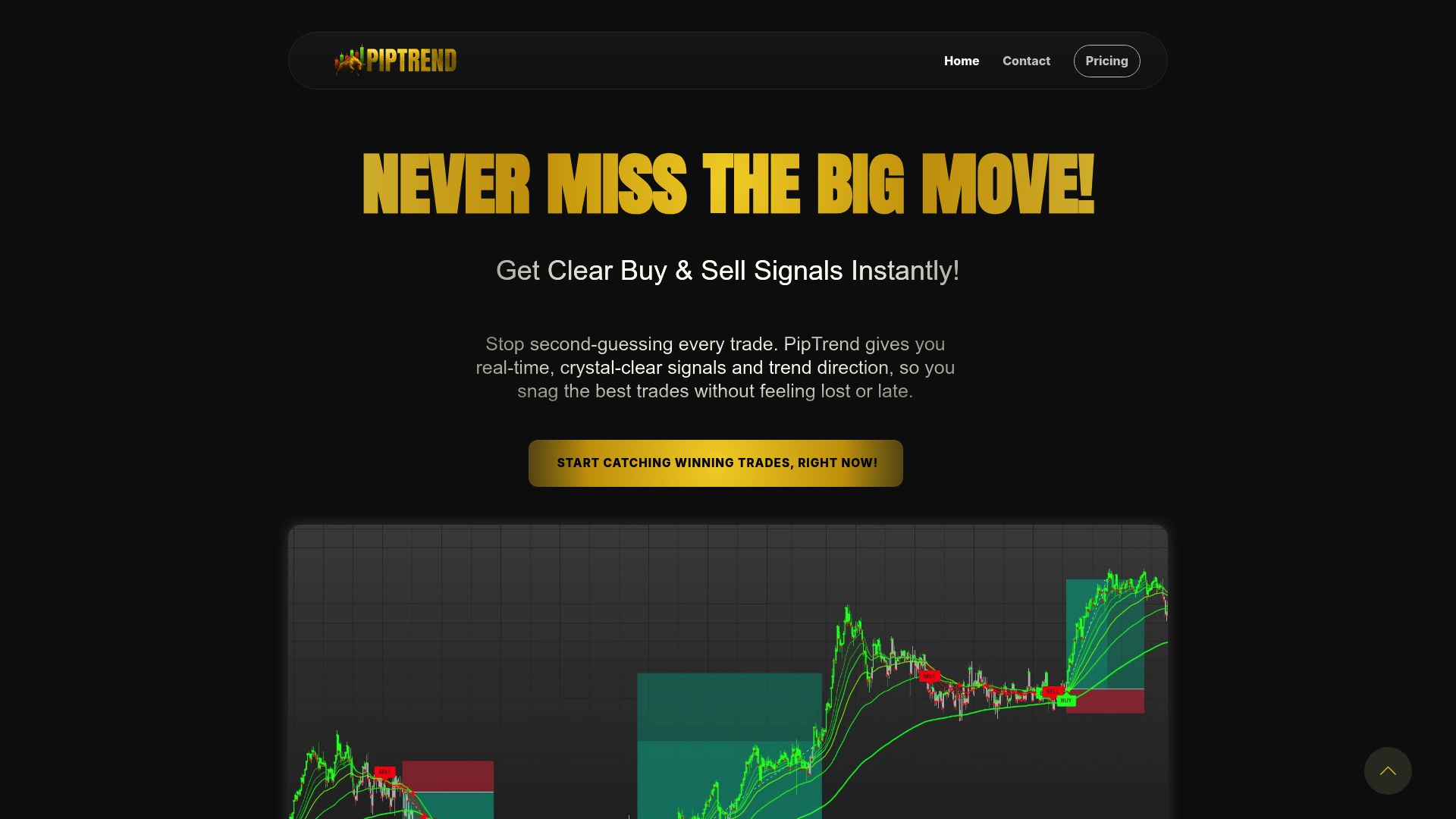
The smart trend detection feature highlights high-probability setups, while the multi-timeframe dashboard offers a holistic view of market moves. Instant alerts ensure you never miss critical opportunities, even in volatile sessions.
Case in point: Traders using PipTrend report less analysis paralysis and greater confidence in their decisions. The customizable analysis adapts to any trading style, making it a valuable tool for beginners and professionals alike.
Reliable AI tools simplify complex market moves, streamlining your decision-making and helping maintain consistency in fast-changing environments.
Expert Perspectives: Lessons from Market Leaders
In a landscape where market moves are shaped by complexity and rapid change, it’s essential to learn from the experts. Institutional investors, seasoned by years of navigating uncertainty, offer valuable perspectives for anyone aiming to thrive in 2025. Let’s break down their approaches to data, discipline, and adapting to new realities.

Insights from Institutional Investors
Top institutional investors view market moves through a macro lens, constantly assessing how global trends influence asset allocation. They rely on comprehensive resources like the IMF World Economic Outlook, April 2025 to interpret inflation, growth, and policy shifts. CIOs often adjust their strategies, balancing traditional assets with alternatives and ESG-focused investments.
| Shift | 2024–2025 Trend |
|---|---|
| Alternatives | Increased allocation |
| ESG | Mainstream adoption |
| Fixed Income | Selective rotation |
By staying flexible, these leaders consistently position themselves ahead of major market moves.
The Role of Economic Data and Policy Announcements
Economic indicators are the pulse of market moves. Institutional investors closely track data releases—like inflation and employment reports—and respond to pivotal announcements such as Fed Chair Powell’s Jackson Hole speech. These events can spark swift shifts in sentiment and asset prices.
The challenge lies in separating meaningful signals from background noise. Experts emphasize the importance of measured reactions. Understanding which data points truly drive market moves helps investors avoid knee-jerk decisions and maintain a strategic edge.
Adapting to Uncertainty: Flexibility and Discipline
Navigating unpredictable market moves requires a blend of discipline and adaptability. Seasoned investors set clear plans but remain ready to pivot when conditions shift. For example, during the unexpected volatility of 2024, successful managers stuck to their risk controls while adjusting allocations as new data emerged.
Lessons from these experts highlight the value of having a repeatable process. By balancing consistency with flexibility, investors can respond confidently to sudden market moves and avoid costly emotional decisions.
Learning from Past Market Moves
Reflecting on historical market moves is crucial for growth. The cycles from 2022 to 2024 revealed how resilience and adaptability underpin long-term success. Reviewing past corrections teaches investors how to spot patterns, manage risk, and capitalize on emerging opportunities.
Continuous learning is a hallmark of market leaders. They review their strategies, study past market moves, and adjust playbooks to stay ahead. This commitment to growth empowers investors to navigate whatever 2025 brings with greater confidence.
The Role of Technology and Innovation in Modern Markets
Technology is rapidly reshaping market moves, making modern investing more dynamic and accessible than ever. From advanced trading platforms to powerful AI-driven analytics, innovation is leveling the playing field and creating new opportunities for both retail and institutional investors.
Evolution of Trading Platforms and Tools
Trading platforms have evolved from basic order-entry systems to sophisticated hubs with real-time data, charting, and AI-powered features. Today’s traders can visualize market moves instantly, access global assets, and automate strategies with just a few clicks.
Modern tools include multi-device apps, customizable dashboards, and seamless connectivity to news feeds and economic data. AI is transforming how investors analyze trends, as highlighted in the Survey of Financial AI: Advances and Challenges, which explores the rise of predictive models and algorithmic trading. These innovations empower users to adapt to rapid market moves with precision and confidence.
Data Democratization and Retail Investor Empowerment
Access to institutional-grade data was once reserved for professionals, but now retail investors can tap into vast information resources. Social media, online communities, and open-source tools give individuals real-time insights into market moves and sentiment shifts.
Retail participation surged in 2024, with individuals leveraging data feeds, sentiment trackers, and crowd-sourced analysis. This democratization means more eyes on the market, faster reactions to events, and a broader perspective on what drives market moves.
Cybersecurity, Data Privacy, and Regulatory Trends
With more digital trading comes heightened focus on cybersecurity and data privacy. Protecting sensitive information is paramount as hackers target financial platforms and personal accounts. Regulatory bodies are responding by enforcing strict standards and monitoring AI-driven trading.
New rules address algorithmic transparency, data handling, and ethical AI use. These measures aim to safeguard investors and preserve trust in the market moves ecosystem, ensuring innovation does not outpace security and compliance.
The Future: What to Expect in 2025 and Beyond
Looking ahead, technology will only accelerate its impact on market moves. Blockchain may streamline settlement, while quantum computing could revolutionize risk analysis. AI will continue to shape portfolio management, enabling deeper understanding of complex patterns.
Staying informed about technological trends is crucial for anyone aiming to master future market moves. Investors who embrace innovation and adapt quickly will be best positioned to capitalize on the opportunities that 2025 and beyond will bring.
Building Your Personalized Market Moves Playbook
Crafting your personalized market moves playbook is essential for thriving in today’s dynamic environment. With volatility and opportunity around every corner, a clear, disciplined approach empowers you to act with confidence—no matter what the market throws your way.
Defining Your Investment Goals and Risk Tolerance
The foundation of any successful market moves strategy is knowing what you want to achieve. Start by clarifying your objectives: Are you seeking steady growth, capital preservation, or bold returns? Next, assess your risk tolerance—can you stomach short-term swings, or do you prefer stability?
Understanding the global landscape is crucial. Insights from the Deloitte Global Economic Outlook 2025 can help inform your decisions, highlighting potential headwinds and opportunities across regions. Aligning your goals with broader trends ensures your market moves remain realistic and actionable.
Developing a Step-by-Step Market Analysis Routine
A consistent routine is vital for interpreting market moves with clarity. Begin by reviewing macroeconomic indicators, sector performance, and technical signals each week. Create a checklist to keep your analysis structured:
- Monitor key economic data releases.
- Track sector rotation and emerging trends.
- Review technical charts and trading signals.
For deeper insights into reading signals, explore Interpreting Trading Signals to refine your approach. This systematic analysis keeps you prepared to spot opportunities as they arise in market moves.
Creating an Actionable Trading or Investment Plan
Your market moves playbook should include clear entry, exit, and risk management rules. Define your criteria for entering trades, set stop-loss levels, and determine position sizes in advance. Use technology—like AI dashboards—to help filter and prioritize opportunities.
Think of your plan as a living document. Regularly update it based on your experience and changing market conditions. Incorporating reliable trading signals can boost discipline and consistency, helping you capitalize on market moves with greater confidence.
Staying Disciplined and Adapting to Change
Markets evolve rapidly, so discipline is your safety net. Stick to your playbook during both calm and volatile periods. Avoid impulsive decisions by reviewing your rules before taking action.
Adaptability is equally important. When new data or trends emerge, adjust your strategy thoughtfully. The best market moves come from balancing steadfast discipline with the flexibility to pivot when necessary.
Networking and Learning from the Community
No trader is an island. Engage with online forums, attend webinars, and listen to podcasts for fresh perspectives on market moves. Sharing experiences and learning from others accelerates your growth.
Peer discussions and expert interviews can reveal strategies you might not have considered. By staying connected, you’ll keep your playbook sharp and responsive to the ever-changing market landscape.
We’ve covered a lot of ground on how to spot trends, use smart strategies, and leverage technology for better trading in 2025. If you’re ready to put these ideas into action and want an easier way to catch the right market moves, why not try a tool built for the fast-paced world ahead? With real-time alerts, smart AI signals, and clear analysis, you can trade with more confidence—no more second-guessing or analysis paralysis. Want to see what that feels like for yourself?
See Your Trading Improve With PipTrend