
The explosive growth of es futures has redefined modern trading, attracting both institutional and retail traders with unmatched liquidity and around-the-clock access. As volatility and global participation surge, mastering es futures is more crucial than ever for anyone looking to diversify or hedge their portfolio.
This comprehensive guide provides a clear roadmap for navigating es futures in 2026. You will discover essential contract details, proven trading strategies, risk management techniques, and advanced tools tailored for evolving markets.
Ready to unlock actionable insights and stay ahead of the curve? Use this guide to make smarter, more confident trading decisions with es futures.
Understanding ES Futures: Fundamentals and Market Structure
ES futures, officially known as E-mini S&P 500 futures, have become a cornerstone of global financial markets. These contracts serve as a benchmark for US equity performance, making them a vital instrument for traders and investors. The es futures market provides exposure to the S&P 500 index in a highly efficient and accessible way.
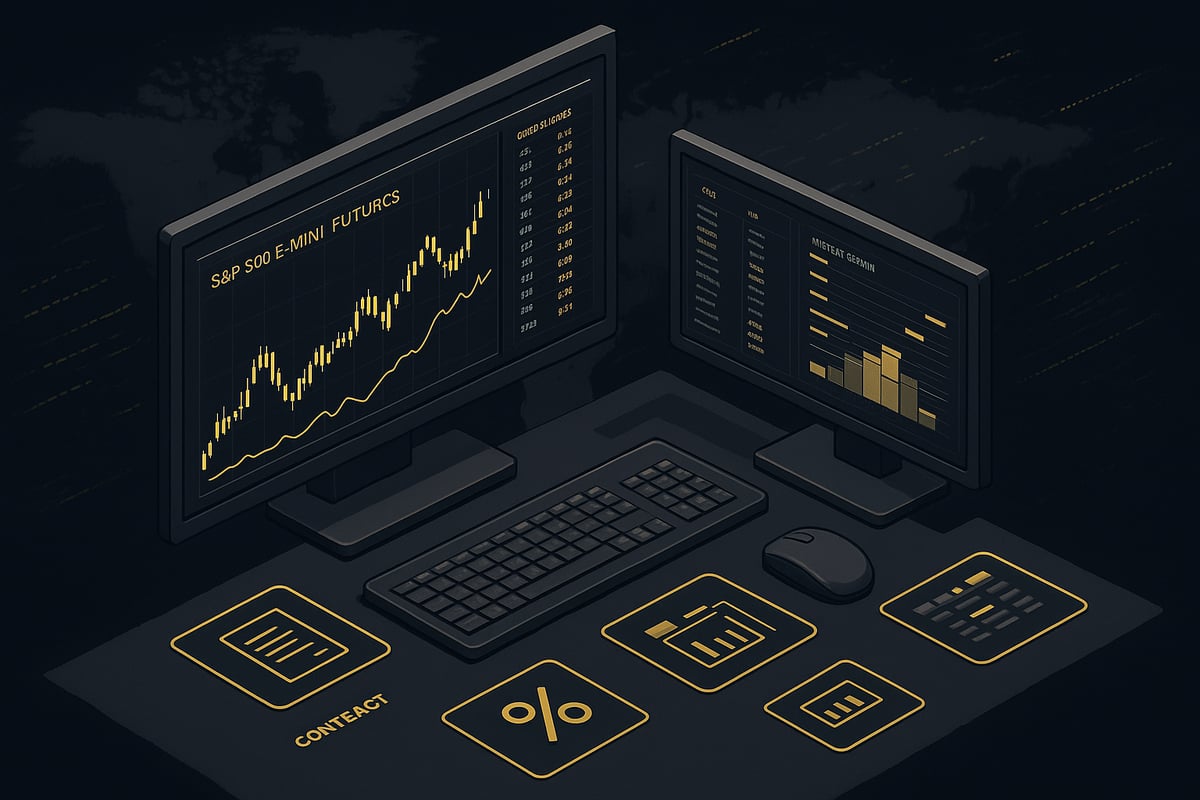
Contract Specifications of ES Futures
Understanding es futures begins with their key specifications:
- Symbol: /ES
- Multiplier: $50 per index point
- Minimum Tick Size: 0.25 index points ($12.50)
- Settlement: Cash-settled
- Trading Hours: Nearly 24 hours a day, five days a week
These attributes make es futures appealing for both professional and individual traders. For more details on tick value, trading hours, and contract size, see this S&P 500 E-mini futures overview.
Comparing Standard, E-mini, and Micro E-mini Contracts
There are three main types of S&P 500 futures contracts: Standard, E-mini, and Micro E-mini. The table below highlights the differences:
| Contract Type | Symbol | Multiplier | Tick Value | Typical Use Case |
|---|---|---|---|---|
| Standard | SP | $250 | $25 | Institutional trading |
| E-mini (ES) | /ES | $50 | $12.50 | Active traders, hedgers |
| Micro E-mini | /MES | $5 | $1.25 | Small accounts, flexibility |
E-mini and Micro E-mini es futures have dramatically increased accessibility, allowing traders with varying capital levels to participate in the S&P 500 market.
How ES Futures Are Traded Globally
Es futures are listed and centrally cleared on the Chicago Mercantile Exchange (CME), which ensures transparency and global reach. With electronic trading platforms, participants from around the world can access es futures nearly 24 hours a day. High liquidity is a defining feature, with average daily volumes consistently ranking among the highest for any equity index derivative.
ES Futures Market Liquidity and Accessibility
According to CME data, es futures regularly see millions of contracts traded per day. This depth allows for tight bid-ask spreads and efficient trade execution. The global accessibility of es futures means that traders can react to news or economic events in real time, regardless of their location.
Margin Requirements and Leverage
Trading es futures involves the use of margin, which magnifies both potential gains and losses. There are two key margin levels:
- Initial Margin: The minimum amount required to open a position.
- Maintenance Margin: The minimum balance needed to keep the position open.
Leverage enables traders to control large amounts of notional value with relatively small capital outlays. However, prudent margin management is essential to avoid forced liquidation.
Speculation, Hedging, and Real-World Example
Es futures are used for both speculation and risk management. Active traders seek to profit from short-term price movements, while investors and institutions use es futures to hedge portfolio exposure.
For instance, a portfolio manager holding a basket of S&P 500 stocks might sell es futures contracts to offset potential losses during a market downturn. This flexible hedging capability is one reason why es futures remain integral to modern trading strategies.
Step-by-Step Guide: How to Trade ES Futures in 2026
Trading es futures in 2026 requires a clear understanding of the process, from broker selection to advanced tools. This guide breaks down each step so traders of all levels can navigate the es futures market with confidence.
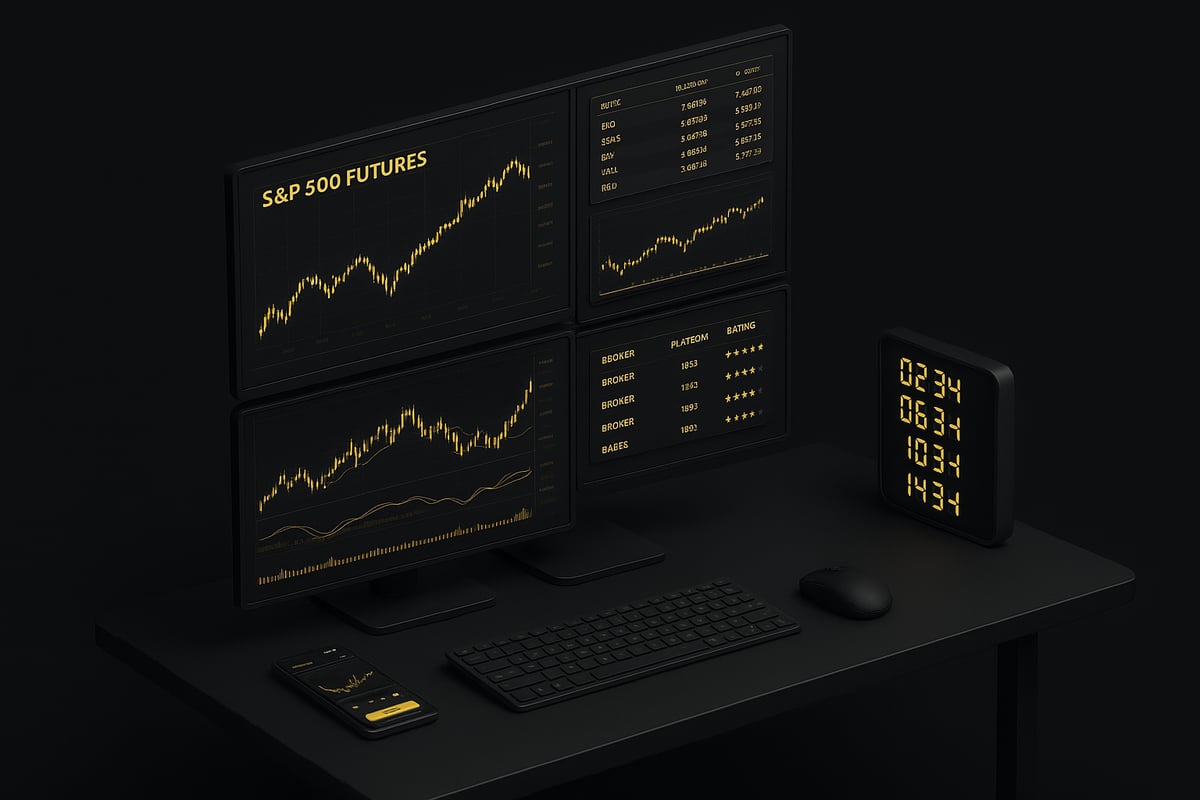
Choosing a Broker and Setting Up Your Trading Account
Selecting a broker for es futures trading is a critical first step. Look for platforms with robust reliability, competitive fees, and strong research support. Regulatory compliance is non-negotiable. Ensure your broker is registered with the CFTC and NFA for added security.
Compare brokers based on these features:
| Broker | Platform Reliability | Fees | Research Tools | Support |
|---|---|---|---|---|
| Broker A | High | Low | Advanced | 24/7 |
| Broker B | Medium | Medium | Basic | Business |
| Broker C | High | High | Premium | 24/7 |
Opening an es futures account involves online registration, identity verification, and funding your account via wire transfer or ACH. A reliable broker ensures smooth trading and fast execution for es futures.
Understanding Contract Specifications and Trading Hours
Familiarity with es futures contract details is essential. The standard contract uses the symbol /ES, a $50 multiplier, and a tick size of 0.25 points ($12.50). Margins, both initial and maintenance, determine how much capital you need to hold positions.
Trading hours for es futures are nearly 24 hours, Sunday evening through Friday evening, with brief daily maintenance breaks. Liquidity and volatility often shift between the US, European, and Asian sessions. Trading during off-peak hours can lead to wider spreads and slippage.
For a deep dive into contract details, refer to the ES Futures Contract Specifications. Understanding when and how es futures trade helps you optimize entry and exit strategies.
Placing Your First ES Futures Trade
When placing your first es futures trade, choose from market, limit, or stop orders. The order book and Depth of Market (DOM) show real-time bids, offers, and liquidity. For example, placing a limit order in a liquid market can help you avoid slippage.
Reading the es futures DOM helps you assess order flow and make informed decisions. Always be mindful of contract expiration dates and the rollover process. Transitioning positions before expiration ensures you avoid unwanted settlement or delivery.
Implement risk controls with every trade. Setting stop-loss and take-profit levels is essential for managing downside risk in es futures.
Managing Positions and Monitoring Performance
Active position management is crucial when trading es futures. Use real-time quotes and advanced trading platforms to monitor open trades. Margin calls can occur if your account value drops below maintenance requirements, so manage leverage carefully.
Adjust stop-loss and take-profit orders as the market moves. Keep detailed records of each es futures trade, including entry, exit, and rationale. Journaling improves discipline and helps identify strengths and weaknesses.
Best practices include reviewing performance weekly and analyzing both winning and losing trades. This feedback loop is key for long-term success in es futures trading.
Utilizing Advanced Trading Tools and Resources
Modern es futures traders leverage advanced charting software, technical indicators, and research platforms. Economic calendars and news feeds provide timely updates on events that can impact es futures prices.
Many traders use tools like volatility indices (such as VIX) to measure market sentiment. Practicing with demo accounts allows you to test strategies without risking real capital. Technical analysis, combined with fundamental research, enhances your edge in es futures.
A well-equipped trader adapts quickly to changing market conditions using these resources for both short-term and long-term es futures positions.
AI-Powered Trading Indicators: Enhancing ES Futures Strategies
AI-driven trading indicators are transforming es futures strategies in 2026. These tools deliver real-time buy and sell signals, often using multi-timeframe analysis for greater accuracy. Instant alerts and automated trend detection can help you spot es futures opportunities as they arise.
For example, AI-powered platforms can analyze vast data sets to reduce guesswork and improve trade consistency. Solutions like PipTrend offer real-time signals and support across multiple markets.
Incorporating AI into your es futures approach can streamline decision-making and give you a significant edge in a competitive landscape.
Essential ES Futures Trading Strategies for 2026
Mastering es futures in 2026 means understanding a range of trading strategies, each tailored to different market conditions and trader preferences. Whether you are an active day trader or a long-term investor, the right approach can help you capitalize on S&P 500 price movements while managing risk effectively.
 Futures Trading Strategies for 2026">
Day Trading and Scalping Techniques
Day trading and scalping remain popular strategies for es futures, thanks to their extraordinary liquidity and tight bid-ask spreads. Active traders often use short timeframes, like the 1-minute or 5-minute chart, to capture quick price moves. A common approach is the 5-minute breakout strategy, which combines volume analysis with price action to identify momentum trades.
- Focus on high-volume periods for better fills
- Use tight stop-loss orders to control risk
- Adjust position sizes to account for volatility
For example, a trader might wait for the es futures price to break above a consolidation range on strong volume, entering a long position with a stop just below support. Quick execution and discipline are essential in this fast-paced environment.
Swing Trading and Position Trading
Swing trading in es futures targets larger price swings over several days or weeks. This strategy relies on technical analysis tools such as moving averages, Fibonacci retracements, and trendlines to identify entry and exit points. Position traders, on the other hand, hold contracts for longer to benefit from broader market trends.
An example setup could involve waiting for es futures to pull back to a key moving average during a macroeconomic event, then entering a trade as price confirms support. Balancing leverage is crucial, since overnight risk can affect outcomes. For a deeper dive into strategy design, consider the Index trading strategies guide for practical tips and frameworks.
Hedging and Portfolio Diversification
Es futures are invaluable for hedging equity portfolios and enhancing diversification. Both retail and institutional investors use these contracts to offset potential losses during market downturns. By calculating the appropriate hedge ratio, traders can protect portfolios against S&P 500 declines while maintaining upside exposure.
For instance, an institutional manager might sell es futures contracts before earnings season to cushion anticipated volatility. Understanding basis risk, or the difference between futures and cash market performance, is key for effective hedging. This approach offers flexibility for managing risk in dynamic markets.
Spread Trading and Arbitrage Opportunities
Spread trading and arbitrage involve exploiting price differences between related contracts or markets. In es futures, calendar spreads are common, where traders buy one contract month and sell another to profit from shifts in the futures curve. Intermarket spreads, like trading es futures versus Dow or Nasdaq futures, help diversify risk and capture relative value.
Arbitrage opportunities arise when temporary mispricings occur, allowing savvy traders to lock in small, low-risk profits. For example, a seasonal spread strategy might involve buying the June es futures and selling the September contract, anticipating historical patterns in index behavior. Precision and speed are vital for success in these strategies.
Incorporating Options on ES Futures
Options on es futures add another layer of flexibility, enabling traders to construct complex risk/reward profiles. Protective puts can limit downside exposure on long positions, while covered calls generate additional income. Combining options and futures allows for advanced tactics, such as straddles or strangles, to benefit from volatility.
A typical use case is buying a put option on an es futures contract to hedge against unexpected market drops. Traders also learn to interpret the Greeks, such as delta and vega, to manage sensitivity to market moves and volatility. Mastery of options unlocks powerful tools for risk control and profit generation.
Algorithmic and Quantitative Strategies
Algorithmic trading has surged in popularity within es futures markets. Quantitative strategies, such as mean reversion and momentum algorithms, use historical data to identify statistically significant patterns. Backtesting and optimization are critical steps to validate these models before deploying real capital.
For example, a mean-reversion algorithm might buy es futures when price deviates significantly from its moving average, betting on a return to the mean. Momentum strategies look for strong trends and ride them for short periods. Traders must consider factors like latency, slippage, and execution quality to ensure their systems perform as expected.
Risk Management and Common Pitfalls in ES Futures Trading
Effective risk management is the cornerstone of long-term success in es futures trading. With high liquidity and leverage, es futures offer unique opportunities, but they also expose traders to significant risks. Understanding and mitigating these risks is essential for protecting capital and achieving consistent results.
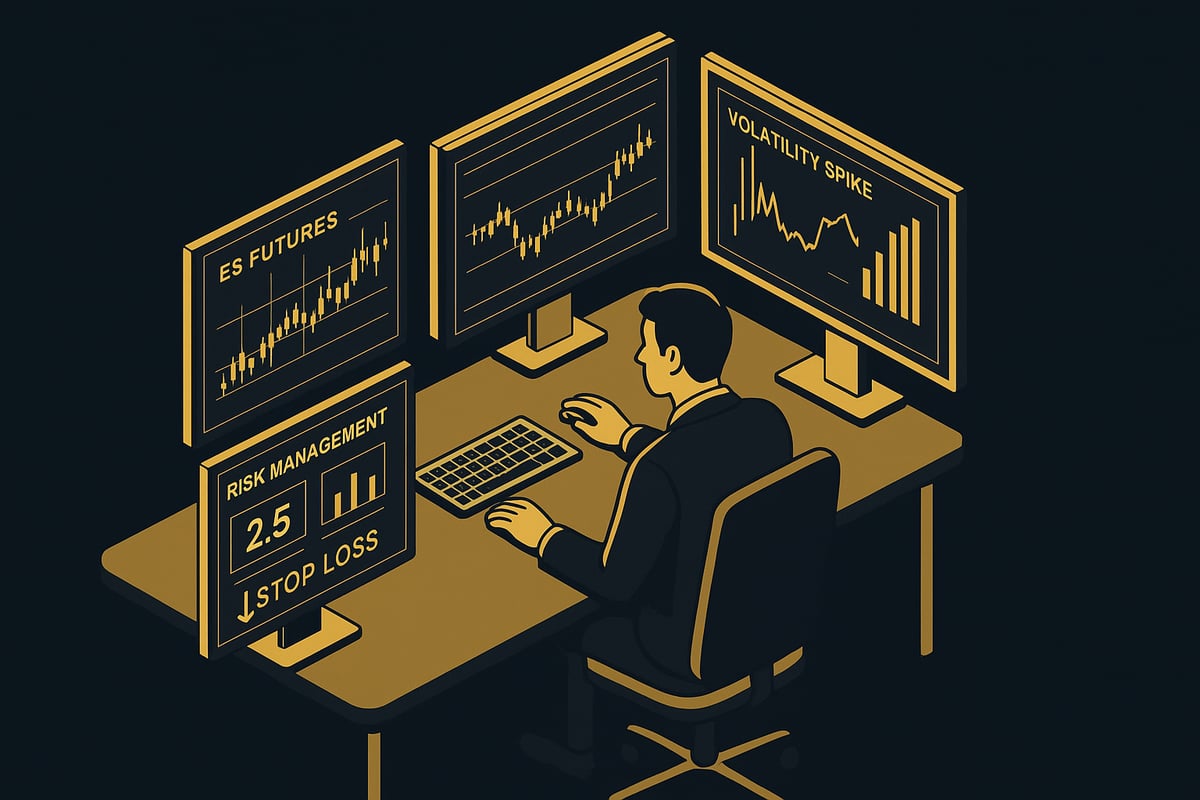
Leverage and Margin Risks
Leverage is a double-edged sword in es futures. While it allows for larger positions with smaller capital, it also amplifies both gains and losses. Margin requirements, set by the exchange and brokers, dictate how much capital you must maintain. There are two main types: initial margin (entry requirement) and maintenance margin (ongoing requirement).
If your account falls below the maintenance margin, you face a margin call and must deposit more funds or liquidate positions. Even small market moves can result in outsized losses when trading es futures with high leverage. For a comprehensive approach to managing these risks, review these Risk Management Tips for ES Futures Traders.
Best practices:
- Use modest leverage relative to your account size.
- Set stop-loss orders to cap potential losses.
- Monitor account balance and margin levels in real time.
Volatility and Market Events
Es futures are sensitive to economic releases, central bank announcements, and geopolitical developments. Events like Federal Reserve decisions or unexpected news can cause sudden volatility spikes. This can widen spreads, increase slippage, and trigger stop-losses unexpectedly.
For instance, during earnings season or CPI releases, the es futures market often experiences rapid price swings. Traders should prepare for these scenarios by adjusting position sizes and using volatility filters.
Key strategies:
- Avoid trading during known high-impact events unless experienced.
- Utilize volatility indices and alerts for risk assessment.
- Tighten risk controls when volatility is elevated.
Psychological Challenges and Discipline
Emotional discipline is critical in es futures trading. Fear and greed can lead to overtrading, revenge trading, or abandoning your plan. Many traders suffer losses not from poor strategy, but from lapses in discipline during stressful periods.
A typical pitfall is increasing position sizes after a loss, hoping to recover quickly, which often compounds the problem. Creating a written trading plan and maintaining a trade journal can help reinforce discipline.
Techniques for discipline:
- Set daily loss limits and walk away if reached.
- Regularly review your trading journal for patterns.
- Practice mindfulness or stress reduction techniques.
Technical and Systemic Risks
Technical failures can be costly in es futures trading. Platform outages, connectivity issues, or delayed order execution may prevent you from managing open positions effectively. Even with reliable brokers, flash crashes or unexpected market halts can occur.
Protect yourself by having backup systems and understanding your broker's policies on outages. Regularly test your trading platform and have contingency plans for critical scenarios.
Precautions:
- Use a second device or internet connection as backup.
- Know your broker’s emergency procedures.
- Set up alerts for connection and execution errors.
Regulatory and Tax Considerations
Trading es futures involves strict compliance with regulatory bodies such as the CFTC and NFA. These organizations set rules on reporting, margin, and trading practices. Changes in regulations, such as new margin requirements or reporting standards, can impact both retail and institutional traders.
Tax treatment is another consideration. Es futures are typically classified as Section 1256 contracts, offering favorable tax rates on gains and losses, but accurate record-keeping is vital. Always stay updated on compliance requirements and consult a tax professional if needed.
Checklist:
- Track all trades and related documentation.
- Review regulatory updates regularly.
- Understand the tax implications of your trading activity.
Regulatory, Technological, and Market Trends Shaping ES Futures in 2026
The es futures landscape is rapidly evolving in 2026, shaped by new regulations, technological breakthroughs, and shifting market dynamics. Traders need to stay ahead of these trends to remain competitive and compliant. In this section, we explore the most important changes defining the future of es futures trading.
Regulatory Changes and Compliance
Regulatory bodies are stepping up oversight for es futures in 2026. The Commodity Futures Trading Commission (CFTC) and National Futures Association (NFA) have introduced updates, including stricter margin requirements and enhanced reporting obligations. These measures aim to protect both retail and institutional traders.
For example, the introduction of dynamic margin models responds to increased market volatility, ensuring that es futures positions are adequately collateralized. Traders must adapt by reviewing compliance bulletins and using reliable broker platforms that keep pace with regulatory shifts.
Staying informed is crucial. Subscribe to official updates and consider joining industry webinars to understand the impact of new rules on your es futures strategy.
Advances in Trading Technology
The trading technology revolution is transforming how participants approach es futures. Artificial intelligence, machine learning, and automation are now integral to strategy development and execution. Smart order routing algorithms help optimize fills and reduce latency, giving traders an edge in fast-moving markets.
Mobile and cloud-based platforms offer flexibility, allowing access to es futures trading from anywhere. Security and data privacy are also in focus, so traders should choose platforms with robust encryption and multi-factor authentication.
By leveraging advanced analytics and automated tools, traders can react quickly to opportunities and risks in the es futures market.
Market Liquidity and Global Participation
Es futures continue to rank among the most liquid financial instruments worldwide. Trading volumes have surged, driven by increased global access and electronic trading innovations. The CME Group’s infrastructure supports efficient execution, attracting traders across continents.
International economic events can impact liquidity and volatility, so understanding trading session overlaps is vital. For a real-time perspective on liquidity and trends, consult the S&P 500 futures live chart. Additionally, reviewing the ES Futures Trading Hours helps traders plan entries and exits during optimal periods.
This global participation ensures that es futures remain a cornerstone for both hedgers and speculators.
The Rise of Micro E-mini Contracts
Micro E-mini S&P 500 contracts have democratized access to es futures. With one-tenth the size of standard E-minis, Micro contracts require significantly less capital. This enables newer traders to participate and test strategies with reduced risk.
Comparing contract sizes:
| Contract Type | Multiplier | Margin Requirement |
|---|---|---|
| Standard ES | $50 | High |
| Micro ES | $5 | Low |
Flexible position sizing and lower barriers to entry have expanded the es futures user base. Micro contracts are now a popular choice for both retail and small institutional traders.
ESG, Thematic, and Alternative Futures Products
The es futures market is expanding beyond traditional benchmarks. ESG-linked S&P 500 futures, thematic contracts, and alternative asset-based products are gaining traction. Traders seeking diversification or aligning with sustainability goals now have more options.
For example, S&P 500 ESG futures offer exposure to companies meeting environmental, social, and governance criteria. Thematic products cater to evolving investor interests, such as technology or healthcare sector performance.
When considering these alternatives, evaluate liquidity, contract specifications, and how they fit within your es futures trading plan. Staying informed about new product launches will help you adapt to changing market preferences.
Resources, Tools, and Continuing Education for ES Futures Traders
Navigating the world of es futures requires more than just market intuition. Traders need reliable resources, robust platforms, and continuous learning to maintain an edge. Whether you are new to es futures or looking to refine your approach, having the right tools at your fingertips is essential for long-term success.
Essential Platforms and Tools
Selecting the right trading platform is the foundation of effective es futures trading. Professional traders rely on platforms that offer real-time quotes, advanced charting, and seamless order execution. Popular choices include NinjaTrader, TradeStation, and Interactive Brokers, each offering unique features for es futures traders.
| Platform | Real-Time Quotes | Advanced Charting | Order Execution | Research Access |
|---|---|---|---|---|
| NinjaTrader | Yes | Yes | Yes | Moderate |
| TradeStation | Yes | Yes | Yes | Extensive |
| Interactive Brokers | Yes | Yes | Yes | Extensive |
Look for platforms with customizable dashboards, reliable uptime, and responsive support. Many brokers also provide mobile apps for trading es futures on the go.
Research, Economic Calendars, and News Feeds
Staying informed is critical in the fast-moving es futures market. Use economic calendars to track key events like Fed announcements or employment data that can impact volatility. News feeds from Bloomberg, Reuters, and CNBC deliver real-time updates, while specialized services like Benzinga Pro offer market-moving alerts.
For in-depth contract information, trading hours, and expiration details, the ES Futures Market Profile provides a comprehensive overview that every trader should review. Integrating these sources into your daily routine helps anticipate market moves and manage risk in es futures trading.
Ongoing Education and Trading Communities
Continuous education is vital for mastering es futures. Participate in webinars hosted by CME Group, attend online courses, and join trading communities on platforms like Discord or Reddit. Engaging with fellow traders fosters idea sharing and keeps you updated on the latest strategies.
Demo accounts are invaluable for practicing new approaches without risking capital. By simulating real market conditions, demo environments let you test strategies, refine execution, and build confidence before trading es futures live.
Simulators, Backtesting, and Staying Updated
Leverage trading simulators and backtesting tools such as TradingView, MultiCharts, or Sierra Chart to analyze past performance and optimize strategies for es futures. These tools allow you to assess risk, test different scenarios, and improve decision-making.
Expand your knowledge with respected books like "Trading Systems and Methods" by Perry Kaufman or podcasts such as "Chat With Traders." Participate in online forums to exchange insights and stay current with regulatory updates and CME announcements. Regularly reviewing resources and embracing lifelong learning is the key to sustained success in the es futures market.
As you set out to navigate the evolving landscape of ES futures trading in 2026, having the right tools at your fingertips can make all the difference. With the rapid advancements in AI and the growing complexity of global markets, it’s more important than ever to base your decisions on clear, timely insights. PipTrend is designed to help you do just that by providing real time buy and sell signals, multi timeframe analysis, and instant alerts—eliminating guesswork so you can trade with confidence and consistency. If you’re ready to see measurable improvements in your trading results, See Your Trading Improve With PipTrend.