
Futures trading is evolving at a remarkable pace, shaped by new technologies, global events, and rising market volatility. Traders must adapt quickly to keep up with these dynamic shifts.
Opportunities are abundant, yet risks are higher than ever, driven by 24/7 access and the speed of information. The modern landscape demands smarter, more flexible approaches.
This article uncovers eight powerful futures trading strategies designed for success in 2026. Whether you are a seasoned professional or just starting out, these approaches can help you thrive.
From trend following to advanced hedging, you will discover actionable insights and proven methods to boost your consistency and confidence in the futures markets.
Understanding the 2026 Futures Trading Landscape
The world of futures trading strategies is undergoing a profound transformation as we enter 2026. Technology, new asset classes, and global market shifts are reshaping the opportunities and risks for traders everywhere.
The Evolution of Futures Markets
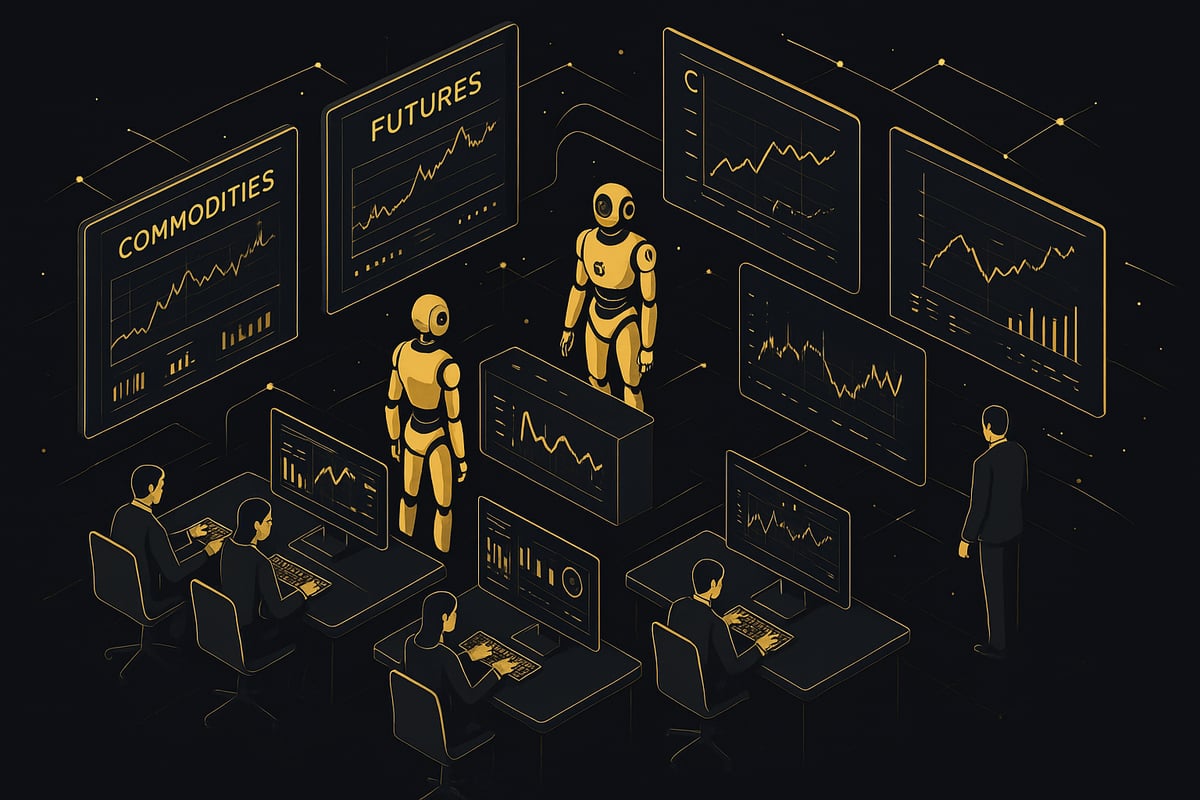
Futures trading strategies are evolving rapidly thanks to breakthroughs in artificial intelligence, global electronic access, and the emergence of new asset classes. In 2026, traders can access not only traditional commodities and indices but also a growing array of crypto futures and micro contracts designed for retail participation.
The shift toward 24/7 trading means markets are more volatile and interconnected than ever. Adaptability and fast decision-making are now crucial traits for anyone navigating this environment. For example, the explosive growth of crypto futures has opened doors for retail traders, while micro contracts allow for precise risk management.
Recent data highlights these changes. According to the Derivatives Market Size Report 2026, global derivatives volumes have reached record highs, with retail traders accounting for a rising share. These trends are fundamentally altering how futures trading strategies are designed and executed in 2026.
Core Principles of Profitable Futures Trading
Despite rapid change, the foundations of successful futures trading strategies remain rooted in three key pillars: clear entry signals, disciplined exit rules, and robust risk management. Each of these elements is essential for consistent profitability.
Leverage remains a central feature of futures markets. While it can amplify gains, it also increases the risk of significant losses. That's why a well-defined trading plan is vital. For instance, a 20-point move in the E-mini S&P 500 can result in a $1,000 swing, underscoring the importance of pre-set rules and emotional discipline.
Effective risk management is more critical than ever. Without strict controls, even the best futures trading strategies can fail in a highly leveraged environment.
Essential Tools and Technologies for 2026
In the modern era, the right tools empower traders to implement futures trading strategies with greater precision and speed. Advanced charting platforms, AI-driven indicators, and instant alert systems are now standard in a trader's toolkit.
Real-time data analysis and automated order execution have become essential for capitalizing on fleeting opportunities. Platforms such as TradingView and PipTrend are leading the way, offering customizable dashboards and integrated AI features.
Staying current with new technologies is a competitive necessity. Traders who continually upgrade their systems and knowledge are best positioned to succeed with innovative futures trading strategies in 2026.
8 Powerful Futures Trading Strategies for 2026 Success
Discovering the right futures trading strategies is crucial for thriving in 2026’s dynamic markets. Below, we break down eight actionable approaches, each designed to help traders of all levels achieve consistent results. Explore each method, learn the tools, and find out how to manage risk in real-world scenarios.
1. Trend Following Strategy
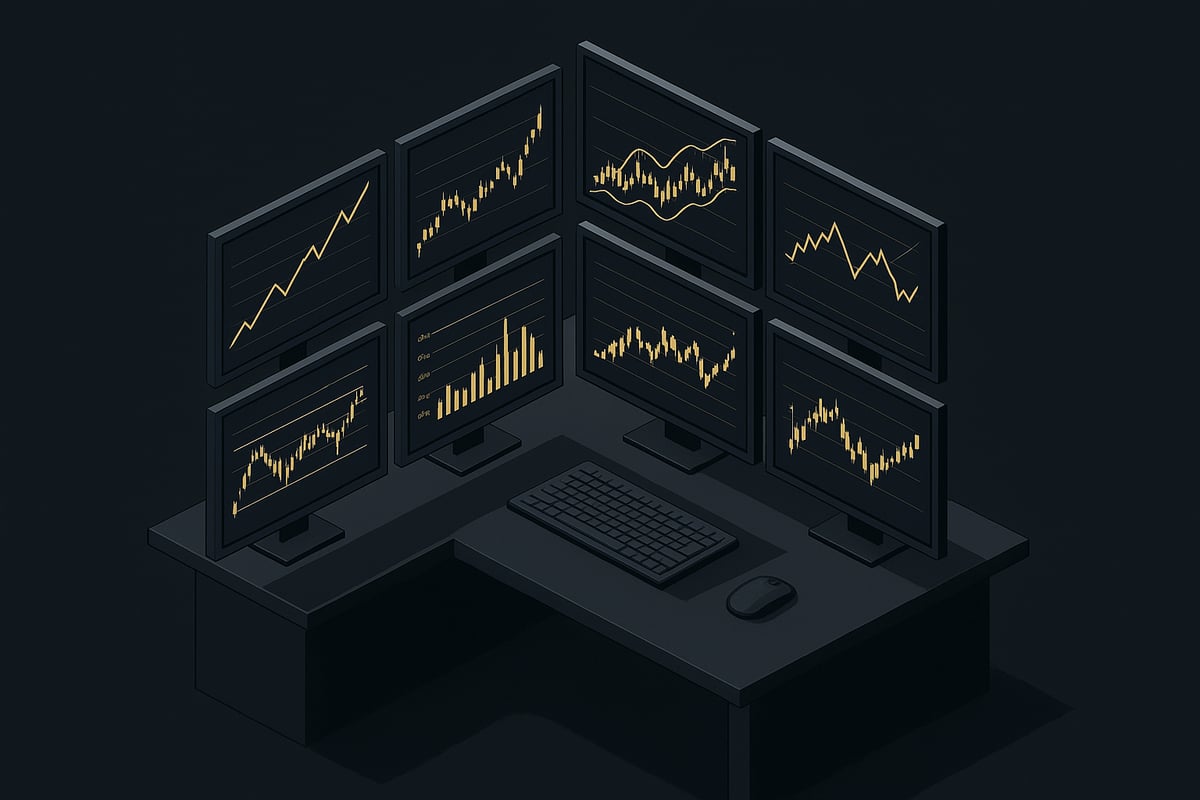
Trend following remains one of the most popular futures trading strategies for 2026. This approach involves entering trades in the direction of the prevailing trend, using technical indicators to confirm momentum.
Key tools include moving averages, Donchian channels, and trendline analysis. Traders typically buy when the price breaks above trend resistance or sell when a reversal is signaled. Entry and exit points are defined by these technical markers, helping traders avoid subjective decisions.
Risk management is vital. Use trailing stops and predefined exits to secure profits and limit losses. For example, a 20-day Donchian channel can help ride a multi-week uptrend in commodity futures, capturing significant moves when volatility surges.
Historically, trend-following futures trading strategies have outperformed in volatile and directional markets. However, patience and discipline are essential. Expect multiple small losses before catching a substantial trend. Stick to your trading plan and avoid second-guessing signals.
- Tools: Moving averages, Donchian channels, trendlines
- Entry: Breaks above resistance
- Exit: Reversal or trailing stop
- Risk: Use stops, size positions appropriately
Consistent application of these futures trading strategies can offer an edge, especially when markets move swiftly.
2. Momentum Trading Strategy
Momentum trading focuses on capitalizing on sharp price moves, confirmed by strong volume and price velocity. This is a favorite among traders looking for quick profits in fast-moving markets.
Common indicators for this strategy include RSI, MACD, volume spikes, and moving average crossovers. Entry occurs after confirmation of a momentum breakout, while exits are triggered when momentum indicators show signs of fading.
Risk management is strict. Tight stop-losses are placed to minimize losses from false breakouts. For example, entering a long position in NASDAQ futures after a surge in volume and a MACD crossover can yield rapid gains if momentum persists.
Momentum-driven futures trading strategies are especially popular among intermediate traders seeking short-term opportunities. However, quick execution and constant monitoring are required. Momentum can fade as fast as it appears, so discipline is non-negotiable.
- Indicators: RSI, MACD, volume, MAs
- Entry: Breakout with volume
- Exit: Momentum waning
- Risk: Tight stops
Apply these futures trading strategies in markets with strong trends and clear catalysts to enhance your trading results.
3. Mean Reversion Strategy
Mean reversion futures trading strategies are built on the idea that prices tend to return to their average after extreme moves. This approach is most effective in range-bound, low-volatility environments.
Key tools include Bollinger Bands, Keltner Channels, and moving averages. Traders fade moves that extend beyond the upper or lower bands, exiting at the mean or mid-band. Stops are placed outside recent highs or lows to prevent being caught in a runaway trend.
For example, you might short an index future after a price spike above the upper Bollinger Band. These bands are powerful for identifying overbought or oversold conditions. For a deeper dive into this tool, check out the Bollinger Bands in Trading guide.
Data shows that mean reversion strategies work best when markets lack a clear trend and price oscillates within a stable range. Avoid using mean reversion during strong trends, as this can lead to significant losses.
- Tools: Bollinger Bands, Keltner Channels, MAs
- Entry: Fade extreme moves
- Exit: At the mean
- Risk: Stops outside highs/lows
Integrate these futures trading strategies with careful risk controls for optimal performance.
4. Breakout Trading Strategy
Breakout trading is a cornerstone of many futures trading strategies. The idea is to enter trades when price breaks a key support, resistance, or chart pattern boundary.
Tools such as ZigZag indicators, chart patterns (like triangles and head & shoulders), and volume confirmation help identify legitimate breakouts. Entries are made at the breakout, and profit targets are set based on the pattern’s height or recent swings.
Stops are placed just beyond the breakout level to avoid getting whipsawed by false moves. For instance, trading a breakout above a major swing high in crude oil futures can capture momentum if the breakout is confirmed by volume.
Breakout strategies are beginner-friendly but can be prone to false signals in choppy markets. Use confirmation from multiple timeframes or volume to improve reliability.
- Tools: ZigZag, chart patterns, volume
- Entry: On breakout
- Exit: Target or reversal
- Risk: Stop beyond breakout
Employing these futures trading strategies during periods of heightened volatility can yield strong results.
5. Range-Bound (Inside the Bands) Strategy
Range-bound futures trading strategies aim to profit from price oscillations within a defined range or between Bollinger Bands. This approach is best suited for calm, sideways markets.
The main tools are Bollinger Bands, support and resistance levels, and oscillators like Stochastic or RSI. Traders buy at the lower band or support and sell at the upper band or resistance. Quick exits are essential if the price breaks out of the range, while partial profits can be taken at the mid-band.
An example is repeatedly buying and selling S&P 500 micro futures within a well-established range. Range trading offers a high win rate, but profits per trade are typically smaller.
- Tools: Bollinger Bands, support/resistance, oscillators
- Entry: At range extremes
- Exit: Mid-band or on breakout
- Risk: Exit quickly on breakout
These futures trading strategies are effective in low-volatility periods but should be avoided during major news events or market shocks.
| Range-Bound Strategy Summary | Benefit | Risk |
|---|---|---|
| High win rate | Consistent gains | Low profit/trade |
| Simple rules | Easy execution | Losses on breakouts |
6. Pullback and Retracement Strategy
Pullback and retracement futures trading strategies involve entering trades after a temporary price pullback in the direction of the main trend. This helps traders avoid chasing price and improves entry timing.
Fibonacci retracement levels (especially 50–61.8 percent) and moving average ribbons are key tools. Traders place limit orders at major retracement zones and exit at prior swing highs or lows. Stops are set just beyond the retracement level to cap losses.
For example, going long after a 61.8 percent pullback during an uptrend in gold futures can position you for the next leg higher. These strategies are especially useful for capturing trend continuations with lower risk.
- Tools: Fibonacci retracement, MA ribbons
- Entry: At retracement zones
- Exit: Swing highs/lows
- Risk: Stops beyond retracement
Combine these futures trading strategies with trend confirmation for greater accuracy and consistency.
7. Pattern Breakout and Chart Pattern Strategy
Pattern breakout futures trading strategies use classic chart patterns such as triangles, head & shoulders, and rectangles to spot breakout opportunities. These patterns provide clear entry and exit rules.
Traders use chart drawing tools, pattern recognition software, and breakout alerts to identify setups. Entry occurs when price breaks above or below the pattern boundary, with targets based on the measured move from the pattern’s structure.
Stops are set a few ticks beyond the pattern’s structure to limit downside. For example, trading a triple bottom breakout in E-mini S&P 500 futures with a calculated target can offer defined risk and reward.
Pattern breakout futures trading strategies are favored for their clarity and objectivity. However, patterns can fail, so confirmation with volume and additional analysis is key.
- Patterns: Triangles, head & shoulders, rectangles
- Entry: Breakout of pattern
- Exit: Measured move target
- Risk: Stop beyond pattern
These strategies work well across asset classes and market conditions when applied with discipline.
8. Advanced Hedging & Spread Trading Strategy
Advanced hedging and spread trading futures trading strategies are designed for managing risk or capturing price differentials between related contracts. These are favored by institutions and experienced traders.
Common tools include calendar spreads, inter-commodity spreads, and automated hedging platforms. Traders enter when the spread between two contracts widens or narrows beyond historical norms, then exit on mean reversion.
Directional risk is lower compared to outright futures positions. For example, trading a calendar spread between two oil futures contracts with different expiration dates can offer steady returns with less exposure to market swings.
- Tools: Spreads, automated hedging
- Entry: Extreme spread conditions
- Exit: On mean reversion
- Risk: Monitor spread dynamics
These futures trading strategies require a deeper understanding of market relationships and constant monitoring, but they can provide robust risk management and diversification.
Risk Management Essentials for Futures Traders
Managing risk is the cornerstone of profitable futures trading strategies. In the fast-paced world of leveraged products, a single misstep can lead to significant losses. Effective risk management protects capital and supports long-term growth, regardless of market volatility. Traders who prioritize risk controls are better positioned to capture opportunities while minimizing exposure to catastrophic drawdowns. For those seeking deeper insights into a variety of futures trading strategies, the Trading Strategies Guide provides a comprehensive overview.
The Critical Role of Risk Management
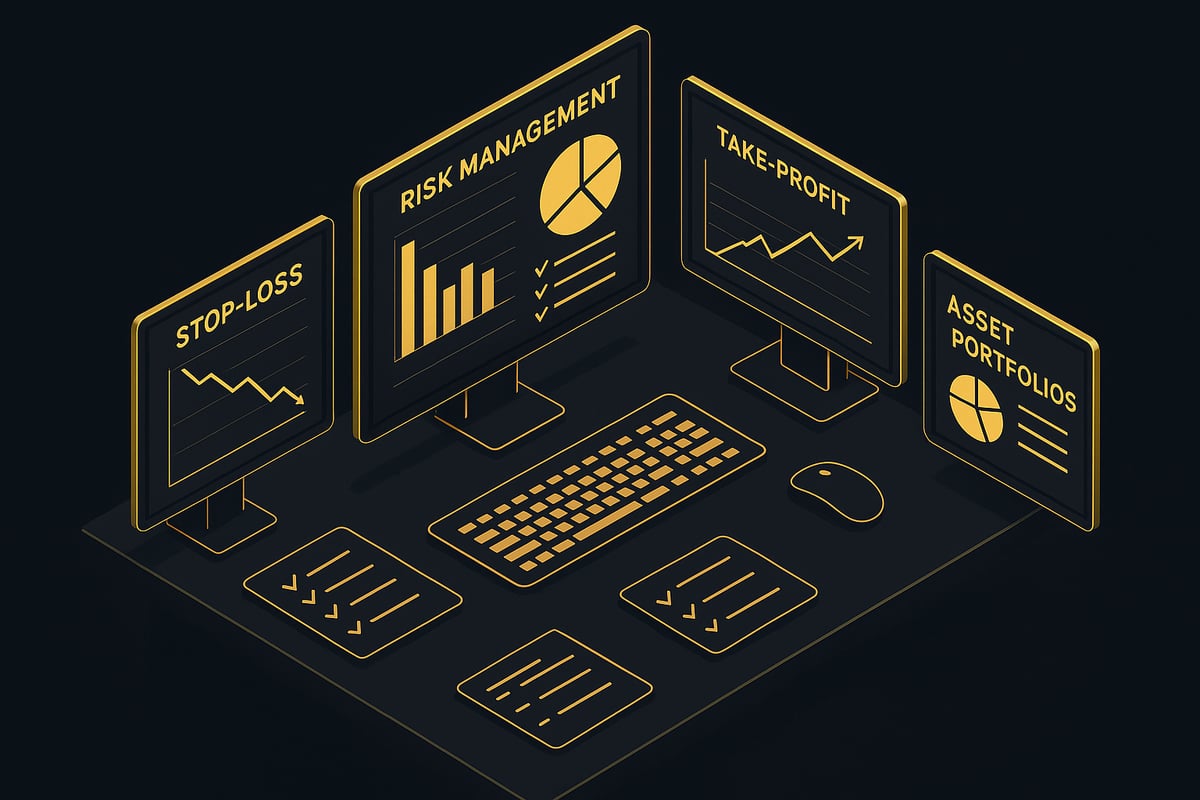
Futures trading strategies without robust risk management are like ships without rudders. Leverage magnifies both gains and losses, making it essential to define risk before placing any trade. Position sizing should always reflect account equity and personal risk tolerance.
Consider this: a single poorly managed trade can erase weeks of disciplined profits. Data shows that most retail traders lose money primarily due to inadequate risk controls. By setting clear risk parameters, traders can weather market storms and maintain consistency.
Stop-Losses, Take Profits, and Trailing Stops
Stop-loss and take-profit orders are vital elements of effective futures trading strategies. Every trade should have a predetermined exit point to avoid emotional decision-making. Trailing stops allow traders to lock in profits as the market moves favorably, adjusting automatically to price changes.
Using OCO (One Cancels Other) orders helps automate exits, reducing the risk of hesitation during volatile swings. These tools empower traders to execute their plans with discipline and precision, keeping losses manageable and letting winners run.
Diversification and Portfolio Management
Diversification is a key defense mechanism within futures trading strategies. By spreading positions across different asset classes, such as commodities, indices, and cryptocurrencies, traders reduce overall portfolio risk. Avoiding overexposure to correlated markets, like multiple equity index futures, helps smooth out equity curves.
A diversified approach means that a loss in one market can be offset by gains in another. This balanced method ensures more stable returns over time, even as individual markets experience turbulence or unexpected news events.
Psychological Discipline and Trading Plans
The emotional aspect of trading can undermine even the best futures trading strategies. Following a written trading plan is crucial for maintaining objectivity, especially during losing streaks or periods of high volatility. Techniques like journaling trades and regularly reviewing performance metrics foster continuous improvement.
Maintaining discipline in the face of adversity separates successful traders from the rest. By sticking to a plan and resisting impulsive decisions, traders can navigate the ups and downs of the futures markets with confidence and clarity.
Leveraging Technology and AI for Trading Success
Technology is the backbone of modern futures trading strategies, reshaping how traders analyze markets and execute trades. In 2026, the integration of AI, automation, and real-time data is no longer optional but essential for staying competitive. These advancements give traders unparalleled speed, accuracy, and adaptability.
The Rise of AI and Automation in Futures Trading
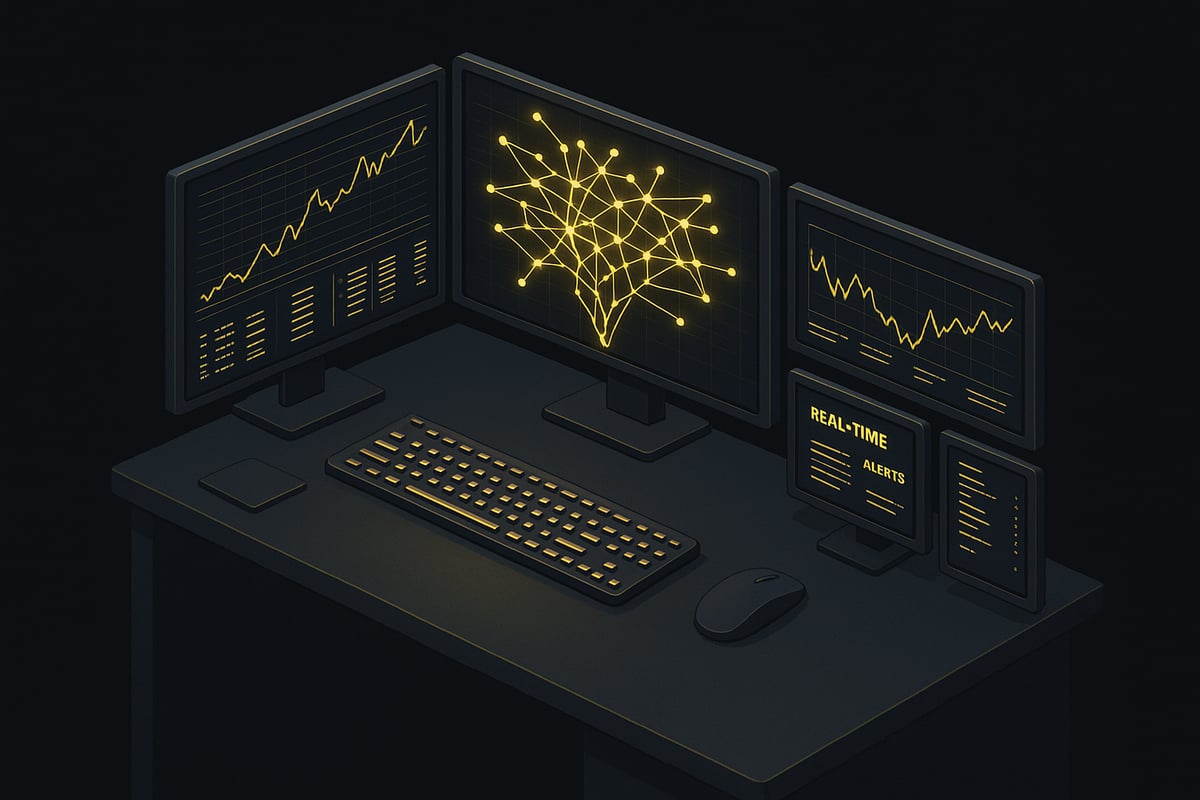
AI-powered tools are revolutionizing futures trading strategies by processing vast amounts of market data in real time. Traders now rely on algorithms to identify patterns, generate signals, and even execute trades automatically. This shift reduces human error and ensures faster response to market changes.
For example, advanced models like the FutureQuant Transformer use distribution-based analytics to predict price movements under uncertain conditions. These innovations help traders uncover opportunities that manual analysis might miss. With AI, both professionals and retail traders can access sophisticated futures trading strategies that were once limited to institutions.
Multi-Timeframe and Real-Time Analysis
Analyzing multiple timeframes has become a cornerstone of effective futures trading strategies. By comparing daily, 4-hour, and 1-hour charts, traders can confirm trends and filter out false signals. Real-time alerts and instant notifications further empower decision-making, allowing for timely entries and exits.
This approach improves accuracy and reduces the likelihood of reacting to market noise. Many platforms now offer multi-timeframe dashboards, integrating AI-generated insights directly into traders’ workflows. Using these features, you can align your futures trading strategies with broader market movements for better results.
Integrating AI Indicators into Your Trading Plan
Custom AI indicators are transforming how traders construct and refine their futures trading strategies. These tools can filter out low-probability setups, highlight optimal entry points, and provide dynamic risk management suggestions. Traders can now customize dashboard layouts, set precise alert parameters, and automate portions of their trading plan.
The ability to tailor AI tools to specific strategies means greater efficiency and adaptability. As you implement new technologies, ensure your futures trading strategies remain disciplined and data-driven, taking full advantage of automation’s benefits.
Staying Ahead with Continuous Learning and Tech Upgrades
The rapid evolution of trading technology requires traders to prioritize continuous learning. Staying updated with the latest platforms, AI developments, and market trends is crucial for long-term success. Participating in webinars, forums, and professional communities keeps your skills sharp and your futures trading strategies relevant.
For insights on how AI and macroeconomic factors are shaping markets in 2026, resources like AI, Earnings, and the Fed: What Could Drive US Markets in 2026 offer valuable context. Embracing ongoing education and technology upgrades ensures your futures trading strategies remain ahead of the curve.
If you’re ready to put these futures trading strategies into action in 2026, having the right tools makes all the difference. With PipTrend’s AI-powered indicators, you never have to second guess your entry or exit—its real time signals and instant alerts let you act decisively, even in fast moving markets. You get the clarity and confidence you need, whether you’re trend following, managing risk, or looking for that next breakout. Why wait to see better results or risk missing the next opportunity? Start Catching Winning Trades, Right Now!