
Artificial intelligence trading is rapidly reshaping the financial world, unlocking opportunities for smarter, faster, and more profitable decisions. In just a few short years, the global AI trading market is set to triple in size, rising from $11.2 billion in 2024 to $33.45 billion by 2030.
What makes artificial intelligence trading so powerful? Its ability to analyze massive data sets, cut through human bias, and react to markets in real time puts it far ahead of traditional methods. This guide will show you how to harness these strengths with proven strategies and cutting-edge tools.
Ready to boost your trading accuracy, manage risk, and seize new opportunities? Use this guide to prepare your trading approach for success in 2026.
The Evolution of AI in Financial Trading
Artificial intelligence trading has rapidly transformed the financial markets, moving from simple rule-based systems to highly advanced, adaptive technologies. In the early days, trading automation focused on basic algorithms that followed predefined instructions. These systems offered speed but lacked the ability to learn or adapt to changing conditions.
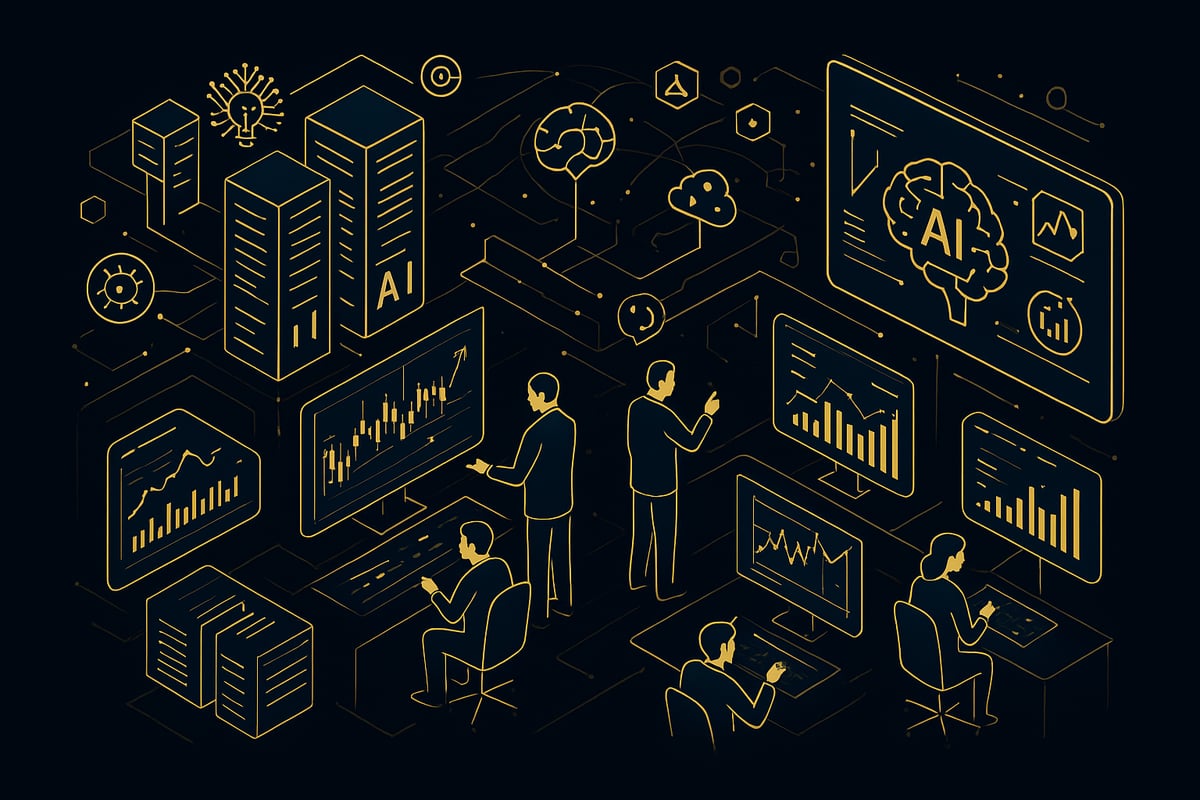
Early Algorithmic Trading to Modern AI Systems
The journey began with algorithmic trading, where computers executed trades based on fixed rules. These early systems revolutionized speed and efficiency, but they could not interpret new data or adjust to evolving trends.
As technology advanced, artificial intelligence trading emerged, enabling machines to analyze vast datasets, recognize complex patterns, and respond to market shifts in real time. The transition from static algorithms to learning systems marked a pivotal shift in financial trading.
Breakthroughs in Machine Learning, Deep Learning, and NLP
The advent of machine learning brought a new dimension to artificial intelligence trading. Supervised and unsupervised learning methods allowed AI to learn from past market data, continuously refining its models.
Deep learning introduced neural networks capable of processing massive amounts of information, identifying subtle relationships, and forecasting price movements with increased accuracy. Natural language processing (NLP) enabled AI to interpret news, financial reports, and social media sentiment, providing actionable insights almost instantly.
Integration Across Asset Classes and the Rise of FinTech
Artificial intelligence trading is no longer limited to equities. Today, AI-driven systems operate across stocks, forex, cryptocurrencies, indices, and commodities, analyzing each market’s unique data streams and volatility.
The rise of FinTech has played a critical role in making these advanced tools accessible to individual traders. Platforms now offer AI-powered analytics, automated bots, and customizable strategies, bringing institutional-grade capabilities to retail investors.
Key Milestones in AI Trading Evolution
Several milestones define the progress of artificial intelligence trading. AI systems have surpassed human performance in both speed and accuracy, especially in high-frequency trading and portfolio management.
A notable example is the use of AI in high-frequency trading platforms, where trades are executed within microseconds, and portfolios are adjusted dynamically based on real-time data. Between 2015 and 2023, 16% of published research highlighted full automation of the trading process, underscoring the shift toward self-sufficient AI systems.
| Aspect | Traditional Trading | Artificial Intelligence Trading |
|---|---|---|
| Speed | Minutes to hours | Microseconds |
| Data Processing | Limited | Massive, real-time |
| Adaptability | Low | High, learns continuously |
| Market Coverage | Single/few assets | Multi-asset, global |
24/7 Markets, Adaptability, and Ongoing Innovation
Artificial intelligence trading now operates around the clock, processing ultra-high-frequency data and reacting to global events as they unfold. This continuous operation enables traders and institutions to manage risk, identify opportunities, and adapt to volatility at unprecedented speeds.
For those seeking deeper insights into recent advances and practical applications, AI in Trading Insights provides expert perspectives and up-to-date developments in this fast-evolving field.
Artificial intelligence trading is not just a technological upgrade; it represents a fundamental change in how markets are analyzed, accessed, and navigated.
Core AI Trading Strategies for 2026
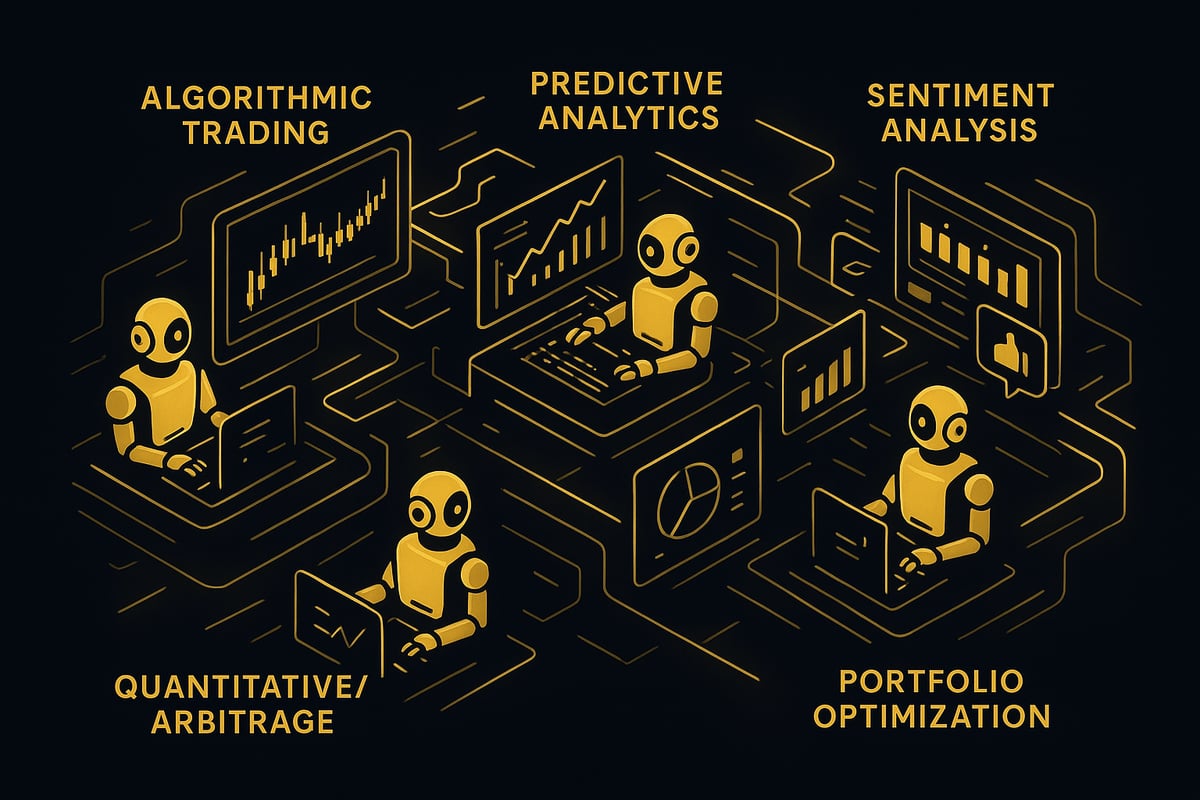
As artificial intelligence trading becomes the backbone of modern markets, understanding its core strategies is essential for staying ahead. In 2026, traders have access to a diverse toolkit powered by AI, enabling smarter, faster, and more adaptive approaches. Let us explore the pillars of artificial intelligence trading that are shaping the future of the financial world.
1. Algorithmic and High-Frequency Trading
Algorithmic trading uses computer programs to execute trades based on predefined criteria. High-frequency trading (HFT) takes this further, leveraging advanced algorithms and ultra-fast computing to process and execute thousands of orders in microseconds.
Artificial intelligence trading optimizes this process by refining trade execution, timing, and order routing. AI systems analyze massive volumes of market data, identifying patterns that might be invisible to human traders. For example, HFT platforms now use AI to scan multiple asset classes and execute millions of trades within seconds. This speed offers a significant edge, as even the smallest delay can impact profitability.
HFT relies on high-powered computers and low-latency networks to minimize slippage and reduce transaction costs. The precision of artificial intelligence trading helps investors capture opportunities as they arise, adapting to changing market conditions instantly. Interested in the technical backbone of this strategy? You can learn more from High-Frequency Trading Explained.
By blending AI with algorithmic trading, traders benefit from unparalleled speed and accuracy, setting a new industry standard.
2. Machine Learning and Predictive Analytics
Machine learning is at the heart of artificial intelligence trading, enabling systems to learn from data and predict future market movements. Both supervised and unsupervised learning techniques are used to analyze historical and real-time information.
AI trading models process millions of past transactions, discovering patterns that help forecast stock price trends. Deep learning, a subset of machine learning, is now the most frequently used AI method in financial markets. These models adapt continuously, refining their predictions as new data arrives.
Predictive analytics supports traders in making informed decisions, reducing the impact of human bias. Instead of relying solely on intuition, artificial intelligence trading uses data-driven insights to anticipate market shifts. This approach allows for more accurate entries and exits, improving overall returns.
The true power of this strategy lies in its adaptability. As markets evolve, machine learning algorithms grow smarter, ensuring traders remain competitive.
3. Sentiment Analysis and News-Based Trading
Sentiment analysis unlocks another dimension of artificial intelligence trading. By analyzing news, social media, and online forums, AI gauges the market’s emotional pulse.
AI-driven systems can instantly interpret breaking news or viral social trends, predicting short-term price swings before most traders can react. For example, if a sudden policy change or major event occurs, AI can assess public sentiment and adjust trading strategies accordingly.
Data shows that sentiment-driven artificial intelligence trading can anticipate market reactions much faster than manual analysis. This speed is crucial in volatile markets, where information flows rapidly and opportunities are fleeting.
By incorporating real-time sentiment analysis, traders gain an edge in capturing short-lived trends and reducing exposure to sudden reversals.
4. Quantitative and Arbitrage Strategies
Quantitative trading relies on mathematical models and big data to inform trading decisions. Artificial intelligence trading supercharges this approach, analyzing vast datasets to uncover profitable opportunities.
Arbitrage strategies are a prime example. AI can spot price discrepancies across different markets or exchanges, executing trades instantly to lock in risk-free profits. In the crypto and forex arenas, AI-driven arbitrage identifies inefficiencies that human traders might miss.
Quantitative models enable large-scale, data-driven decision making. They allow traders to manage complex portfolios, diversify across asset classes, and react to market shifts in real time. With artificial intelligence trading, these strategies become even more robust, as AI adapts to new data and market environments.
The combination of quantitative rigor and AI flexibility creates a powerful foundation for sustained trading success.
5. Portfolio Optimization and Risk Management
Portfolio optimization is a cornerstone of artificial intelligence trading, empowering traders to construct and rebalance portfolios dynamically. AI continuously monitors asset performance, risk exposure, and market conditions.
Risk modeling is another strength. Artificial intelligence trading assesses potential drawdowns and simulates various scenarios, helping traders prepare for unexpected events. For instance, AI-driven portfolio managers can adjust asset allocation in real time, responding to both market trends and individual risk tolerance.
AI tools automate risk assessment, reducing emotional decision-making and supporting more consistent outcomes. By integrating these systems, traders achieve better diversification, improved returns, and greater resilience during market turbulence.
Ultimately, artificial intelligence trading transforms both portfolio construction and risk management, offering a level of precision and adaptability that manual methods cannot match.
Essential AI Trading Tools and Platforms
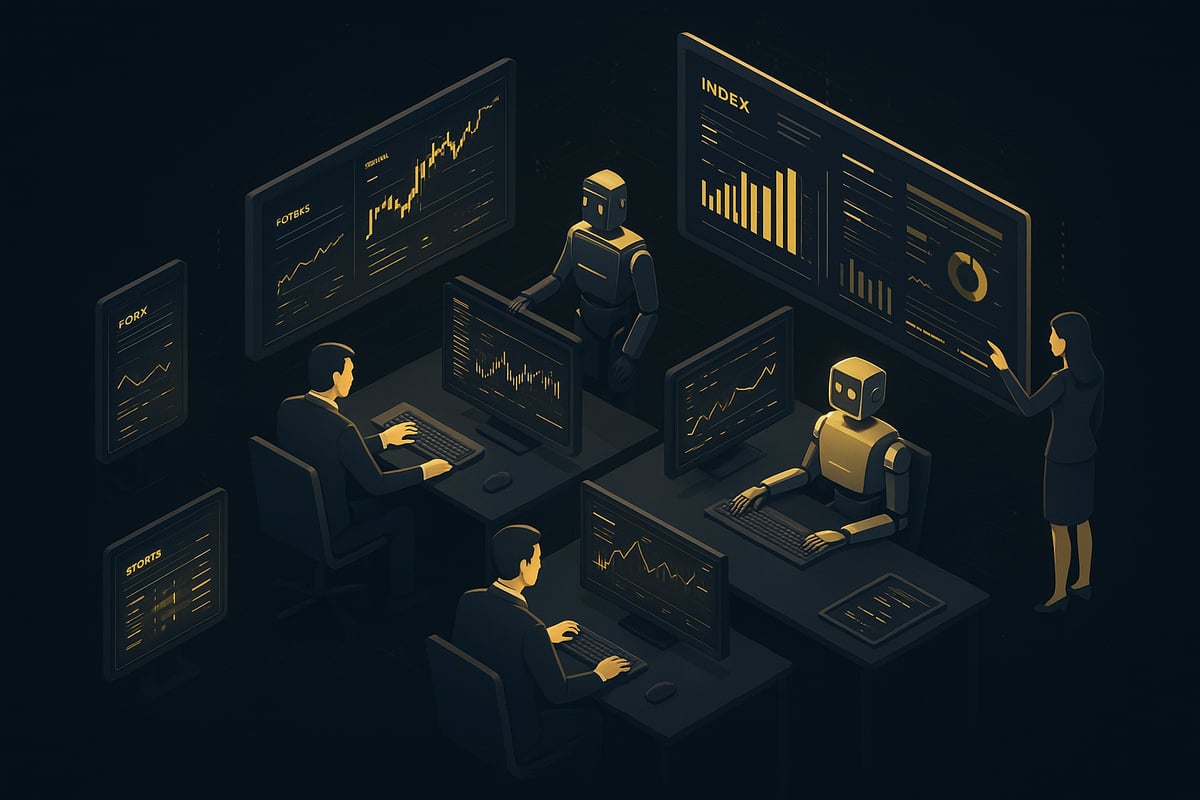
The world of artificial intelligence trading is rapidly evolving, reshaping how traders approach the markets. Modern platforms and tools now give both institutional and retail traders access to advanced analytics, automation, and decision support. Let us explore the essential tools that are defining artificial intelligence trading in 2026.
Trading Bots and Automated Systems
Trading bots have become a cornerstone of artificial intelligence trading. These software solutions execute trades based on pre-set rules or advanced AI logic, allowing traders to participate in multiple markets without constant manual input.
For example, many bots run on popular platforms such as MetaTrader and TradingView, integrating seamlessly with various brokers. By automating trade execution, bots can respond instantly to market shifts and operate 24/7, a crucial advantage in artificial intelligence trading.
- Bots monitor price movements and technical indicators in real time.
- They reduce emotional trading and enforce discipline.
- Users can customize parameters to fit their risk profile.
With these benefits, trading bots empower traders to leverage artificial intelligence trading strategies efficiently.
AI-Powered Signal Providers
AI-powered signal services are transforming how traders receive actionable insights. These platforms use artificial intelligence trading algorithms to scan vast market data and deliver real-time buy or sell alerts across forex, crypto, and stocks.
Multi-asset signal providers help users cut research time and make informed decisions. For instance, AI-Powered Trading Signals deliver automated, high-accuracy alerts directly to traders’ dashboards.
- Signals are generated using predictive models and pattern recognition.
- Alerts are often customizable for different trading styles.
- Instant notifications allow traders to act quickly on opportunities.
Artificial intelligence trading signals not only streamline analysis but also boost trade accuracy.
Portfolio and Strategy Builders
Modern artificial intelligence trading platforms now include robust portfolio and strategy builders. These tools help traders design, backtest, and optimize strategies before entering live markets, reducing the risk of costly mistakes.
Backtesting solutions use both historical and synthetic data generated by AI, allowing users to validate strategies under various conditions. Traders can adjust parameters and instantly see how changes impact performance.
- Visual strategy builders simplify complex setups.
- Performance metrics help refine trading approaches.
- Integration with live trading accounts is often seamless.
By harnessing artificial intelligence trading tools for strategy development, traders can approach markets with greater confidence.
Sentiment and Data Analysis Tools
Sentiment and data analysis tools powered by artificial intelligence trading are invaluable for interpreting market mood. These platforms use natural language processing to scan news, social media, and financial reports, extracting actionable insights.
Real-time sentiment analysis enables traders to anticipate sudden shifts in market direction. AI systems process vast data much faster than humans, providing early warnings on emerging trends.
- Sentiment dashboards display bullish or bearish signals.
- Data mining uncovers hidden correlations in market behavior.
- Automated alerts keep traders informed of breaking news.
Artificial intelligence trading analysis tools support faster, more informed decision-making.
AI Trading Indicators: PipTrend
PipTrend stands out as a leading AI-powered trading indicator designed for real-time, clear buy and sell signals across forex, crypto, stocks, and indices. The platform features instant alerts, multi-timeframe analysis, trend detection, and customizable visuals.
PipTrend simplifies artificial intelligence trading by reducing guesswork and supporting consistent decision-making. Traders benefit from aligning trades with prevailing trends, often seeing higher win rates.
- Beginner-friendly interface with robust features for advanced users.
- Supports steady account growth with reliable signals.
- Enhances confidence in every trade.
With tools like PipTrend, artificial intelligence trading becomes accessible and effective for traders at all levels.
Real-World Applications and Use Cases
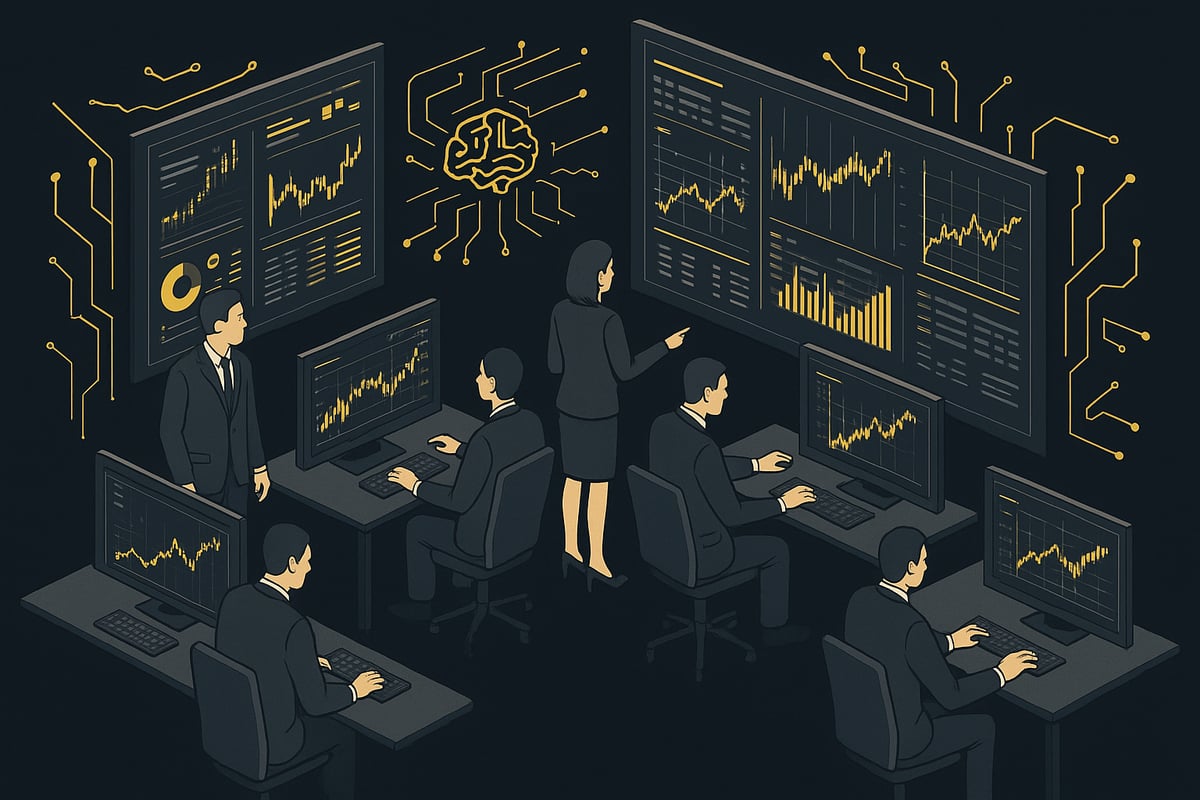
Artificial intelligence trading is rapidly reshaping the financial industry, offering real-world solutions that range from institutional strategies to retail innovations. By examining practical applications, we can see how artificial intelligence trading delivers measurable results across diverse market segments.
Institutional Trading and Hedge Funds
At the institutional level, artificial intelligence trading powers market making, high-frequency trading, and real-time risk management. Hedge funds and major financial institutions deploy AI-driven systems to process massive order volumes and identify fleeting opportunities. For example, platforms like IntelligentCross use AI to match trades and ensure price stability, reducing slippage for large orders.
These systems excel at analyzing vast, high-frequency data streams and adapting to shifting market conditions. Firms routinely execute hundreds of millions of orders daily, maximizing efficiency and accuracy. According to AI’s Impact on Financial Services, AI adoption is accelerating among top-tier institutions, transforming how portfolios are managed and risks are assessed.
Retail Trading and Democratization
Artificial intelligence trading is no longer exclusive to Wall Street. The democratization of AI tools means retail traders now access powerful indicators and bots through platforms like TradingView and MetaTrader. These innovations empower individuals to analyze markets with institutional-grade precision, leveling the playing field.
Retail users benefit from AI-powered alerts, automated trade execution, and portfolio optimization. By leveraging these advancements, traders can make informed decisions, minimize human bias, and respond instantly to market shifts. As a result, artificial intelligence trading is helping a broader audience achieve consistent and data-driven results.
Cross-Market and Multi-Asset Trading
Artificial intelligence trading enables seamless participation across multiple asset classes, from stocks and forex to crypto and indices. AI systems monitor diverse markets simultaneously, spotting correlations and arbitrage opportunities that would be nearly impossible for humans to detect in real time.
For instance, AI tools can quickly identify price discrepancies between crypto exchanges, allowing traders to capitalize on inefficiencies. This cross-market capability supports diversified strategies and helps mitigate risk. With artificial intelligence trading, users manage complex portfolios with agility and insight, adapting rapidly to evolving global trends.
Risk Assessment and Stress Testing
Managing risk is essential in volatile markets, and artificial intelligence trading excels in this area. AI models simulate a wide range of scenarios, from sudden market crashes to geopolitical shocks, giving traders a clearer picture of potential vulnerabilities. By stress testing portfolios, AI helps institutions and individuals prepare for the unexpected.
These tools provide ongoing, data-driven risk assessment that adapts as market conditions evolve. Traders can proactively adjust positions, rebalance portfolios, and maintain resilience. Artificial intelligence trading, with its robust modeling, ensures that both large firms and individual investors are better equipped to withstand market turbulence.
Regulatory Compliance and Fraud Detection
Artificial intelligence trading also strengthens regulatory compliance and fraud detection efforts. AI algorithms monitor trading activity for suspicious patterns, flagging anomalies for immediate review. This reduces manual oversight and enhances market integrity.
With evolving regulations in financial services, AI helps firms stay compliant by automating reporting and ensuring adherence to complex rules. According to AI in Financial Services Regulation, the integration of AI is pivotal in meeting emerging legal requirements and maintaining a secure trading environment. As artificial intelligence trading becomes more prevalent, its role in upholding transparency and security will continue to expand.
Benefits and Risks of AI Trading
Artificial intelligence trading is revolutionizing how both professionals and everyday investors engage with financial markets. As adoption accelerates, understanding the full spectrum of its benefits and risks is essential for anyone seeking a competitive edge.
Key Benefits for Traders
The rapid adoption of artificial intelligence trading is reshaping the landscape for traders worldwide. By automating research, execution, and portfolio management, AI systems help traders make faster, more informed decisions. This leads to a significant increase in productivity, with studies showing a 10% boost attributable to AI-driven automation.
Artificial intelligence trading algorithms excel at reducing human error and emotional biases, resulting in greater accuracy and consistency. They analyze massive data sets, uncovering subtle market patterns that are often missed by traditional methods. For example, AI-powered platforms can predict price movements using both technical and sentiment analysis, offering valuable signals for timely trades.
AI tools also enhance risk management by enabling dynamic portfolio adjustments and automated stress testing. This minimizes exposure to sudden market shocks. Additionally, the ability to operate 24/7 allows traders to react instantly to global events, seizing opportunities around the clock. Operational costs drop as repetitive tasks become automated, freeing up time for strategic planning.
The market for artificial intelligence trading is poised for explosive growth, projected to reach $35 billion by 2030 according to a recent AI in Trading Market Growth report. This expansion signals increasing accessibility and innovation in the field.
Summary Table: Benefits of AI Trading
| Benefit | Impact |
|---|---|
| Productivity | 10% increase, faster decision-making |
| Accuracy | Reduces errors and bias |
| Pattern Recognition | Identifies trends in massive data sets |
| Risk Management | Automated, dynamic adjustments |
| Cost Efficiency | Lowers operational expenses |
| 24/7 Trading | Captures global market opportunities |
Critical Risks and Challenges
Despite its promise, artificial intelligence trading is not without significant risks. One major concern is transparency. Many AI models operate as "black boxes," making it difficult for traders to understand how decisions are made. This lack of clarity can create trust issues, especially during volatile market conditions.
Overreliance on historical data is another challenge. While AI models learn from vast amounts of past information, they may falter in the face of unprecedented events. This exposes traders to unexpected losses. Large-scale errors are possible when software bugs or faulty algorithms affect thousands of trades simultaneously, potentially amplifying losses.
Cybersecurity is a growing threat, as artificial intelligence trading systems become lucrative targets for hackers. Data breaches or algorithm manipulation can compromise both performance and privacy. Notable incidents have shown that even sophisticated AI can make costly mistakes if not properly monitored.
Recent research, such as the AI-Trader Benchmarking Study, highlights real-world performance gaps and challenges faced by autonomous AI agents in live markets. These findings underscore the importance of rigorous oversight and continuous improvement to mitigate large-scale risks.
Navigating the Future: Best Practices for 2026
To harness the full potential of artificial intelligence trading, traders should blend advanced technology with human expertise. Combining AI-driven insights with human oversight ensures balanced, robust decision-making.
Regular backtesting and stress testing of strategies is crucial. This process evaluates how artificial intelligence trading models perform under diverse scenarios, helping traders prepare for market shocks. Cybersecurity measures must be prioritized, including regular audits and strong data protection protocols.
Staying informed about regulatory changes is essential, as the legal landscape for artificial intelligence trading continues to evolve. Updating and refining AI models ensures they remain effective as market conditions shift. Many firms are now integrating explainable AI, or XAI, to make decision processes more transparent and trustworthy.
Best Practices Checklist:
- Combine AI insights with human judgment.
- Backtest and stress test strategies frequently.
- Prioritize cybersecurity and data privacy.
- Monitor regulatory updates.
- Continuously update and explain AI models.
Adopting these best practices will empower traders to use artificial intelligence trading ethically, securely, and profitably as the industry matures.
As we’ve explored, AI is quickly reshaping the way we trade by offering lightning-fast analysis, actionable insights, and the confidence to navigate complex markets with clarity. If you’re ready to leave guesswork behind and approach 2026’s opportunities with a smarter strategy, it’s time to see how a tool like PipTrend can transform your results. With real-time signals, multi-timeframe analysis, and a focus on reliable, data-driven decision making, you can finally trade with consistency and peace of mind. Why wait to take control of your trading future? See Your Trading Improve With PipTrend