
The financial markets are evolving fast, with ict trading strategies gaining explosive traction as we approach 2026. Traders worldwide are seeking smarter, more refined approaches to stay ahead in this dynamic environment.
This article is your essential guide to mastering ict trading strategies for 2026. Whether you are new or experienced, you will discover actionable insights and proven methods to elevate your trading performance.
We will walk through foundational ict concepts, explore the latest core strategies, offer step-by-step implementation guidance, share expert adaptation tips, and highlight the best tools for maximizing your results.
Ready to unlock the potential of ict trading? Dive in to gain the knowledge and confidence you need to thrive in the markets of tomorrow.
Understanding ICT Trading: Foundations and Evolution
The landscape of ict trading has evolved rapidly, driven by the quest to understand what truly moves markets. Unlike traditional retail methods, ict trading takes a deep dive into the footprints left by institutional participants, offering traders a distinct edge in reading price action.
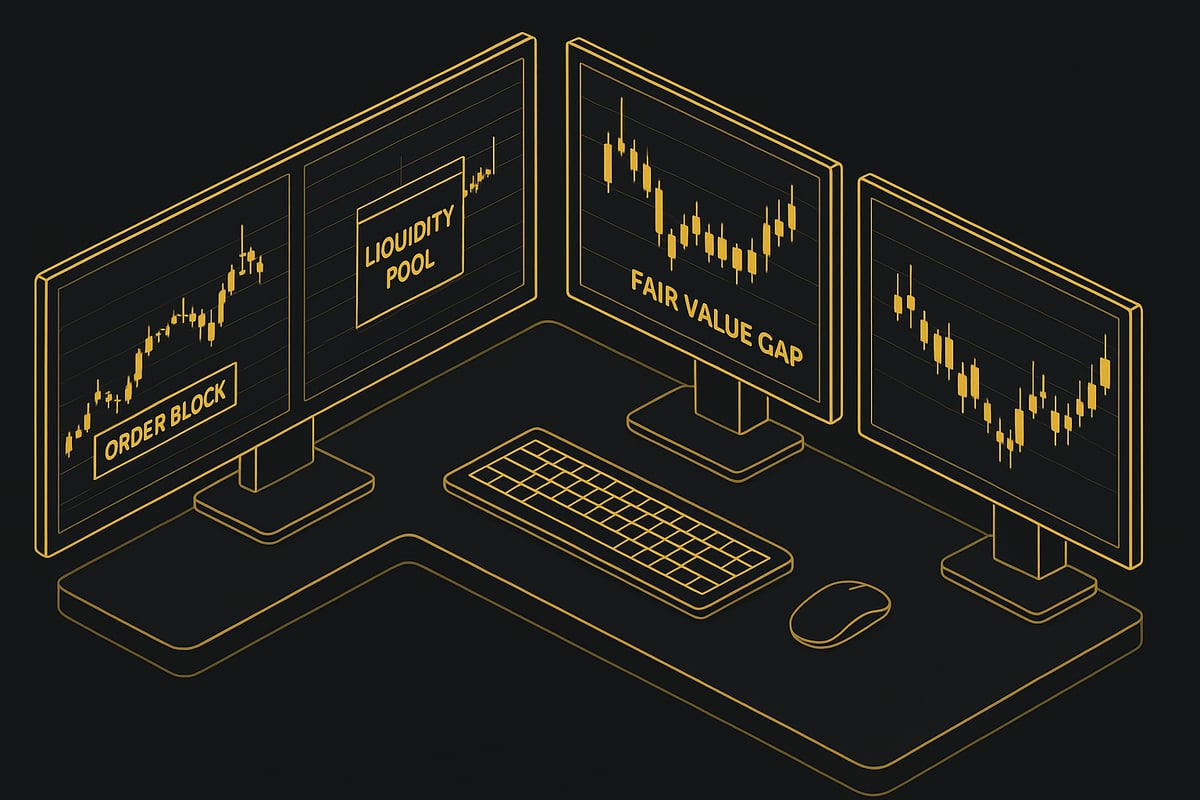
At its core, ict trading is a methodology created by Michael J. Huddleston, who sought to demystify institutional order flow. Rather than relying on classic indicators, ict trading interprets how major players engineer price movements. This approach emphasizes reading the market’s intent through price structure, not just signals.
The journey of ict trading began as a counterpoint to retail strategies that often lag behind real price drivers. Over the past decade, its concepts have gained traction among traders in forex, stocks, crypto, and indices. The shift occurred as more market participants recognized that understanding institutional behavior could unlock new levels of precision and consistency.
Several core principles define ict trading. These include:
- Order Blocks: Zones where institutions accumulate large positions, often signaling future price pivots.
- Liquidity Pools: Clusters of stop losses and pending orders that attract institutional attention as price targets.
- Fair Value Gaps (FVG): Price imbalances that markets often revisit to reach equilibrium.
- Kill Zones: Specific times of day with peak institutional activity, such as the London and New York sessions.
- Market Structure Shifts: Key changes in trend direction, identified by breaks in highs and lows.
The table below summarizes these essential ict trading concepts:
| Principle | Description | Purpose |
|---|---|---|
| Order Blocks | Institutional accumulation/distribution zones | Predict reversals or continuations |
| Liquidity Pools | Areas with concentrated stops/orders | Targets for market moves |
| Fair Value Gaps | Price imbalances | Likely retracement points |
| Kill Zones | High-activity trading windows | Optimal trade entry times |
| Market Structure Shifts | Changes in trend via highs/lows | Confirm trend direction |
A key area of overlap is with Smart Money Concepts (SMC). Both ict trading and SMC focus on institutional actions, but ict trading is more structured in its use of order blocks and time-based setups. SMC may encompass broader liquidity engineering and market psychology, yet both frameworks aim to decode the actions of the “smart money.”
There are persistent myths that ict trading is about exploiting or predicting market manipulation. In reality, ict trading does not claim that markets are rigged; rather, it recognizes that large players have the power to move price through liquidity hunts and engineered reversals. Traders using ict trading learn to interpret these movements, not to outsmart the system, but to align with institutional flow.
Between 2021 and 2025, the volume of ict trading content, courses, and educational resources surged. This mainstream acceptance is evident in the proliferation of strategy guides, mentorship programs, and active online communities.
For example, consider a major forex pair like EUR/USD. When price sweeps a visible liquidity pool below a recent low, then sharply reverses, it often signals an institutional move aligning with ict trading logic. Recognizing these footprints helps traders anticipate market turns with greater accuracy.
Understanding market intent and structure is what sets ict trading apart from indicator-heavy systems. By focusing on where and why institutions act, traders build a foundation for consistent decision-making in any financial market.
For a deeper dive into how liquidity concepts such as buy side and sell side liquidity underpin ict trading, visit Buy side and sell side liquidity.
Core ICT Trading Strategies for 2026
Navigating the complexities of modern markets requires a mastery of core ict trading strategies. As the landscape evolves, understanding how to identify and act on institutional footprints is more critical than ever. Below, we break down the essential components that define ict trading in 2026, ensuring you have a practical edge.

Order Blocks and Liquidity Pools
Order blocks and liquidity pools are the foundation of ict trading. Order blocks represent zones where institutional traders have executed significant buy or sell orders. These zones act as footprints, signaling high-probability areas for future price reactions.
Liquidity pools form around clusters of stop losses and pending orders. Institutions target these pools, causing sudden price moves to capture liquidity before reversing direction. For example, an S&P 500 order block may precede a sharp reversal, providing a clear entry for those skilled in ict trading.
Recognizing these areas is essential. By focusing on where institutions are most active, traders anticipate market direction rather than react to lagging indicators. For a deeper dive into real-world ict trading applications, see this ICT Concepts in Intraday Futures Trading study analyzing ICT strategies in action.
Fair Value Gaps (FVG) and Inversion FVGs
Fair value gaps, or FVGs, reflect temporary price imbalances when markets move rapidly, leaving untraded zones on the chart. In ict trading, these gaps are significant because price often returns to "fill" them, seeking equilibrium.
Once filled, some FVGs transform into inversion FVGs, acting as dynamic support or resistance. These zones become focal points for institutional activity and can guide entry or exit decisions. On the 4-hour chart, FVGs frequently provide reliable retracement entries, letting traders align with institutional intent.
Understanding FVGs gives ict trading practitioners an edge, revealing hidden motivations behind price moves. Instead of chasing every tick, focus on these imbalances for higher-probability trades.
Power of Three (PO3): Accumulation, Manipulation, Distribution
The Power of Three, or PO3, is a central concept in ict trading. It describes the three-phase process institutions use to deliver price: accumulation, manipulation, and distribution.
- Accumulation: Price moves sideways as institutions quietly build positions.
- Manipulation: Sharp, often deceptive moves sweep liquidity, trapping retail traders.
- Distribution: The true directional move follows, often catching the majority off-guard.
During the New York session, PO3 becomes especially clear. For instance, a false breakout may trigger stops, only for price to reverse and trend in the anticipated direction. Recognizing PO3 phases allows ict trading enthusiasts to trade alongside, not against, institutional flows.
Breaker Blocks and Market Structure Shifts
Breaker blocks are unique to ict trading. They form after liquidity sweeps and mark zones where institutions have reversed their positions. These blocks often serve as reliable reversal areas and signal a shift in market intent.
Market structure shifts occur when price forms new higher highs or lower lows, indicating a potential trend change. Identifying these shifts, especially after a failed breakout, can confirm entry points. For example, after a liquidity grab, a breaker block may appear, providing a precise opportunity for a trade aligned with ict trading principles.
Time-Based Setups: Kill Zones and Silver Bullet Strategy
Timing is everything in ict trading. Kill zones are specific periods—like the London and New York sessions—when institutional activity peaks. Volume and volatility surge, creating ideal conditions for high-probability setups.
The Silver Bullet strategy focuses on one-hour windows within these sessions, maximizing the chance of catching significant moves. Data consistently shows increased trading opportunities during these times. For instance, trading EUR/USD during the New York AM Silver Bullet window often yields clear setups, especially when combined with other ict trading signals.
By concentrating on time-based setups, traders avoid low-probability trades and align their activity with institutional flows.
Step-by-Step Guide to Implementing ICT Strategies in 2026
Mastering ict trading in 2026 requires a structured, disciplined approach. This step-by-step guide will help you navigate from market selection to continuous improvement, ensuring you apply ict trading principles with precision and confidence. Each step is designed to build on the previous, forming a resilient foundation for your trading journey.

Step 1: Market Selection and Preparation
Selecting the optimal market is the first critical decision in ict trading. Focus on assets with high institutional participation, such as major forex pairs, leading indices, or large-cap stocks. These markets offer the cleanest footprints for ict trading analysis.
Prepare your charts by stripping away unnecessary indicators. A minimalist approach allows price action and market structure to take center stage. For example, forex pairs like EUR/USD are favored for their deep liquidity and clear institutional behavior, making them ideal for applying ict trading methods.
Before entering any position, ensure your environment is distraction-free. This preparation phase lays the groundwork for consistent decision-making and reliable results in ict trading.
Step 2: Identifying Institutional Footprints
The next step in ict trading involves spotting the subtle clues left by institutional participants. Begin by marking order blocks, liquidity pools, and fair value gaps on higher timeframes such as the 4-hour or daily chart. These tools reveal where smart money is likely to act.
Multi-timeframe analysis is essential. Start on higher timeframes to set the context, then drill down to lower timeframes like the 1-hour or 15-minute charts for precise entries. For instance, mapping a 4H order block and confirming it on the 1H chart increases the probability of a successful ict trading setup.
By consistently identifying these institutional footprints, you align your trades with the true market drivers rather than retail noise.
Step 3: Spotting High-Probability Setups
In ict trading, patience is your ally. Wait for price to enter key windows such as kill zones or the Silver Bullet hour, when institutional activity peaks. This is when major liquidity sweeps and market structure shifts are most likely to occur.
Monitor for tell-tale signs like a sudden liquidity grab followed by a shift in market structure. These events often precede high-probability reversals or continuations. For example, an entry after a liquidity grab during the New York session can yield impressive results.
By focusing on these high-probability setups, you reduce random trades and increase your edge in ict trading.
Step 4: Executing Trades with Precision
Execution is where ict trading theory meets real-world results. Set your entry, stop loss, and take profit levels based on clearly defined ict trading principles. Precision is key—avoid guessing or chasing price.
Look for confluence, where multiple ict trading signals align. For instance, a fair value gap overlapping an order block and a breaker block forms a powerful stacked setup. Such confluence boosts confidence in your trade.
Before placing any trade, review your checklist. This step ensures you consistently apply ict trading rules and avoid impulsive decisions.
Step 5: Managing Risk and Trade Psychology
Effective risk management is at the heart of long-term ict trading success. Limit your exposure to 1-2 percent per trade and avoid overleveraging. Consistency in risk parameters shields your account from major setbacks.
Equally important is mastering your mindset. Emotional discipline is vital in ict trading. For deeper insights on this topic, explore Trading psychology essentials, which covers proven techniques for managing emotions and maintaining a resilient trading attitude.
Studies show traders who adhere to rule-based ict trading systems and strong psychological habits achieve greater consistency and longevity in the markets.
Step 6: Reviewing and Refining Your Approach
Continuous improvement separates exceptional ict trading practitioners from the average. Maintain a detailed trading journal, recording every setup, entry, exit, and outcome. This data-driven approach uncovers patterns and highlights areas for growth.
Analyze both wins and losses. If you notice repeated stop-outs during low-liquidity periods, adjust your strategy accordingly. Regular reflection turns mistakes into learning opportunities and sharpens your edge in ict trading.
By committing to ongoing review and refinement, you stay adaptable and prepared for evolving market conditions.
Adapting ICT Strategies for Different Markets and Conditions
Adapting ict trading to different markets and conditions has become essential for sustained success in 2026. As institutional activity expands across forex, stocks, indices, and crypto, traders must tailor ict trading methodologies for each asset class, while staying agile during periods of volatility and technological change.

Forex, Stocks, Indices, and Crypto: What’s Different in 2026?
Ict trading has established itself as a versatile approach, but each market presents unique characteristics. In forex, deep liquidity and pronounced institutional footprints provide an ideal environment for ict trading techniques. Major pairs like EUR/USD allow for precise identification of order blocks and liquidity pools, making ict trading strategies highly effective.
Stocks and indices require a nuanced approach. Company earnings, macroeconomic news, and sector rotations can disrupt technical patterns. Focusing on large-cap stocks and major indices helps ict trading practitioners filter out noise and spot genuine institutional moves. In crypto, increased institutional presence has made ict trading more relevant, yet the market remains volatile and can react unpredictably to sentiment shifts.
Consider this comparison table:
| Market | Institutional Presence | Liquidity | Volatility | ICT Adaptability |
|---|---|---|---|---|
| Forex | High | High | Medium | Excellent |
| Stocks | Moderate-High | High | Medium | Strong |
| Indices | High | High | Low-Medium | Strong |
| Crypto | Growing | Medium | High | Good |
For example, ict trading on EUR/USD offers clear setups, while BTC/USD may require wider stops and faster decision-making.
Navigating Volatility and News Events
Volatility and news events can dramatically impact ict trading outcomes. High-impact releases such as non-farm payrolls or central bank announcements often create unpredictable price spikes, disrupting order flow and liquidity zones.
To adapt, ict trading practitioners avoid entering trades just before major news events. Instead, they may wait for the initial volatility to subside, then reassess market structure. For instance, standing aside during an FOMC announcement helps prevent unnecessary losses. After the dust settles, ict trading setups like order blocks and fair value gaps can re-emerge with renewed clarity.
Reacting calmly and adjusting risk parameters during news-heavy periods is crucial for maintaining consistency in ict trading.
ICT and Algorithmic/AI Trading Integration
The rise of AI and automation is reshaping how ict trading strategies are executed. More traders now use algorithmic tools to scan for institutional footprints in real time, instantly identifying fair value gaps, order blocks, and liquidity pools.
Integrating ict trading with AI-powered systems enhances decision-making speed and reduces human error. Platforms that provide instant alerts for ict trading setups help traders capitalize on opportunities as they arise. To learn more about this powerful synergy, explore the latest advances in AI in trading strategies, which highlights how intelligent tools are transforming ict trading execution.
By leveraging these technologies, traders can stay ahead of market shifts and improve accuracy in their ict trading routines.
Common Pitfalls and How to Avoid Them
Many new practitioners of ict trading fall into the trap of overcomplicating their analysis. Attempting to apply every ict trading concept on every chart can lead to analysis paralysis and missed opportunities.
Instead, focus on mastering a few core ict trading setups that align with your preferred market and time frame. Another common pitfall is failing to adapt strategies to specific market conditions, such as applying forex-centric tactics directly to crypto without adjustment.
Surveys show that 70 percent of new ict trading participants struggle with over-analysis in their first six months. Simplifying your approach and sticking to proven ict trading principles can help avoid this challenge.
Continuous Learning and Community Engagement
The landscape of ict trading is always evolving. Engaging with other traders through forums, Discord groups, and mentorship programs accelerates growth and helps you avoid common mistakes.
Continuous learning is vital. By sharing experiences, reviewing trades, and staying updated on market shifts, you can refine your ict trading edge. Peer feedback and community support are invaluable resources for building confidence and deepening your understanding of ict trading strategies.
Essential Tools and Resources for ICT Traders in 2026
Staying competitive in ict trading requires more than just knowledge of strategies. The right tools, platforms, and resources can make the difference between consistent success and missed opportunities. In 2026, technology is more advanced than ever, giving traders a powerful edge.
Charting Platforms and ICT-Friendly Features
A reliable charting platform is the foundation for effective ict trading. TradingView has become the top choice for many traders, offering intuitive multi-timeframe analysis and a distraction-free workspace.
Key features include:
- Clean, customizable chart layouts
- Advanced alert systems for real-time ict trading signals
- Script libraries for order blocks, fair value gaps, and liquidity pools
For example, traders often use TradingView’s custom indicators to mark ict trading setups directly on their charts. This streamlines the process and allows for quick decision-making, making it easier to stay focused on institutional price action.
AI-Powered Trading Indicators: Enhancing ICT Execution
Artificial intelligence is transforming how traders approach ict trading in 2026. AI-powered indicators now analyze liquidity, market structure, and trend shifts in real time, providing instant alerts and reducing human error.
These tools help traders spot ict trading setups faster and with greater accuracy than ever before. For instance, some AI systems highlight fair value gaps or order blocks as they form, offering timely entry opportunities.
To deepen your understanding of how AI is reshaping financial trading, explore this AI Techniques in Financial Trading Review, which covers the latest advancements in algorithmic and AI-driven strategies relevant to ict trading.
How PipTrend AI Indicator Supports ICT Trading
The PipTrend AI indicator is designed specifically for ict trading practitioners who value clarity and precision. It delivers real-time buy and sell signals, detects trends, and supports multi-timeframe analysis across forex, stocks, crypto, and indices.
Standout features include:
- Instant alerts for ict-based setups
- Seamless integration with TradingView
- Compatibility with multiple asset classes
Many traders report that using PipTrend reduces guesswork and boosts confidence, helping them consistently apply ict trading principles with less overtrading. The intuitive interface enables both new and experienced traders to capture high-probability moves efficiently.
Recommended Educational Resources and Communities
Continuous learning is essential for mastering ict trading. The official ICT YouTube channel offers free mentorship, while forums, Discord groups, and Telegram channels provide peer support and real-time feedback.
Popular resources include:
- TradingView’s ict trading strategy libraries
- Active user communities sharing charts and insights
- Structured mentorship programs for ongoing development
From 2024 to 2026, the surge in educational content and community engagement has empowered traders to refine their skills, troubleshoot problems, and stay updated on new ict trading methodologies.
Advanced Tips and Expert Insights for ICT Mastery
Creating a Personalized ICT Trading Plan
A robust ict trading plan is the cornerstone of consistent performance. Start by defining your risk appetite, trading hours, and preferred markets. Build your plan around clear entry and exit criteria, incorporating ICT concepts like order blocks, kill zones, and fair value gaps.
List your rules for trade selection and risk management, and make sure your strategy suits your lifestyle. For example, if you can only trade during the New York session, tailor your plan to Silver Bullet windows. A well-structured ict trading plan keeps your actions focused and emotions in check.
Backtesting and Analyzing Your ICT Trading Strategies
Backtesting is essential for validating ict trading strategies before risking real capital. Use historical data to test your setups, refining them based on actual results, not assumptions. Analytical tools and trading journals help you spot recurring patterns and avoid repeated mistakes.
Leverage AI-driven indicators and resources to enhance your analysis. For those interested in precision tools, the Best technical indicator for day trading offers insights into optimizing entries and exits. Explore Hybrid AI-Driven Trading System Research for a deeper dive into integrating machine learning with ict trading, a trend swiftly gaining traction among advanced traders.
Staying Ahead: Adapting to New Markets and Methods
The landscape of ict trading is always evolving. Stay connected to thought leaders and monitor updates in ICT methodologies. Adapt your strategies to new market conditions, such as shifts in volatility or the rise of algorithmic trading.
For instance, as the Silver Bullet strategy adapts to emerging markets, you may need to tweak entry timings or risk parameters. Remaining agile ensures your ict trading approach stays effective, even as institutional behaviors shift and new tools become available.
Expert Insights: Patience, Discipline, and Lifelong Learning
The most successful ict trading practitioners share a few traits: patience, discipline, and a commitment to lifelong learning. Systematic journaling and regular reviews help you identify strengths and address weaknesses in your trading process.
Case studies show that traders who systematize their ict trading routines achieve more consistent results over time. Remember, ongoing education and adaptability are vital, as markets and ICT strategies will continue to evolve. Embrace feedback, join vibrant communities, and never stop refining your craft.
As you explore the latest ICT trading strategies and see how AI-driven tools are transforming market analysis, it’s clear that having reliable, real-time signals can make all the difference. With PipTrend, you don’t have to guess when to enter or exit trades—you get instant, actionable alerts and multi-timeframe analysis to support your decisions every step of the way. If you’re ready to simplify your trading, reduce uncertainty, and start seeing more consistent results, this is the perfect time to See Your Trading Improve With PipTrend.