
Why do so many traders with great strategies still fail to achieve lasting success? The real answer lies not in technical charts or market indicators, but in the powerful influence of psychology in trading. This guide will help you unlock the true driver of consistent results by showing how mindset shapes every decision you make.
Regardless of your experience level, understanding psychology in trading is essential for overcoming emotional pitfalls and building resilience. In this article, you will discover the core principles of trading psychology, learn to spot common mental traps, follow a proven step-by-step framework, and gain advanced strategies to excel in the markets of 2026.
Are you ready to take control of your trading future? Let’s begin the journey toward lasting success by mastering your mindset.
Understanding Trading Psychology: The Foundation of Success
Success in the markets is not just about charts, numbers, or even a well-crafted strategy. At its core, psychology in trading shapes every decision a trader makes. This field examines how thoughts, emotions, and mental habits drive actions before, during, and after each trade.
Trading psychology is the silent force that can turn a promising plan into consistent profits or unexpected losses. Many experts argue that trading is 80% psychology and only 20% strategy. Even the best technical analysis cannot overcome poor discipline or emotional reactions. When the pressure is on, psychology in trading often determines whether a trader sticks to their plan or makes impulsive moves.
Every trader faces a range of emotional triggers. The most common are:
- Fear: Hesitating to enter trades or exiting too early.
- Greed: Overleveraging or chasing unrealistic gains.
- Overconfidence: Ignoring risk management after a streak of wins.
- FOMO (Fear of Missing Out): Jumping into trades without analysis.
- Regret: Dwelling on missed opportunities or past mistakes.
These emotions can cloud judgment and push traders to deviate from their strategies. For example, a trader might hold onto a losing position, hoping for a reversal, or overtrade after a loss, trying to recover quickly. According to Saxo Bank, 62% of retail traders lose money, and psychological errors are a major cause. Research such as the Investor Emotions and Cognitive Biases Study highlights how cognitive biases and emotional reactions can undermine rational decision-making, especially in volatile markets.
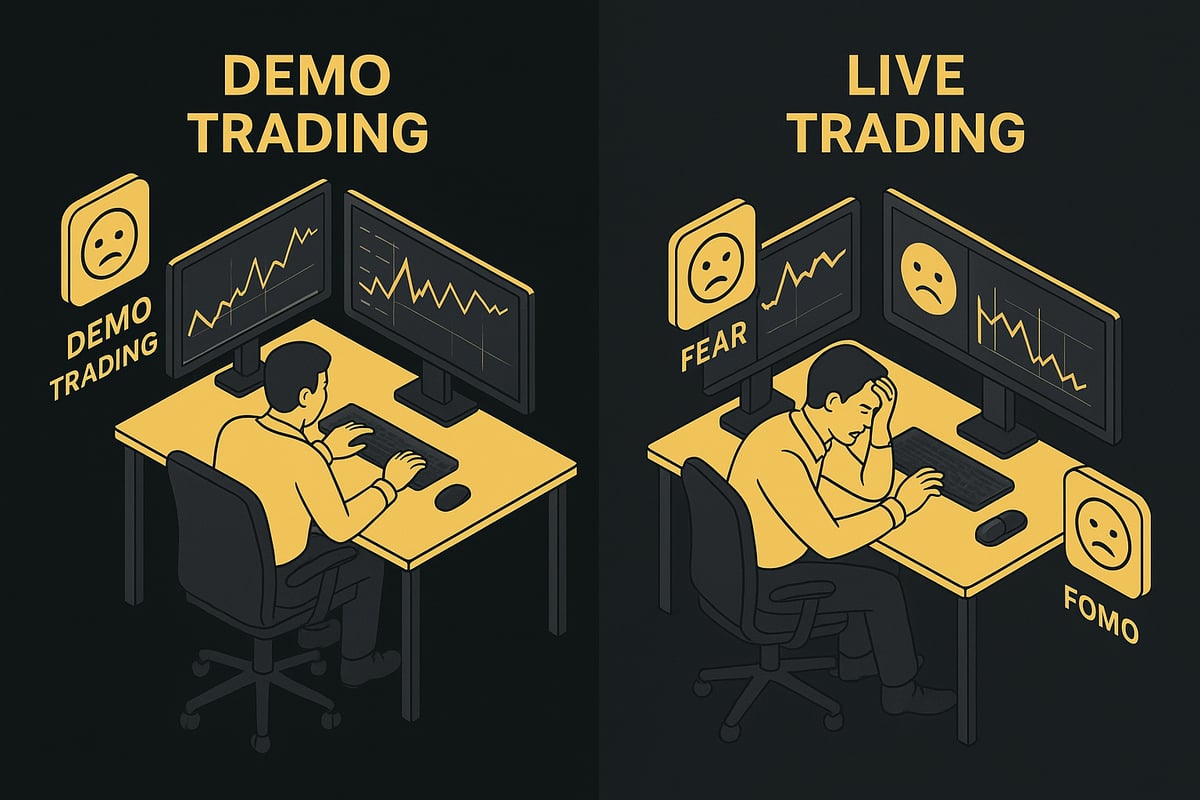
The difference between demo and live trading further illustrates the power of psychology in trading. In demo mode, traders often perform well because there is no real money at risk. Once live, the emotional stakes rise, and the same trader may second-guess decisions, exit too soon, or let losses run. This pressure can expose hidden weaknesses in mindset and discipline.
It is important to recognize that psychological mastery is not a one-time achievement. Instead, developing strong psychology in trading is a continuous process. Traders must learn to observe their emotional patterns, adapt to changing markets, and treat each experience as a stepping stone toward greater self-control and resilience.
The Most Common Psychological Pitfalls in Trading
Understanding the most common psychological pitfalls in trading is vital for anyone seeking consistent success. No matter how robust your strategy, the mind can become your greatest obstacle. Research reveals that a staggering portion of trader losses stem not from poor analysis, but from the subtle, persistent traps set by our own psychology in trading.
Emotional Traps That Sabotage Traders
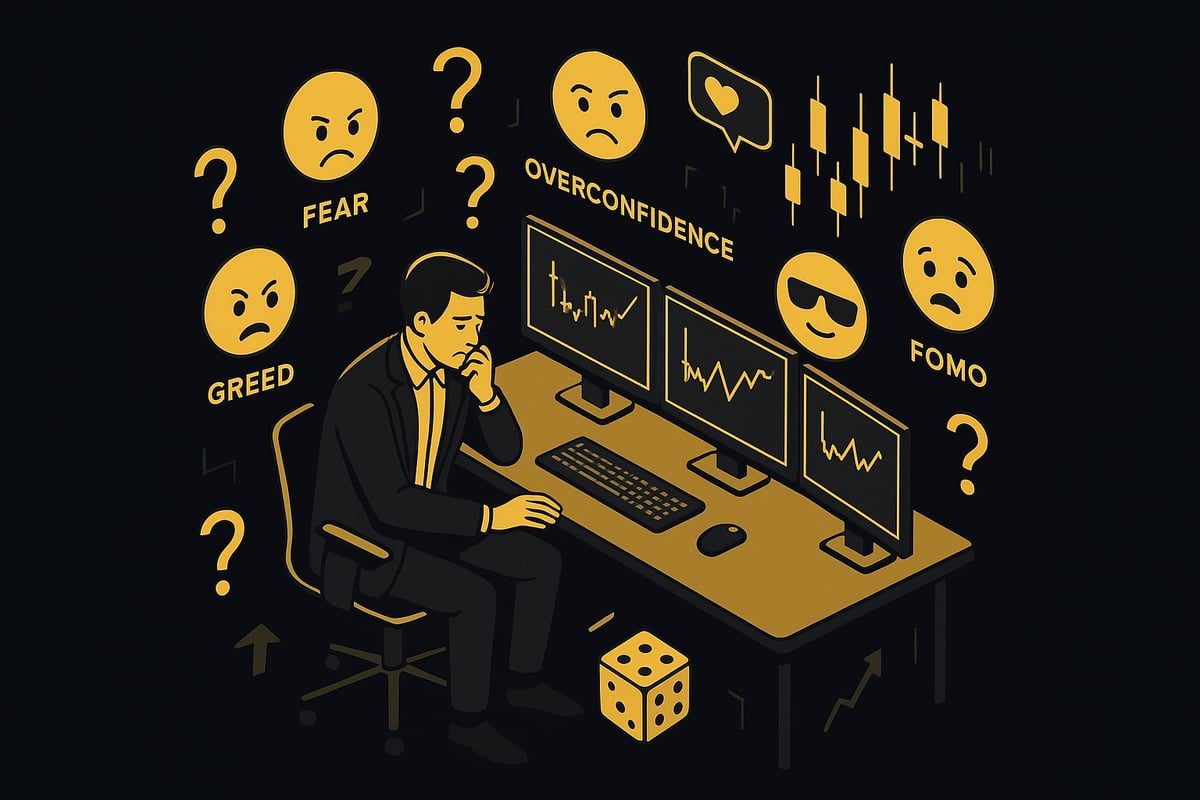
Emotions can quickly override logic, especially during volatile market swings. The most prevalent emotional traps include:
- Fear: Causes traders to exit profitable trades too early or avoid opportunities altogether.
- Greed: Leads to overleveraging or holding onto winners too long, expecting more.
- Overconfidence: Triggers excessive risk-taking after a series of wins.
- FOMO (Fear of Missing Out): Drives impulsive entries on trending assets after missing the initial move.
- Revenge Trading: Compels traders to immediately re-enter the market after a loss, hoping to recover quickly.
For example, panic selling during a sudden downturn or chasing a surging asset after it has already moved often results in poor outcomes. These reactions highlight just how powerful psychology in trading can be when unchecked.
Cognitive Biases: The Invisible Hand Guiding Mistakes
Beyond raw emotion, cognitive biases silently distort rational decision-making. Some of the most common biases include:
- Confirmation Bias: Only seeking information that supports existing beliefs, ignoring warning signs.
- Gambler’s Fallacy: Expecting a reversal after a streak of similar outcomes, even when trends persist.
- Status Quo Bias: Clinging to outdated strategies despite new market realities.
- Representative Bias: Overestimating the likelihood of patterns repeating based on recent experiences.
A trader might hold onto a losing position, convinced that a turnaround is “due,” or dismiss evidence contradicting their market thesis. Studies such as Overconfidence and Trading Behavior Research show how overconfidence frequently leads to excessive trading and diminished returns, further proving the crucial role of psychology in trading.
Navigating the Challenges of 2026: New Pitfalls Emerge
The trading landscape in 2026 presents unique psychological hurdles. Increased market noise from 24/7 news cycles and social media amplifies FOMO and anxiety. The constant comparison to others’ results, fueled by online trading forums, can lead to rash decisions and self-doubt.
Retail traders often report on Reddit that the pressure to perform in real time, coupled with instant access to market data, intensifies emotional swings. Recognizing these patterns is the first step toward overcoming them.
Tips for Self-Recognition and Prevention
To combat these pitfalls, self-awareness is key. Start by:
- Pausing before every trade to assess your emotional state.
- Keeping a trading journal to track thoughts and feelings.
- Setting clear rules to minimize impulsive decisions.
By acknowledging the influence of psychology in trading and actively watching for these pitfalls, traders put themselves in a stronger position to succeed—regardless of the market environment.
Step-by-Step Framework for Mastering Trading Psychology
Achieving consistency in the markets requires more than just technical skill. True success comes from mastering psychology in trading through a structured, repeatable process. The following five-step framework is designed to help you build the mental strength and discipline needed for long-term results.
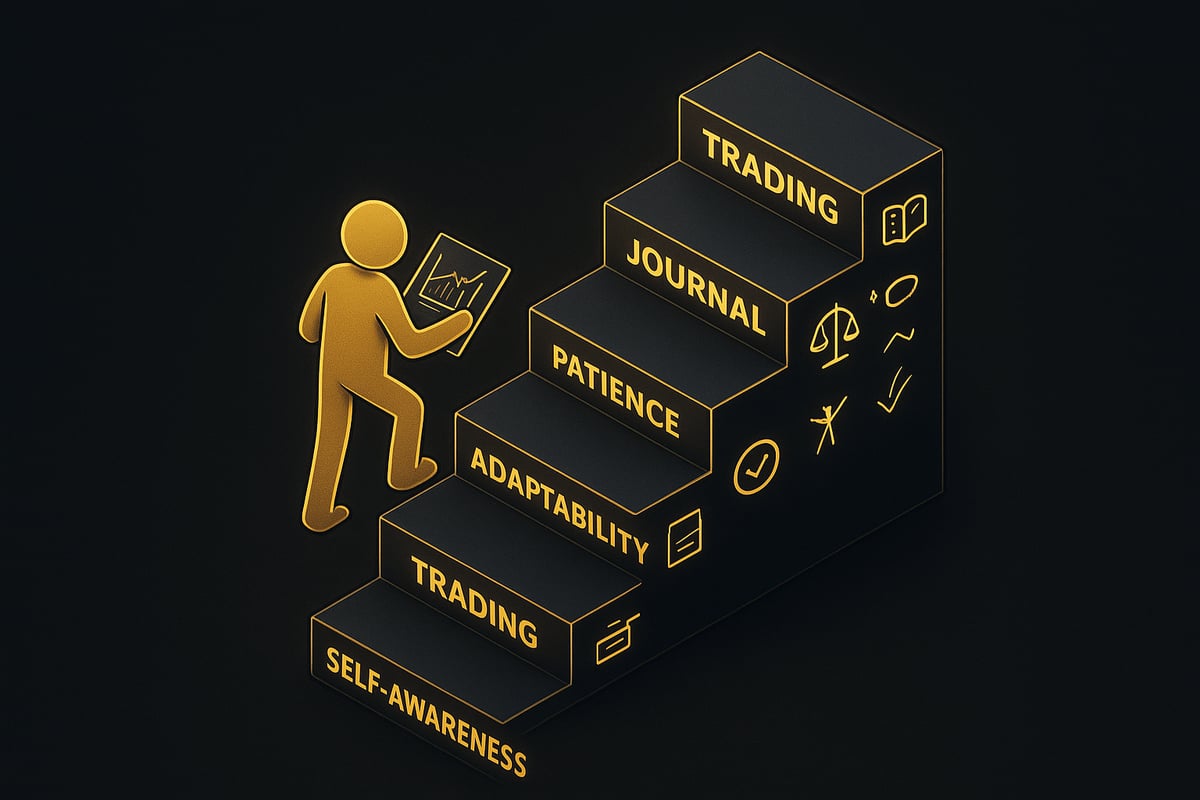
Step 1: Develop Self-Awareness and Emotional Intelligence
The journey toward mastering psychology in trading begins with self-awareness. Recognize your emotional states before, during, and after each trade. Are you feeling anxious, impatient, or overconfident? These emotions often influence decision-making more than you realize.
Practice mindfulness to become present and observe your thoughts without judgment. Techniques such as deep breathing or brief meditative pauses can help you reset mentally. Journaling is another powerful tool. By writing down your feelings and reactions, you can spot patterns over time.
For example, you might notice increased anxiety before high-impact news releases. Awareness of these triggers enables you to adjust your approach and avoid impulsive actions. Building emotional intelligence is the foundation of resilience in psychology in trading.
Step 2: Create and Commit to a Personalized Trading Plan
A written trading plan is a shield against emotional decision-making. Define your entry and exit rules, risk management strategies, and stop-loss placements. Clear guidelines reduce uncertainty, making it easier to act rationally when markets become volatile.
Include a pre-trade checklist to verify that setups meet your criteria. Establish routines that prepare your mind for focused decision-making. Personalization is key: tailor your plan to fit your goals, risk tolerance, and preferred trading style.
If you are new to this process, the Trading for Beginners Guide offers a foundational overview of psychology in trading and essential elements to include in your plan. Remember, consistency in following your plan is what leads to mastery.
Step 3: Practice Patience and Adaptability
Patience is a cornerstone of psychology in trading. Rather than chasing every opportunity, wait for high-quality setups that fit your strategy. Overtrading often results from impatience or the fear of missing out, leading to unnecessary losses.
Adaptability is equally important. Market conditions change, and what worked yesterday may not work today. Adjust your strategies in response to new volatility regimes or macroeconomic events, but do so within the boundaries of your plan.
For instance, if you notice increased volatility after global news, review your risk parameters instead of abandoning your discipline. Patience and adaptability together create a balanced mindset, essential for thriving in dynamic markets.
Step 4: Manage Losses and Wins with Objectivity
Objective reflection is vital for mastering psychology in trading. Treat losses as feedback, not personal failures. Analyze what went wrong without self-criticism. This approach transforms setbacks into learning opportunities.
After a series of wins, guard against overconfidence. Success can lead to riskier decisions if not managed carefully. Set limits on daily or weekly trading activity to maintain perspective.
Know when to step away from the screen. Breaks restore mental clarity, reducing the likelihood of emotional trades. By managing both losses and wins objectively, you strengthen your ability to remain consistent over time.
Step 5: Maintain a Detailed Trading Journal
A trading journal is your roadmap for continuous improvement in psychology in trading. Record every trade, noting your thoughts, emotions, and decision-making process. This documentation reveals recurring patterns and emotional triggers that may otherwise go unnoticed.
Review your journal regularly. Look for trends such as repeated impulsive entries or emotional exits. Use these insights to refine your approach and set targeted goals for growth.
Benefits of a Trading Journal:
| Benefit | Description |
|---|---|
| Self-Reflection | Identify strengths and weaknesses |
| Emotional Awareness | Spot emotional triggers impacting performance |
| Accountability | Track adherence to your trading plan |
| Continuous Learning | Turn mistakes into actionable lessons |
Over time, your journal becomes a personalized guide to mastering psychology in trading. Embrace this habit, and let it drive your journey toward lasting consistency.
Tools and Techniques for Building Psychological Resilience
Building psychological resilience is a cornerstone of lasting success in trading. Even the best strategies falter without mental strength. Mastering psychology in trading means having the right tools and habits to face stress, uncertainty, and the emotional rollercoaster of the markets.

Mindfulness and Emotional Awareness
Mindfulness is a foundational practice for strengthening psychology in trading. Techniques like meditation and deep breathing help traders stay present, reduce anxiety, and respond rather than react to fast market moves.
Taking short breaks for breathing exercises or visualization before key trades can clear the mind and sharpen focus. Professional traders often use mindfulness to detach from emotional swings, allowing them to execute their plans with greater discipline.
Setting Realistic Expectations and Goals
Unrealistic expectations often sabotage psychology in trading. Setting achievable short-term goals and acknowledging the learning curve reduces pressure and frustration.
A clear roadmap helps traders focus on process over outcome. Instead of chasing every opportunity, resilient traders stick to their plan, accepting that losses are part of the journey. This mindset shift fosters patience and steadiness during volatile periods.
Positive Self-Talk and Affirmations
The internal dialogue shapes psychology in trading as much as any external factor. Negative self-talk can erode confidence after losses, while positive affirmations reinforce discipline and self-belief.
Simple statements like "I follow my plan" or "Losses are lessons" help reframe setbacks. Over time, this mental habit builds a resilient, growth-focused mindset that supports consistent decision-making.
Risk Management Tools
Effective risk management is essential for healthy psychology in trading. Tools such as position sizing, stop-loss orders, and pre-defined risk limits act as guardrails against emotional decisions.
By managing risk proactively, traders reduce the fear of catastrophic loss and the temptation to double down on losing trades. This structured approach brings clarity and peace of mind, allowing traders to focus on execution.
Community Support and Accountability
Isolation can undermine psychology in trading, especially during tough periods. Engaging with supportive communities or finding an accountability partner provides perspective, encouragement, and honest feedback.
Professional networks, mastermind groups, or online forums offer spaces to share experiences, learn from others, and maintain motivation. This collective resilience helps traders bounce back from setbacks and stay committed to growth.
Leveraging Technology and AI
Modern technology offers powerful tools for reinforcing psychology in trading. Automated alerts, algorithmic entry/exit signals, and performance dashboards minimize impulsivity and help traders stick to their strategies.
AI-driven platforms can provide objective guidance, reducing the mental drain of constant market analysis. For a deeper look at how technology can support discipline and reduce emotional trading errors, see AI and Trading Discipline.
Rituals and Routines of Top Traders
Establishing daily rituals, such as pre-market reviews or post-trade journaling, anchors psychology in trading. These routines create structure, foster self-reflection, and prevent emotional decision-making.
By consistently applying these habits, traders cultivate the psychological resilience needed to thrive in any market environment.
Advanced Strategies for Thriving in the 2026 Trading Landscape
The trading landscape in 2026 is rapidly evolving, presenting both new opportunities and unique psychological hurdles. To maintain an edge, traders must refine their approach, blending advanced tools with mastery of psychology in trading. As markets become faster and more complex, success hinges on mental agility and strategic discipline.
Navigating Algorithmic Markets and Volatility
Algorithmic trading now dominates global markets, increasing speed and unpredictability. This shift amplifies the need for robust psychology in trading, as human reactions to rapid price swings can trigger impulsive errors.
To manage this, establish strict risk controls and automate portions of your strategy. Use pre-set alerts and rules to avoid emotional decision-making during sudden volatility. Review performance data regularly to identify and address psychological triggers that algorithms may exploit.
Adapting to Multi-Asset, Always-On Environments
Markets operate around the clock, across assets like forex, crypto, stocks, and indices. This constant activity can tempt traders to overtrade or neglect rest, undermining the psychology in trading.
Set clear session boundaries and prioritize quality over quantity. Use tools that monitor multiple markets efficiently, but commit to only the setups that fit your plan. Remember, consistency matters more than constant action.
The Role of Continuous Learning and Research
Staying informed about behavioral finance and market psychology is essential. In 2026, new research on decision-making and cognitive biases is emerging rapidly.
Dedicate regular time to study reputable sources and apply insights to your daily routine. For example, integrating High Probability Trading Strategies can reinforce the importance of disciplined, systematic approaches, reducing the influence of emotion.
Filtering Noise: Social Media, News, and Forums
The explosion of financial information and social comparison pressures can distort psychology in trading. Traders often react to trending opinions or viral news, leading to herd behavior and poor decisions.
Develop a filtering process: limit exposure to non-essential sources, and focus on verified, high-quality analysis. Recent studies, such as the Influence of Social Comparison on Trading, highlight how social cues can increase risk-taking. Stay vigilant and trust your own research.
Human Judgment and AI: Finding the Right Balance
AI-powered tools are invaluable, but they cannot replace human intuition. The most successful traders leverage technology to support, not override, their psychology in trading.
Rely on AI for objective data and trend analysis, but always validate signals with your own reasoning. Use automation for routine tasks, freeing mental energy for critical decisions. This synergy enhances both efficiency and psychological resilience.
Building Your Psychological Support Network
Isolation magnifies emotional swings. In 2026, building a support network is more important than ever for strengthening psychology in trading.
Join mastermind groups, seek mentors, and participate in professional communities. Regularly discussing challenges and sharing strategies helps normalize setbacks and fosters accountability. Peer support is a proven buffer against stress and overconfidence.
Example: Top Traders’ Blend of Mindset and Tools
Elite traders in 2026 combine psychological discipline with cutting-edge platforms. They journal thoughts and trades, use AI for signal confirmation, and maintain strict routines. Their edge lies not just in strategy, but in unwavering commitment to mastering psychology in trading.
By adopting these advanced strategies, you can navigate uncertainty, adapt to new challenges, and thrive in the dynamic world of 2026 trading.
Essential Resources for Ongoing Psychological Mastery
Building lasting skills in psychology in trading requires more than just good intentions. Traders need a toolkit of practical resources, expert insights, and supportive communities to foster mental resilience and continuous improvement. The right resources can accelerate your growth, help you identify blind spots, and keep you focused on long-term progress.
Must-Read Books for Psychology in Trading
Books remain foundational for deepening your understanding of psychology in trading. Start with "Trading in the Zone" by Mark Douglas, which explores the mindset differences between amateurs and professionals. "The Investor’s Quotient" by Jake Bernstein provides practical exercises to build self-discipline and emotional control.
Other recommended titles include:
- The Daily Trading Coach by Brett N. Steenbarger
- Mindset: The New Psychology of Success by Carol S. Dweck
- The Psychology of Trading by Brett N. Steenbarger
Each of these books offers unique perspectives and actionable strategies to help you master your mental game.
Podcasts, Courses, and Communities
Staying updated is vital for success in psychology in trading. Top podcasts such as "Chat With Traders" and "The Trading Psychology Podcast" feature interviews with experts and real traders. Online courses, including those from reputable platforms or trading educators, provide structured pathways for skill development.
For ongoing support, join online communities like Elite Trader or r/Daytrading on Reddit. These forums enable discussion, accountability, and sharing of personal experiences. Many traders also benefit from mastermind groups where they can set goals and receive constructive feedback.
Templates, Tools, and Behavioral Finance Research
Using structured tools helps you apply psychology in trading principles consistently. Journaling templates, such as trade logs and self-assessment checklists, are invaluable for tracking emotions, decisions, and outcomes. For those seeking to reinforce objectivity, explore Mastering Trading Indicators, which explains how objective indicator use can reduce impulsivity and emotional trading errors.
Stay informed on the latest behavioral finance research through blogs and newsletters. For a deeper dive into how cognitive biases shape financial decisions, the paper Cognitive Biases in Financial Decision-Making examines irrational trading behaviors using advanced analytical frameworks. These resources will help you recognize bias and improve your decision-making process.
Crafting Your Personal Development Plan
Treat psychology in trading as a lifelong journey, not a quick fix. Develop a personal plan that includes weekly reviews, clear goal setting, and regular reflection. Use your journal to track progress and update strategies as you evolve.
For example, dedicate one day each week to review your trades, emotions, and lessons learned. Over time, these small habits compound, leading to steady improvement and greater psychological resilience.
The journey to mastery in psychology in trading is ongoing. By leveraging these resources and committing to continuous learning, you can build the mental edge needed for consistent trading success.
As you’ve seen, mastering your trading psychology is the foundation for consistent results—especially as markets evolve in 2026. But even the strongest mindset benefits from reliable, real-time insights that remove second guessing and help you stay disciplined. That’s where PipTrend comes in. With AI-powered signals and instant alerts across forex, crypto, stocks, and indices, you can eliminate the guesswork and focus on executing your plan with confidence. If you’re ready to put these psychological strategies into practice and see measurable improvement in your trading decisions, See Your Trading Improve With PipTrend.