
In 2026, intraday trading moves at lightning speed, with fortunes made or lost in moments. Success demands sharp tools and smarter strategies as markets grow more competitive and unpredictable.
This article uncovers the best indicators for intraday traders determined to thrive. Technical indicators are crucial for timing entries and exits, managing risk, and boosting profits, especially in today’s data-driven world.
We will break down the 7 best indicators for intraday performance, revealing actionable insights and the latest advancements. If you want to trade with confidence and consistency, discover which tools experts rely on for an edge.
Why Technical Indicators Matter for Intraday Trading in 2026
In today's lightning-fast markets, having the best indicators for intraday trading is more important than ever. As technology transforms the financial landscape, traders face both new opportunities and unprecedented risks. Understanding how these tools work—and why they matter—is the first step toward consistent intraday success.
The Evolving Landscape of Intraday Trading
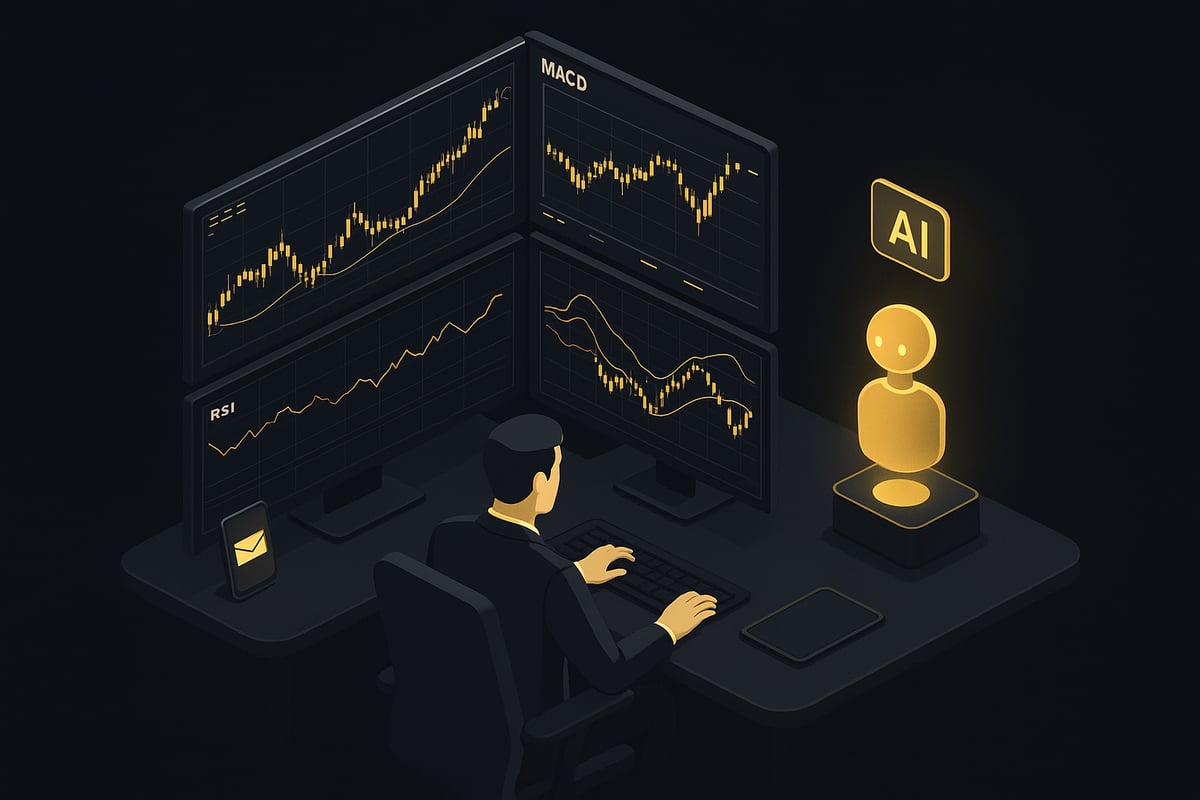
Intraday trading in 2026 is shaped by rapid advancements in algorithmic trading, artificial intelligence, and heightened market volatility. Real-time data streams and near-instant execution speeds have changed how traders approach every session. These shifts demand reliable, data-driven solutions to keep up with the pace.
Traders now need the best indicators for intraday performance to help filter noise and avoid impulsive decisions. As automation becomes more accessible, the reliance on technical tools grows. Many professionals turn to comprehensive resources like the Best Trading Indicators Guide to stay current with the latest strategies and tools.
Role of Indicators in Risk Management and Profitability
Technical indicators serve as a trader's compass, guiding decisions throughout the trading day. By highlighting trends and potential reversals, the best indicators for intraday use help pinpoint optimal entry and exit points. For example, moving averages can smooth price fluctuations, while the RSI identifies overbought or oversold zones.
Using multiple indicators for confirmation is essential. Pairing tools such as MACD and RSI reduces false signals and increases the probability of profitable trades. When properly integrated, these indicators support robust risk management, allowing traders to set clear stop-loss and take-profit levels.
Common Challenges Without Proper Indicators
Trading without the best indicators for intraday setups can lead to costly mistakes. Overtrading, chasing losses, and missing high-probability opportunities are common pitfalls. Consider a trader who struggled with inconsistent results until adopting a structured indicator-based system, which led to a significant boost in win rate.
Industry data reveals that traders using indicator-driven strategies report up to 20 percent higher consistency in returns. Without these tools, emotional decision-making often takes over, undermining discipline and profitability.
The 2026 Edge: Adapting to New Market Dynamics
Modern indicators in 2026 go beyond traditional charting. They incorporate AI, multi-timeframe analysis, and real-time mobile alerts to empower traders. The best indicators for intraday trading are now often compatible with TradingView and equipped with customizable notifications.
As market conditions evolve, having the right mix of indicators can turn uncertainty into opportunity. Traders leveraging these advancements position themselves for greater adaptability and long-term success in the ever-changing intraday environment.
7 Best Indicators for Intraday Success in 2026
Success in today's markets relies on using the best indicators for intraday trading. Traders need tools that provide real-time clarity, actionable signals, and adaptability to market shifts. In 2026, advancements in AI and technology have transformed how these indicators are used, making it essential to stay updated. Here are the top seven tools every trader should master to boost consistency, manage risk, and make the most of each trade.
1. PipTrend AI Trading Indicator
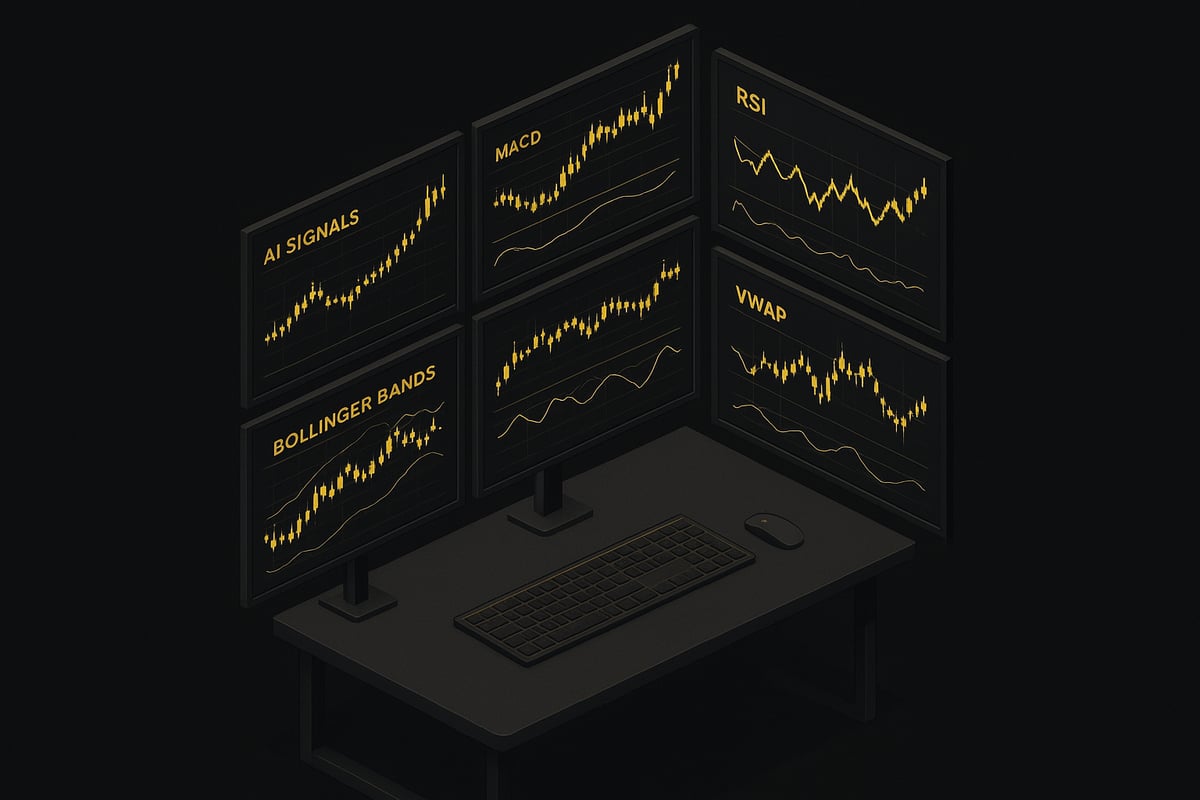
For traders looking for the best indicators for intraday success, PipTrend AI Trading Indicator stands out in 2026. This AI-powered TradingView tool delivers real-time buy and sell signals across forex, crypto, stocks, and indices.
Key features include multi-timeframe analysis, instant alerts, automatic trend detection, and a highly customizable interface. PipTrend reduces guesswork by offering clear, actionable signals. It helps traders avoid overtrading and boosts confidence, especially in volatile sessions.
Pricing is flexible: Monthly at $59.99, quarterly at $134.99, or yearly at $479.99, each with a 3-day free trial and lifetime updates. The indicator is designed for retail, day, and swing traders who want precision and simplicity.
Pros:
- AI-driven signals
- Works on all major markets
- Beginner-friendly interface
- Lifetime updates and support
Cons:
- Requires a TradingView account
- Subscription-based pricing
Unique selling points include laser-accurate signals, access to an exclusive trading community, 24/7 support, and ongoing updates. One user testimonial highlights improved consistency and less analysis paralysis after switching to PipTrend. The indicator's actionable insights make it a top choice among the best indicators for intraday trading.
2. Moving Average Convergence Divergence (MACD)
MACD is a cornerstone among the best indicators for intraday trading. It combines two exponential moving averages to identify momentum, trend direction, and potential reversals.
The main components are the MACD line, signal line, and histogram, which visualize trend strength and shifts. Intraday traders commonly use the 12, 26, and 9-period EMAs for quick market response. MACD is effective for spotting crossovers and divergences, serving both as a confirmation tool and a standalone signal generator.
For example, traders often look for MACD crossovers on 5- or 15-minute charts to confirm trend strength before entering a trade. Data shows that MACD-based systems can significantly improve entry and exit timing, especially in fast-moving markets.
Pros:
- Versatile across asset classes
- Clear visual signals
- Widely supported on trading platforms
Cons:
- May lag in choppy or sideways conditions
A major 2026 update is the integration of MACD with AI tools for automated signal filtering, reducing false positives. For deeper insights into how MACD works, the MACD Indicator Explained resource offers a comprehensive look at its mechanics and applications. This adaptability cements MACD's place among the best indicators for intraday traders.
3. Relative Strength Index (RSI)
The Relative Strength Index (RSI) measures the speed and magnitude of price changes, helping traders spot overbought and oversold conditions. It remains a fixture among the best indicators for intraday trading, especially for identifying potential reversals.
RSI readings above 70 often signal overbought conditions, while readings below 30 suggest oversold markets. Traders use RSI to pinpoint high-probability reversal zones and to confirm existing trends. Advanced strategies involve combining RSI with price action or other indicators for greater accuracy.
Intraday traders frequently apply RSI to shorter timeframes, allowing them to catch quick reversals during volatile sessions. Market data confirms that RSI is one of the most cited indicators for entry and exit decisions across equities and derivatives.
Pros:
- Simple, visual interpretation
- Quick identification of market extremes
Cons:
- Can generate false signals during strong trends
For 2026, RSI offers customizable periods and integration with multi-timeframe dashboards, giving traders more flexibility. This adaptability helps ensure RSI remains among the best indicators for intraday traders looking for consistency and speed.
4. Bollinger Bands
Bollinger Bands are a staple for volatility analysis and are considered one of the best indicators for intraday strategies. The indicator consists of upper, middle, and lower bands derived from moving averages and standard deviation.
Traders use Bollinger Bands to spot breakout and squeeze opportunities. When price touches or breaks the upper or lower band, it often signals potential overbought or oversold scenarios. This makes the tool invaluable for gauging volatility expansion and contraction.
In 2026, traders frequently combine Bollinger Bands with momentum oscillators for more reliable signals. Studies show the indicator is highly effective during earnings seasons and periods of elevated volatility.
Pros:
- Clear visualization of volatility shifts
- Helps identify breakout opportunities
Cons:
- Not a standalone buy/sell tool
Advanced users set up automated alerts for sharp band contractions or expansions, capitalizing on sudden volatility changes. Bollinger Bands' adaptability ensures their place among the best indicators for intraday traders.
5. Stochastic Oscillator
The Stochastic Oscillator is a momentum tool that compares a security’s closing price to its price range over a set period. This indicator is routinely listed among the best indicators for intraday setups due to its ability to highlight overbought and oversold conditions.
Readings above 80 indicate overbought markets, while readings below 20 suggest oversold conditions. Traders use stochastic crossovers to identify early trend reversals and entry or exit points, making it especially useful in fast-paced environments.
For example, intraday traders often rely on the Stochastic Oscillator for quick scalping opportunities, pairing it with MACD or RSI for added confirmation. Data shows that this combination can improve win rates and filter out weaker signals.
Pros:
- Generates quick, actionable signals
- Easy to interpret
Cons:
- Can produce noise in strong trends
The 2026 version offers smoothed calculations and AI-based filtering to minimize whipsaws, making this oscillator even more effective among the best indicators for intraday trading.
6. Volume Weighted Average Price (VWAP)
VWAP calculates the average price of a security, weighted by volume, and resets daily. It is widely used among the best indicators for intraday trading, especially by institutional participants.
VWAP helps identify fair value zones and potential support or resistance levels. When price trades above VWAP, the market is considered bullish; below VWAP, bearish. Traders use VWAP as a benchmark to minimize market impact and optimize entries.
In 2026, VWAP is increasingly integrated with algorithmic trading systems, offering real-time insights. Combining VWAP with other indicators, like RSI or MACD, provides powerful confluence for high-probability trades.
Pros:
- Anchors price action to real market activity
- Useful for benchmarking trades
Cons:
- Less effective in illiquid or low-volume markets
Advanced users leverage VWAP for dynamic support/resistance identification, keeping it among the best indicators for intraday strategies.
7. Commodity Channel Index (CCI)
The Commodity Channel Index (CCI) measures price deviation from a statistical mean, allowing traders to spot overbought or oversold conditions and trend shifts. It is consistently ranked among the best indicators for intraday trading due to its sensitivity.
Typical intraday settings are 14- or 20-periods. CCI is especially helpful for identifying emerging trends and potential reversal points before price action confirms the move. Traders watch for CCI spikes to anticipate momentum surges and act quickly.
Market data supports CCI’s reputation for delivering early signals, though it can sometimes overreact during volatile sessions. The 2026 version introduces dynamic settings and AI integration for more accurate alerts.
Pros:
- Provides early trend signals
- Sensitive to short-term price movements
Cons:
- Can be overly reactive in high-volatility periods
With its advanced customization, CCI continues to be a go-to among the best indicators for intraday traders seeking an edge.
How to Combine Indicators for Maximum Intraday Success
Combining the best indicators for intraday trading is the cornerstone of a consistent, high-probability strategy. Instead of relying on a single signal, traders in 2026 harness the power of multiple indicators for precision, risk control, and faster decision-making. Let’s break down exactly how to craft an effective multi-indicator approach for today’s fast-moving markets.
Building a Multi-Indicator Strategy
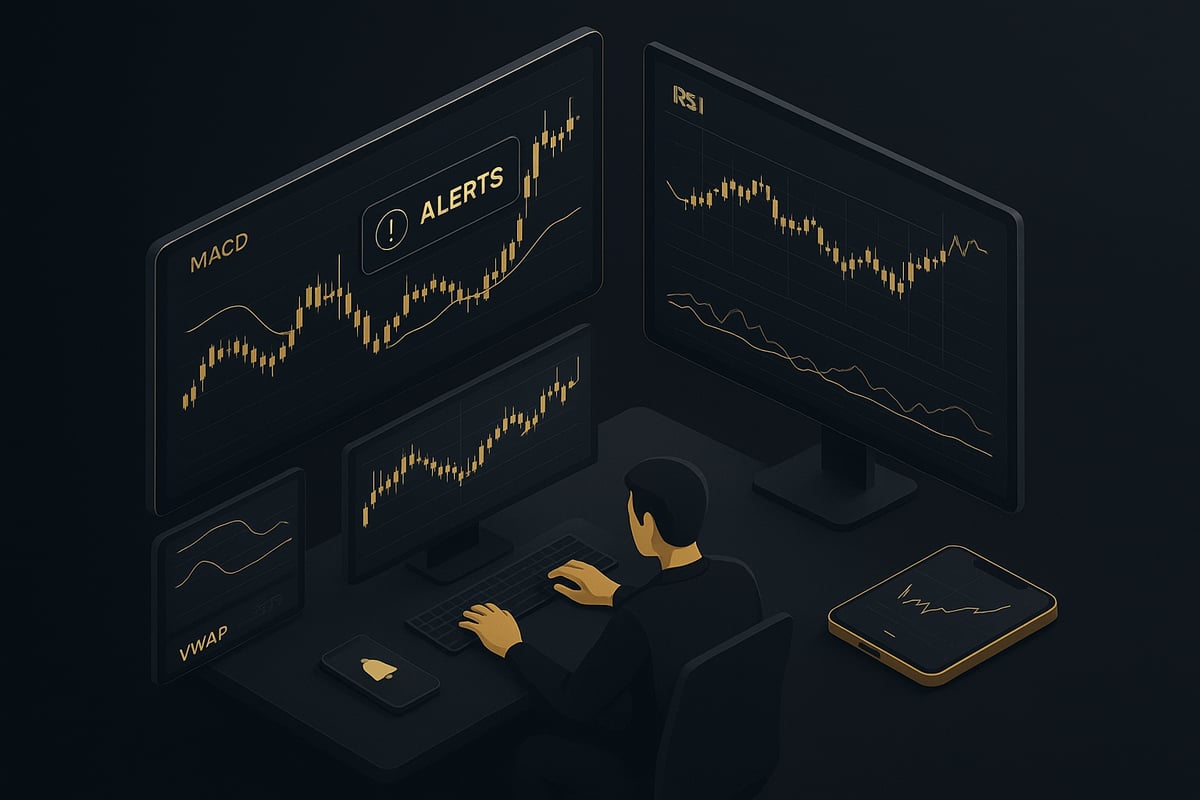
The secret to success with the best indicators for intraday is confluence. By combining two or three complementary tools, you filter out noise and confirm signals. For instance, pairing MACD with RSI helps spot both momentum and overbought or oversold conditions. This synergy reduces false signals and improves your trade entries.
For deeper insights into RSI, see this RSI Indicator for Traders resource. Risk management is equally vital. Always align your stop-loss and position sizing with indicator signals to protect capital. Remember, consistency comes from a repeatable, data-driven process.
Avoiding Common Pitfalls
Using too many indicators can lead to “analysis paralysis.” The best indicators for intraday work best in small, focused combinations. Research from 2025 shows traders using two or three core indicators outperform those who overload their charts with five or more.
Keep your setup simple:
- Choose only indicators you fully understand.
- Avoid redundant signals.
- Test combinations before trading live.
Simplicity breeds clarity, helping you act decisively under pressure.
Adapting to Different Market Conditions
No single setup works everywhere. The best indicators for intraday must be fine-tuned for trending or ranging environments. In high-volatility markets, tools like VWAP and Bollinger Bands excel at highlighting breakouts and squeezes. For more on this approach, visit the Bollinger Bands Strategy guide.
In sideways markets, oscillators like RSI and Stochastic Oscillator shine by pinpointing reversal zones. Adjust indicator periods to match the asset’s volatility and session pace. Flexibility is key to staying ahead of shifting conditions.
Leveraging Technology in 2026
Technology amplifies the effectiveness of the best indicators for intraday. Modern platforms offer AI-powered signal filtering, real-time alerts, and seamless integration with TradingView and mobile devices. These advancements allow traders to react instantly to market moves, even on the go.
Set up notifications for your preferred indicators and let automation handle routine monitoring. This frees you to focus on strategy, not screen-watching. In 2026, staying connected and informed gives you a true edge.
Practical Example: Sample Intraday Setup
Here’s how a trader might combine the best indicators for intraday success:
- Use VWAP to identify the session’s fair value zone.
- Wait for RSI to enter overbought or oversold territory.
- Confirm with MACD crossover for momentum alignment.
- Place entry, set stop-loss just beyond VWAP, and target the next support or resistance.
This structured approach leverages indicator confluence for high-probability trades. By sticking to a clear process, you gain confidence and consistency in every session.
Frequently Asked Questions About Intraday Indicators
Intraday trading in 2026 demands precision, speed, and adaptability. Below, we answer the most pressing questions about the best indicators for intraday, helping both new and seasoned traders navigate the evolving landscape with confidence.
What makes an indicator “best” for intraday trading in 2026?
The best indicators for intraday are defined by real-time responsiveness, reliability, and adaptability to dynamic market conditions. In 2026, traders seek tools that deliver actionable signals without lag or ambiguity. Indicators that offer multi-timeframe analysis and instant alerts provide a measurable edge. According to recent surveys, over 70% of traders value these features above all. For deeper insight into how informed trading can impact indicator effectiveness, see this study on the impact of informed trading on technical indicators.
How many indicators should I use at once?
Experts agree that using two to three of the best indicators for intraday provides the ideal balance between clarity and confirmation. Relying on too many indicators can lead to conflicting signals and hesitation. By focusing on a select few, you can streamline your decision-making process and improve trade execution. This approach is consistently supported by performance data and professional trading strategies.
Which indicator is most accurate for entry and exit points?
Traders often cite RSI and MACD as the best indicators for intraday entry and exit timing. RSI excels at highlighting overbought or oversold zones, while MACD confirms trend strength and potential reversals. VWAP is favored for institutional-style execution, helping to identify fair value. Combining these indicators often results in higher win rates and more consistent trades, especially when volatility is high.
How do I adjust indicator settings for different assets?
The best indicators for intraday must be customized based on the asset class you trade. For example, stocks, forex, crypto, and indices each have unique volatility profiles. Adjusting periods and thresholds helps optimize indicator performance. In 2026, many platforms offer AI-driven auto-optimization, which refines indicator settings in real time, ensuring your tools remain effective as market conditions shift.
Are AI-powered indicators worth it?
AI-powered tools are rapidly becoming some of the best indicators for intraday. These indicators leverage real-time data and machine learning to deliver context-aware signals that adapt to fast-changing markets. User feedback consistently points to higher win rates and reduced emotional trading. For a broader perspective on the future of AI in trading, explore AI trends in trading for 2026.
Can indicators guarantee profits?
No indicator, even the best indicators for intraday, can guarantee profits. Success depends on discipline, sound risk management, and ongoing education. Indicators provide a statistical advantage, but market conditions can always surprise. Combining technical tools with strong trading psychology and strict stop-losses is essential for long-term profitability.
Where can I access these indicators?
You can find the best indicators for intraday on major platforms like TradingView, MT4/MT5, and various proprietary brokerage tools. Many of these now offer web-based and mobile versions, allowing you to monitor trades and receive alerts wherever you are. Always review each platform’s features to ensure compatibility with your trading style and preferred indicators.
Now that you’ve seen how the right indicators can transform your intraday strategy in 2026, it’s time to take the next step. With tools like PipTrend offering real time buy and sell signals across forex, crypto, stocks, and indices, you don’t have to second guess every trade or get caught up in market noise. Imagine making decisions with clarity, confidence, and consistent results—no more analysis paralysis, just actionable insights when you need them most. If you’re ready to see the difference a smart, AI powered indicator can make, See Your Trading Improve With PipTrend.