
The financial world calls the VIX the “fear gauge” for a reason. In 2026, mastering the vix indexes is more important than ever as markets remain unpredictable and volatility shapes every trading decision.
This guide is here to demystify vix indexes, giving you actionable insights and clear strategies for navigating the year ahead. We will explore their foundations, evolving roles, key variations, and the data-driven trends that matter most.
Ready to transform uncertainty into opportunity? Dive in and discover the tools and strategies you need to thrive in volatile times.
Understanding the VIX: Foundations and Evolution
The vix indexes have become essential tools for navigating today’s volatile markets. To fully grasp their significance in 2026, it’s important to understand where they came from, how they are calculated, and why their role continues to evolve. This foundational knowledge empowers investors to decode market sentiment and develop robust strategies for the years ahead.
The Origins and Purpose of the VIX
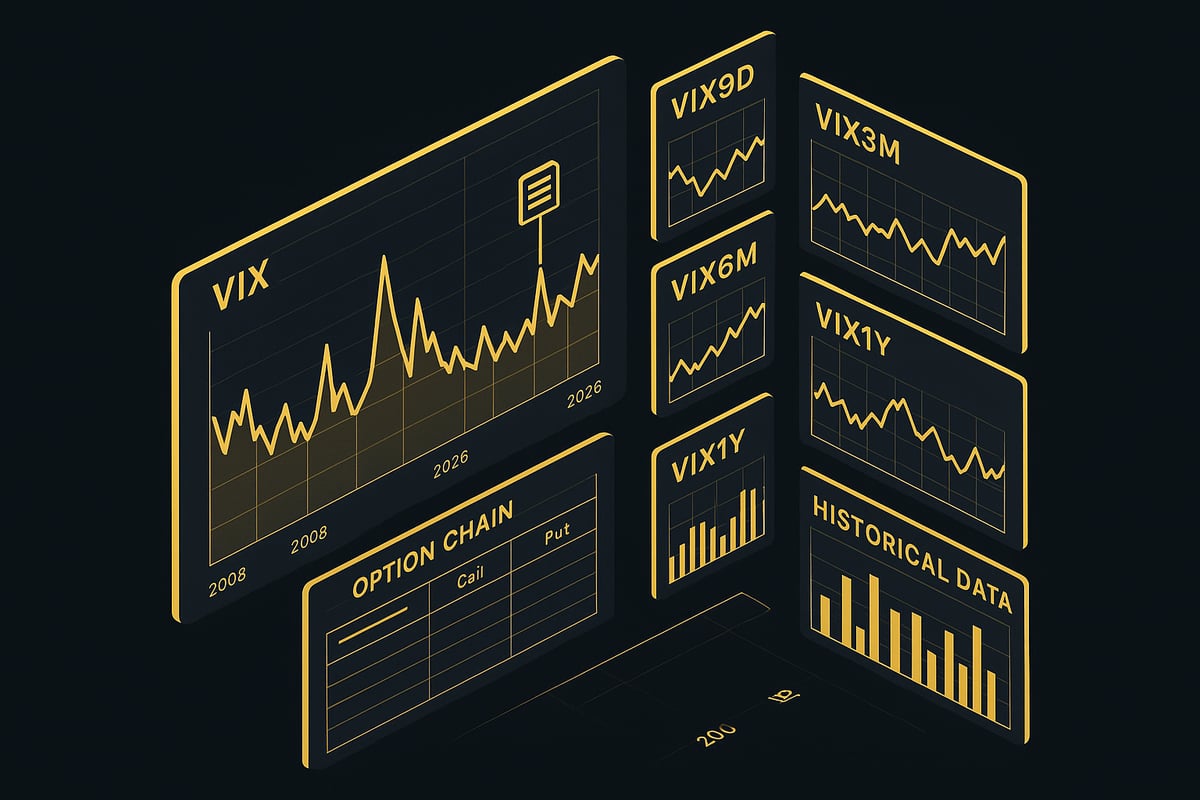
The vix indexes trace their roots back to 1993, when the Chicago Board Options Exchange (CBOE) introduced the original VIX. Designed as a benchmark for U.S. equity market volatility, the index measures expected S&P 500 volatility using options pricing.
Quickly nicknamed the “fear gauge,” the VIX became a vital indicator of market sentiment. When uncertainty surges, such as during the 2008 financial crisis or the COVID-19 pandemic, the VIX spikes dramatically. These movements reflect heightened investor anxiety and often prompt shifts in risk management.
The vix indexes continue to influence how traders and institutions assess fear, manage risk, and position for changing market conditions.
How the VIX is Calculated
At its core, the VIX relies on the concept of implied volatility, which represents the market’s forecast of future price swings. The calculation uses a wide range of S&P 500 index options, capturing the expected volatility over the next 30 days.
Key elements include the variance of option prices, weighting by strike price, and a focus on both calls and puts. For example, a sudden rush to buy put options can push the VIX higher, signaling rising concern. To understand how these calculations impact real-world trading, explore this VIX futures trading guide, which offers deeper insights into the mechanics behind vix indexes.
This transparent methodology allows the vix indexes to serve as reliable barometers for short-term market expectations.
Evolution and Expansion of VIX Indexes
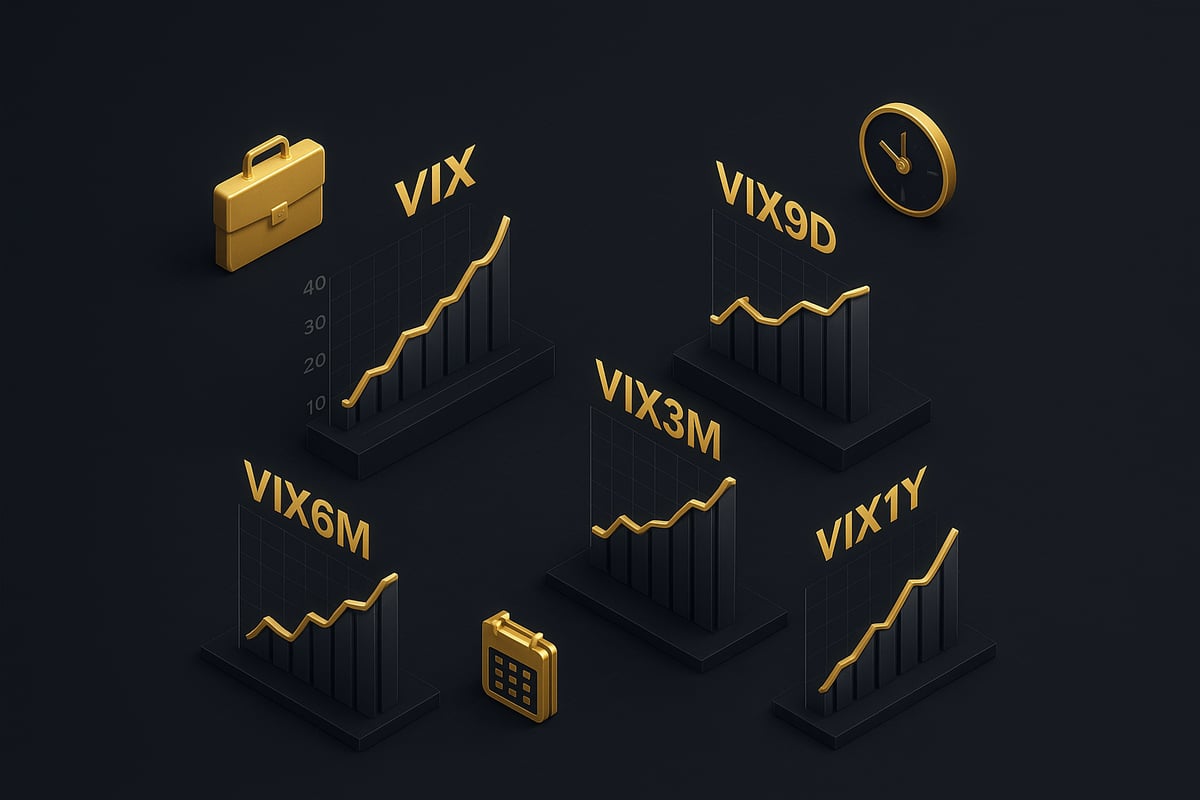
Over time, the demand for more nuanced volatility measures led to the creation of multiple vix indexes. These variants, such as VIX9D (9-day), VIX3M (3-month), VIX6M (6-month), and VIX1Y (1-year), offer tailored insights for different investment horizons.
| Index | Timeframe | Typical Use Case |
|---|---|---|
| VIX | 30 days | General market risk |
| VIX9D | 9 days | Short-term events |
| VIX3M | 3 months | Quarterly planning |
| VIX6M | 6 months | Medium-term hedging |
| VIX1Y | 1 year | Long-term allocation |
Institutional and retail traders now use vix indexes for everything from hedging earnings risk with VIX9D to structuring portfolios around VIX1Y readings. This evolution has made the vix indexes integral to modern risk management.
The VIX in 2026: Why It Matters More Than Ever
Looking ahead to 2026, the importance of vix indexes is only growing. Heightened geopolitical tensions and macroeconomic shifts are driving persistent uncertainty. At the same time, retail trading and algorithmic strategies are pushing volatility to new levels.
Recent data from 2023 to 2025 shows that VIX averages remain elevated compared to the pre-pandemic era. Analysts expect these trends to continue, making it crucial for traders and portfolio managers to monitor vix indexes closely.
Understanding and applying vix indexes will be a key advantage for anyone seeking to thrive amid the unpredictable markets of 2026.
Key VIX Index Variants and Their Applications
Understanding the diversity of vix indexes is fundamental for investors and traders looking to manage risk across different market horizons. Each index offers a unique lens into market expectations, allowing for tailored volatility strategies. By knowing when and how to use each, you can align your approach with your specific goals and timeframes.
Overview of Major VIX Indexes
There are several primary vix indexes, each designed to measure volatility over distinct periods. The classic VIX reflects expected volatility in the S&P 500 over the next 30 days, serving as the market’s go-to “fear gauge.”
VIX9D captures ultra-short-term, nine-day volatility, ideal for tracking rapid market shifts. VIX3M and VIX6M extend the outlook to three and six months, respectively, enabling deeper risk planning. VIX1Y offers a full-year perspective, crucial for long-term asset allocation.
By comparing these vix indexes, investors can better assess volatility risk across short, medium, and long-term horizons, making it easier to match strategies to market conditions.
VIX9D: Short-Term Volatility Insights
VIX9D is designed to pinpoint short-term market turbulence, making it a favorite among day traders and those reacting to event-driven risk. This index excels during periods of heightened uncertainty, such as major economic releases or Federal Reserve meetings, where volatility can spike sharply.
Compared to other vix indexes, VIX9D is highly responsive, often moving faster and more dramatically in reaction to breaking news. For example, during earnings season in 2024, VIX9D readings surged ahead of key announcements, providing actionable signals for tactical trades.
The unique structure of VIX9D allows traders to anticipate and respond to market shocks with greater agility, enhancing short-term risk management.
VIX3M and VIX6M: Medium-Term Volatility Planning
VIX3M and VIX6M are essential vix indexes for investors seeking to hedge risk or plan trades over quarterly and semi-annual cycles. These indexes align with common investment review periods, making them highly relevant for portfolio managers and swing traders.
VIX3M, in particular, is closely watched for shifts in medium-term sentiment. Fund managers often use it to hedge portfolios through volatile quarters, leveraging insights from historical divergences between VIX3M and the standard VIX. For a detailed breakdown of how these indexes influence structured products and hedging, see the S&P 500 VIX Mid-Term Futures Index.
By integrating VIX3M and VIX6M into their analysis, investors gain a more nuanced view of evolving risk, positioning themselves for more robust medium-term strategies.
VIX1Y: Long-Term Volatility Forecasting
VIX1Y stands out among vix indexes for its focus on annualized risk, making it indispensable for institutions and pension funds. This index is used to stress-test portfolios against prolonged uncertainty, such as anticipated policy changes or slow-moving economic shifts.
For example, during multi-year bear markets, spikes in VIX1Y have prompted pension funds to adjust asset allocations, preserving capital over extended downturns. The data from 2023 to 2025 shows that VIX1Y trends can diverge significantly from shorter-term indexes, highlighting the importance of strategic planning.
In 2026, incorporating VIX1Y into long-term models will be vital for maintaining portfolio resilience in the face of global volatility.
Comparing VIX Indexes: Choosing the Right Tool
Choosing among vix indexes depends on your trading horizon and objectives. Short-term traders often rely on VIX9D for tactical moves, while long-term investors look to VIX1Y for strategic planning.
Professionals frequently combine multiple vix indexes, creating a layered analysis that captures both immediate risks and broader trends. For instance, using VIX9D to anticipate near-term shocks while monitoring VIX1Y helps balance agility with stability.
Selecting the right mix of vix indexes ensures your strategies remain aligned with both the current market environment and your long-range goals.
The VIX and Market Behavior: Data-Driven Insights for 2026
Understanding how vix indexes shape market behavior is essential for investors aiming to navigate volatility in 2026. Data-driven insights reveal how these indexes serve as powerful tools for forecasting, hedging, and adjusting investment strategies amid changing global conditions.
VIX as a Leading Indicator: What the Data Shows
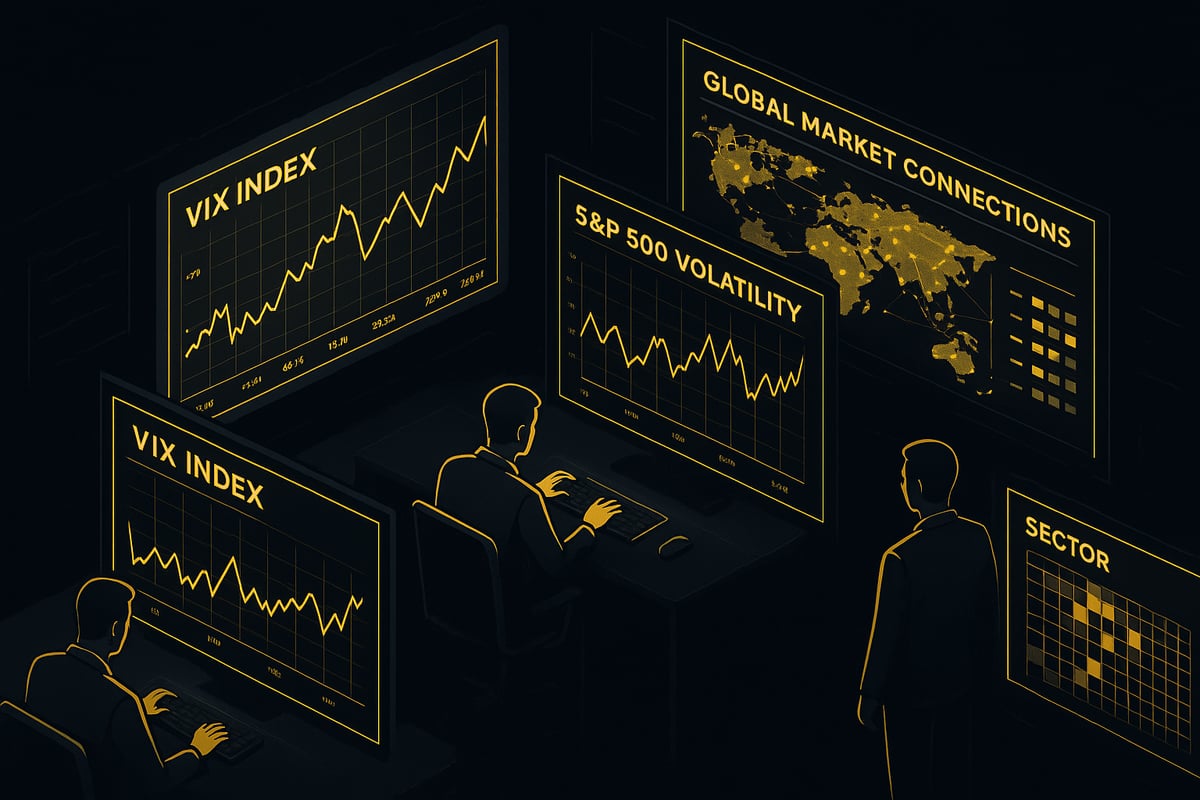
Vix indexes are renowned for signaling shifts in market sentiment before major moves occur. Historically, spikes in the VIX have closely preceded significant S&P 500 drawdowns, acting as a reliable early warning system for market corrections.
For instance, a dramatic surge in the VIX was observed ahead of the 2022 rate hike sell-off, alerting traders to heightened risk. On average, S&P 500 returns tend to turn negative following VIX moves above 30, underscoring the predictive value of these indexes.
To deepen your understanding, explore how S&P 500 futures and volatility interact with vix indexes to anticipate market swings and refine risk management strategies.
Staying alert to these signals helps investors respond proactively rather than reactively.
Historical VIX Trends and What’s Changing
Comparing vix indexes averages from the pre-pandemic era (2010-2019) to post-pandemic years (2020-2025) reveals a notable increase in market volatility. Volatility clusters, such as those seen in 2008, 2020, and 2022, highlight periods when market uncertainty surged.
A review of annual VIX highs and lows from 2010 to 2025 shows a clear trend: high-volatility episodes are occurring more frequently. This pattern suggests that investors must remain vigilant and adapt their strategies as the volatility landscape evolves.
Insights from these trends are invaluable for preparing for the potential turbulence forecasted for 2026.
VIX and Volatility Products: ETFs, ETNs, and Futures
The growth of VIX-linked products, including ETFs like VXX, UVXY, and SVXY, as well as VIX futures, has expanded access to volatility trading. These products provide exposure to vix indexes but come with unique risks such as contango, daily decay, and leverage effects.
For example, VXX performed strongly during the volatility spikes of 2020 and 2022, attracting significant asset flows. However, investors must be cautious, as these products can diverge from the spot VIX due to structural factors.
Understanding these dynamics is crucial for anyone looking to use vix indexes for hedging or speculative purposes, especially in volatile markets.
VIX and Sector/Asset Class Correlations
Movements in vix indexes impact a wide range of asset classes and sectors. During high VIX regimes, equities often experience declines, while safe-haven assets like gold and Treasury bonds tend to outperform.
Sector rotation is a common response, with defensive sectors such as utilities and consumer staples showing resilience compared to cyclical sectors. Recent data from 2024 to 2025 demonstrates strong negative correlations between the VIX and equity sectors, reinforcing the value of monitoring vix indexes.
These correlations enable investors to adjust allocations and manage risk efficiently during periods of heightened uncertainty.
VIX in Global Context: International Volatility Indexes
Vix indexes serve as a global barometer, influencing and being influenced by international volatility measures like VSTOXX (Europe) and VXJ (Japan). Cross-market volatility transmission is evident when VIX leads surges in other regions during global sell-offs.
For example, during several crises between 2023 and 2025, spikes in the VIX were quickly mirrored by international counterparts. This interconnectedness highlights the importance of tracking both domestic and global volatility indexes.
By understanding these relationships, investors can better anticipate global market movements and construct more resilient portfolios.
VIX in 2026: Analyst Forecasts and Market Expectations
As 2026 approaches, analysts from major institutions project that vix indexes will remain elevated compared to historical norms. Key volatility drivers include geopolitical risks, inflation uncertainty, and evolving market structures.
JPMorgan, Goldman Sachs, and CBOE anticipate average VIX levels above pre-pandemic averages, suggesting persistent market unease. For portfolio managers, these expectations underscore the need for robust risk management and adaptive strategies.
Monitoring vix indexes will be vital for navigating the unpredictable environment forecasted in the year ahead.
Trading and Investing Strategies Using VIX Indexes
Navigating market volatility requires more than intuition. It demands a disciplined approach to interpreting signals, managing risk, and adapting to fast-changing conditions. With vix indexes at the core, traders and investors can design strategies that withstand uncertainty and exploit opportunity. The following strategies offer a comprehensive playbook for 2026.
Interpreting VIX Levels: What Constitutes High, Low, and Normal?
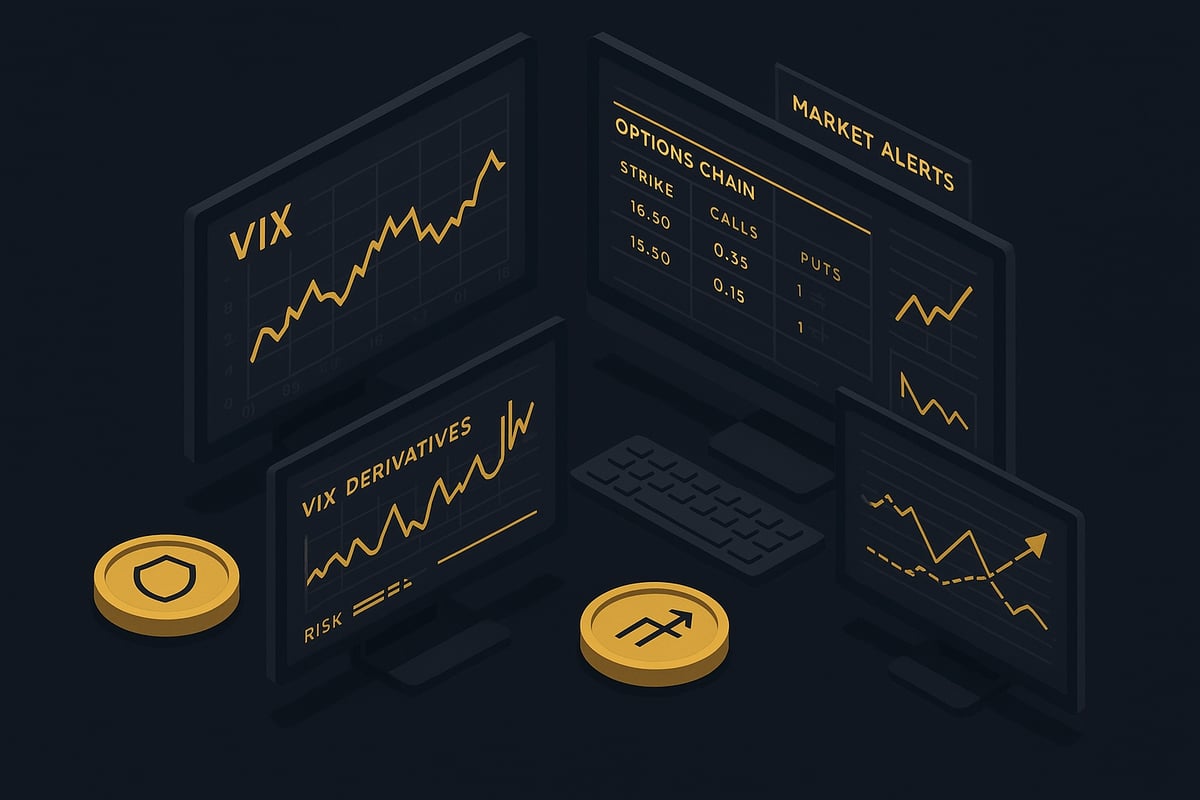
Understanding how to read vix indexes is vital for effective decision-making. Historically, VIX readings below 15 indicate a calm market, while levels between 15 and 20 are considered neutral. When the VIX moves above 20, volatility expectations rise, signaling caution.
During periods of extreme stress, such as the 2008 crisis or the COVID-19 shock, vix indexes have surged above 40. These spikes often coincide with market bottoms, as panicked selling reaches its peak.
After such surges, the probability of positive S&P 500 returns typically increases, offering opportunity for contrarian strategies. By monitoring whether vix indexes are low, average, or high, investors can better gauge sentiment and potential market turning points.
Hedging Portfolios with VIX Derivatives
Hedging is a cornerstone of risk management, and vix indexes offer unique tools for portfolio protection. VIX futures and options allow investors to guard against sudden market downturns. While these instruments can be effective, their complexity requires careful consideration of costs, timing, and decay risks.
For example, in 2022, many hedge funds used VIX call options to offset losses during sharp equity declines. Setting up a hedge involves selecting the appropriate contract, sizing the position, and monitoring it as market conditions evolve. For detailed approaches to these techniques, review VIX Options Trading Strategies, which covers practical methods and key risks.
Remember, while vix indexes-based hedges can reduce portfolio drawdowns, they are not foolproof. Assessing the cost-benefit tradeoff is essential for long-term success.
Short-Term Trading: Capitalizing on VIX Spikes
Short-term traders often turn to vix indexes for fast-moving opportunities. During news-driven events like CPI releases or central bank meetings, products such as VIX ETFs and ETNs can experience rapid price swings.
Day traders may use VIX9D for intraday volatility, scalping profits from sudden moves. For example, trading UVXY during earnings announcements or macroeconomic surprises can yield significant returns, provided strict risk controls are in place.
Successful short-term strategies rely on:
- Real-time monitoring of vix indexes
- Predefined entry and exit rules
- Tight stop-loss orders to limit downside
By focusing on discipline and agility, traders can harness volatility without exposing themselves to excessive risk.
Volatility Premium Harvesting: Selling Volatility
Selling volatility is a strategy that seeks to capture the premium embedded in vix indexes options. Methods include selling VIX calls or puts, writing covered calls, or constructing iron condors. These approaches work best when volatility is elevated but expected to normalize over time.
For instance, during 2021-2025, selling volatility after vix indexes spikes often generated steady income as markets reverted to the mean. However, timing is critical. Selling too early in a rising volatility regime can lead to losses.
Key considerations for harvesting the volatility premium:
- Identify periods of elevated vix indexes
- Confirm signs of stabilization before selling
- Use defined-risk strategies to manage potential spikes
Historical data shows that disciplined sellers can outperform in choppy, range-bound markets.
Multi-Asset Allocation: Using VIX for Tactical Shifts
Vix indexes are powerful signals for adjusting asset allocation. When VIX readings climb, institutional investors may increase exposure to safe havens like cash or gold, while trimming equity positions.
A tactical overlay based on vix indexes can help capture upside during calm periods and protect portfolios during turbulence. For example, during sustained high volatility, shifting a portion of assets to bonds or defensive sectors can reduce drawdowns.
Consider this sample allocation adjustment:
| VIX Level | Equity % | Bond % | Gold % | Cash % |
|---|---|---|---|---|
| <15 | 70 | 20 | 5 | 5 |
| 15–20 | 60 | 25 | 10 | 5 |
| >20 | 50 | 30 | 10 | 10 |
By integrating vix indexes into allocation models, investors can improve portfolio resilience through diverse market cycles.
Common Pitfalls and Mistakes When Trading VIX
Trading vix indexes products is not without hazards. Many retail traders underestimate the nuances of VIX-linked ETFs and ETNs, particularly issues like contango, decay, and leverage.
Common mistakes include:
- Misunderstanding how vix indexes products track volatility
- Overexposure to leveraged instruments
- Poor timing of entries and exits
For example, in 2021-2022, many traders suffered losses in leveraged VIX ETFs due to persistent contango and rapid value erosion. To avoid these pitfalls, take time to understand product mechanics, use moderate position sizes, and always have a risk management plan in place.
Mastering vix indexes strategies means learning from both successes and setbacks. By staying informed and disciplined, investors can navigate the volatility landscape with greater confidence.
Advanced VIX Analysis Techniques for 2026
Navigating the complexities of vix indexes in 2026 demands advanced analytical techniques. With evolving market dynamics, investors benefit from a deeper understanding of volatility surfaces, term structures, ratios, and the integration of macroeconomic and quantitative models. Let us explore the key methods that will shape volatility analysis in the coming year.
Volatility Surface and Skew: Beyond the Headline VIX
The volatility surface is a three-dimensional plot showing implied volatility across various strike prices and expirations. For vix indexes, this surface offers crucial insights into market sentiment. Skew, which measures the difference in implied volatility between out-of-the-money puts and calls, often signals stress or complacency.
For example, before major corrections, the skew tends to steepen, reflecting rising demand for downside protection. Between 2023 and 2025, data revealed significant skew shifts ahead of sharp S&P 500 declines. Monitoring the volatility surface helps traders anticipate changes in risk appetite and adjust strategies accordingly.
VIX Term Structure: Reading the Curve
The term structure of vix indexes reflects how expected volatility changes over different time horizons. When the curve is in contango, longer-dated contracts price higher volatility than near-term ones. Backwardation, in contrast, signals elevated immediate risk.
During crisis periods, such as March 2020, the term structure flipped rapidly. Traders analyze these shifts for actionable signals. For real-time analysis, the VIX Term Structure Data provides a live snapshot of the curve, allowing professionals to gauge market expectations with precision. Understanding the term structure is vital for timing entries and exits in volatility-related trades.
VIX/VXV Ratio and Other Key Indicators
The VIX/VXV ratio compares 30-day to 3-month implied volatility, offering a window into the short-term versus medium-term outlook within vix indexes. A spike in this ratio often precedes corrections, indicating rising near-term fear relative to the medium-term view.
For example, the VIX/VXV ratio surged before the 2022 market correction, highlighting its predictive strength. From 2021 to 2025, backtests showed that extreme readings in this ratio frequently aligned with market turning points. Monitoring ratios like VIX/VXV allows traders to spot shifts in sentiment early and adjust their risk exposure.
Integrating VIX with Macro and Quantitative Models
Modern investors integrate vix indexes into multi-factor quantitative models, combining volatility data with macro indicators such as interest rates, inflation, and liquidity measures. This holistic approach can reveal deeper market trends and enhance risk management.
For instance, quant hedge funds in 2024 used VIX triggers alongside economic data to dynamically adjust portfolio exposure. Backtesting results confirmed that incorporating vix indexes into models improved drawdown protection and return consistency. Combining volatility metrics with macro factors enables robust, adaptive strategies for 2026.
Real-Time VIX Analytics: Tools and Platforms for 2026
Access to advanced analytics is crucial for leveraging vix indexes effectively. Platforms like Bloomberg, TradingView, and CBOE LiveVol offer real-time charting, custom scripting, and multi-index overlays. AI-driven volatility forecasting tools are gaining traction, further enhancing decision-making.
For technical analysis, resources like Technical indicators for traders can complement VIX-based strategies, offering additional context for market signals. In 2025, adoption rates for such platforms surged, reflecting the demand for precision and speed in interpreting volatility data. These tools empower traders to stay ahead of the curve.
Case Studies: Successful VIX-Based Strategies in Recent Years
Several case studies highlight the practical impact of advanced vix indexes analysis. In 2022 and 2023, hedge funds profited by positioning ahead of VIX spikes, while retail traders found success swing trading VIX ETFs during Federal Reserve cycles.
Institutional investors, such as pension funds, utilized VIX1Y to align liability management with shifting volatility regimes. These examples underscore the value of combining technical, macro, and real-time analytics. The lessons learned provide a blueprint for best practices and resilience in 2026’s unpredictable environment.
VIX Indexes and the Future of Volatility Trading in 2026
The landscape for vix indexes is evolving at a rapid pace. As we look toward 2026, traders and investors are adapting to new tools, products, and strategies driven by technology, regulation, and global market shifts. Understanding these changes is essential for anyone aiming to stay competitive in the volatility space.
Structural Changes in Volatility Markets
Since 2020, trading activity in vix indexes and related products has surged. The rise of algorithmic and AI-driven strategies has fundamentally changed how volatility is measured and traded. This structural shift is evident in the explosive growth of zero-day options (0DTE), which allow market participants to hedge or speculate on intraday moves.
CBOE data shows that volume in vix indexes and volatility-linked products climbed significantly from 2022 to 2025. Traders now have access to a broader toolkit, including VIX futures, options, and ETFs, which has democratized volatility trading for both institutional and retail participants.
A key driver behind this transformation is the integration of real-time analytics and automation. For example, 0DTE options have amplified intraday volatility, leading to sharper, more frequent moves in vix indexes. These changes highlight the need for robust, adaptive strategies in an increasingly complex market environment.
Regulatory Developments and Their Impact
Regulatory agencies like the SEC and CFTC have responded to the rapid expansion of vix indexes products with new rules and oversight. These measures are designed to protect investors and maintain orderly markets, especially during periods of heightened volatility.
Recent years have seen the introduction of circuit breakers and position limits for VIX-linked ETFs and ETNs. Such safeguards were activated during the volatility surges of 2020 and 2023, helping to contain systemic risk. Regulators are also focusing on product disclosures, ensuring that traders understand the unique risks associated with vix indexes, such as contango and decay.
For 2026, market participants should anticipate further refinements to these regulations. Enhanced transparency and compliance requirements will likely shape how vix indexes products are structured and traded, reinforcing the need for ongoing education and risk management.
The Role of AI and Machine Learning in VIX Analysis
Artificial intelligence and machine learning are revolutionizing the analysis of vix indexes. Sophisticated algorithms can now detect subtle patterns and predict volatility spikes with greater accuracy than ever before. These advancements enable traders to act preemptively, optimizing their strategies for changing market conditions.
Machine learning models have shown marked improvements in forecasting vix indexes movements between 2023 and 2025. By integrating macroeconomic data, order flow, and sentiment indicators, AI-powered tools provide a holistic view of volatility risk. For those interested in the cutting edge, the Tail-Safe Stochastic-Control SPX-VIX Hedging research paper explores how AI sensitivities can enhance SPX-VIX hedging in complex environments.
As we approach 2026, expect AI-driven analytics to become standard among professional traders. These tools not only improve decision-making but also help manage the risks inherent in vix indexes strategies.
Market Structure Innovations: 0DTE Options and Volatility
The introduction of zero-day-to-expiry (0DTE) options has been a game changer for vix indexes and volatility trading. These contracts, which expire within a single trading day, offer unparalleled flexibility for managing risk and capturing short-term opportunities.
In 2025, the share of 0DTE options in total U.S. options volume reached record highs. On key event days like FOMC meetings, 0DTE-driven vix indexes surges became commonplace, reflecting traders’ appetite for immediate exposure to volatility. This innovation has increased intraday swings, making markets more dynamic but also more unpredictable.
For traders, mastering the nuances of 0DTE options is crucial. These instruments can enhance tactical strategies but require precise timing and risk controls, given their sensitivity to market news and order flow.
Globalization of Volatility Trading
The globalization of volatility trading has extended the reach of vix indexes far beyond U.S. borders. New VIX-style products have launched across Asia, Europe, and emerging markets, allowing investors to manage risk around the clock.
Cross-listing and the rise of 24/7 trading platforms have fueled this expansion. In recent years, exchanges in India and China have debuted their own volatility indexes, contributing to a surge in international product assets under management from 2023 to 2025. This global network enables traders to respond to regional events and correlations, making vix indexes a critical tool for managing worldwide portfolio risk.
As global financial markets become more interconnected, understanding the interplay between regional volatility indexes and U.S. vix indexes will be essential for informed decision-making.
Strategic Outlook: Navigating Volatility in 2026 and Beyond
Looking ahead, several key drivers will shape the trajectory of vix indexes. Political elections, persistent inflation, and ongoing technological disruption are set to influence volatility regimes throughout 2026. Scenario analysis suggests that both high and low volatility environments are possible, depending on macroeconomic and policy developments.
Investors and portfolio managers should focus on building resilient strategies that can adapt to shifting vix indexes conditions. This may include dynamic asset allocation, tactical overlays, and diversified hedging approaches. The integration of AI, real-time data, and cross-market analytics will provide a competitive edge.
As volatility cycles evolve, staying agile and well-informed will be the hallmark of successful vix indexes trading. By anticipating regime shifts and aligning portfolios accordingly, market participants can enhance returns while managing risk.
Expert Tips for Staying Ahead of Volatility Trends
To excel in the future of vix indexes trading, continuous learning and strategic flexibility are paramount. Here are actionable tips for staying ahead:
- Regularly review educational resources and market research.
- Adapt trading strategies to incorporate new products, such as 0DTE options and global volatility indexes.
- Leverage advanced analytics and real-time data platforms to monitor vix indexes trends.
- Maintain a robust volatility playbook to guide decisions during uncertainty.
For a deeper dive into practical applications, explore Index trading strategies explained, which outlines how vix indexes fit into broader market strategies. By combining education, technology, and disciplined execution, traders and investors can navigate the evolving volatility landscape with confidence.
As you’ve seen, understanding the VIX and its evolving indexes is essential for navigating the unpredictable markets of 2026. Gaining clarity on volatility trends can make all the difference between second guessing your trades and acting with confidence. Imagine having instant insights into market direction, filtered signals, and the conviction to know exactly when to enter or exit. If you’re ready to put these strategies into practice and stop missing trading opportunities, let’s take the next step together. Start Catching Winning Trades, Right Now!