Forex Lot Size Explained: From Units to Risk
On this page
Why Lot Size Is Your Real Risk Control
Two traders take the identical setup. Same pair, same entry, same stop-loss.
One loses $8. The other loses $780.
Nothing about the analysis differed. Only the lot size did.
That gap is the whole point.
Lot size is not a glossary entry you memorise once and forget. It is the single variable that converts an idea on a chart into an actual dollar figure at risk in your account.
Most explanations of forex lot size stop at three numbers: 100,000, 10,000, 1,000.
Useful, but incomplete.
They never connect those units to your stop-loss distance, your account currency, or the specific currency pair you happen to be trading.
And that connection is where real money is won or lost.
This guide teaches a workflow instead of a definition.
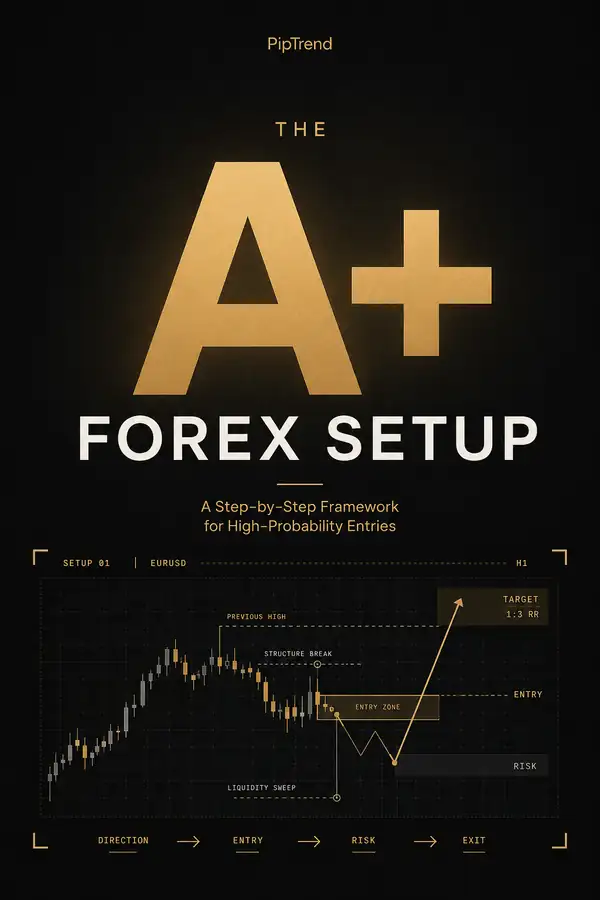
Setup, then stop-loss, then pip value, then risk amount, then lot size. In that order, every single time.
The chart tells you where to place the stop. The stop tells you what lot size you can afford. Never the other way round.
One more thing worth understanding early: a technically identical setup can demand very different trade volume depending on which pair you trade and which currency funds your account.
A 30-pip stop on EUR/USD and a 30-pip stop on GBP/JPY do not carry the same risk per lot.
Not even close.
Lot Sizes Explained: Units at a Glance
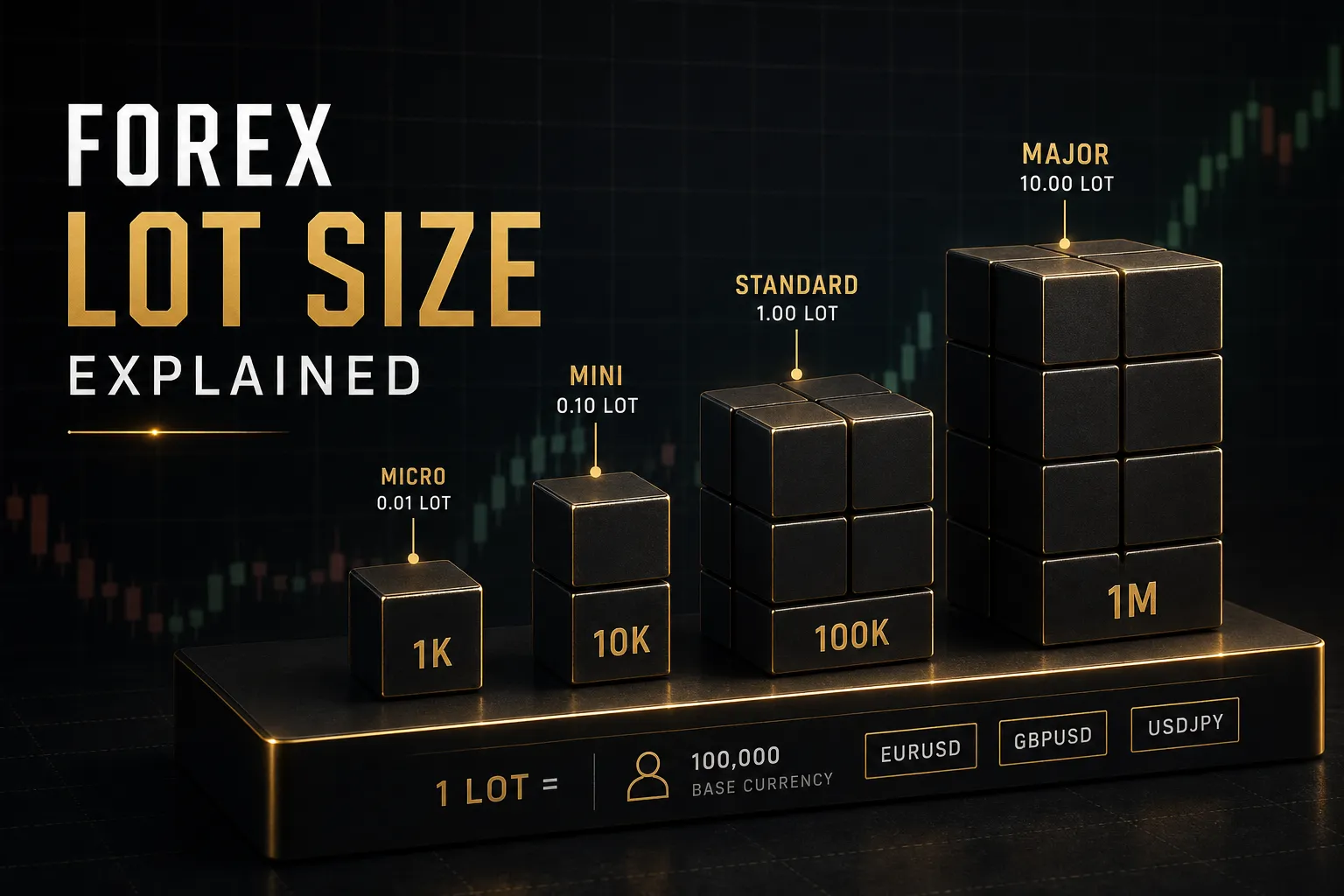
A lot is the number of currency units your trade controls.
Nothing more.
It is not your account balance, and it is not the margin your broker sets aside to hold the position open.
When you buy 1 standard lot of EUR/USD, you are controlling 100,000 euros. The euro here is the base currency, the US dollar is the quote currency, and the lot always measures units of the base.
Brokers rarely label positions as “mini” or “micro” on the order ticket. They show a decimal number in the volume field, where 1.00 means one standard lot. So 0.10 is a mini lot and 0.01 is a micro lot.
That decimal convention is what you will see in MT4 and MT5 volume settings, and it trips up more beginners than any other part of the platform.
| Lot type | Units of base currency | Platform volume display | Approx. pip value (EUR/USD, USD account) | Loss on a 25-pip stop |
|---|---|---|---|---|
| Standard lot | 100,000 | 1.00 | $10.00 per pip | $250.00 |
| Mini lot | 10,000 | 0.10 | $1.00 per pip | $25.00 |
| Micro lot | 1,000 | 0.01 | $0.10 per pip | $2.50 |
| Nano lot | 100 | 0.001 (broker dependent) | $0.01 per pip | $0.25 |
Those pip values are a convention, not a law of physics.
The tidy $10 / $1 / $0.10 ladder holds when the quote currency is the same as your account currency, which is why every textbook uses EUR/USD with a dollar account as the example.
Change one variable and the ladder bends.
Trade USD/CAD from a USD account and the pip value floats with the exchange rate. Trade EUR/USD from a euro account and it floats too. Trade any JPY pair and the pip itself sits in a different decimal place.
Also check your broker minimum lot increment before you plan anything. Most retail brokers accept 0.01 as the smallest step. Some cent accounts and nano brokers go down to 0.001, and a handful of institutional-style accounts will not let you trade below 0.10.
That floor sets a hard limit on how small your risk can go.
Pip Value, Margin, and Exposure Untangled
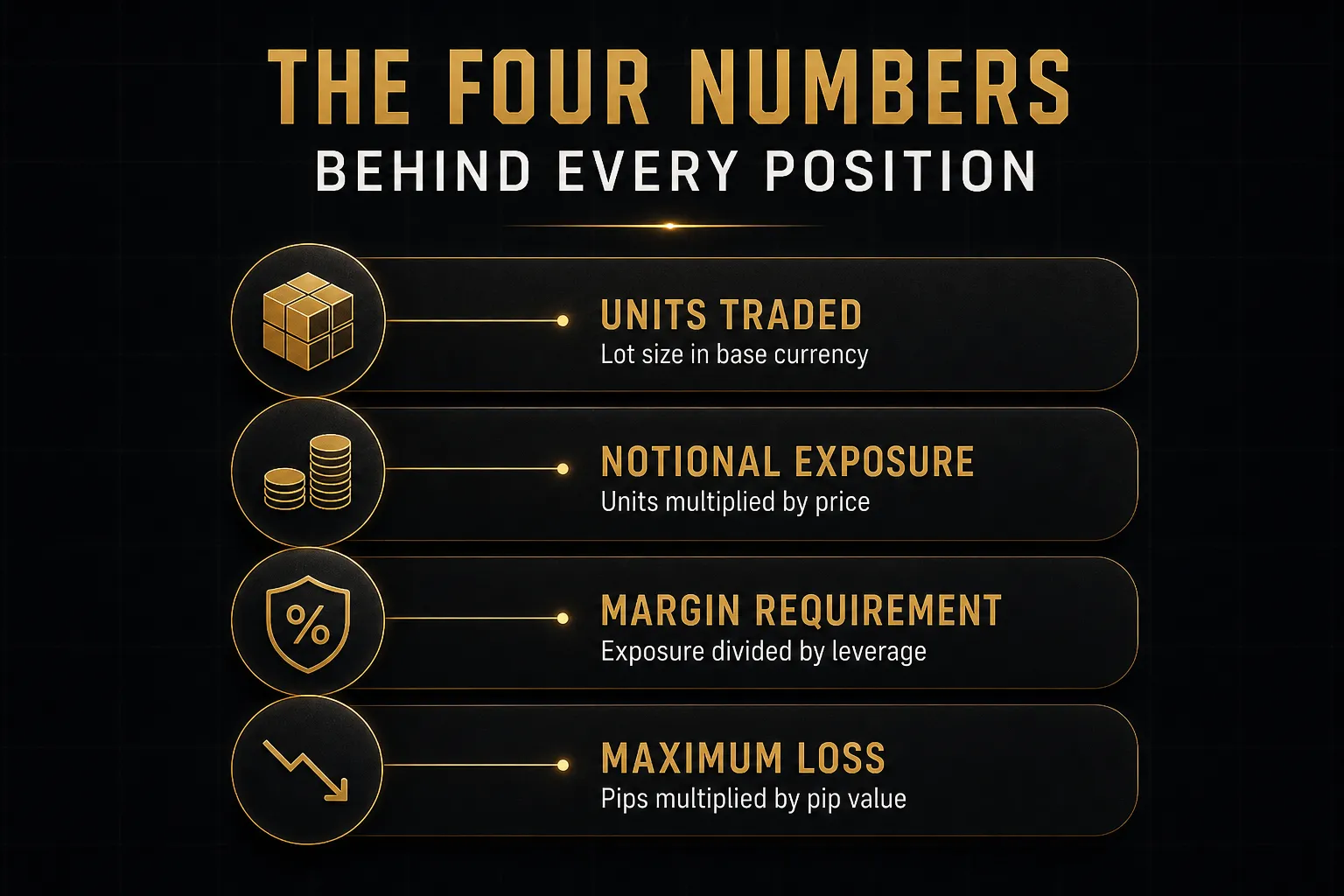
Four numbers describe every forex position, and traders routinely mash them into one. Separating them is the fastest upgrade you can make to your position sizing.
Units traded is your lot size: 0.50 lots means 50,000 units of the base currency. Notional exposure is those units multiplied by price, so 50,000 euros at 1.0850 is roughly $54,250 of market exposure.
Margin requirement is exposure divided by forex leverage, so at 1:30 that same position ties up about $1,808 of your balance. And maximum loss is lot size multiplied by stop distance in pips multiplied by pip value.
Only the fourth number is your risk.
The first three describe the mechanics.
Here is the part that surprises people.
Raising leverage from 1:30 to 1:200 does not make a fixed-risk trade any more dangerous. If your lot size and stop-loss stay identical, your maximum loss is identical. All that changed is how much cash the broker parks as collateral.
Leverage is dangerous indirectly.
It removes the natural ceiling on how large a position you can open, which tempts traders into sizes their stop-loss cannot survive.
The leverage does not hurt you.
The oversized lot does.
JPY Pairs and Pipettes
A pip is the fourth decimal place on most pairs (0.0001) and the second decimal place on JPY pairs (0.01). That difference alone accounts for a huge share of miscalculated position sizes.
Then there is the pipette.
Most modern platforms quote five decimals on standard pairs and three on JPY pairs, adding a fractional tenth-of-a-pip digit. EUR/USD showing 1.08524 means 1.0852 and 4 pipettes.
Read that quote as 1.08524 pips wide and your maths comes out ten times off.
Before you size anything, confirm whether your platform’s distance readout is in pips or points. In MT4 and MT5, the “points” figure on a 5-digit broker is ten times the pip count.
When Your Account Isn’t in USD
Pip value is always expressed in the quote currency first, then converted into your account currency at the current rate. That conversion is the step most traders skip.
Take EUR/USD with a euro-denominated account.
One standard lot still moves $10 per pip, but you hold euros, so your real pip value is $10 divided by the EUR/USD rate. At 1.0850, that is about €9.22 per pip.
The number drifts as the rate moves.
A GBP account trading AUD/USD, or a USD account trading EUR/GBP, both require a two-step conversion. If you use a risk management calculator, make sure it asks for your account currency.
If it does not, it is guessing.
Lot Size vs Margin vs Risk
Traders often say “I risked $500 on that trade” when they mean $500 of margin was tied up.
Those are different sentences.
Margin is a deposit.
You get it back when the position closes, minus whatever the market took. Risk is the amount the market can actually take before your stop triggers.
A 0.20 lot EUR/USD trade at 1:100 leverage requires roughly $217 in margin. With a 15-pip stop, its risk is $30.
Same trade, two numbers, and only one of them belongs in your risk per trade calculation.
Confuse them and you will either over-trade or freeze up at the wrong moment.
Calculating Position Size From a Stop-Loss
The formula itself is one line.
The discipline is in the order of operations, because reversing steps one and two is how accounts die.
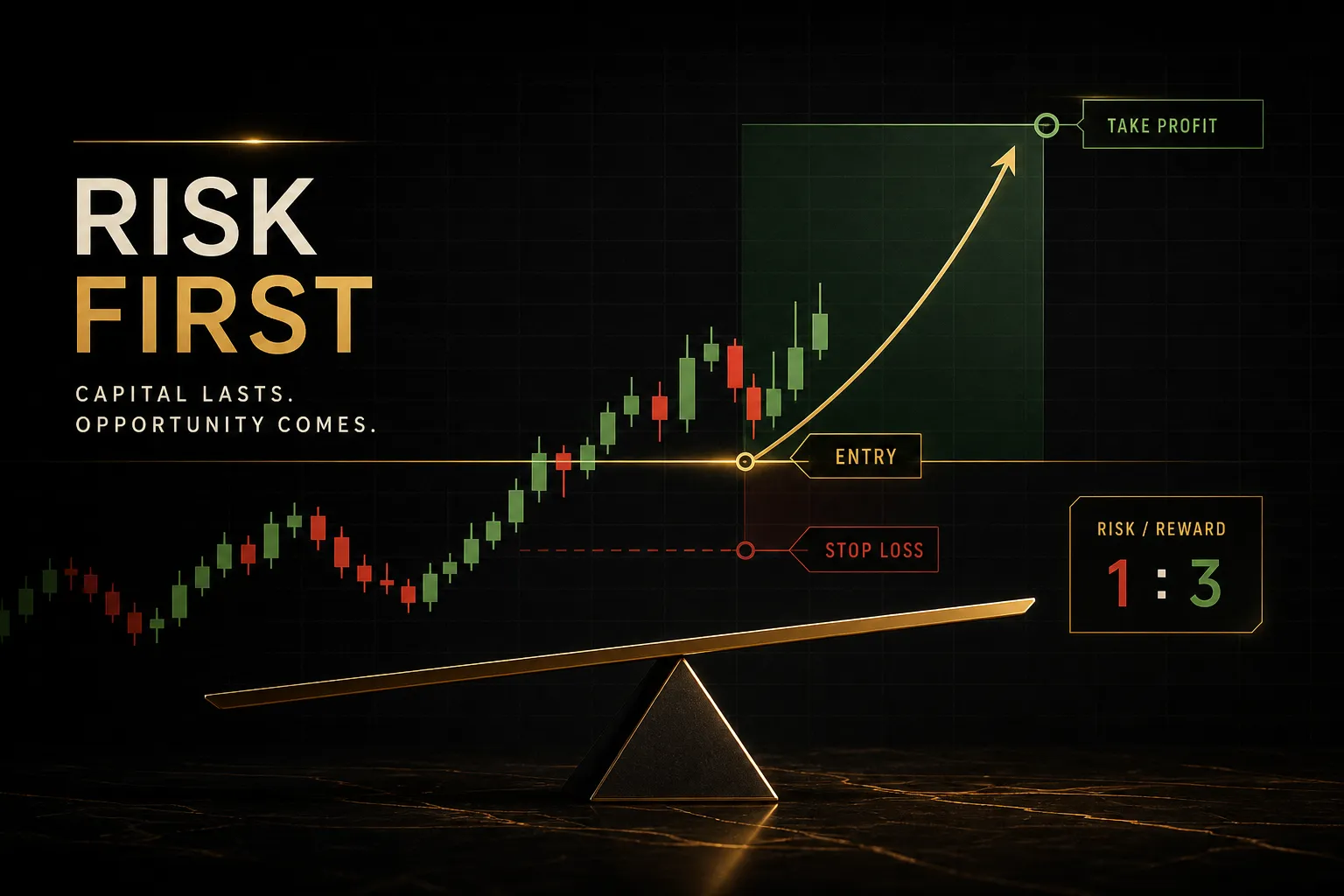
- Fix your risk amount in account currency first. Decide what a single loss costs you before you look at any lot field. Most professional guidance sits at 1% to 2% of balance per trade, which keeps a six-loss streak at a survivable maximum drawdown rather than a catastrophic one.
- Measure the stop-loss distance the chart justifies. Place the stop where your trade idea is proven wrong: beyond the swing low, past the structure break, outside the average true range. The stop distance comes from the market, never from how much you wish to risk.
- Calculate pip value for that specific pair and account currency. Work out what one pip is worth per standard lot in the quote currency, then convert into your account currency at the live rate. Do this per trade, not once per year, because the conversion rate moves.
- Solve for lot size. Lot size equals risk amount divided by (stop distance in pips multiplied by pip value per standard lot). The output is your volume figure in standard-lot terms, ready to type into the order ticket.
- Round down to the nearest supported increment and verify manually. If the maths says 0.0388 lots and your broker’s minimum increment is 0.01, you enter 0.03, never 0.04. Rounding up quietly breaks the risk budget you spent four steps building.
Now the full worked example.
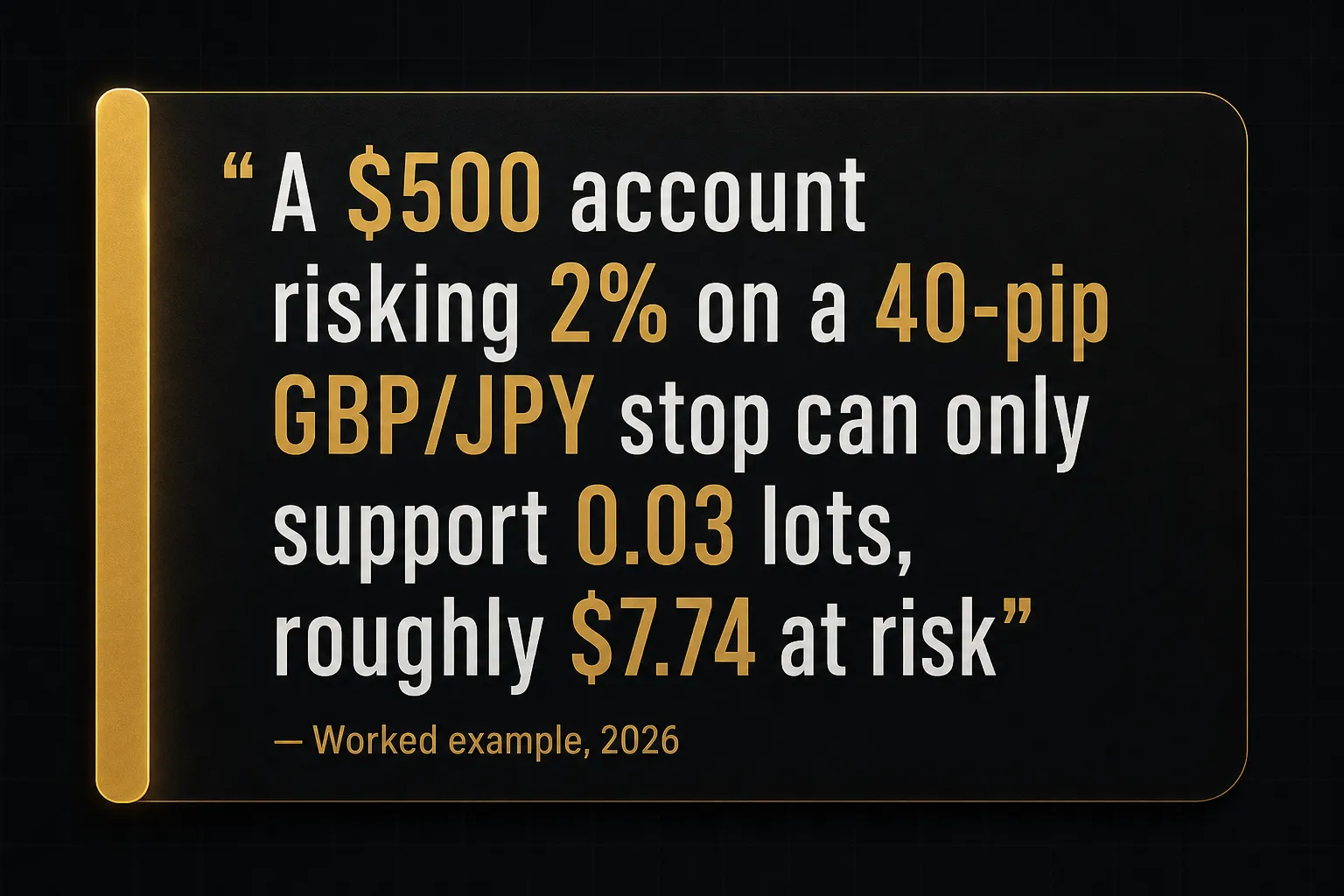
Account balance is $500, denominated in USD. Risk per trade is 2%, so the maximum loss is $10. The technical entry signal is a bullish break-and-retest on GBP/JPY, and structure puts the stop 40 pips below entry.
GBP/JPY is a yen pair, so one pip is 0.01. One standard lot is 100,000 GBP, so a single pip is worth 100,000 × 0.01 = 1,000 JPY.
With USD/JPY trading at 155.00, that converts to 1,000 ÷ 155 = $6.45 per pip per standard lot.
Plug it in: $10 ÷ (40 pips × $6.45) = $10 ÷ $258 = 0.0388 lots.
Round down to 0.03 lots, which is 3,000 GBP of exposure. Verify it: 0.03 × 40 × $6.45 = $7.74, or 1.55% of the account.
Under budget, exactly as intended.
Notice what happened at the rounding step.
Small accounts jump in coarse increments, so 0.0388 became 0.03 and the effective risk dropped by nearly half a percent. That is unavoidable, and it is always better than the alternative.
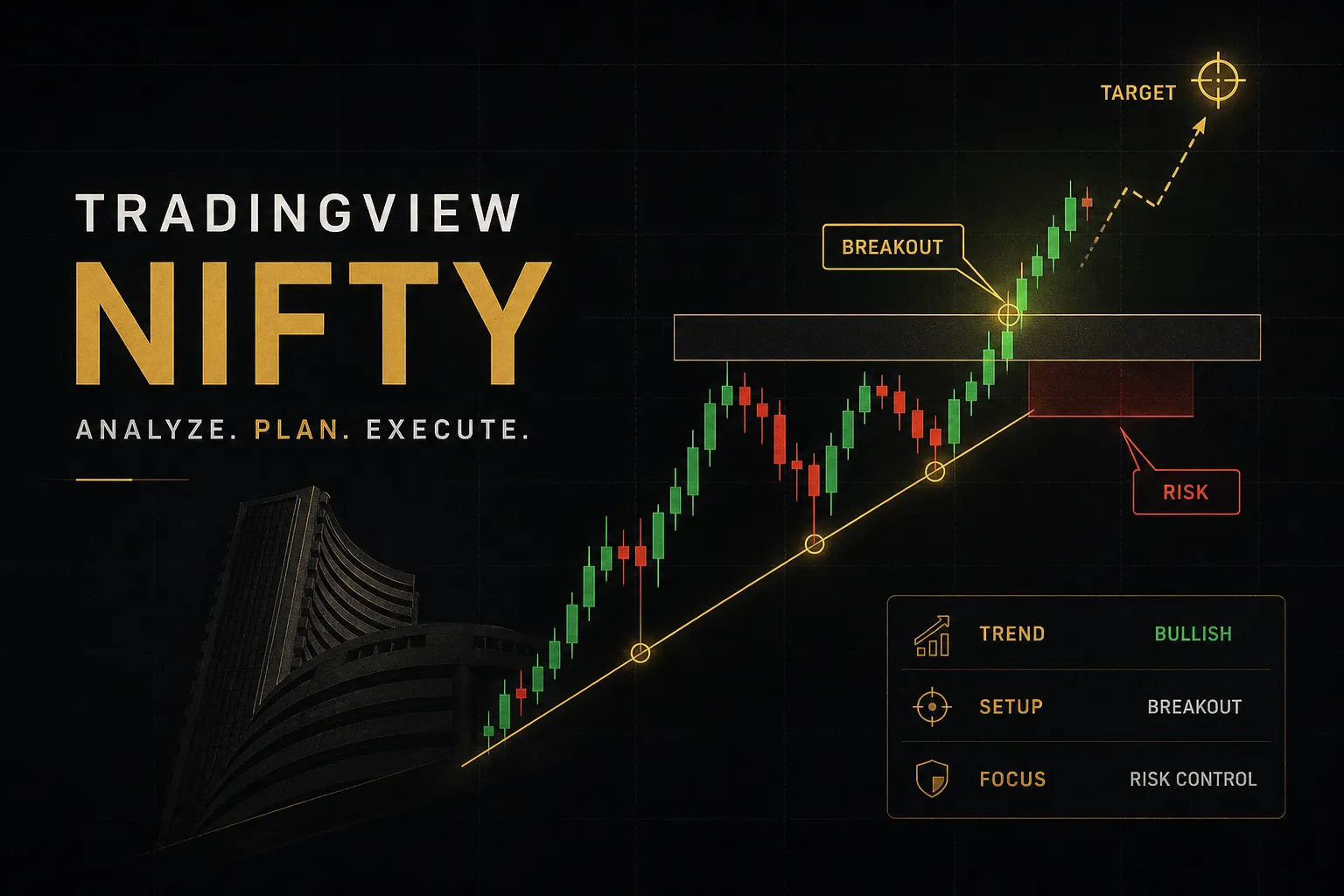
Whether you calculate this by hand, with a spreadsheet, or through TradingView position sizing tools that let you drag the stop and read the volume, the inputs never change.
Risk, distance, pip value.
Everything else is arithmetic.
Sizing Mistakes, Edge Cases, and Signal Discipline
Perfect position sizing on a single trade means very little if the surrounding context quietly multiplies your exposure. These are the failure modes that catch experienced traders, not just beginners.
- Correlated positions stack into one bigger trade. EUR/USD and GBP/USD have historically shown correlation coefficients above 0.80 for long stretches. Open 1% risk on each and you are not running two 1% trades, you are running something closer to a single 1.8% bet on dollar weakness. Track correlated currency exposure by theme, not by ticker, and cap total risk across a correlated cluster.
- Trading costs eat into your calculated risk. Your $10 planned loss becomes $11.40 once spread and commission costs are included, and worse if you hold overnight. Swap or overnight financing on a negative-carry position can add up over a multi-day swing trade, and a 3-pip spread on GBP/JPY is a meaningful slice of a 40-pip stop.
- Slippage breaks the assumption that stops fill where you placed them. Around central bank announcements, NFP releases, and the Sunday open, slippage of 5 to 20 pips is realistic on volatile crosses. Size assuming your stop might fill worse than planned, particularly if you trade news.
- Broker display conventions differ more than they should. The same 10,000-unit position may show as 0.10 on one platform, 1.00 on a mini-lot account, and a raw “10000” figure on another. Some cent accounts multiply everything by 100. Place one deliberately tiny test trade on any new account and check the resulting pip value against your own maths before you scale up.
- Non-forex instruments use entirely different contract sizes. Spot gold typically trades at 100 ounces per lot, meaning a $1 move is $100 per lot rather than anything pip-shaped. Index and crypto CFDs use their own tick values and contract size definitions. Copying your EUR/USD sizing habit onto XAU/USD is one of the fastest ways to blow up an otherwise healthy account.
- Conviction is not a sizing input. A textbook setup with three confluences and a beautiful risk-to-reward ratio still gets the same 1% risk as a marginal one. If your budget is fixed, the setup quality determines whether you take the trade, not how big it is.
Signals Show Direction, Sizing Shows How Much
A signal answers one question: which way, and where do I get out?
That is a directional judgement.
Position sizing answers a completely different one: given that this idea might be wrong, how much of my capital is exposed to being wrong?
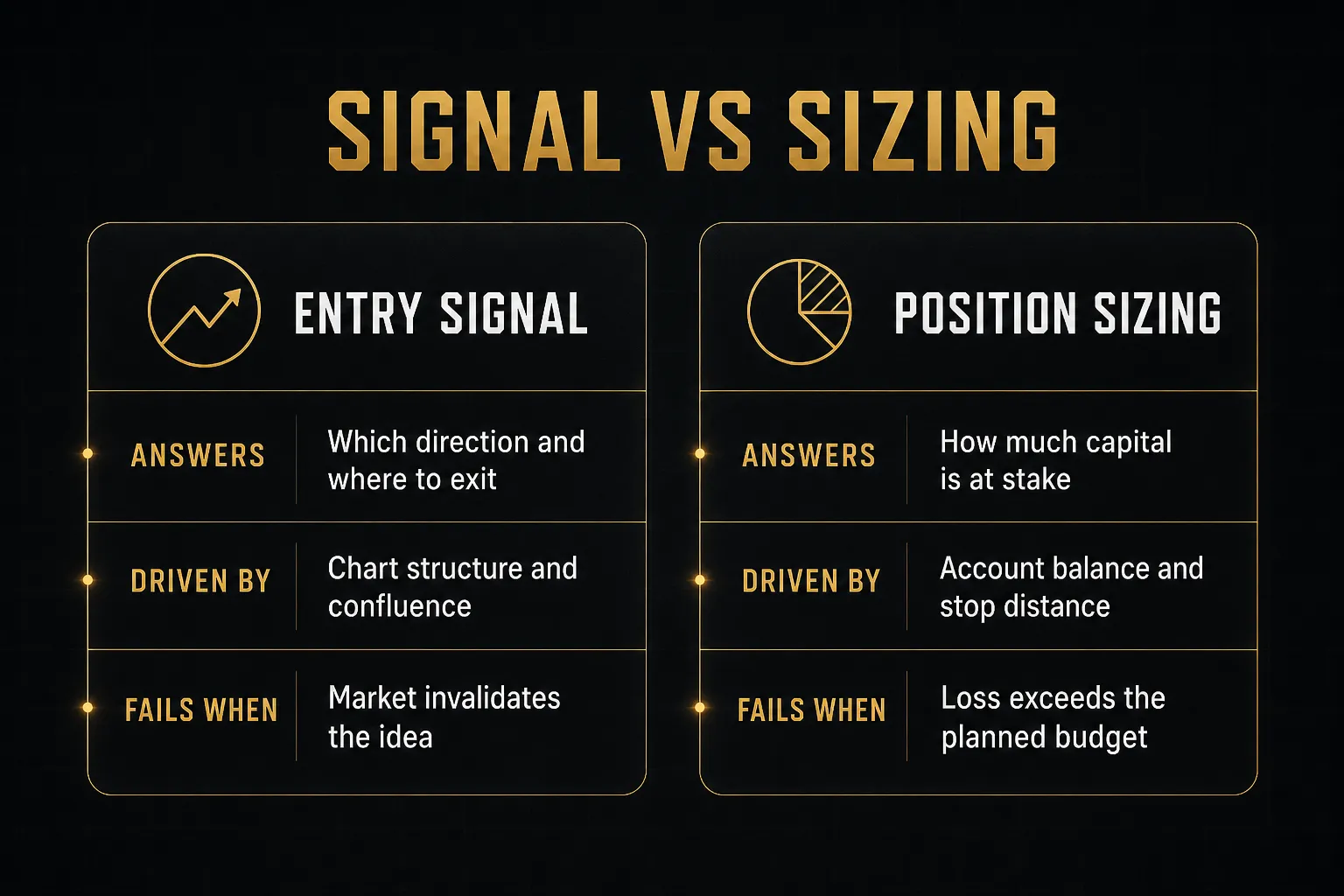
Blending the two is the classic path to a blown account. The trader who feels certain doubles the lot, wins, feels more certain, doubles again, and then meets the one loss that undoes eleven wins.
Keep them separate.
Let your analysis argue about direction all it wants. Let your sizing formula stay boring and unmoved.
Forex Lot Size FAQ
What does 0.01 lot size mean in forex?
A 0.01 lot is one micro lot, equal to 1,000 units of the base currency. On EUR/USD with a USD account, each pip is worth roughly $0.10, so a 30-pip stop-loss risks about $3.
It is the smallest increment most retail brokers accept and the practical floor for anyone trading an account under $1,000.
How much money is 1 lot in forex?
One standard lot controls 100,000 units of the base currency, so 1 lot of EUR/USD at 1.0850 carries about $108,500 of notional exposure.
You do not need $108,500 to open it.
At 1:30 leverage the margin requirement is roughly $3,617, and at 1:100 it drops to about $1,085. Your actual risk depends entirely on the stop distance: 20 pips at $10 per pip is $200.
How much is 0.10 lot in forex?
A 0.10 lot is one mini lot, or 10,000 units of the base currency. On a dollar-quoted pair with a USD account, that works out to roughly $1 per pip.
So a 50-pip stop on 0.10 lots risks about $50. On a JPY cross like GBP/JPY at a USD/JPY rate of 155, pip value falls to around $0.65 per pip at that volume.
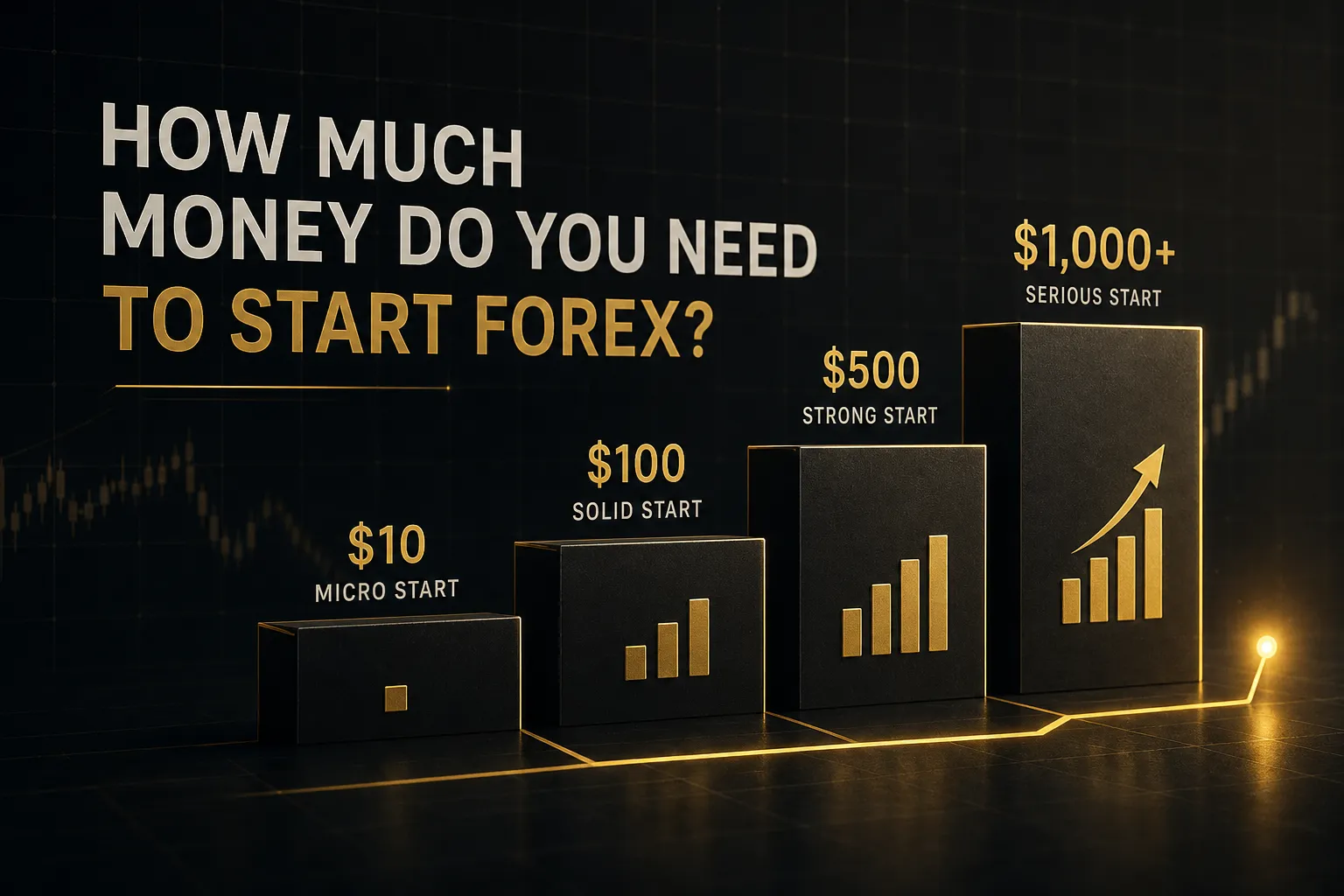
What is the best lot size for a $100 forex account?
0.01 lots, and often that is still too large.
Risking 2% of $100 gives you a $2 budget, which on EUR/USD at $0.10 per pip allows a stop of only 20 pips.
Many valid setups need wider stops than that. If your strategy demands 50-pip stops, a $100 account cannot size the trade correctly at a 0.01 minimum, and a nano-lot or cent account is the honest solution.
How do you calculate lot size in forex with a stop loss?
Divide your risk amount by the stop distance in pips multiplied by the pip value per standard lot. With $10 of risk, a 40-pip stop, and a $6.45 pip value, that gives 0.0388 lots.
Always round down to your broker’s minimum increment, so 0.0388 becomes 0.03. Then multiply back to verify: 0.03 × 40 × $6.45 = $7.74, comfortably inside budget.
Does a bigger lot size mean more risk in forex?
Yes, if the stop-loss distance stays the same. Doubling volume from 0.05 to 0.10 lots doubles the dollar loss at your stop, with no exception.
But bigger lots with tighter stops can carry identical risk to smaller lots with wider stops.
Risk is the product of volume and distance, which is why neither number means much on its own.
Size Every Trade Before You Take It
Here is the one instruction worth acting on today.
Before your next entry, run the five steps: fix the risk percentage, measure the stop from the chart, calculate pip value for that pair and account currency, divide, round down.
Not from habit.
Not from “0.10 feels about right.”
Not from your account balance alone.
From the actual stop-loss on the actual setup in front of you.
No signal service, indicator, or AI model removes that calculation.
They can improve your directional accuracy, which is genuinely valuable, but they cannot decide how much of your capital should be exposed when the analysis fails.
That decision belongs to you, and it happens before the trade, never during it.
Sizing is what keeps a good setup a survivable trade.
It is also the quietest skill in trading, because it never produces a story worth telling at the moment it works.
The traders still active in five years are rarely the ones with the best entries. They are the ones who never let a single position get large enough to matter more than the process.
That is the whole edge… and it is available to you on the very next trade.
Sources
Risk Disclaimer: Trading involves risk. Past performance doesn't guarantee future results. Only trade with money you can afford to lose. PipTrend is a tool to assist your trading decisions, not financial advice.