
The forex market is projected to surpass $8 trillion in daily volume by 2026, making it one of the fastest-growing and most dynamic trading arenas worldwide. With evolving technology and global economic shifts, opportunities for profit have never been greater.
To thrive in this environment, mastering effective forex trading strategies is essential. In 2026, increased volatility, the influence of AI, and unpredictable macro trends demand a smarter approach to every trade.
This article uncovers 7 proven forex trading strategies designed to help both new and experienced traders achieve consistent success. Ready to boost your edge and profits? Read on to discover actionable techniques and expert insights tailored for the modern forex market.
Understanding the 2026 Forex Market Landscape
The forex market in 2026 is evolving at an unprecedented pace. Traders are navigating a landscape shaped by rapid technological advances, major economic shifts, and new regulatory frameworks. To succeed, it is essential to understand not just the mechanics, but the forces driving change and the practical implications for forex trading strategies.

Key Trends and Developments Shaping Forex in 2026
Several transformative trends are reshaping forex trading strategies this year. Algorithmic and AI trading now account for over 70 percent of daily volume, making the market faster and more data-driven than ever. This shift has led to increased volatility, as geopolitical tensions and frequent economic policy updates spark rapid price movements.
Trading hours have expanded, thanks to global brokers offering innovative platforms. Retail traders are on the rise, empowered by advanced analytics and mobile tools. Central bank digital currencies (CBDCs) are also altering currency pair dynamics and liquidity. Regulatory changes, particularly around leverage and margin, are impacting how traders manage risk.
A recent example highlights these trends: following the 2025 ECB policy update, the USD/EUR pair saw a sharp volatility spike, testing even seasoned traders' adaptability. For a comprehensive breakdown of projected forex market volumes and liquidity shifts, review the 2026 Global Forex Markets Outlook.
Key trends include:
- Algorithmic and AI-driven trading dominance
- Greater volatility from global events
- Broader access through technological innovation
- The influence of CBDCs and regulatory adjustments
Each factor requires traders to rethink and refine their forex trading strategies to stay competitive.
Challenges and Opportunities for Traders
Navigating the 2026 forex market presents both significant challenges and unique opportunities. Unpredictable market swings and occasional flash crashes demand robust risk management and quick decision-making. Faster price movements and tighter spreads mean traders must adapt their forex trading strategies to capitalize on fleeting opportunities.
Today's traders have access to an array of new tools and data sources, from real-time news feeds to advanced volatility indicators. However, the sheer speed and complexity of the market require a disciplined approach to risk. Maintaining psychological resilience is crucial, as fear and greed can easily drive costly mistakes.
On the opportunity side, traders can:
- Capitalize on short-term trends with rapid execution
- Exploit market inefficiencies using AI analytics
- Diversify strategies across currency pairs and timeframes
Robust risk controls and a willingness to adapt are more important than ever. By leveraging technology and staying informed, traders can turn volatility into a strategic advantage and refine their forex trading strategies for consistent success.
Essential Principles for Forex Trading Success
Mastering the essential principles behind forex trading strategies is critical for navigating the complexities of the 2026 market. Whether you are a new or seasoned trader, these foundational elements will help you stay disciplined, informed, and adaptive in a landscape shaped by volatility and rapid innovation.
The Foundation: Risk Management and Discipline
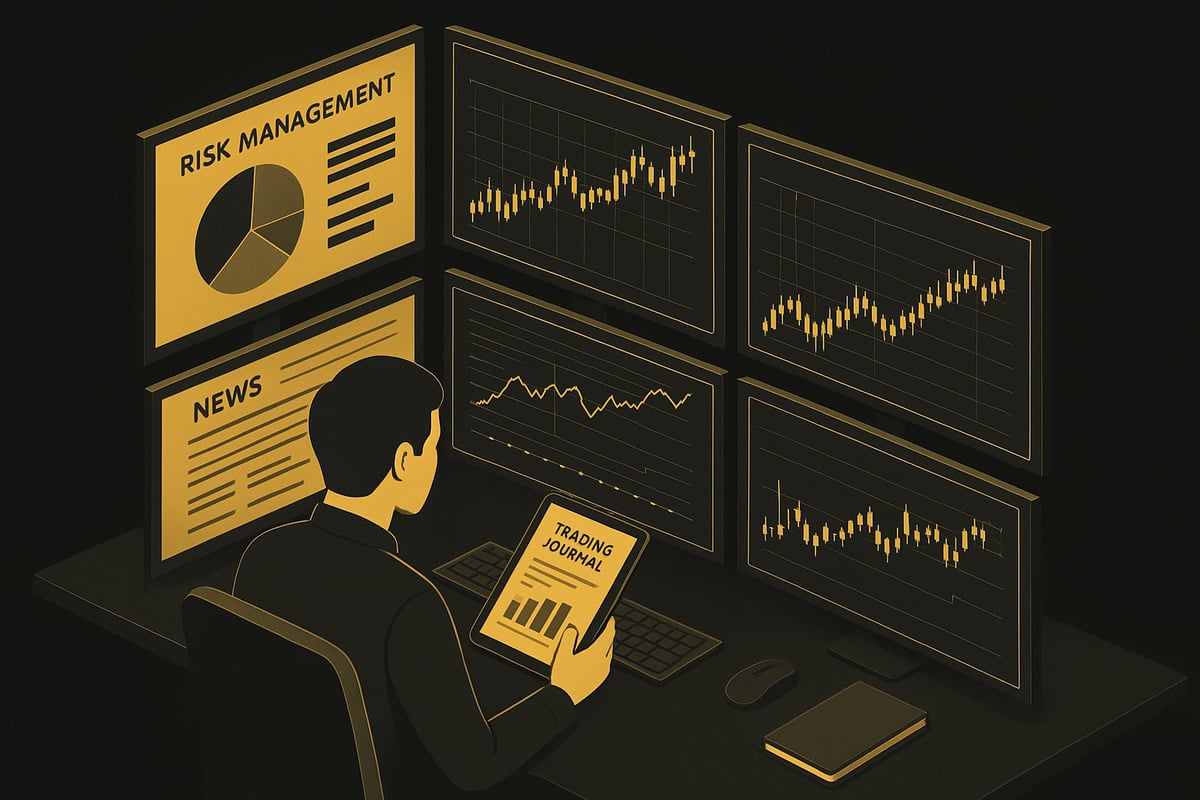
At the core of all successful forex trading strategies is robust risk management. Setting stop-loss and take-profit orders is not just best practice, it is a necessity in today’s unpredictable environment. Maintaining a risk/reward ratio of at least 1:2 ensures that even a few successful trades can outweigh losses.
Position sizing is equally vital. Adjust your trade sizes based on market volatility to avoid oversized risks. Psychological discipline is often the difference between consistent gains and sudden losses. Overcoming fear, greed, and FOMO requires a clear plan and the ability to stick to it, especially when the market moves quickly.
Consider the 2025 GBP flash crash, where traders with strict risk controls preserved capital, while others faced significant losses. For a deeper dive into these foundational principles and more, consult the Forex trading strategies guide for actionable frameworks.
Staying Ahead with Market Analysis
In 2026, a well-rounded approach to market analysis is non-negotiable. Successful forex trading strategies now require blending technical and fundamental analysis. Technical tools like moving averages, trendlines, and oscillators offer valuable signals, but they are most effective when combined with real-time news feeds and economic calendars.
Sentiment analysis has become increasingly important. Monitoring trader positioning and market mood can reveal hidden opportunities or risks. Volatility indicators help anticipate major swings, especially as AI-driven market behavior accelerates price movements. By staying informed and adapting your analysis techniques, you can respond confidently to evolving market dynamics.
Continuous Learning and Strategy Refinement
The forex landscape is continuously evolving, making ongoing learning essential for traders using forex trading strategies. Stay updated on your trading platform’s new features and available indicators. Regularly backtest your strategies with advanced simulation tools to measure their effectiveness in different conditions.
Participating in trading communities provides shared insights, support, and exposure to new ideas. Keep a detailed trading journal to track both successes and setbacks. Learning from every trade, whether a win or a loss, leads to long-term improvement and consistency. Make it a habit to refine your approach as the market shifts, ensuring your strategies remain effective in 2026’s dynamic environment.
7 Proven Forex Trading Strategies for Success in 2026
In 2026, the forex market is more dynamic than ever, with technological advancements and increased volatility reshaping trading landscapes. As traders strive for consistent results, the right forex trading strategies become the cornerstone of success.
This section unveils seven battle-tested approaches, each tailored to current market realities. Whether you are a beginner or a seasoned professional, these forex trading strategies offer actionable steps and practical insights to help you navigate the unpredictable waters of today's currency markets. Read on to discover how to adapt, thrive, and maximize your trading potential with proven techniques.
1. Trend Following Strategy
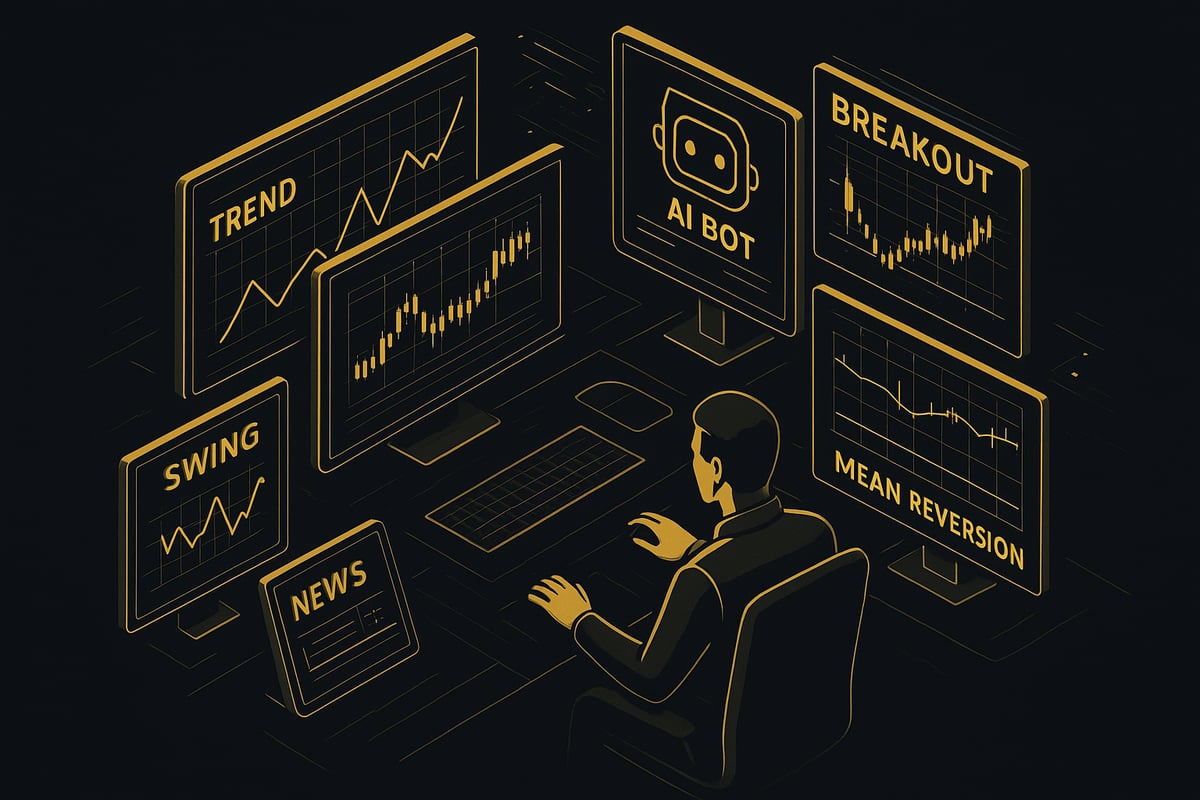
Trend following remains a staple among forex trading strategies, particularly in 2026's volatile environment. This approach involves identifying and riding the direction of dominant market trends, capitalizing on sustained price movement.
To implement trend following, traders often use moving averages, such as the 50 and 200 EMA crossover, to signal potential entry points. The Average Directional Index (ADX) helps confirm trend strength. Drawing trendlines on higher timeframes can further refine your analysis.
A practical example from Q1 2026 is the USD/JPY pair. Following a Bank of Japan policy shift, USD/JPY entered a pronounced uptrend. Traders applying the 50/200 EMA crossover captured a significant portion of this move, with ADX readings above 25 confirming momentum.
To avoid false signals, always check for whipsaws during periods of consolidation. Use technical indicators to filter out noise and set stop-loss orders below recent swing lows or above highs. The best forex trading strategies in this category combine discipline with objective indicators, ensuring you stay on the right side of the market.
2. Scalping with AI-Powered Indicators
Scalping has evolved dramatically with the rise of AI, making it a top choice among modern forex trading strategies. This method targets tiny price movements within seconds or minutes, aiming for frequent small gains rather than large profits per trade.
AI-powered indicators integrate machine learning to spot micro trends and ultra-short-term momentum shifts. Platforms like TradingView and MetaTrader 5, equipped with custom AI scripts, provide real-time signals and automate entry and exit decisions. High liquidity pairs such as EUR/USD and GBP/USD are preferred for their tight spreads.
Consider the London session in 2026: volatility surges, and AI scalpers react instantly to order flow and news. Traders using AI in forex trading have reported increased accuracy, as algorithms filter out false signals and adapt to changing market conditions.
Risk management is critical. Set tight stop-losses, and never risk more than a fraction of your capital per trade. Use backtesting tools to refine your approach, and monitor AI performance regularly. In this fast-paced arena, the best forex trading strategies combine technology with robust controls.
3. Breakout Trading Strategy
Breakout trading is a powerful addition to the arsenal of forex trading strategies, especially during periods of heightened volatility. This approach seeks to capitalize on price moves that break through established support or resistance levels, often triggered by major news or economic data.
Traders pinpoint breakout opportunities by drawing horizontal lines at key price zones. Confirmation tools such as volume spikes and Bollinger Bands help validate the strength of a breakout. Entering trades only when both price and volume align reduces the risk of false signals.
A notable example occurred after the 2026 US Non-Farm Payroll (NFP) report. The EUR/USD pair consolidated before the release, then erupted past resistance with a surge in volume. Traders positioned with straddle orders captured quick gains.
Timing is crucial. Avoid entering trades during low-volume periods, which can lead to whipsaws. Use stop-loss orders just inside the breakout level to manage risk. Effective forex trading strategies in this category require discipline and a keen eye for market catalysts.
4. Range Trading in Sideways Markets
Range trading stands out among forex trading strategies when markets lack clear direction. In 2026, many pairs, such as EUR/CHF, have exhibited prolonged sideways movement, creating ideal conditions for this approach.
To execute range trading, identify horizontal support and resistance zones by analyzing price action over several sessions. Oscillators like RSI and Stochastic help pinpoint overbought and oversold conditions within these ranges. Enter trades near the boundaries, aiming for modest profit targets and using tight stop-losses to limit downside.
For example, in Q2 2026, EUR/CHF repeatedly bounced between defined support and resistance levels. Traders who recognized this pattern and applied range trading techniques secured consistent, if modest, returns.
Avoid trading when price approaches the edge of the range with high momentum, as breakouts can occur. Monitor economic calendars for events that might disrupt the range. Successful forex trading strategies in sideways markets rely on patience, precision, and strict adherence to risk controls.
5. Swing Trading for Medium-Term Gains
Swing trading bridges the gap between short-term and long-term forex trading strategies, targeting price swings that unfold over days or weeks. This method is ideal for traders who cannot monitor charts constantly but seek larger moves than scalping provides.
Key tools include Fibonacci retracements to identify potential reversals, and the MACD indicator for timing entries and exits. Chart patterns such as flags, pennants, and double tops/bottoms help spot emerging opportunities. Fundamental events, like central bank announcements, can serve as powerful catalysts.
A real-world example from 2026 involves GBP/AUD. Following a Bank of England policy update, the pair exhibited a classic swing pattern. Traders who combined technical analysis with news triggers captured significant gains.
For those interested in refining their approach, the Swing trading techniques guide offers deeper insights into this strategy. Remember to set clear stop-loss and take-profit levels, and review each trade to improve consistency. Among forex trading strategies, swing trading stands out for its balance of flexibility and potential reward.
6. News-Based Event Trading
News-based event trading is a vital component of adaptive forex trading strategies, particularly as global events drive sharp, unpredictable moves. This approach revolves around trading major scheduled releases, such as central bank decisions or economic reports.
Preparation is key. Use economic calendars to anticipate high-impact events, and set up volatility alerts. Common strategies include placing straddle orders to catch moves in either direction, or fading the initial spike after a news release.
During the 2026 ECB rate decision, EUR/USD experienced extreme volatility. Traders who positioned themselves with wider stops and reduced position sizes managed to profit while minimizing risk.
Always adjust your risk parameters during news events, as spreads can widen and slippage may occur. Avoid overleveraging, and ensure you have a plan for both entry and exit. The most effective forex trading strategies in this category emphasize discipline and the ability to adapt quickly.
7. Mean Reversion Strategy
Mean reversion remains a cornerstone of many forex trading strategies, especially in choppy or overextended markets. The essence of this approach is to bet on price reverting to its average after reaching extreme highs or lows.
Tools like Bollinger Bands and RSI divergence are invaluable for spotting exhaustion points. When price deviates significantly from its mean and indicators confirm overbought or oversold conditions, mean reversion trades become attractive.
For instance, after an oil price shock in 2026, USD/CAD spiked sharply. Traders employing mean reversion techniques waited for confirmation of exhaustion, then entered trades as price returned toward its mean, capturing the reversal.
Exercise caution, as trends can persist longer than expected. Always confirm signals with multiple indicators and use stop-loss orders to manage risk. Effective forex trading strategies in mean reversion rely on patience and a thorough understanding of market context.
Advanced Tools and Technology for Forex Traders in 2026
The landscape of forex trading strategies in 2026 is shaped by rapid advancements in technology. From artificial intelligence to sophisticated trading platforms, today's traders have access to a toolkit that was unimaginable just a few years ago. To stay competitive, understanding and leveraging these innovations is essential.
Harnessing AI, Automation, and Data Analytics
Artificial intelligence has revolutionized forex trading strategies, allowing traders to analyze markets with speed and precision. AI-powered trading bots can scan thousands of data points, recognize emerging trends, and execute trades within milliseconds. This level of automation means traders can capitalize on fleeting opportunities that manual methods might miss.
Machine learning algorithms are now able to refine entry and exit signals in real time. By learning from historical data and adapting to new patterns, these systems help traders optimize their forex trading strategies for different market conditions. Multi-timeframe analysis, powered by AI, further boosts accuracy by combining signals from various chart intervals.
Cloud-based backtesting tools let traders simulate their strategies using large datasets. These platforms deliver instant feedback, helping users identify strengths and weaknesses before risking real capital. Real-time data feeds ensure that every decision is based on the latest information, reducing lag and slippage.
According to the Finance Trends Report Q1 2026, more traders are seeing improved win rates by integrating AI-driven platforms into their daily routines. The synergy of automation, analytics, and human oversight is quickly becoming a hallmark of successful forex trading strategies.
Choosing the Right Trading Platform and Tools
Selecting the best platform is a crucial step for executing effective forex trading strategies. In 2026, MetaTrader 5, TradingView, and cTrader remain top choices, while many brokers offer proprietary solutions tailored for advanced users. Each platform has unique strengths, and the right choice depends on your trading style and technical needs.
Key features to evaluate include execution speed, customization options, mobile compatibility, and built-in risk controls. The ability to integrate third-party indicators and automation scripts can make a significant difference, especially for traders using algorithmic or AI-enhanced forex trading strategies.
A comparison table can help summarize platform features:
| Platform | Speed | Customization | Mobile Support | Automation |
|---|---|---|---|---|
| MetaTrader 5 | High | Extensive | Yes | Yes |
| TradingView | High | High | Yes | Limited |
| cTrader | High | Moderate | Yes | Yes |
Many traders report that advanced charting tools have made it easier to spot reversals and trends. For example, using real-time analytics, some professionals successfully identified the 2026 JPY reversal early. Integrating the right technology into your workflow is critical for staying ahead in the ever-evolving world of forex trading strategies.
Building Your Personalized Forex Trading Plan for 2026
Creating a tailored forex trading plan is a vital step for anyone serious about achieving consistency and growth. In 2026, the fast-paced nature of the market means that relying on instinct alone is no longer enough. By following a structured approach, traders can make the most of forex trading strategies while adapting to evolving conditions.
Step-by-Step Guide to Creating a Winning Plan
Start by clearly assessing your personal risk tolerance and defining your trading objectives. Are you looking for steady growth, or are you willing to accept higher risks for larger potential gains? This foundation shapes which forex trading strategies will best suit your style and financial goals.
Next, choose and rigorously test a selection of forex trading strategies that align with your availability and temperament. Use demo accounts and backtesting tools to evaluate performance under different conditions. For those seeking an edge, consider exploring resources like the Best technical indicators for trading to enhance your strategy toolkit.
After selecting your preferred forex trading strategies, outline clear rules for entering and exiting trades. Set specific criteria for stop-loss and take-profit levels, and determine your position sizes based on current market volatility. Schedule regular reviews of your results, adjusting your plan as you learn from both successes and setbacks.
Journaling each trade and tracking key metrics will help you identify patterns and refine your approach. Use analytics to spot strengths and weaknesses, and don't hesitate to adapt your plan as the market shifts.
Common Pitfalls to Avoid
Even the most robust forex trading strategies can falter if common mistakes go unchecked. Overtrading during periods of high volatility can quickly erode profits, so stay disciplined and stick to your plan. Ignoring major economic events or market news can leave you exposed to unexpected swings that no strategy can fully anticipate.
Another pitfall is becoming too rigid with your chosen forex trading strategies. Markets in 2026 demand flexibility, so be prepared to pivot when new data or trends emerge. Failing to review and learn from past trades is a missed opportunity for improvement. Regular reflection and adaptation are essential to long-term success.
By remaining vigilant and open to learning, you can avoid these traps and keep your forex trading strategies aligned with your evolving goals.
Frequently Asked Questions About Forex Strategies in 2026
Navigating forex trading strategies in 2026 means staying informed and adaptable. Below, you will find answers to the most common questions traders ask.
What is the most profitable forex trading strategy in 2026?
No single method dominates, but strategies that combine AI analysis, risk management, and adaptability often deliver strong results.How has AI changed forex trading strategies?
AI offers faster data analysis, pattern recognition, and predictive modeling, allowing traders to respond quickly to market shifts.What are the best currency pairs to trade now?
Major pairs like EUR/USD and USD/JPY remain popular. For detailed forecasts, see the Forex Market Outlook for 2026.How much capital do I need to start trading forex in 2026?
Many brokers allow accounts with as little as $100, but a larger balance provides better risk control.Can beginners succeed with these strategies?
Yes, with discipline and continuous learning, new traders can achieve consistency using proven forex trading strategies.How do I stay updated on market changes and new strategies?
Follow trusted news sources, join trading communities, and regularly review market outlooks.
You’ve just explored seven proven strategies that can help you find real consistency in the ever-changing forex market of 2026. If you’re ready to stop second guessing your trades and want the confidence that comes from seeing clear, filtered signals, there’s a smarter way to trade. With PipTrend, you’ll get instant clarity on market direction, high probability setups, and alignment across all timeframes—exactly what today’s volatile, AI-driven environment demands. Take the next step toward trading with conviction and fewer regrets.
Start Catching Winning Trades, Right Now!